The Druid and the Mystic

p1080469-768x1024For me, Druidry is mostly a solitary path, though I do belong to some Druid Orders and networks, and celebrate the seasons with a small group of friends.  But the everyday Druidry, the currents of intention that flow through me and my home, through the landscape where I live, is my main focus.  Like learning, I always preferred to do so on my own, rather than working with a group, for I found that my concentration was higher, and I could have a deeper level of experience than I could with the influence of others upon my work. Indeed, personal and private ritual is always more profound than most shared ritual, though there have been a few occasions where, such as at the White Spring in Glastonbury, there has been a mix of private ritual and group celebration with my best friends deep within the cavernous walls that house those sacred waters that have changed my life forever.

Of course, we are never truly solitary creatures, but in this sense I am using the word solitary with regards to other humans.  I am never truly solitary, for I am always surrounded by nature and all its creatures every single second of my life.  I am always a part of an inter-connected web of existence. Living this connection, weaving the threads of my life to that of my environment and all that exists within it, means that there is no separation, no isolation. Yet, when asked to describe my path, I use the word solitary in the sense that I prefer to find such connection on my own, without other human animals around. Why this should be so is perhaps due to my nature: naturally shy, and sensitive to noise, light, barometric pressure and other phenomena, it is just easier to be “alone” most of the time.  My husband is much the same, so it is easy to be around him for most of the time, taking day-long walks with him through the countryside, with little words between us, for there is no need for unnecessary talk; just being with another being in a shared space is enough.  We live in a small village near the coast, so it is easy to get away from humanity by just walking out the door and down the bridle paths, or simply stay in and enjoy our beautiful garden visited by all sorts of wildlife, from deer and pheasants to pigeons and blackbirds, and even a family of badgers one time!

The path of the mystic is much the same, a solitary path where personal connection to the divine is the central focus.  Some would say that the mystic path is the search for the nature of reality. For me, Druidry is the search for reality within nature, and so the two can walk hand in hand down this forest path. There are many elements of mysticism in my everyday life, where the songs of the land and the power of the gods flow through me, the knowledge from the ancestors deep within my blood and deep within the land upon which I live, rooted in its soil and sharing its stories on the breeze. To hold that connection, day in and day out, to live life fully within the threads of that tapestry is what I aspire to do, each and every moment.  Sometimes a thread is dropped, and it requires a deep mindfulness to restore it, but practice helps when we search for those connecting threads, becoming easier with time and patience both with the world and with your own self.

The dissolution of the ego can be seen as at the heart of many Eastern traditions. Druidry teaches us integration, our ego perhaps not dissolving but blending in with that of our own environment. The animism that is a large part of Druidry for many helps us to see the sacredness of all existence, and in doing so we are not seeking annihilation, but integration. We can perhaps dissolve the notions and out-dated perceptions that we have, both about the world and about ourselves, leaving the self to find its own edges and then blending in to the world around us, truly becoming part of an ecosystem where selflessness is not altruistic, but necessary for the survival of the system.

The flowing inspiration, the awen, where soul touches soul and the edges melt away into an integrated way of being, has always been at the heart of Druidry.  The three drops of inspiration or wisdom from Cerridwen’s cauldron contain that connection; contain the awen that, with enough practice, is accessible to all. We have to spend time brewing our own cauldron of inspiration, filling it with both knowledge and experience before we can taste the delicious awen upon our lips. Some prefer to do this with others; some prefer to do so alone.

It is easier to quiet the noise of humanity, and of our own minds, when we are alone without distraction. Notice I said “easier” and not “easy”, because again it takes practice. But time spent alone, daily connecting and reweaving the threads that we have dropped can help us create a wonderful, rich tapestry that inspires us to continue in our journey through life, whatever may happen along the way. Though the solitary path might not be for everyone, having these moments of solitude can be a great tool for deep learning, working on your own as well as working within a group, Grove or Order. Sometimes we need to remove ourselves from the world in order to better understand it, and then come back into the fold with a new awareness and integration filled with awen, filled with inspiration.

Reviews for new book: Zen for Druids

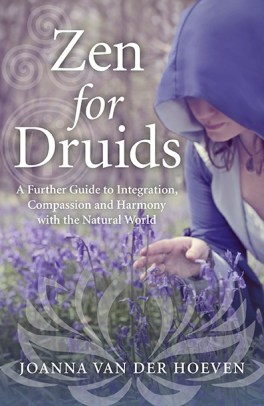
Zen for Druids front coverReviews are coming in for my new book, Zen for Druids: A Further Guide to Integration, Compassion and Harmony with Nature. This new book expands upon my first work, the introductory Pagan Portals Zen Druidry, and looks deeper into combining elements of Zen Buddhism and Druidry. Here are a few of the reviews!


I am a massive fan of Joanna van der Hoeven’s books. They are wonderfully accessible whilst still conveying a depth and clarity that helps the reader to really connect with the wisdom of the subject. Her latest offering does just that. ‘Zen For Druids’ is a companion to her earlier work ‘Zen Druidry’, exploring Zen Buddhism and Druidry by illustrating how these spiritual paths can complement one another in practice. The book is written in five parts. The first explores Druidry and the Dharma giving an excellent overview of Buddhism’s Three Treasures; The Four Noble Truths; The Five Precepts; The Eightfold Path and The Sixteen Bodhisattva Precepts and how these relate to Druid philosophy. The second part takes us through the Pagan Wheel of the Year and how Zen Buddhism can enrich the understanding and honouring of these festivals. Joanna includes some really useful tips at the end of each festival section, with ideas to deepen your experience of each. Part three focuses on Meditation; part four on Mindfulness and part five on Integration, each section helping to both explain the underlying spiritual meaning of these practices whilst giving practical advice, exercises and encouragement. I particularly enjoyed the section on Integration where the author writes beautifully about Awen and Relationship as a connecting, compassionate force that reveals the interconnectedness of life. In her chapter on Ego, Self and Identity the author tackles the thorny issue of the Ego. In many spiritual texts, the Ego can so easily be labelled the ‘bad guy’ but Joanna skilfully explores the difference between Representational Ego and Functional Ego, redeeming the Ego’s useful functions whilst suggesting a compassionate approach to its more challenging aspects. The concepts in this book take some thoughtful pondering but the beauty of Joanna’s writing is that it cracks open what initially appear to be very complex ideas and gets straight to the heart of each. Obviously the real work is in the dedicated practice of a spiritual path but Zen For Druids offers a wonderful foundation to build upon. In every page you can sense that the author has learned these insights through experience, that she really understands and lives these principles from a place of deep heart-knowing. We move from a purely intellectual grasping of a subject to this heart-led living of a spiritual path through the constant connection and exploration of that path; Joanna van der Hoeven’s fabulous book is both an inspiring and deeply practical aid to help you on that journey. I highly recommend this book. It is proof of how seemingly different spiritualities can enrich each other, and for those of us who are drawn to both western and eastern paths, it’s a real gem! ~ Maria Ede-Weaving, from the office of the Order of Bards, Ovates and Druids

Zen for Druids: A Further Guide to Integration, Harmony, and Compassion with Nature by Joanna Van Der Hoeven is a look at integrating aspects of Zen Buddhism and Druidry into ones personal practices. We take a look at some of the basic principles of Buddhism such as the Four Noble Truths and the Eightfold Path and how they can be integrated with aspects of Druidry such as the sacredness for all things. There are questions which help us contemplate these concepts within the aspects of both Druidry and Buddhism. We take a look at meditation and mindfulness in both areas of practice. We are shown how to incorporate the eightfold path of Buddhism into the Wheel of the Year and Druid festivals. I liked how this book brought together both Buddhist and Druid practices to create a practice that is one with nature and enhances our spiritual practice. I learned a lot about both Druidry and Buddhism and how they can work seamlessly together to create a spiritual practice. ~ Rose Pettit, Insights into the Wonderful World of Books

In this user-friendly book, Joanna van der Hoeven further develops ideas already present in her earlier ones, especially Zen Druidry. On my reading, this book will work best for Druids committed to a modern eco-spirituality. I imagine readers already re-enchanted by their experience of the natural world, who want a harmonious relationship with that world, and to honour, protect and preserve it. Zen for Druids confirms this stance and adds something else: the interwoven ethical and attentional training of the Buddhist tradition. The author draws specifically on Thich Nhat Hanh, the Vietnamese Zen Master who founded the Community of Interbeing and is a leading model and exponent of ‘engaged Buddhism’. This cultivates personal, social and ecological levels of awareness. It recognizes the radical interdependence of all beings and a need to make ethical/political choices in line with this interdependence. Such Buddhism is not in any way world denying, in the way that Buddhist tradition has at times been in the past. I see Thich Nhat Hanh as a perfect source of influence for this book, and several of his own works are cited in the bibliography. Zen for Druids is divided into five parts. The first is a clear exposition of Buddhist basics, helped by that tradition’s own style of clear exposition and list making. It includes chapters on the three treasures, the four noble truths, the five basic precepts for lay Buddhists, the eightfold path and the sixteen Bodhisattva precepts. By age-old Buddhist design, there is a certain amount of repetition in these lists, with the same issues coming up again in slightly different contexts. Each individual chapter ends with a set of questions designed to engage the reader in their own reflections. The second part moves through the eightfold wheel of the year, frequently found as a festival year in Druid and Pagan communities. Each festival is given its own chapter, and each chapter combines traditional Druid and Pagan themes with a principle from the Buddhist eightfold path. The author starts at Samhain (right effort), moves on to the Winter Solstice (right mindfulness), Imbolc (right concentration), Spring Equinox (right intention), Beltane (right view), Summer Solstice (right action), Lughnasadh (right speech) and the Autumn Equinox (right livelihood). Each section is followed by a list of suggestions for practice. The book’s remaining three parts are shorter. They concern, respectively, meditation, mindfulness and integration. In two chapters on meditation, the first explores ‘mind traps’ – “those little prisons of our own making. We are constantly hijacked by our thoughts and feelings, attachments to them and our egos, such that we spin endlessly in circles until we fall down”. The second shows us to how do a brief meditation session in the Zen manner. The following section, concerning mindfulness in the world, suggests a practice of ‘mindful Mondays’ and explores the relationship between present time awareness and an animist world view. The final section, on integration, focuses on our integration with nature, looking at the issue of ‘ego, self and identity’ before reflecting on ‘awen and relationship’. For Joanna van der Hoeven, indeed, “awen is relationship and integration, the connecting threads that bind us soul to soul”. In Zen for Druids, one Druid shows how she has taken an iteration of Zen Buddhism into her life and practice, combining them into one path. She sets out her stall very clearly and offers the reader specific opportunities and resources for practice and reflection. This book does a valuable job well. ~ James Nichol, Contemplative Inquiry

I read Joanna’s “Zen Druidry” and it really helped add an extra layer of depth to my own Druidry. This book continues down that same path, with a lot more emphasis on how to incorporate aspects of both Zen and Druidry into one’s life. Not only does Joanna write in a way that is easily accessible, her approach to topics provides the reader with enough information to work with the topic or concept. The questions she asks throughout the book are definitely good moments of “food for thought” – and for me provide even more desire to dig even deeper into what she is presenting here. Is her book a be-all, end-all of Zen, Druidry, or the combination of the two? Not even, nor is it meant to be. Finding that kind of depth, in my opinion, is up to the individual bringing these concepts into their Spiritual practices. This book; however, is a definite strong start for those who are looking for ways to incorporate these two particular Spiritual disciplines into their lives at the same time. For me, this book is a timely follow on to the “Zen Druidry” title, providing more depth and clarity to the combination of these two Paths. Going further down that Path, will be up to the individual adherent and their own unique application of these disciplines to their own lives. If you are picking this book up first, set it down and get “Zen Druidry” and read that first. Then follow on with this one. The two flow together very nicely.  ~ Tommy van Hook, Life with Trickster Gods

Hope

Hope can be a double-edged sword. It can lift our hearts, rally us towards a cause, or it can lead us to the depths of despair when it dies. I’ve often wondered whether it is better to have hope or not, whether hope is a carrot dangling in front of us, or whether it is that very real need to invest our emotions into the belief that we can change our world. Back in 2012, I wrote about the Zen approach, in a piece entitled “No Hope“. The words that I wrote four years ago still resonate strongly within me, even as my relationship to hope has changed.

When we are at our lowest, we might still have some hope that things will get better. This hope may be the only thing that gets us through those long, dark nights of the soul. Then again, that hope may be what is preventing us from achieving things in our own right. Hope may cause complacency. If we work without hope, without expectation, then we may be even more motivated to make a positive change in the world in our own right, for the benefit of all.

With hope comes expectation. When we have expectations, we can be thrown against the rocks of frustration, anxiety, anger and despair when those expectations are not met, when things do not go the way that we would like them to. We want people to behave the way we think they should, for the benefit of all. We want our politicians to think of the people that they represent instead of their own agendas. We want colleagues to pull their own weight, spouses and partners to be there for us, children to love us. When things don’t go according to our plans, or according to our expectations, we might crash and burn. We might dive into darkness at seeing a new President-elect, we might look at the environment and realise that perhaps we have simply gone too far, and there is no remedy for what we have done. When this happens, we can lose momentum, we can get stuck. Hope might be the thing that brings us out of this stagnation, or it might leave us altogether, so that we are in an even worse state than before.

So how do we work with hope? I’ve found it useful in the last couple of years to work with Hope as a god. I’ve worked with Time in the same context, and it has been illuminating for me in so many ways. Working with the gods, we learn to create a relationship with them, one that is nurturing for all involved. There is a give and take, a sustainable and reciprocal feeling to it that means that we cannot rely on them to do everything for us, and vice versa. It is in mutual respect where we meet, where we realise that we are part of an ecosystem, and where we need to strengthen the bonds of relationship so that it functions for mutual benefit. We learn from permaculture that diversity is key, that edges are where things happen. We learn to work with both, and in doing so can make this planet a better place. If we give up Hope in this context, if we give up Hope as deity, then there will be a very real feeling of bereavement in our lives; we will be bereft. That relationship will be gone, and when it is gone then to whom do we relate?

Others would say that this might be preferable, and in giving up Hope as deity we then become more self-reliant. But self-reliance is a myth. We are all co-dependent upon everything else on this planet. We do not exist in a vacuum. We need others in order to exist, let alone thrive. We are not separate. Without the innumerable other factors in our lives, beings seen and unseen, we simply could not be. I think that this is why I believe in the gods. The gods are all about relationship, about relating to our world through a means which is personal to each and every being. This is why I’m starting to work with Hope on a new level, when it seems perhaps that all hope is lost. Otherwise, I fear I might spiral into apathy, or depression. If I work with Hope, if I talk to Her and connect those threads of sustainable relationship, then I might be inspired to solve a problem, mend something that is broken, reweave the threads of connection in the best way that I can.

Hope can be the spark of inspiration, the awen that sings to us in the dead of night when all seems lost. Hope can also be a force that keeps us from changing our lives for the better, hoping someone else, someone more powerful or intelligent will do it for us. But when we work with Hope as deity, then things begin to change. Hope will not save us from ourselves. But Hope may inspire us to do better, to be better, to be the change that we wish to see in the world.

Or so one can only Hope.

The Joy of Teaching

Well, we’ve just had our first weekend with our Year Two students, and it was brilliant. We have a really diverse and bright group, who bring to the weekends such different experiences. I am truly honoured to know them.

We began with a ritual in the nearby woodland, a lovely deciduous wood with several large ponds. We honoured the work of Year One, and stated our intention for Year Two. We honoured all the teachers in our life, those who inspire us. Robin also spoke a few very moving words to honour Boudica, as our new venue lies very close to the spot purported to be where she fought her last battle. We then wove a web of connection, throwing balls of yarn to each other across the circle, stating what we wish to weave into the year’s work. Word like “joy”, “compassion”, “integrity”, “friendship”, and “honour” were said. We then lifted the web and moved deosil around the circle, chanting and bringing our energy to the web, which will later next week be offered to my Samhain fire.

We had a packed weekend, discussing what it means to live an awakened life, as well as prophecy and seership, divination and the divine. We took the students through a ritual trance induction to the Lowerworld, to meet with their totem animal. There was witty and funny discussion, and the weekend was very much a success. The venue, with its solar panels and air exchange system really met the criteria we have for working in sustainable relationship with the land, and for ancestors yet to come.

We’re very much looking forward to the next weekend!

And, on October 31st we open for our next Year One session which begins in October 2017. This allows time for payment in installments to be made before the course begins. For more information on the Year One programme, please visit the website at www.uk.druidcollege.org.

Interview for Pagan Writers Community

Here’s a link to an interview that I did with Pagan Writers Community. Thanks, Piper!

Pagan Writers Community interview with Joanna van der Hoeven

cover high res

Interview for Pagan Pages

I was recently interviewed for Pagan Pages by Mabh Savage, and you can read the full article by clicking HERE.

Interview with Joanna van der Hoeven: Breathing the Ancient Breath

Mabh Savage: Pagan Portals: The Awen Alone has been an incredibly popular release. Tell us a bit about the book, and why you think it has such wide ranging appeal.

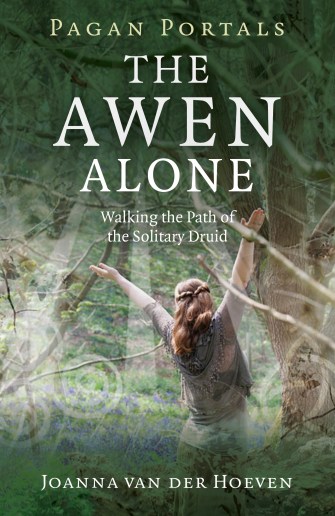
Joanna van der Hoeven: I’m absolutely delighted at the reception The Awen Alone: Walking the Path of the Solitary Druid has received. It’s a book in the Pagan Portals series, a lovely series of books that provides an introduction to a certain topic in around 100 pages or less, and which are subsequently very affordable. I’ve had so many emails from readers, from all over the world, thanking me for this work and telling me how it has resonated with them, how it’s helped them to find their own path. I feel so blessed to have been a part of their journey, to have helped in some small way. Perhaps its wide-ranging appeal has to do with the fact that Druidry is a religion or spiritual tradition rooted in nature, which is all around us, all the time, and accessible to us each and every moment of our lives. To learn to live in balance and harmony with nature can never be a bad thing! The tenets of Druidry also work brilliantly with other traditions, from all over the world.

MS: What was your biggest challenge when writing the book?

JvdH: Trying to fit it all into 100 pages or less!

MS: And what did you enjoy the most about the process?

JvdH: I think the feedback that I’ve received from readers is the most wonderful part of it, to hear their stories, to learn about them and how they have interpreted the work. To know that you’ve made a difference in someone’s life is so humbling, and so wonderful to experience. To have people take time out of their busy lives to write to you is simply heart-warming. If you’ve loved a book from an author, write to them, tell them! To have that human to human interaction, to hear that your words have been heard, can make all the difference to an author. A musician performing to an audience has instant feedback from the crowd, but authors often feel like they’re out there, writing and talking to themselves, not sure if there’s an audience out there listening or not. Writing can often be lonely. I enjoy working by myself, I enjoy solitude, but it’s still really nice to get feedback on your work.

Continued…. to read the full article, click HERE.

A musical morning…

This little tune has been knocking around in my head for the last few days, and I thought I should capture it in a recording. Photos were taken at Staverton Thicks, Suffolk, UK.

Release

p1000386-1024x666I had a lovely solo ritual last evening, to celebrate the autumn equinox. As the sun set, I meditated on the changing colours in the sky, on the harvest that has taken place, the wheat and corn crops taken in, the onions and turnips. The fields are still being tended, ploughed for winter veg, seeding with potatoes and other root crops. The sounds of work in the fields is still going on, even as the evening dog walkers pick blackberries and apples from the hedgerows. It’s a strange time of both noise and stillness, when the swifts and house martins have mostly left, the skies seeming emptier for it. The dawn chorus is softer, the evening calls less urgent.

The times of the festivals have an effect on me, physically as well as spiritually. At these strong points in the year, I often feel at odds, not quite in this realm or any other. At Beltane, my head felt like it was being pressed in on all sides as we spent time at the local tumuli. Yesterday, and the day before, I felt dizzy, sometimes faint as it seemed the energy was swirling around me yet again. Being very susceptible to pressure changes in the air, I feel I’m becoming even more sensitive to energies unseen that roil and swirl around this little sphere hurtling through space.

I love autumn. I love the energy that it brings, a quiet, soft, energy: a release. It seems that all summer long, from Beltane onwards there has been a swift build-up of energy that it seeking its release. Some of it goes at midsummer, but most of it is contained, helping to ripen the harvest fruits. It’s at this time of year, when the fruits fall, that the energy is released, the potential lying still and quiet in the seeds, ready for winter’s dreaming.

And so at last night’s ritual, I began with meditation, and then did the ritual in my usual way, scattering leaves and saying words of my appreciation for the season and the harvest around my circle. I also prayed for peace, a deep, heartfelt prayer, as well as doing five earth touchings. I then meditated again, the sun having set, feeling the balance between darkness and light. I opened my self to what I needed to learn over the long dark nights of approaching winter, widening my perspective, allowing nature to guide me. Instantly, one word rang through my head: forgiveness.

Taking inspiration from nature, I thought about forgiveness. If any ecosystem held a grudge, then it would fail. Trees continue to provide us with oxygen, despite us decimating their population. Herbs continue to grow, despite humanity’s propensity for herbicides. The rain falls, the sun shines, and we still reap the rewards that this world has to offer each and every day. If we could only do the same, if we could only learn true forgiveness, then this world would be a much better place.

I thought that I was pretty good at forgiveness. I’ve forgiven people in my life who have caused me to suffer. But taking a deeper look, my forgiveness wasn’t all-encompassing. I needed to release the anger and hate, like the leaf falls from the tree, like the leaves that lay scattered all around me in my ritual circle.

Forgiveness is one of the most difficult things to do for us humans. We often equate forgiveness with weakness, seeing it as a relinquishing of power. Those who forgive, we think, are only setting themselves up for more grief from those who would cause them to suffer. They’re doormats.

What we don’t realise is the exquisite power of forgiveness. When we can truly forgive, we can move on with our own lives. This doesn’t mean that we condone bad behaviour; far from it. We can still stand up for ourselves, speak out against injustices. We will still face struggles with people in our lives. But we can suffer less in ourselves, if we can forgive.

But we don’t want to. We want the other person to suffer, for all the hurt that they have done to us and to others. If we forgive, we think that they’ve been left off the hook. This most certainly isn’t the case. Everyone is accountable for their actions, everyone has a responsibility for their own life. We can’t force anyone to accept this, of course, but we can set the example for others. And when others don’t follow our example, we shrug and move on, knowing that we have, at the very least, stopped the suffering in ourselves.

But we want to change people. We want to stop people who are hurting others, and rightly so. So we can stand up for what is right, remembering that there is more than one right. We can also forgive, because everyone is suffering in some form or other. Whether willingly or not, when someone is causing another being harm, they are suffering deep inside from some affliction that we may never realise. They are fighting their own battles. We must set the example.

That doesn’t mean that we’re going to suddenly start liking these people. But we can allow the power of compassion to flow freely, to stop the pain in our lives, and when we do it begins to radiate outwards, like rings of water in a still pond. We’re not going to take any crap, but equally we’re not going to allow any crap that comes our way to cause us to suffer, to continue to make us crazy, hurt or bitter. We’re going to remain open, calm and filled with love for this planet, and in doing so understand the true meaning of forgiveness.

We’re also going to forgive ourselves. In doing so, we find peace. We’ve all screwed up, we’ve all caused pain at some point. We need to release that in order to function properly. We accept responsibility for our actions, and ensure that we never do it again. We strive to be better people, to make the world a better place.

Some would query whether it is truly possible for any human being to really forgive. I’ve thought about this myself. As such emotionally biased creatures, are we able to set aside our skewed perceptions of any given situation? In the attempt to do so, at the very least, is the heart of compassion. In the striving to do so, we rise to the challenge.

So my ritual last night was filled with my home environment providing me with the awen on the nature of forgiveness, compassion and love. And as I sat in the growing darkness, the cool soft breeze playing around me, I whispered these four words: I welcome the darkness.


Druid Ritual Tools Series: The Staff

Here’s my latest video for Down the Forest Path video blog, in the latest Druid Ritual Tools Series that I created. Please do consider supporting me on my Patreon page for additional online content, video blogs, and more!

Reblog: Lammas, Don’t Fear the Reaper

This is a reblog from my channel at SageWoman for Witches and Pagans at PaganSquare. To read the full article, click HERE.

The grain harvest is being collected in the fields around my home. The usually still and silent evening air is filled with the sound of combine harvesters, accentuated every now and then with the hoot of a tawny owl. Lammas is upon us.

Standing on a footpath that divides two large fields, one side filled with barley just reaped, the other with wheat standing pale golden in the sun, I raise my hands to the blue sky and give my thanks for all that nourishes us. I walk a ways into the cut field, the harsh stubs of barley amid the dry, sandy earth and place my hands upon the soil. Thank you for your blessing, may the land be nourished even as it nourishes us. Hail and thanks be to the goddess. I then move to stand on the edge of the wheat field, allowing its song of potential to flow through me. I brush the bent heads filled with seed and say another prayer of thanks.

This is a wonderful time of year, when the songs of the ancestors flow through the rural heartlands of Britain. Though the way we harvest is different, still there is that cycle of growth, of planting and harvesting. After the long hot days of midsummer, the lengthening evenings are welcome, bringing cooler air. Though the dog days may still lie ahead of us, there is something different in the air at this time of year. The scents have changed, the leaves are dark green and heavy, the foliage beginning to choke out and fall back.

I love this time of year. The birds have fledged, and the muntjac deer are at the end of their mating season. The stag barks occasionally for his hind on the other side of the hedge, and this year’s badger family come to visit every night to eat the fallen birdseed from our table and the peanuts that we put out. The sidhe are active at their special spots, over by the burial mound as they are at each of the fire festivals. It is a time of celebration, though there is still much work to be done…

Continue to the full article HERE