Dousing the Fire

Brighid is often known as the goddess of the sacred flame and of the sacred well. It is often said in religions throughout the world that where fire and water meet there is the greatest potential. Exploring her aspects of fire and water are extremely beneficial and here I shall talk a bit about fire; however, perhaps not in its most usual aspect.

We are all familiar with fire as flame, as external energy whether that be a fire in the hearth, the combustion that allows us mechanised transportation or the heat of the sun. What I’ve also been exploring is the fire within, that flame or spark of energy that ignites us to do things, say things, create things. I often think of inspiration in the Druidical “fire in the head” sense, but I also feel fire in the belly and fire in the heart. The fire in the belly is intuitive, instinctive. The fire in the heart is our passion, our love, our capacity for compassion and understanding.

The fire of the heart can take a long time to come into being. In our society, we often feel isolated from each other, even when we are literally living on top of each other in urban high-rise complexes. We learn coping techniques of shutting ourselves off from one another in order to function. We may have been hurt by others in the past and that causes us to dampen our flame of love for the rest of the world.

We also live in a society wherein it seems perfectly acceptable to douse someone’s fire. Think of reality shows, especially those that have “judges” critiquing the participants. Last year I gave up watching Strictly Come Dancing because I was tired of one particular judge being an outright bully, thinking his comments were humorous when they were in reality just plain mean. Putting down, making fun of someone who is simply trying their best to participate in a dance show to raise money for Children in Need is not something I wanted to be a part of. I can donate money directly instead of supporting that kind of behaviour.

We are so influenced by what we watch on television – we cannot deny that we are not. And it frightens me, especially with the amount of television that children are often exposed to these days. It is a rare occurrence, even where I live, to actually see children playing outside despite there being the most gorgeous countryside at their disposal. Whether that is due to parents’ control or other factors I cannot know – all I know is that when I was growing up the streets would be filled with neighbourhood children riding bikes or playing street hockey among other games. Are children nowadays being raised by television and computer games instead?

We live in an extremely competitive society, or so we are told. We feel that we always need the upper hand, the edge on a situation. We are now programmed to work against each other as opposed to with each other. We are trying to beat that other person out in promotion, or to be the best as everyone knows that the top dog is the happiest. We live in a put-down culture where co-operation simply doesn’t exist. We do not know our neighbours.

Living like this provides a perfect divide and conquer technique for those who want to keep us under their control. What we need to do is to reclaim our own power, and that of our own community. Instead of dousing the fire in other people, we need to cheer them on, to work together to make our lives better. It’s happening in small grassroots ways here and there, but not on a massive scale. In my own village, we have a village allotment where people can get together to work on group projects as well as their own. The village shop often acts as a hub for people to interact with each other.

What we need to do is to stop trying to take each other down and instead build each other up. We need to realise that life is not about competition. As a social species, we thrive better when we work together. When we douse the fire in other people’s hearts we are also dousing the fire within our own hearts. Every word, every deed with the intention of dousing another’s fire reduces our own capacity for love and compassion, to make the world a better place. Why on earth would we want to do that?

In her book, The Earth Path author and activist Starhawk talks about this very subject, exploring it at various Witchcamps. A proud supporter of community effort and achievement, of bringing power back to the people, she has worked with the various elements. She tells us of the results of working with fire and dousing another’s energy.

Throughout that week, we went on to reflect on the ways in which we put out each other’s fire. When we recognise subtle energies, we become responsible for the kind of energy we are putting forth in our community. The things we do and say about each other create subtle energetic fields that either support our work and our relationships, or undermine them.

Malicious gossip, backbiting, unsupportive criticism, and mean-spiritedness douse even the stoutest of fire. And because a fire takes energy to build and maintain, such negativity is wasteful of the community’s resources; it’s like use electricity not just to keep the radio on all the time, but to keep it tuned to an irritating and distracting station… when anger festers, when we chew over our grievances like old bones without expressing them directly, when we meet others with sullenness or resentment, we douse not only their fire but our own.”

We need to judge situations in our lives all the time – they key to doing so lies in not being judgemental. We also need to support each other. If you don’t like what someone is doing, if you think it is detrimental to the community, you need to speak to that person directly. If you just don’t like them, then leave them well enough alone. All too often it is easy to attack or undermine someone through subtle means – Facebook and blogs are often used as tools for such behaviour. We can so easily dowse another’s fire through incessant comments or insidious ways online without anyone else apart from the target being the wiser. Let’s stop this behaviour right now. It is within our power.

Let’s cheer each other on, and where we simply cannot let us walk away with respect. Let’s stand up for what we believe in without resorting to maliciousness. Let’s put some good fuel onto the fire of our hearts and that of others and in doing so everything will burn with a cleaner, better focused energy.

Brighid has taught me to look deeply into what is feeding my fire, and how I can feed the fire within others. For that I am utterly thankful.
 

Love

Many of us have heard the saying “Love means never having to say you’re sorry”. Like all sayings, they can be misinterpreted. Love is one of the most powerful gods. Love is so much more than romance, than warm fuzzy feelings for another. Love can be an unshakeable force, it can inspire us to greatness or tear us apart.

Never having to say sorry with regards to love has been misused by many as an excuse to behave badly, to not care about the feelings of others, to live in a purely self-centred state. It is also often implied that if we really love someone we should always be willing to forgive their behaviour. In Buddhism, it is widely regarded that we are all Buddhas, that we all have the ability for true compassion. However, we are also all human, with all the wonderful implications, limitations and foibles that it entails.

We have all known people whose behaviour has been less than glowing, who are so entrapped in their own worlds and minds that they often create a reality which is completely and utterly different to the one that you may experience. As humans, we have a shared reality and shared human experience, but as beings that are supposedly self-aware we become trapped in this self-awareness to the point of it spilling over into less than glowing behaviour. Love accepts the humanity of everyone. Love accepts reality. Love is compassion.

Compassion, however, doesn’t mean we have to take everyone’s crap. Compassion is understanding, trying to see the bigger picture, to understand why someone behaves the way that they do. In this attempt, we step outside of our “small selves” and out into a greater reality. We open up our perception. We may never truly understand, but at least in the attempt we see that the world is more than just our experience, our perceived reality. We recognise the experience and reality of others.

When that reality hurts us, when people do or say things to undermine us for whatever reason, should we simply forgive and move on? I’m not entirely sure it’s within human capacity to truly forgive, though people like Zen monk Thich Nhat Hanh are real-life inspirations for this way of being. We may find that the hardest person to forgive is ourselves. Perhaps we need to focus less on “us” forgiving “them” and simply focus on living our own lives in way that means that we will never have to say “I’m sorry” to another. This, in my opinion, is the real interpretation of the saying “Love means never having to say I’m sorry”.

We may fail, and there is nothing wrong with saying “I’m sorry”, however.

When we come against people we simply cannot be with, we can still try to understand them, to look beyond our self. It can often put us into the bigger picture, allowing more of a peripheral vision of the world that encompasses everything and in doing so, allowing the self to fall away in integrated living. Sometimes we simply have to walk away from that relationship in order to work compassionately with our selves, for we simply suffer too much at that given time to be able to function properly. We can do this with partners we’ve been romantically involved with – when it no longer works, we can bow to each other and walk away with respect, and hopefully a little compassion for both them and ourselves.

What we have to focus on most though is our own life, and our own behaviour. We have to live our lives in a way that means we will hopefully never have to apologise for our behaviour. It’s not an easy path, but it’s one that is worthwhile. In doing so, we will walk lightly upon the earth, loving the earth with every fibre of our being, loving everything on the earth with eyes wide open and a heart filled with compassion. We can love life, the power of the gods moving through us and around us, and live our lives in celebration of this.

As the first snowdrops bloom here in the UK, and the songs of the birds change to love of each other, of the warming sun and the greening of the land, may our hearts too be filled with love.

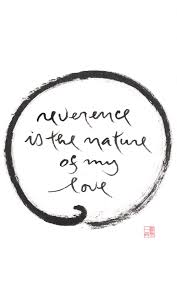
reverence

Interview with Emma Restall Orr, March 2014

Photo courtesy of emmarestallorr.org

Photo courtesy of emmarestallorr.org

Below is a fairly recent interview (March 2014) with Emma Restall Orr, author, founder and director of Honouring the Ancient Dead, and former Head of The Druid Network. Here, she is talks about Druidry, labels, the priesthood, anarchy, understanding the self and the importance of earth-based religions. Enjoy!

Listen HERE.

Kindness

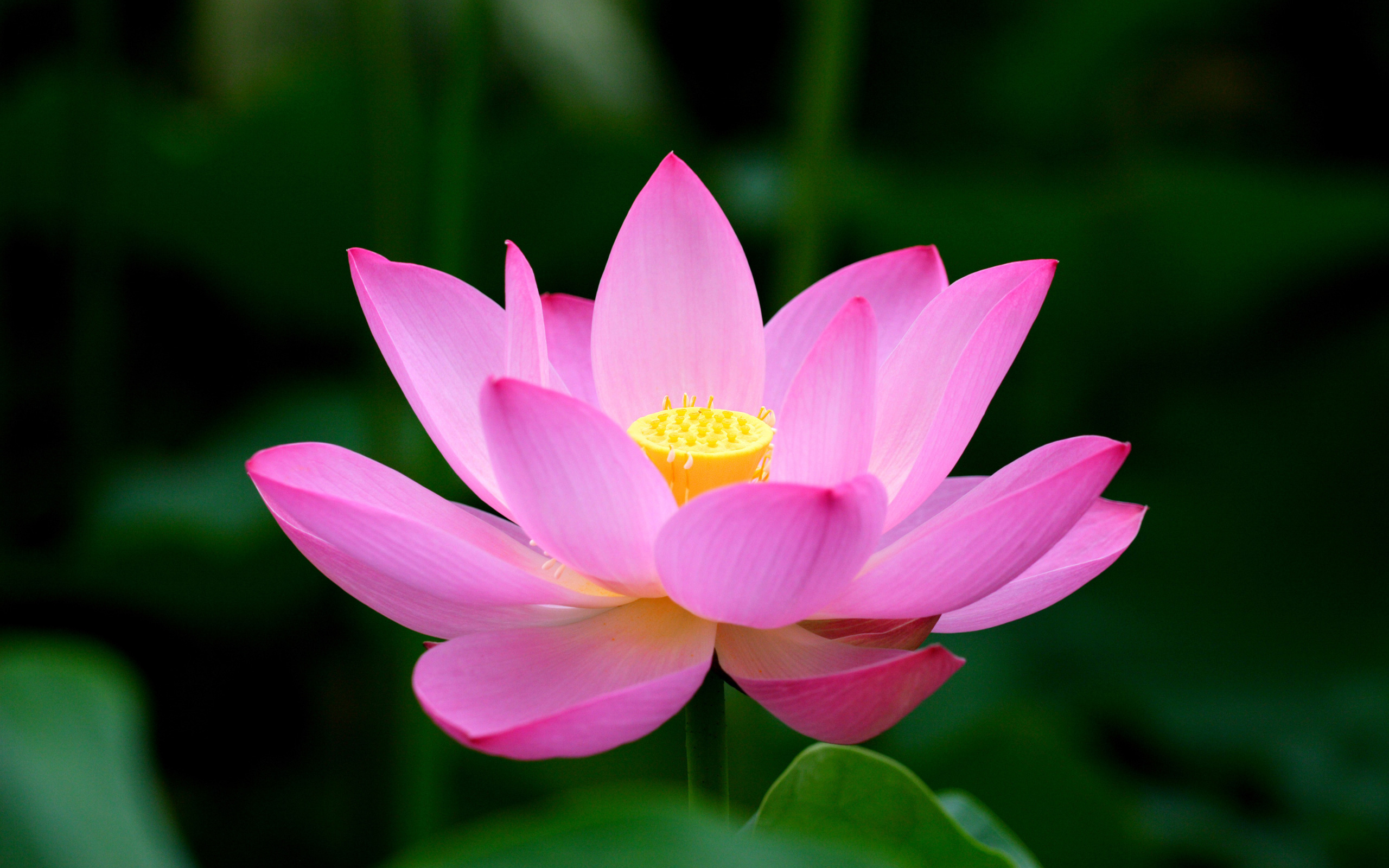
lotus-flowerKindness – in our modern Western world, this beautiful concept has become twisted, where in a “dog eat dog” world it equates to weakness.  We have to push, we have to grasp at life, beat out the other guy in order to get the biggest piece of the pie.

The truth is, there is no pie.

Forget what the media tells you, forget what other people may tell you, that you need to be better than others, that to show your humanity you will soon slide down that corporate ladder. There is no ladder either.

There is no me. There is no you. All is illusion.

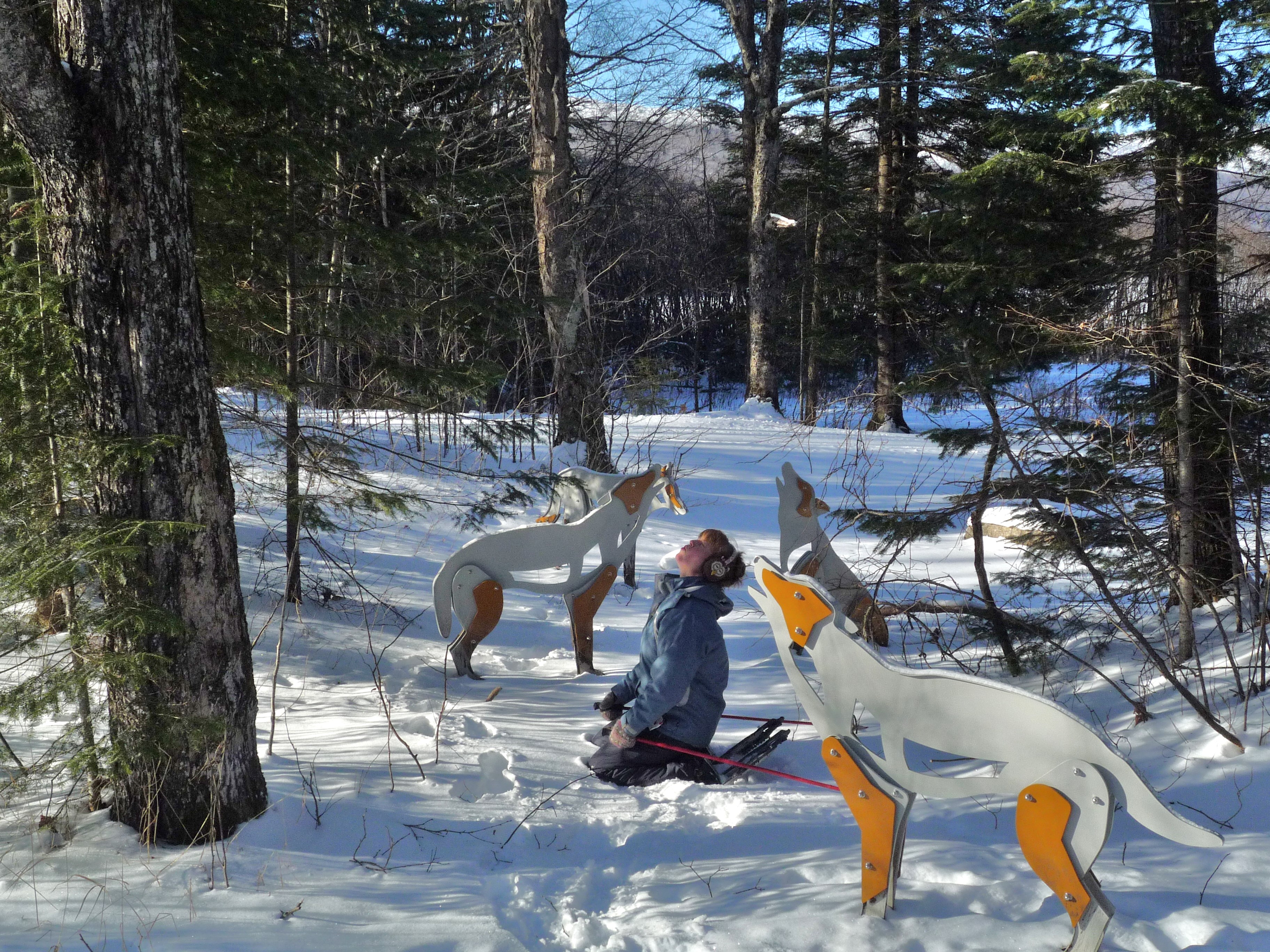
We are all made up of each other, there can be no separation. The tree and the coyote, the fox and the mountain, the sunlight and your brother are all made up of matter and energy. Matter and energy cannot be destroyed. They cannot come out of nothing. They only wait for the right conditions to manifest, for the right circumstances in which to come into a form that we recognise. They are always there. We have always been here. We have always been a part of this world, and a part of each other.

As humans, we have become very judgemental beings. We allow our emotions and thoughts to overide the reality of many situations. It’s far easier to judge the behaviour of others than to look deeply at our own selves. Each time we judge something, we tighten up in our hearts and in our bodies.  An open heart is one that does is not judgemental. If there is no separation, there is nothing to judge.

We need to notice when we are forming judgements of people and of situations.  We need to see when we are contricting our souls, when we are not open to what life really is in this present moment. We need to really begin to know what the word kindness means.  If we truly see that we are all related, why would we be unkind to anyone or anything?

Do not believe in the illusion. Immerse yourself deeply in the awen, the poetic inspiration that opens the door to seeing the interconnectedness of all things.  Open your heart to the wonder that is life all around you. Look into the eyes of your supposed enemy, and see their condition of being. Look into the circumstances that created their life, and see yourself reflected in that. You are them and they are you.

Being aware of each judgement we make, being aware of our thoughts about other people, being aware of what is coming out of our mouth makes such a  difference to our lives.  When we speak ill of someone, we are doing ill to ourselves. When we treat others unkindly, we are being unkind to our selves. Our hearts do not like to be constricted.  The flow of awen, the flow of circulation in our bodies, the flow of a river or the flow of life itself moves better when we are open.

Our practice in life is simply kindness.  It’s not hard, but we make it hard for ourselves.  We have to lose our self-centred ego, our sense of self-importance, our sense that the world should be as we desire it to be, and not as it already is.  When we have stepped away from that way of being and move into a way of being that is centred on others, be they bird or bee, refugee child or murderer, basking shark or polar bear, we see that the world is much greater than the small worlds we create around ourselves.  We are released from anger and depression, hate and worry. We see how our little selves can take over, and we realise what is much more important that our little selves.

Kindness.

Have no fear – we will not become doormats for people to abuse if we are kind. We will not lose our place in life if we are kind. We will be happier, more free and really living as opposed to simply doing things.  Kindness is not weakness – it is the truest form of being. It takes courage to be kind to someone who has hurt us. We do not have to allow them to continue hurting us, but we do not need to seek revenge, or punish them for their actions. We can let them see that they have hurt us, and we can try to understand them with an open heart free of judgement. We can look critically at a situation without judging it, without letting emotion or non-factual elements into the equation. We can release our self-centred perception to get a look at the bigger picture, and try to help others instead of focusing on our selves.

It’s not easy, changing the way you think and behave. We have to really pay attention. We have to be really aware of how we are, how we react, what we say and do in any given situation. We need to look deeply into our being, through practice and meditation, through every single act of our waking lives. We have to be willing to change out of our old habits and our old ways of self-centred thinking. We have to try, again and again, to step outside of our little selves.

When we do, the world opens up in wonder.

May your life be filled with wonder.


Solstice Practice

This post was originally  displayed on SageWoman’s channel, on my blog DruidHeart at Witches & Pagans.

Around the winter solstice is the time of year when many people get together, families and friends, to celebrate the holidays. If we are fortunate, we have some time off to be together, all together in one place – we may not have such an opportunity until the next solstice season rolls around. It can be a wonderful time of loving hugs, good conversation and deep, belly filled laughs. It can also be a trying time, when the bonds of friendship or family can become tested as we are all thrown together, our usual routines and habits left behind and we are faced with situations that are perhaps out of the norm.

My home is usually very quiet, filled with deep silence and stillness. In that silence I find my personal sanctuary, where peace is around every corner. I’m not a big fan of crowds or noise. However, at this time of year, I leave behind my little sanctuary and venture out into the world of lights and noise, family and friends when I’d really rather be sitting on my meditation cushion in the dark, with a candle and some incense.

It’s quite a shift to deal with. There is constant noise around me, different noise to that of my own home. It’s the noise of other people, which I am not accustomed to. Loud televisions, conversations, arguments, laughter – it’s a bit of an assault on my senses. Dealing with other people’s behaviour when there is no opportunity to “escape”. I have to confront everything that upsets me head on, or lose my temper, say something in anger as my “sanctuary” is thrown out the window.

Or is it? Yes, it’s difficult. Even as I type this blog, there are interruptions by people walking in and out of the room, asking me what I’m doing and other various questions. Nemetona, my goddess of sanctuary, has taught me that she is ever within me even as she is without – I take her with me wherever I go, and where I go she is always there.

In my Zen practice, this time of year provides me with innumerable ways to really practice. Life becomes difficult when things don’t go our way. When we realise this, and when we see that life is simply going ahead whether we like it or not, things can become easier. I have to deal with behaviour that I don’t like – this gives me a chance to practice and to try to understand that person’s behaviour. Often I can see myself reflected in it, or see that they are lost in their own suffering. I can try to ease that, when I remember to try to understand it. When it just pisses me off, I’m not trying to understand, and anger can erupt. When this occurs, I realise that I am not practicing very well, that I am not aware of my own reactions and behaviour. It’s a constant reminder to look deeply at myself, to see my patterns and to alter them in order to have peace and harmony both within and without. My goddess and my Zen practice help me with this understanding.

I have two choices when I find myself in difficult circumstances – get upset or not get upset. When people are shouting in the kitchen, or using words unkindly, or their behaviour is totally out of sync with creating harmony, I feel a tightness, a contraction within my body. Getting upset with this only tightens that contraction even further, making me miserable, or lashing out in anger in a misguided attempt to alleviate the tightness within. Seeing people mistreat each other, taking each other for granted – all of these things can cause contractions within. Passive/aggressive behaviour, words that are intented to provoke, noise levels louder than they need to be – all these things cause a contraction within my body. I want to loosen that contraction, but how?

Sitting and walking meditation practice, daily, really help me through this challenging time. By sitting, I am aware of my body, and aware of my thoughts. I see patterns in my behaviour. I see the self that is screaming for attention, for comfort, for sanctuary. I also then see the illusion of the separate self, and the inter-connectedness of all things. We are all dependent on everything else – the sunlight, the rain, our parents, the air, food. Without any of these things we could not exist. We are in them and they are in us.

When people’s behaviour challenges us, it helps to remind ourselves of this inter-connectedness. They are in me, and I am in them. It’s easy to do when out in the forest, becoming one with nature. But in challenging situations, with people we are often more directly faced with egos and personalities, with habits and the ego’s constant self-regard. When someone says something that upsets us, instead of thinking “I’m so upset that he said that” we can just realise that he said something. That’s the truth of the matter. Someone simply said something. We can act on what they said, of course, if they are saying inappropriate things. But we don’t have to act on it in anger, simply in awareness. Things happen. People behave the way they do. We can either get upset and lose our practice, or we can see the opportunities to become even more aware of our selves. In this awareness lies peace.

Slowly losing our separate sense of self, our egos begin to dissolve. We listen more. We apologise more. We find a deep well of peace to draw from, where we nourish that which brings peace and harmony. We don’t ignore our feelings, but we don’t feed those that create discord. We’ve no wish to stay in that contraction, no desire to create it in others.

Use this time of year as an opportunity to practice, to see how in nature we are all connected. See how the awen flows, how we are inspired by each other in each and every moment. Use difficult situations as the chance to become aware of your self and the world around you. It’s not easy, I’m being challenged constantly. It’s also a wonderful opportunity to fully immerse in the flow of awen, and not to be bashed against the rocks and caught in the swirls and eddies in the river of life. When life isn’t going the way that you would like it to, simply remember that. When we are angry or depressed, remember that it is because life isn’t going the way we want it to. Work with those feelings, work with others, and the practice will begin to show its rewards in less contraction, less anger and less upset. Peace begins to seep in, trickling through out insight, aware of the delicious drops of awen upon our tongue.

Isn’t that what this time of year is all about? Peace and love, awareness of the darkness and the returning light, the times and tides of life. May this time of year bring you many chances to practice, and may you find true joy in that practice.

Perception, assumption and suffering

How much of our lives are based around incorrect perceptions? How often does our emotional state and relationship with others fall apart based on incorrect perceptions? And just what is perception?

Perception is how we interpret the world, through our own subjectivity. We have a store consciousness built on our past experiences and those experiences related to us by others. We use this store consciousness to help inform us on our view of the world. It helps us to survive. We know that fire burns, so we don’t touch it. We know that cougars are dangerous, so we don’t approach. We look both ways (hopefully) before crossing the street. However, as our perception of the world is so subjective, how often do we get it wrong?

This is not to say that we should throw out all useful perception and experience. What we need to do is to become aware of our perceptions, and to see if we are making assumptions that aren’t based on actual fact. So much of our lives are built upon this, which is a rather shaky foundation.

Incorrect perception can lead to all sorts of problems and can create a huge amount of suffering. We might have the incorrect assumption that we are alone, which gives us the false perception that we are completely isolated from the rest of the world. We may react to a situation based on what we think someone said, rather than what they actually said, and thereby create a false perception of the actual event. We may assume from past experience that all politicians lie, and create a false perception that we cannot trust anyone, much less bother to vote. We might get angry at someone for their behaviour, without seeing the root causes behind it. Changing your perception leads to understanding, which is the essence of compassion.

We will still make mistakes, however. We have habits, ingrained learned behaviour that is difficult to overcome if we are not aware of it. However, once we see the patterns formed in learned behaviour, we can unlearn it. We can break free of negative, destructive cycles, beginning to heal ourselves and then work towards healing our community, our world.

By nature I judge everything – it’s simply a part of my personality. While it’s worth having to some extent, it’s also a detriment. What I have had to learn is how to judge without being judgemental. It may not sound like that great a difference, but really it is the foundation of trying to understand the human being.

Daily meditation helps with this on so many levels. Practising awareness for 10 to 20 mins a day in mindful meditation begins to seep into every aspect of your life. Once you become aware of your thought patterns and behavioural patterns, you can then learn to break free of these in order to live with more intention. Everyone can meditate to some extent – you just have to want to. You have to want to spend time with yourself, and thereby doing some pretty deep examination, coming to terms with the less than glowing aspects of your self, as well as embracing those parts of your self that nourish and bring peace. It’s very simple and sometimes very difficult. However, if you want to get off that treadmill of constant running, out of that vicious cycle you feel trapped in, it’s well worth the effort.

Next time you are angry, depressed or sad, take the time to look deeply into your perceptions. If you find that they are based on incorrect or unsubstantiated views, perhaps they are not perceptions but assumptions. You will have to let go of the anger, depression or sadness as well as the ego in order to fully see – things we like to cling on to for various reasons, ie. because we know we are right, because we know we are not good enough, etc. This knowledge is not true knowledge, but assumption based on false perception.

Doing this work can lead to a life filled with less suffering, and in doing so even bring more joy into the world. May we do the work with a peaceful heart and with pure intention.

The Self and the Middle Way

I’ve just been introduced to a wonderful concept, a very different view of the Middle Way by Vietnemese Zen Buddhist monk, Thich Nhat Hanh in his book, Beyond the Self: Teachings of the Middle Way.

So many people interpret the Buddha’s teachings of the Middle Way as walking between two extremes, of finding a middle ground between points of view. However, Thay talks about how we need to throw out all duality in order to truly understand the Middle Way. We do not walk between two extremes, but instead we throw out the concept of the extremes. We let go of dualistic points of view, and in doing so we are further able to release notions of the self in order to fully integrate with the world.

This has resonated so deeply with me, as for the past couple of months I have been exploring the release of the self and integration with the natural world as a result. To walk the middle way, we must, as Thay suggests “throw out” instead of letting go – as letting go still concedes to a dualistic nature of existence, and a self that is separate from nature. If we throw out all these ideas we are left with nothing but possibility.

The idea of the Middle Way, of changing the way that you think by throwing out dualities, has some other very interesting concepts to chew on. What happens if you throw out anger and joy? What happens when you throw out pain and bliss? Walking the Middle Way is not about never getting angry, or upset, or joyful, or blissful. It is about releasing ideas of opposites, and seeing the potential that is created in doing so.

How does this work then? If we throw out ideas of birth and death, we are simply left with manifestation of existence in all its forms. This reaffirms my belief that life does not begin when we are born, nor stop when we die: we simply change form, decomposing into the soil, molecules breaking down, chemical reactions occurring. We are released into the air through the plants growing around us, released into the water table, we fall as rain or snow, we are in the wind. There is no beginning and no end. When the conditions are right we manifest in different forms, whether that be human, water molecule, etc. When we strike a match, the flame does not come out of nowhere: the right chemical reaction must occur. When the flame is blown out, it does not disappear into nothingness, but simply ceases in that manifestation. When the conditions are right, it can appear again. As Thay puts it – clouds cannot die.

For me, this is the concept of reincarnation, exquisitely explained.

With regards to the self, we can take this further, realising that there is no separate self. We are beings that, like everything else on this planet, require the existence of other things in order to manifest. We are entirely co-dependent, there is nothing on this planet that can exist without other things. A cloud needs water and other elements in order to be. Humans needs water, food, shelter, oxygen and a host of other things in order to exist. Everything is interconnected. We cannot separate one thing from another – it is simply impossible. When we realise the interdependence of existence, we see that there really can be no separate sense of self – we are made up of millions of other human and non-human elements.

Thay goes further into describing all these other elements as having their own vitality, their own purpose, their own consciousness. Each thing is equally important in the manifestation of all existence.

For me, this is animism, exquisitely explained.

It is so wonderful when concepts that you hold so dear to your heart, concepts that you regularly meditate over, are expressed within a different religious path so eloquently. It shows a shared human experience, and a shared global manifestation of consciousness.

Thay is currently in hospital, aged 88 having suffered a brain haemorrhage. He is making progress, and we all wish him the best in his recovery, should that happen. Whatever may happen, we wish him peace and love. His teachings have made him a true hero of our time.

The Curse of Self-Awareness

As homo sapien sapiens, the beings that are aware that we are aware, we have a great gift in terms of our species title (though personally I’m not sure that this is pertinent only to human beings). We also suffer from a great curse: the curse of self-awareness.

Being self-aware can help us to achieve wonderful, beautiful things, striving towards peace and harmony with all creatures with pure intention, awake and aware of how you respond to situations and seeing where you “fit”. It can also lead down the slippery slope of becoming drowned in your own sense of self and of not being able to see beyond that. We can get lost in our heads in a made-up world instead of actually being in reality. We can create situations, linger on emotions and situations that are no longer relevant, and simply be too self-focused, missing out on the beauty, wonder and magic that life can offer us at any given moment.

Much of Paganism and Druidry begins by looking at the self, of finding where we fit within nature. Locating that sense of self is important. However, it shouldn’t end there – we must look outwards as well, otherwise we are missing out on everything that nature is communicating with us in relationship. Druidry is, after all, all about relationship, a two-way flow of energy.

Lift the curse of self-awareness, and look beyond the self to be inspired by the beauty and wonder of the world around you. Finding where you fit, and then listening and being inspired by others, in whatever form they may be – that is the greatest gift.

Reblog: The Love of the Darkness

This a reblog from my channel, DruidHeart at Witches and Pagans, on SageWoman’s channel:


The still centre.

Outside, in the dark, the air is finally still. Like rich swathes of fabric, the darkness hangs around me, enfolding me, wrapping me in its exquisite embrace. I sit, breathing in the night air, the smell of cedar and dew wet grass filling me with pure awen. The last of the crickets are singing in the remnant of summer’s growth, owls hooting softly in the distance and underneath the beech tree near Caia’s grave I let the songs of the night wash over me in waves of indigo and black.

The quiet is shattered by the call of a stag just on the other side of the hedge. Calling to the does, he is in full rut, looking for the ladies in the shelter of the night. He is maybe four feet away, and his bark and rumbles excite me with the power that he is emanating in following his soul’s truth. I can hear the slight shuffle of leaves and grass beneath his hooves as he paces up the track and then back down towards the nature reserve and farmer’s fields.

Overhead, a few stars are shining between the cloud cover, and the moon has not yet risen. My muscles have become fluid, my sense of self sliding into the darkness until there is no separation. There is no I am to compare with: I cannot even say “I am one with this land”, for there is no I. No me. Just life and death, a cycle and spiral mirrored in the galaxy that we perch upon the edge of, in the vastness of space and time.

But eventually I come back; there is an “I” once again. An “I” to speak from this still centre, to make sense of the experience. Sometimes I loathe that “I”, wanting to remain forever in the embrace of the darkness, boundless and floating, no edges and completely open, sharing with everything on this planet in the beautiful, soundless dance in the round of existence. The “I” always returns however, a little smaller, a little less sure of itself, and for this I am glad.

Deep within the depths of the stillness, the songs of the universe can be heard. Beyond the sense of self is all existence.

The love of the darkness, where there is nothing but potential.


To see the original post, click HERE.


Daily Meditation

Meditation (source unknown)Meditation is a very important part of my spiritual path. I remember when I was a student with Bobcat (Emma Restall Orr) back in 2007, and the amount of meditation that she suggested was the minimum we do each day – it had seemed like a lot at the time (I had only begun to delve in Zen meditation at this point). She said that we should spend more time at our altars, at least with two twenty minute sessions per day. At first it was hard to get into, but then became easier at it became part of my life, part of my daily routine.

I took the sessions to longer periods of time, two thirty minute sessions. It meant getting up earlier and finding time when I came home from work before cooking dinner, or if that wasn’t possible finding time in the evening whenever it could fit in. There was great value in spending time before my altar, sitting in silence and communing with the gods, the ancestors and the spirits of place. It is often said that prayer is talking, and meditation is listening.

Learning more and more about meditation in its various forms, I realised that it could be done anytime, anywhere really – it didn’t have to be in front of the altar in a seated position. Seated meditation is still, for me, the best form, as quieting our bodies and our minds allows us a chance to get beyond our talking selves and into a space of pure being, where in stillness we settle even as the dusk falls upon the land. Like mud being churned in a pond, if we allow it to settle things become clear.

However, meditation could be taken out of that space and into the wider world. If I was away from home, and had no altar, I could take a walk and do some walking meditation. Lying in a bath, I could meditate there, fully aware of the water against my skin, the sounds and scents. In essence, meditation is simply giving your full attention to something, whether it is a stillness of the mind, the working through of a problem, walking down the street or paying attention to your breath. Work can become meditation – washing the dishes is meditation for me, as are other house chores. They are much more pleasant that way.

Riding my bike, driving my car, paddling my canoe – all these can be meditation. With meditation, if you are doing mindfulness meditation, you are not “zoning out” so to speak – you are fully aware of everything, allowing the illusion of the self to fade away in order to hear the wider world around you. Stopping the incessant internal dialogue, we step beyond our selves, allowing us a break from our egos. The more we do this, the more we are not ruled by our egos, living a life that is not reactive but completely and fully active: lived with intention.

Meditation is not all about sitting on a cushion chanting Om. It is living with full awareness, using techniques such as seated meditation to help you begin your journey. I would always advise seated meditation first, and then take that into other aspects of your life. Pretty soon you will find that you are living with much more awareness, much more mindfully. It’s not difficult to do.

Often people say that with the raising of a family they do not have the time to meditate. What I would suggest is that raising your family becomes a meditation. Pay attention to cooking the meals, when your children are speaking, when you are reading them a bedtime story. Be fully present with them and you are meditating. Be aware of your actions and reactions and you are meditating. Be aware of your breathing and you are meditating. You can do it.

Explore the many ways you can meditate. From finding that still centre, explore journeying, guided meditation, trancework and so on, keeping coming back to the simpler forms and the still centre. It will be well worth it.