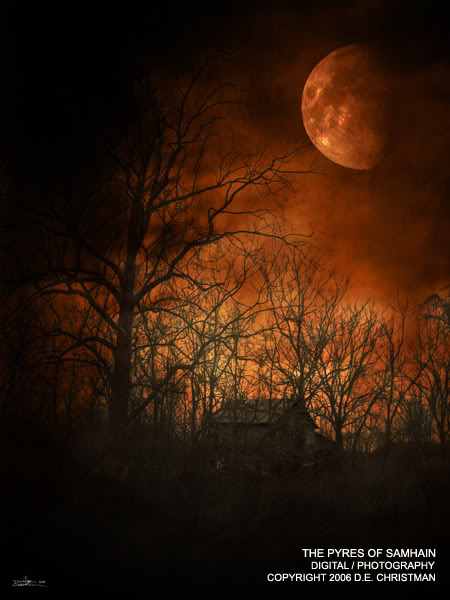
The birds have gone…

It is a melancholy time of year. Most of the fields are now lying still, shorn and with the stubbly remains jutting defiantly into the last of the summer sunshine. The house martins departed over the weekend; I had spent much of last week watching the elders teach the young ones how to glide and ride the air currents in preparation for their long trek to their winter homes. The sky is so silent and still without them, and there is a small space in my heart that is sad to have said goodbye to them. Good luck on your journey, little ones. May you be as safe as can be, and I hope to see you again next summer, when you herald in the start of the season of warmth and sunlight once again, alongside the calls of the cuckoo.

The full moon makes sleep difficult; dreams are seemingly random and exhausting, and will only have meaning when the actual events happen. My skills in divination and the sight are through dreams more than anything, but right now I’m so tired that I’ll be lucky to remember anything upon waking. It’s only in the actual doing or being somewhere that I’ll remember that I dreamt it, like on Saturday when I signed a new contract, and remembered writing an email with a query regarding it. In the dream, I had no idea who I was writing to or why; now it all makes perfect sense.

It is a time when we are seeing the fruits of our labour. But it is also a time when we cannot yet rest or lay down our tools, for there is still much to be done. There are many other harvests that await. I have had a good crop of raspberries this summer, and another one on the way. The first apple harvest was abundant, and the second looks to be even better from my three little trees. I have just released my seventh book, with another written and in production, and a whole new one to work on. Druid College’s next Year 1 session begins in October, but we have our first session of our Year 3 apprentices beforehand to journey with on pilgrimage to Glastonbury in September. There is still much to be done.

The leaves are beginning to change, and a soft sadness tinged with relief lies within my breast. It feels like I’ve cried a long time, and am releasing that juddery sigh that often follows a good sob. New things await, but the old ones are being put to bed first. Everything in its own time. Nature does not hurry, and yet everything gets done.

So this evening I will be honouring the full moon and the Lammastide, with ritual in the company of a couple of lovely ladies. As the combine harvesters grumble relentlessly in the background, we shall sing to the moon, and share in the bounty that we have received with the spirits of place, the ancestors and the gods. Bread that I will bake this afternoon will be our offering, as well as words and vows of the work to come.

The times of sadness and stillness are required, just as the times of light and laughter. For we cannot have one without the other. They are not opposites, but simply on different places in the spectrum of human emotion. We ride the currents in keeping with the tides and seasons, and work towards integration and harmony.

May we be the awen.
6

If you’ve enjoyed reading this blog post, or any others on this site, please consider contributing towards the future of Down the Forest Path with a £10 donation for a year’s support of the work. You can donate by clicking HERE.
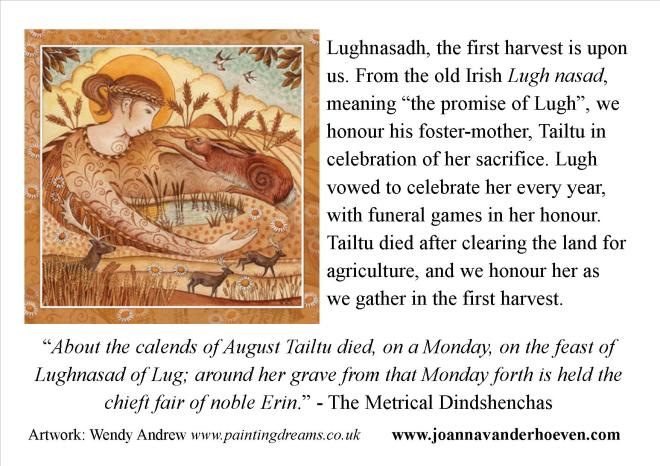
Blessings of the First Harvest

As Lugh pledged to honour his foster-mother, Tailtu with games in her honour every year, what pledge will you make to the land? Let this vow strengthen your resolve through the cycles of the seasons. Lammas/Lughnasadh blessings to you all. x

Lughnasadh

Reblog: Lughnasadh and the State of Grace

Here is a reblog of my post on SageWoman’s channel at Pagan Square. Blessings of the first harvest to you all! (To see the full original post, click HERE.)

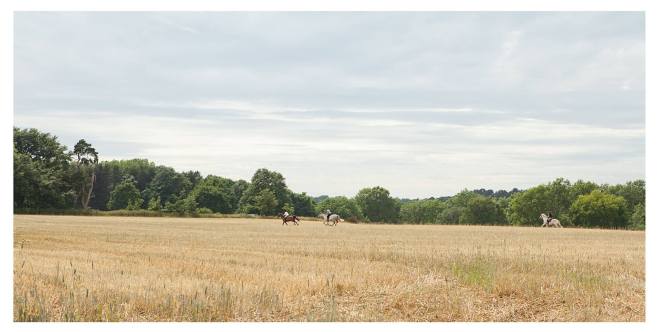
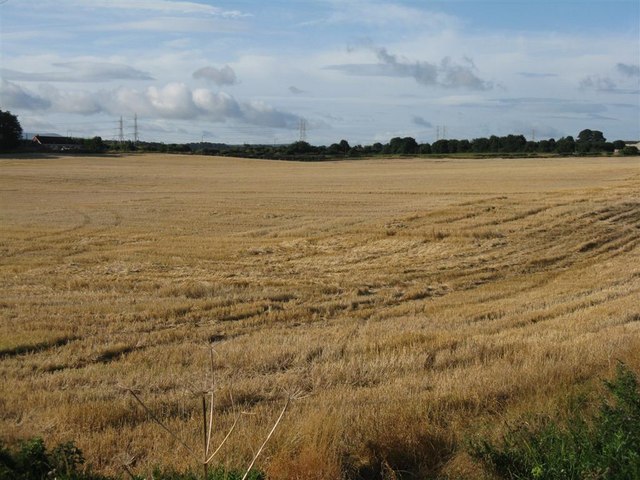
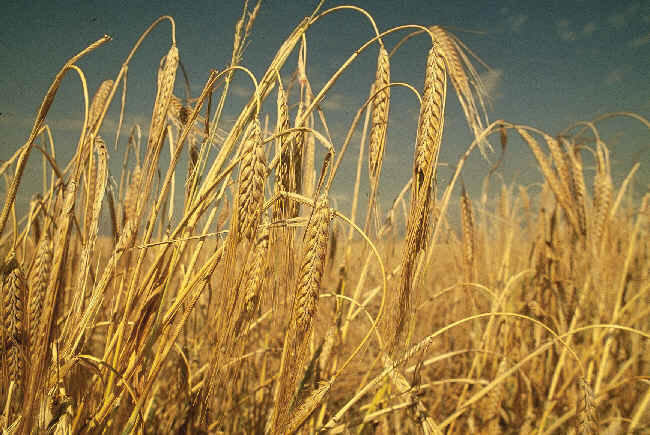
_MG_9378 Lughnasadh is upon us, and the farmers are anxiously looking to the skies for a few clear hours when they can harvest their crops of wheat in my area. It has been a hot, dry summer, and of course, just when the harvest is due to come in we get changeable weather with rain showers every day; not ideal when you need to gather in a crop like wheat totally dry, or else it will rot. So just like our ancestors, we look up and hope and pray for some dry weather, and for the farmers, that they’ve rented the combine harvesters on the best day for it, and not when it’s going to dump it down halfway through their work.
Things are unpredictable in life. It’s just something that we have to accept. With a little grace, we can face the problems and triumphs, the highs and the lows with equanimity. Grace is a word that is little used today, but one which I think is important, and one that I’ve been trying to live each and every day.

It’s not easy, to live with grace. Acceptance does not come easily when things don’t go your way, or when people don’t behave the way you think they should, or the weather turns unexpectedly, or you suddenly find out that you need a root canal, but hey, that’s a good thing, at least they can save the tooth and not have to extract it. (Yes, I’m undergoing quite a bit of dentistry this past month, having cracked a tooth at Gatwick airport on my way to a three-week visit to my family in Canada last month. Not ideal.)

So how do we deal with life’s upsets with grace? By being open to change, to what comes, and not to dwell too much on how we think things should be. Because however much we think we know what’s best, or that we have total control over a situation, the simple fact is that we just don’t; we are viewing life through a single lens of perception, and we have absolutely no control over external influences in our lives. Living as we do alongside myriad other beings, we have some control (I would hope) over ourselves and our reactions and intentions, but very little when it comes to others. And this is a good thing.

Grace is all about working with the concept of freedom and acceptance.

People are free to do what they will, so long as they are not breaking laws or harming others. Live and let live. We as individuals fall into that category, and when we can allow others to be themselves, whether they’re rude and obnoxious, lovely and charming, or everything in between then we are living with grace. We focus on our own self, but without becoming self-obsessed. We are awake and aware to all aspects of ourselves, from the light and the shadow, from the conscious and what lies hidden beneath layers and layers of past experience and trauma.

Grace is often equated with beauty and elegance of form, and when we decide to allow life to happen as it happens, we find that we actually do move through it with less struggle, with less flailing. That doesn’t mean that we will suffer any less, but that we deal with the suffering and the struggle in a manner that is calm, peaceful and accepting. This isn’t easy to do in the slightest. It takes a lot of practice, and is not something that happens overnight. Grace is also synonymous with favour, and we may just find that when we are more accepting of what life throws our way, our luck may change, or at least our perception of it, and we are able to move through the currents with more ease. We are going with the flow of the tide, not against it.

So this harvest season, I am going to remind myself (often) of that single word: grace. When I am flailing, when I am struggling, when I am angry or upset, when I am in the dentist’s chair again next week, I am going to stop, take a moment, see the beauty, feel the pain, and accept. And then I am going to work if I can to change it, and if I can’t then so be it. Just as the wheat in the field awaits a dry, sunny day for harvesting, so too can I work with patience and the tides and times of life, for nature is not in any hurry, and yet all things get done.

Reblog: Lammas, Don’t Fear the Reaper

This is a reblog from my channel at SageWoman for Witches and Pagans at PaganSquare. To read the full article, click HERE.

The grain harvest is being collected in the fields around my home. The usually still and silent evening air is filled with the sound of combine harvesters, accentuated every now and then with the hoot of a tawny owl. Lammas is upon us.

Standing on a footpath that divides two large fields, one side filled with barley just reaped, the other with wheat standing pale golden in the sun, I raise my hands to the blue sky and give my thanks for all that nourishes us. I walk a ways into the cut field, the harsh stubs of barley amid the dry, sandy earth and place my hands upon the soil. Thank you for your blessing, may the land be nourished even as it nourishes us. Hail and thanks be to the goddess. I then move to stand on the edge of the wheat field, allowing its song of potential to flow through me. I brush the bent heads filled with seed and say another prayer of thanks.

This is a wonderful time of year, when the songs of the ancestors flow through the rural heartlands of Britain. Though the way we harvest is different, still there is that cycle of growth, of planting and harvesting. After the long hot days of midsummer, the lengthening evenings are welcome, bringing cooler air. Though the dog days may still lie ahead of us, there is something different in the air at this time of year. The scents have changed, the leaves are dark green and heavy, the foliage beginning to choke out and fall back.

I love this time of year. The birds have fledged, and the muntjac deer are at the end of their mating season. The stag barks occasionally for his hind on the other side of the hedge, and this year’s badger family come to visit every night to eat the fallen birdseed from our table and the peanuts that we put out. The sidhe are active at their special spots, over by the burial mound as they are at each of the fire festivals. It is a time of celebration, though there is still much work to be done…

Continue to the full article HERE

Lammas/Lughnasadh blessings!

Blessings of the harvest to you all. x

lammas wendy andrews

Painting by Wendy Andrews: http://www.paintingdreams.co.uk

Finding balance

Finding your balance point is a major part of this season, the season of harvest. We learn of need and abundance, of just enough and not quite enough. We learn what needs to be worked on still, and what we can sit back and enjoy. Having a birthday that falls right in the middle of the harvest season is a great reminder for me to stop, to take stock, in my own personal life. Too often for me the focus is outward, and rightly so in my opinion, working on deep integration and relationship. Too often too many spend their entire lives looking inward, and missing the entire outer experience of being in the world. The curse of self-awareness is a blinkered view of the world because the focus is centred on the self. When the self becomes “we”, however, our views can change rapidly. But right here, right now, I am about to celebrate another year’s passing in my life, camping with my husband, taking our canoe out and enjoying some time together away from all the demands of everyday life. With the equinox approaching, the crops still being taken in, the apples in my garden ripening, I see how everything in nature is working in a balance, where if something is out of kilter, it will more than likely fail.

Taking this time is essential for my own personal balance. Teetering on the tipping point of a situation can be gloriously inspiring, invigorating and exciting, but so can finding that harmony within. So many people feel alive only when they are tipped one way or another, but for me balancing in the middle of that teeter-totter was always the best place to be on the playground. Literally. I loved finding my balance, seeing the ends of the teeter-totter stretched out to either side, knowing that I could keep them both off the ground and in balance through finding my own centre. I didn’t need the drama of a great high or a low bump while sitting on the edge of that playground attraction – that middle place was the most exhilarating, where I found I used the most skill to find and maintain my own balance to affect the whole.

I’ve always had good balance physically. Learning to ski and ice skate from a very early age, riding bikes all summer long, I knew how to find and work with that sweet spot to my own advantage. With ice-skating in particular I loved spinning, finding that spot on the blade of my skate that allowed me to spin at speed in one place, ignoring the dizziness and simply being in the moment of perfect balance, often one leg lifted, creating beautiful shapes and feeling physically present and wonderful in that moment.

Spiritually, my work in Buddhism has helped me to understand the wisdom of the Middle Way. This is not to say that my life isn’t full of spiritual or emotional ups and downs, but instead the focus is to incorporate the teachings of harmony and balance into everyday life.

I simply don’t understand the need to create huge dramas when life is so utterly wonderful. I’m not saying my life is wonderful, for again there are equal amounts of pleasure and pain, work and enjoyment, life and death. But being in that moment of moving beyond opens me to the wonder that is so utterly inspiring to Druids the world over. It is that exquisite taste of awen, of inspiration, where souls meet and worlds are broken open into new and deeper meanings than ever imagined. That wonder is not just found in great highs and at the turning point of the lowest lows, but also in perfect balance.

This harvest season, as we approach the equinox, I’ll be working further with balance, opening my eyes to see it in the world around me, to allow it to inspire me further in my work. In the heathland and forest of my home, where the ecosystem maintains itself without human intervention. In the cycles of water and wind that roam over our blue planet. In the dance of stars and moons that hurtle through time and space. And at the centre of it all is balance, even as the world spins without, here, at the very centre is a stillness that is so exquisite there simply aren’t even words to describe it.

Sacrifice

barley stubbleSacrifice – it’s one of those “old” words, like honour and duty. Many who have read Roman accounts of the Druids associate the word, sacrifice, with the priest caste of the Celtic people at that particular time. However, the word goes even further back into the beginnings of time for the human animal, when the importance of relationship with nature was everything, when we knew that to disconnect ourselves from the natural world meant death. Today, we must remember this, remember each and every day how much we are a part of the world, how much our everyday actions count, no matter how small. Each day is also an opportunity to give thanks for the blessings that we have. At Lammas, however, just giving thanks doesn’t seem quite enough. When the first crop is harvested, and the land lies stark and naked, shaved and shorn from under the combine harvester, giving thanks and saying words over the field doesn’t feel adequate. This, for me, is where sacrifice comes into play.

It’s hard as the line keeps shifting between giving thanks and the notion of sacrifice. What might be an offering to one person might be seen as a sacrifice to another. I can only speak from my own personal viewpoint, as I may value things differently from my neighbours, my family, and members of my pagan community. So, what is the difference between an offering and a sacrifice?

For me, sacrifice is something of significant value. This is not necessarily a monetary value, but could be something that is cherished, prized, something that is utterly loved and which has a representative value of the threads of connection we hold with the gods, the ancestors, the spirits of place. What is it that I have which I value? What am I willing to give back in return for the flow of awen, that spark where soul touches soul and is inspired? What am I willing to do to achieve that?

When the barley in the field by my house is cut, the energy of the land drastically changes. Between the homes and the heathland there are two arable fields, one which was harvested in the spring for green barley, and one which still has the golden, bowed stalks waiting to be harvested. Acknowledging the change isn’t enough, for when we hear the songs of the ancestors, I feel how important these crops were for them, how important their relationship with the land meant their survival and success. In a field of growing barley, there is potential, a shimmering energy waiting to be harvested. When that field is cut, the potential can be scattered if the land is not honoured. The ancestors knew this, but we have forgotten. Modern farming depletes the soil of essential nutrients that must be replaced, often by less-than-natural means. The barley is cut, and the field then stands, barren and forgotten for weeks, until the farmer and his tractor are ready to plough in the winter or spring crops.

The land isn’t respected, isn’t acknowledged anymore. As an animist, I find this appalling. When the land has been used, has given us so much in a beautiful field of barley, and we don’t even give thanks, much less sacrifice then there is dishonour. As with any relationship, if one side continually gives and gives, and the other continually takes and takes, the balance will shift, the relationship will crumble and great suffering will ensue.

What can I give that will honour the lives that this crop will feed, that will honour the land that grew it, that will honour the ancestors that worked it, that will honour the spirits of place who live there? What will be a significant gift for all we have received?

The sacrifice will change year upon year. What matters most is the importance of the sacrifice to me personally.

Offerings represent a more daily interaction, little gifts and niceties that you would present to any friend that you meet: a cup of tea, a biscuit, some of the fresh-baked bread you just made, or your home-brew mead. Finding out what the local spirits of place would like is as polite as asking your guest how she would like her tea: with or without milk, honey or sugar? When it comes to sacrifice, however, the shift of focus changes to become more introverted rather than extroverted.

I’ve previously in earlier articles described sacrifice as something that is not only of great value, but also as something that can help you “get to the next level”, so to speak. No, we’re not playing at Druids on World of Warcraft, but we are seeking to deepen our relationship with the land. Sacrifice is key in this regard, helping us to go deeper, to give more of ourselves in order to understand more of the land.

Many within the Pagan traditions see the Sun King as offering himself as sacrifice at this time of year, to be cut down as the grain is cut, to be reborn at Yule. Yet are we comfortable allowing the Sun King to do this each and every year, or should we also take our part in the sacrifice, participating rather than simply watching the cycles of life unfold?

And so I will spend the next few weeks walking the land, finding out what I can give, what I can do to deepen my relationship with it, to be an active contributor instead of a passive spectator. Some aspect of my self must be willing to die alongside John Barleycorn in order to understand the cycles of nature. Some sacrifice must be made.

Working with the Gods of Time

barleyDruidry is hard work. If you want to establish a deep and meaningful relationship with the land, the gods and the ancestors you have to work at it, each and every day, really walking the talk and living your religious or spiritual path. Like most things in life, you get out what you put in.

At this time of year, things can seem crazy busy, with all the plans that we dreamt up over the winter months and put into action in the spring finally coming to fruition. Working as a Druid priest, not only do I have my own personal plans to attend to, but also those of the community. July and August are heavy months in my diary, filled with handfastings and weddings mostly. In the later summer months we are inspired to a deep commitment, not only in our work but in our love lives as well. If we want our harvest to be successful, we have to work at it.

The warm months encourage us outside, even though we may have a pile of work waiting on our desk. It’s important to experience these months physically, as well as on a spiritual level, especially here in the UK where sometimes the summer can seem so short. It makes greater demands on our time, and I find that I do not get nearly as much writing done from June to October as I would like, with other duties and the hot sunshine or warm rain calling me outdoors. It’s equally important to be outside in all kinds of weather, but perhaps it is because I was born in August that this month really appeals to me, with more thunderstorms, hot sunshine, refreshing rains and muggy weather. Though autumn is my favourite season, it can often be too short, whereas summer (hopefully) lingers on in the heat of the stones and the land, the smell of the rain, the flowers and the scent of mown grass.

So even though my work goes a bit nuts at this time of year, I take time out each day to remind myself of that commitment that I made with the land. To work with her, to honour her, to be with her, to learn from her. I hear the songs of the ancestors flowing through the land. My lady Brighid sings deep within my soul, every day.

Even though I had only a small window of opportunity yesterday to get out there, still I went to the field opposite my house to be with the barley before the harvest, listening to the brilliant rustle of the drying stalks under the sun, hearing the songs of the land and the troubles with the bluebell woodland beyond. Saying my prayers and blessings over the crop and the land, connecting with the earth and her nourishment, giving of myself in return was a necessary part of the day. Like being in any long-term relationship, it requires constant presence and not taking anything for granted. This was really brought home to me when I studied with Bobcat many years ago in the beautiful setting of the Cotswolds, when we discussed with the other students the gods of time. Working with time is a great learning curve, coming to learn how to relate to the gods of time, working with deep integrity and honesty.

So you will please excuse me if there are fewer posts between now and the end of August – in the few moments of brief respite from other duties and obligations, I’m probably out in the fields or forest, heathland or seashore, spending time with the ancestors, honouring the gods of time and reminding myself to be present.

Blessings of the harvest!

Reblog: Harvest-Time

Here is my latest post for SageWoman Magazine’s blog channel at Witches and Pagans…

Every day at this time of year, either morning or evening, I do some gardening, keeping back the riotous growth that excels in this season. If I didn’t, many plants would simply take over the garden, crowding out some other favourite plants. Though these crowders may be near the end of their cycle, in their death they will still smother those that have great potential, as their time is arriving. It’s a hard time of year to keep on top of things, as the sun is so hot in our south-facing garden, and time is limited to mornings and evenings when we won’t burn to a crisp or keel over from heat exhaustion. Jack in the Green is running riot, uncaring, reaching for the sun, drinking in the rain.

Yet if I want my irises and lilies to survive, I must release them from the choking hold of ground creepers/covers that threatens their existence. I must carefully weed out and try to keep under control those plants whose vigorous growth would otherwise overwhelm others. In this, I feel a kinship to my ancestors, not only my recent ancestors whose work with plants runs in my blood, but also ancestors of this land who depended upon agriculture to survive. Both physically and metaphorically, this is the ideal time to sort the wheat from the chaff.

Even as I hear the tractors and combine harvesters rumbling in the fields on the other side of the street, so too do I look both within and without to see what needs harvesting, and if the harvest has been good. Getting out in the garden brings it all home, showing that if you take on the responsibility of growing things, of nourishing them, then you must do your job well in order for your harvest to be good. Walking out in the fields after supper, running my hands over the tops of the wheat and barley that grow around here, I make my prayers for the harvest to go well, for the people to be nourished and for the land to be treated well. The time nears for when we give back in great gratitude as Lammas, Lughnasadh, Harvest-time arrives…

To read the full article, click HERE.

Samhain Musings…

Samhain, the time when the veils between the worlds are thin… I’ve been wondering about this term of phrase lately.  Why, on certain dates of the year, should the veil be thinner than at other times? Is there even such a thing as a veil between the worlds?

More and more I lean towards the negative – that there is indeed no veil, that the dead and the living walk side by side.  That there is no Otherworld, that the Otherworld and this world are all the same – it’s only our perception of it that makes it “other”.  We like to separate things, we human beings, to classify and put them in a place where we can understand them from a stand-offish perspective.  I would posit that, looking at nature, nothing is that simple, or can be tied so neatly to an idea.

Taking inspiration from the natural world around us, we see the living and the dead working together all of the time, whether it is autumn, winter, spring or summer.  Things are dying around us constantly – there is no specific season for it. Animals die, plants die, cells die – it does not wait for autumn. I admit, in the Fall we see the foliage around us withdrawing into itself, the leaves falling, the grasses returning to their roots, energy moving in different directions, from out into the sunlight to deep within the earth. This is not a death, however it may appear – simply a reversal of direction.

Like the double helix, energy is always moving, and never in one direction only. When everything appears to be dying here in the Northern Hemisphere, it is beginning to come to life in the Southern Hemisphere. The tides and times of life follow no one set of rules.

I may die in the autumn, I may die in the spring. Whenever I do die, my body will in turn nourish the soil, plants, fungi, animals and legion of other living beings on this planet in that great symbiosis of simply being. It does not rely on a season.  I do not cease to be, either. I simply cease to be in some form or other – my body will take on a new form. My soul – I believe that too will take on a new form, if nature has taught me anything.

In our agricultural year and society here in the Northern Hemisphere, we are at the end of our harvest season, and in that time we are able to take a break as the final crops have come in.  But we are still making our preparations for winter. Is there really a time to rest, to relax, before the snows come?  For some animals this is the busiest season, the squirrels squirreling away their stores, for example.  I’m sure our ancestors would have been busy all throughout the year, just trying to stay alive.

I’ve often thought of autumn as a time of rest, of rejuvenation.  I see now that perhaps “rest” wasn’t quite right.  Autumn is more a time of reflection, of going through what we have learned through the year, and through all the years of our lives.  It is a time to not stop, per se, but to take stock.

Along the way, our ancestors, who are with us always, can help us, guide us throughout our lives.  Having a special time of year set aside to acknowledge them is a good thing, but I would posit that we should honour where we have come from, our stories and our heritage, all that brought us to this point in time each and every day.  It is not a one-off thing. Like the holiday of Thanksgiving, I really enjoy and appreciate the sentiment, but carry that same sentiment with me throughout the year.

All that being said, this IS my favourite time of the year. I love the colours, the smells, the feeling in the air of the approaching winter, the stories of summer lingering upon our lips in reflection and contemplation.

Side by side with the ancestors, I honour the season, the tides and times of life, death, and rebirth.