The Novice

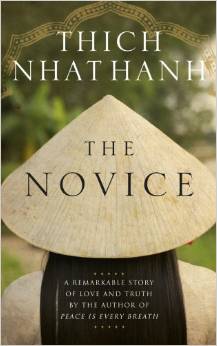
noviceWhilst on holiday in Brittany the past week (blog and photos to come!) I read Zen monk Thich Nhat Hanh’s novel, The Novice. It is his first novel, that tells the story of a young woman who has become a legend in Vietnam for paving the way for women to be nuns in the Buddhist tradition. It’s a short book, eloquently written and filled with wisdom throughout.

Kinh Tam is a beautiful young woman who has always felt a calling for deep learning through Buddhist enlightenment. As there were no temples for nuns at the time, she felt that her only option was to do what women did back then – marry and have children. However, her marriage failed as her in-laws falsely accused her of trying to kill her husband one night. Kinh Tam goes back home then, cuts off her hair and disguises herself as a boy, wandering for five days until she comes to a temple where she asks to be taken in as a novice.

She shows an aptitude unlike any other monk in her devotion to the Zen Buddhist teachings and carrying them out. She lives the perfections of generosity, mindfulness, magnanimity, diligence, patience and insight. She has already been through much, after the false accusations of attempted murder, and yet she holds true to her path, holding no malice to those who have wronged her through their own false perceptions.

A young noblewoman who visits the temple falls in love with the young “boy” monk, seeing in him such beauty that only an open-heart can radiate. Kinh Tam avoids her, with as much compassion as possible, as her secret cannot be found out else she faces expulsion. After Kinh Tam turns down the noblewoman’s request for a private meeting, the noblewoman woman becomes enraged, filled with her own anger and wounded pride, accusing the young novice of impregnating her when it was really a servant boy from her household whom she took to bed in anger and despair of not being able to sway the young novice from his devoted path.

Kinh Tam faces the dilemma of choice: tell everyone that it’s not possible, as she is a woman, or face beatings for her “transgressions”. Her love for her path is so strong that it sees her through the beatings, and yet again she never holds any malice towards the young woman (Mau), those who believe her false accusations and even those who beat her. She knows it is only their wrong perception of her that makes them act as they do, and the strength of loving kindness overcomes all the pain she endures.

Kinh Tam goes through further hardships, yet always with the endurance of a loving heart and the deep well of forgiveness. I won’t tell you the ending, but I was in tears as I read it – it was just so beautiful.

Kinh Tam’s story is one that can help anyone going through a rough time. It doesn’t matter what it is that you are enduring, whether it is being shot at, beaten, false accusations or someone trying to undermine you and your work – the open heart of compassion and seeing the unity of all things is stronger than any of these. Anyone can relate to Kinh Tam’s story. As a woman, I felt a deep bond with her struggles and an empathy for her trials and tribulations. I felt deeply the tug of sadness as one woman falsely accuses another (albeit unknowingly regarding the disguised gender, yet with an intended malice in any event). As a practitioner of Zen I found deep wisdom in the teachings that lay like little stars filled with light across the pages, twinkling with their insight into living a life of less suffering. We all suffer, for various reasons, but we can lessen that suffering through the open heart of compassion. Those who try to hurt us, physically, emotionally, intellectually, who undermine our person and our work, who tell lies and allow their pride, anger and other emotions to overwhelm their reason and the ability to see clearly the heart of the matter – these are things we all go through at some point in our lives. Whether it is through war, office/work politics or family issues, the cause is the same: wrong perceptions. Because they have a wrong perception of us, they act out, lash out, are ruled by the monkeys riding on their backs.

Yet we don’t have retaliate like for like. We can see their suffering, and still send them our love and compassion, even from afar. Because they perhaps have not seen that there is another option, they have no way out. Living through our actions, of opening our eyes to all possibilities and the reality of the present moment we can hopefully provide an example for a peaceful way of life that benefits the whole. We can forgive these misjudgements from others, as they are easily created. Through diligence we can work to dissolve these false perceptions within ourselves, through meditation, deep insight and the other teachings of Zen Buddhism.

I always doubted whether humans were truly capable of forgiveness. When explained through the words and story told by Thich Nhat Hanh, it makes so much more sense; it is so easy. There are three appendices to the story, one describing further the legend of Kinh Tam, the second describing the legacy of Kinh Tam by Sister Chan Khong of Plum Village monastery, and Thich Nhat Hanh’s own addendum about practicing love. These appendices are just as important as the story itself, for it shows “Engaged Buddhism” in action as Sister Chan Khong and Thich Nhat Hanh both relate how the practice of compassion helped them through the suffering of the Vietnam war, exile and more. We see first-hand how the Zen Buddhist precepts are put into practice, actually lived out in the lives of those who worked in the DMZ, offering wisdom and deep insight into how suffering is different for each individual and yet can be overcome when held in the arms of compassion.

In the UK, you can buy this wonderful little book from as little as £1.04 second-hand; do try to read it if you are at all interested in Zen Buddhism, mindfulness, compassion or loving kindness. If you feel you are suffering in any shape or form, this book might be able to help you find the way to transforming suffering into something that instead brings peace and harmony to your world, and thereby to the world at large.

May we be peace. x


Reblog: Meditation – The Gift of Transformation

My latest blog post for SageWoman 🙂

gundestrupMeditation is a huge part of my spiritual life. It is something that I try to do every single day, in various shapes and forms. I find that sitting meditation, or zazen is the best way for my self to refocus on what’s important, to stop the chattering ego and really get deep down to the issues at hand. So much clarity is gained from simply stopping, from allowing the silence to fill your soul. In that deep pool of quiet, in that dark heart of Cerridwen’s cauldron, lies transformation.

You have to be willing to do it, though. It’s difficult, as many of us don’t really like spending time alone, much less sitting still and “wasting time”. However, I would posit that this could very well be the best use of your time, realigning you to the present moment, grounding yourself in the reality of the here and now. We can get so carried away on our emotions, on our problems with the world, on our own sense of self that we become blinkered to the rest of existence. Life is constantly happening, all around us, and we hardly notice it. Sitting meditation is a great way to pay attention to it, to our selves, our bodies and our minds, to see how they work, to get in touch with them once again, thereby allowing us to get in touch with the rest of the world on a much clearer, positive level.

Like a deep pool, the waters may become disturbed, but if we stop the mud will eventually settle to the bottom, the clear water rising to the top to perfectly reflect the sky above. We can become as this pool, reflecting with clarity the present moment in all that we do, in all that we say and in all that we think. It’s not easy, but it’s well worth it.

To read more, click HERE

Silence, the Author and Freedom

This long bank holiday weekend just gone has been spent mostly listening. I’ve stopped talking, for the most part; I’ve stopped the mental chatter to gain clarity. My aid in this exercise was drawing, working with coloured pencils where the only thing that mattered was the lines, the colours, the paper. My self had fallen away, and I was better able to see clearly. Art is liberation. Art is freedom.

As a writer, sometimes it’s hard to just stop. I’m usually always writing, at least in my head. Like a musician who writes their own music, who is always composing, I am always putting into words what is influencing me, what the muses whisper. It’s hard to turn that off sometimes. Through meditation I am able for thirty minutes to an hour to switch it off. Days of mindfulness. Through trancing I am able to leave it behind. Dancing also does it – especially dancing with my professional dance troupe, where when we are improvising we have to listen so hard to each other’s bodies that our own selves don’t get in the way. But this weekend the awen came through drawing and colouring.

When we’re quiet, when we’re still, we’re able to hear the world around us. When we stop that mental chatter, when we stop telling and retelling ourselves the story of our selves then we can hear the stories of others. We can be influenced and learn from the stories of others. We learn that we are not always right. We learn that we are not always wrong. We learn that we are never the same person every morning that we wake up. We change, we grow, we recede, we die and do it all over again the next day. In this exercise we learn that it is okay to differ from the person you were yesterday, that your opinions and thoughts will change over time, else they become dogma.

But essentially we have to learn to switch off first, before we can get to that head space. We need to find the silence, the void, the empty cauldron. Only when we are empty can we be filled. Only when we’ve poured out all the contents can we refill it with what nourishes us. We can’t subsist on the same old same old each and every day. We have to let things go, we have to have new ideas, new inspiration. Living in the present moment is what this is all about. Stuck in the past, we are not open to new ideas. Lost in the future, those ideas will never come. Here and now. Perfect freedom.

Tomorrow I will be a different person. Today I am different from yesterday. I question who this person really is, and then I let the question go. It doesn’t really matter. What really matters is freedom.

Art as meditation

When I really want to be in the moment, when I really desire to let that sense of self slip away and enter into the present, in perfect freedom – I draw.  It’s a wonderful, meditative, creative process.  You stop thinking about the past. You stop thinking about the future. All that matters, for those precious hours, are the lines, the colours the shapes and the shading.  I am no longer there – I am in the drawing. I am in the sun and the wood of the pencils, I am in the rain and cloud of the paper.  There is a real connection, where the thinking self falls away and there is time to just “be”.  Mostly I use sitting meditation for this, but when I really need to go deeper, I draw. Yet, who is this person drawing, colouring?

No idea.

It just is. 🙂

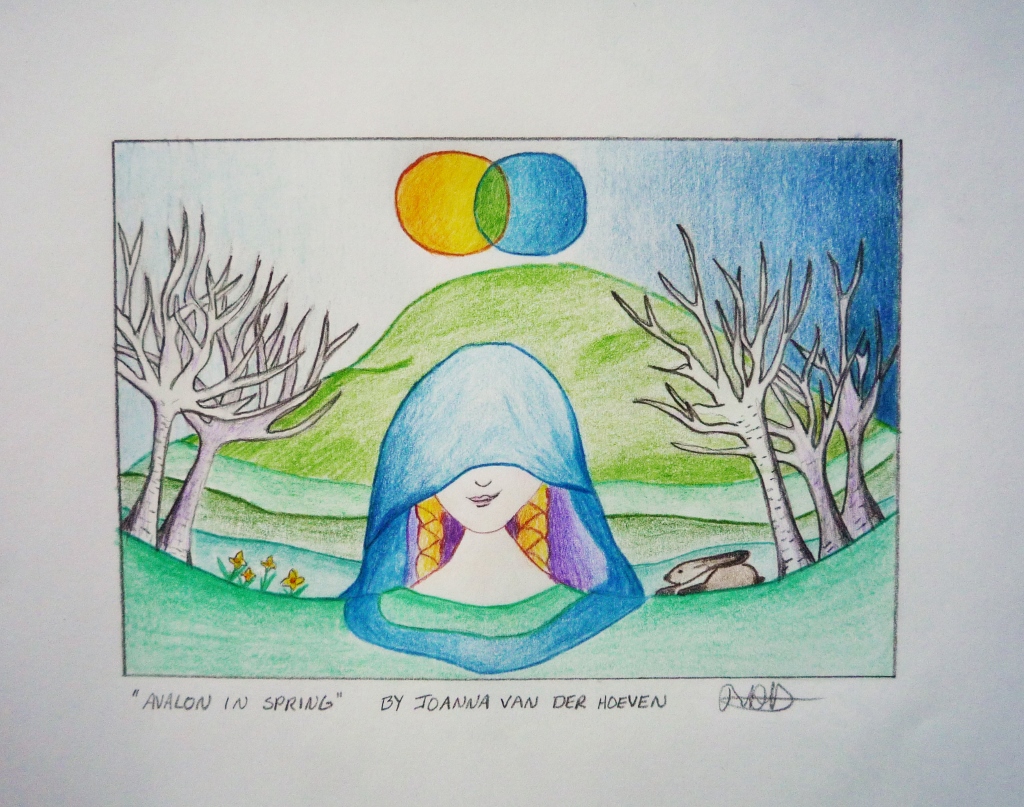
"Avalon in Spring" © Joanna van der Hoeven 2015

“Avalon in Spring” © Joanna van der Hoeven 2015

Kindness

lotus-flowerKindness – in our modern Western world, this beautiful concept has become twisted, where in a “dog eat dog” world it equates to weakness.  We have to push, we have to grasp at life, beat out the other guy in order to get the biggest piece of the pie.

The truth is, there is no pie.

Forget what the media tells you, forget what other people may tell you, that you need to be better than others, that to show your humanity you will soon slide down that corporate ladder. There is no ladder either.

There is no me. There is no you. All is illusion.

We are all made up of each other, there can be no separation. The tree and the coyote, the fox and the mountain, the sunlight and your brother are all made up of matter and energy. Matter and energy cannot be destroyed. They cannot come out of nothing. They only wait for the right conditions to manifest, for the right circumstances in which to come into a form that we recognise. They are always there. We have always been here. We have always been a part of this world, and a part of each other.

As humans, we have become very judgemental beings. We allow our emotions and thoughts to overide the reality of many situations. It’s far easier to judge the behaviour of others than to look deeply at our own selves. Each time we judge something, we tighten up in our hearts and in our bodies.  An open heart is one that does is not judgemental. If there is no separation, there is nothing to judge.

We need to notice when we are forming judgements of people and of situations.  We need to see when we are contricting our souls, when we are not open to what life really is in this present moment. We need to really begin to know what the word kindness means.  If we truly see that we are all related, why would we be unkind to anyone or anything?

Do not believe in the illusion. Immerse yourself deeply in the awen, the poetic inspiration that opens the door to seeing the interconnectedness of all things.  Open your heart to the wonder that is life all around you. Look into the eyes of your supposed enemy, and see their condition of being. Look into the circumstances that created their life, and see yourself reflected in that. You are them and they are you.

Being aware of each judgement we make, being aware of our thoughts about other people, being aware of what is coming out of our mouth makes such a  difference to our lives.  When we speak ill of someone, we are doing ill to ourselves. When we treat others unkindly, we are being unkind to our selves. Our hearts do not like to be constricted.  The flow of awen, the flow of circulation in our bodies, the flow of a river or the flow of life itself moves better when we are open.

Our practice in life is simply kindness.  It’s not hard, but we make it hard for ourselves.  We have to lose our self-centred ego, our sense of self-importance, our sense that the world should be as we desire it to be, and not as it already is.  When we have stepped away from that way of being and move into a way of being that is centred on others, be they bird or bee, refugee child or murderer, basking shark or polar bear, we see that the world is much greater than the small worlds we create around ourselves.  We are released from anger and depression, hate and worry. We see how our little selves can take over, and we realise what is much more important that our little selves.

Kindness.

Have no fear – we will not become doormats for people to abuse if we are kind. We will not lose our place in life if we are kind. We will be happier, more free and really living as opposed to simply doing things.  Kindness is not weakness – it is the truest form of being. It takes courage to be kind to someone who has hurt us. We do not have to allow them to continue hurting us, but we do not need to seek revenge, or punish them for their actions. We can let them see that they have hurt us, and we can try to understand them with an open heart free of judgement. We can look critically at a situation without judging it, without letting emotion or non-factual elements into the equation. We can release our self-centred perception to get a look at the bigger picture, and try to help others instead of focusing on our selves.

It’s not easy, changing the way you think and behave. We have to really pay attention. We have to be really aware of how we are, how we react, what we say and do in any given situation. We need to look deeply into our being, through practice and meditation, through every single act of our waking lives. We have to be willing to change out of our old habits and our old ways of self-centred thinking. We have to try, again and again, to step outside of our little selves.

When we do, the world opens up in wonder.

May your life be filled with wonder.


Solstice Practice

This post was originally  displayed on SageWoman’s channel, on my blog DruidHeart at Witches & Pagans.

Around the winter solstice is the time of year when many people get together, families and friends, to celebrate the holidays. If we are fortunate, we have some time off to be together, all together in one place – we may not have such an opportunity until the next solstice season rolls around. It can be a wonderful time of loving hugs, good conversation and deep, belly filled laughs. It can also be a trying time, when the bonds of friendship or family can become tested as we are all thrown together, our usual routines and habits left behind and we are faced with situations that are perhaps out of the norm.

My home is usually very quiet, filled with deep silence and stillness. In that silence I find my personal sanctuary, where peace is around every corner. I’m not a big fan of crowds or noise. However, at this time of year, I leave behind my little sanctuary and venture out into the world of lights and noise, family and friends when I’d really rather be sitting on my meditation cushion in the dark, with a candle and some incense.

It’s quite a shift to deal with. There is constant noise around me, different noise to that of my own home. It’s the noise of other people, which I am not accustomed to. Loud televisions, conversations, arguments, laughter – it’s a bit of an assault on my senses. Dealing with other people’s behaviour when there is no opportunity to “escape”. I have to confront everything that upsets me head on, or lose my temper, say something in anger as my “sanctuary” is thrown out the window.

Or is it? Yes, it’s difficult. Even as I type this blog, there are interruptions by people walking in and out of the room, asking me what I’m doing and other various questions. Nemetona, my goddess of sanctuary, has taught me that she is ever within me even as she is without – I take her with me wherever I go, and where I go she is always there.

In my Zen practice, this time of year provides me with innumerable ways to really practice. Life becomes difficult when things don’t go our way. When we realise this, and when we see that life is simply going ahead whether we like it or not, things can become easier. I have to deal with behaviour that I don’t like – this gives me a chance to practice and to try to understand that person’s behaviour. Often I can see myself reflected in it, or see that they are lost in their own suffering. I can try to ease that, when I remember to try to understand it. When it just pisses me off, I’m not trying to understand, and anger can erupt. When this occurs, I realise that I am not practicing very well, that I am not aware of my own reactions and behaviour. It’s a constant reminder to look deeply at myself, to see my patterns and to alter them in order to have peace and harmony both within and without. My goddess and my Zen practice help me with this understanding.

I have two choices when I find myself in difficult circumstances – get upset or not get upset. When people are shouting in the kitchen, or using words unkindly, or their behaviour is totally out of sync with creating harmony, I feel a tightness, a contraction within my body. Getting upset with this only tightens that contraction even further, making me miserable, or lashing out in anger in a misguided attempt to alleviate the tightness within. Seeing people mistreat each other, taking each other for granted – all of these things can cause contractions within. Passive/aggressive behaviour, words that are intented to provoke, noise levels louder than they need to be – all these things cause a contraction within my body. I want to loosen that contraction, but how?

Sitting and walking meditation practice, daily, really help me through this challenging time. By sitting, I am aware of my body, and aware of my thoughts. I see patterns in my behaviour. I see the self that is screaming for attention, for comfort, for sanctuary. I also then see the illusion of the separate self, and the inter-connectedness of all things. We are all dependent on everything else – the sunlight, the rain, our parents, the air, food. Without any of these things we could not exist. We are in them and they are in us.

When people’s behaviour challenges us, it helps to remind ourselves of this inter-connectedness. They are in me, and I am in them. It’s easy to do when out in the forest, becoming one with nature. But in challenging situations, with people we are often more directly faced with egos and personalities, with habits and the ego’s constant self-regard. When someone says something that upsets us, instead of thinking “I’m so upset that he said that” we can just realise that he said something. That’s the truth of the matter. Someone simply said something. We can act on what they said, of course, if they are saying inappropriate things. But we don’t have to act on it in anger, simply in awareness. Things happen. People behave the way they do. We can either get upset and lose our practice, or we can see the opportunities to become even more aware of our selves. In this awareness lies peace.

Slowly losing our separate sense of self, our egos begin to dissolve. We listen more. We apologise more. We find a deep well of peace to draw from, where we nourish that which brings peace and harmony. We don’t ignore our feelings, but we don’t feed those that create discord. We’ve no wish to stay in that contraction, no desire to create it in others.

Use this time of year as an opportunity to practice, to see how in nature we are all connected. See how the awen flows, how we are inspired by each other in each and every moment. Use difficult situations as the chance to become aware of your self and the world around you. It’s not easy, I’m being challenged constantly. It’s also a wonderful opportunity to fully immerse in the flow of awen, and not to be bashed against the rocks and caught in the swirls and eddies in the river of life. When life isn’t going the way that you would like it to, simply remember that. When we are angry or depressed, remember that it is because life isn’t going the way we want it to. Work with those feelings, work with others, and the practice will begin to show its rewards in less contraction, less anger and less upset. Peace begins to seep in, trickling through out insight, aware of the delicious drops of awen upon our tongue.

Isn’t that what this time of year is all about? Peace and love, awareness of the darkness and the returning light, the times and tides of life. May this time of year bring you many chances to practice, and may you find true joy in that practice.

Daily Meditation

Meditation (source unknown)Meditation is a very important part of my spiritual path. I remember when I was a student with Bobcat (Emma Restall Orr) back in 2007, and the amount of meditation that she suggested was the minimum we do each day – it had seemed like a lot at the time (I had only begun to delve in Zen meditation at this point). She said that we should spend more time at our altars, at least with two twenty minute sessions per day. At first it was hard to get into, but then became easier at it became part of my life, part of my daily routine.

I took the sessions to longer periods of time, two thirty minute sessions. It meant getting up earlier and finding time when I came home from work before cooking dinner, or if that wasn’t possible finding time in the evening whenever it could fit in. There was great value in spending time before my altar, sitting in silence and communing with the gods, the ancestors and the spirits of place. It is often said that prayer is talking, and meditation is listening.

Learning more and more about meditation in its various forms, I realised that it could be done anytime, anywhere really – it didn’t have to be in front of the altar in a seated position. Seated meditation is still, for me, the best form, as quieting our bodies and our minds allows us a chance to get beyond our talking selves and into a space of pure being, where in stillness we settle even as the dusk falls upon the land. Like mud being churned in a pond, if we allow it to settle things become clear.

However, meditation could be taken out of that space and into the wider world. If I was away from home, and had no altar, I could take a walk and do some walking meditation. Lying in a bath, I could meditate there, fully aware of the water against my skin, the sounds and scents. In essence, meditation is simply giving your full attention to something, whether it is a stillness of the mind, the working through of a problem, walking down the street or paying attention to your breath. Work can become meditation – washing the dishes is meditation for me, as are other house chores. They are much more pleasant that way.

Riding my bike, driving my car, paddling my canoe – all these can be meditation. With meditation, if you are doing mindfulness meditation, you are not “zoning out” so to speak – you are fully aware of everything, allowing the illusion of the self to fade away in order to hear the wider world around you. Stopping the incessant internal dialogue, we step beyond our selves, allowing us a break from our egos. The more we do this, the more we are not ruled by our egos, living a life that is not reactive but completely and fully active: lived with intention.

Meditation is not all about sitting on a cushion chanting Om. It is living with full awareness, using techniques such as seated meditation to help you begin your journey. I would always advise seated meditation first, and then take that into other aspects of your life. Pretty soon you will find that you are living with much more awareness, much more mindfully. It’s not difficult to do.

Often people say that with the raising of a family they do not have the time to meditate. What I would suggest is that raising your family becomes a meditation. Pay attention to cooking the meals, when your children are speaking, when you are reading them a bedtime story. Be fully present with them and you are meditating. Be aware of your actions and reactions and you are meditating. Be aware of your breathing and you are meditating. You can do it.

Explore the many ways you can meditate. From finding that still centre, explore journeying, guided meditation, trancework and so on, keeping coming back to the simpler forms and the still centre. It will be well worth it.

Self-Governance

mudraFar too often we allow our emotions to control us, dictating how we react and respond to situations and perhaps not in the best way. Some would argue that our emotions are what gets things done, however, something done with anger, for instance, may not always be the best way forward.

Discipline has become a bad word in our society. What we need to do is to reclaim this word, along with duty (which I will elaborate more on in another blog). We need to sit down with ourselves and take a good, long, hard look at our emotions and the roots of these emotions, finding out why we react to situations the way we do, discover underlying patterns and unravel the threads that are loose, or about to snap, reworking them into something more harmonious.

If we work on a situation based on an emotion of anger, hate or jealousy, then the outcome will most likely not be conducive to creating compassion and harmony with the world. Exploring the roots of these “negative” emotions, we will realise that the underlying thread is one of fear. Anger is another expression of fear. We become angry at our partner for not behaving in a manner that we think he should. In reality, we may be fearful of losing our partner, or of changing feelings for him, of not having enough control in our own lives, etc. Hate is based in fear, as we fear that which is the Other, separate from ourselves, the unknown. Jealousy is based on fear of change, our own insecurities and fears created out of past experiences.

What we need to do it to sit down with our feelings, to better understand them and in doing so, better understand our selves. In creating a safe space to sit with our feelings, we can engage with them openly and honestly. Creating a haven, a sanctuary in which to perform this task, we can explore the deepest corners of our minds. For me, the goddess Nemetona helps in this exercise.

She is a goddess of sanctuary and sacred space. She is present in my home and in my heart. Human beings have such a craving for safety and security, and within this goddess we can find that wherever we are. Not only does it help with emotional discipline and self-governance, but the two are intricately woven together, with self-governance creating that safety. Let me explain.

If we are ruled by the tides of our emotions, we will never settle, never find a place that we can call a sanctuary. We are subject to the peaks and valleys of an emotional long hard slog, and never really find a good breathing space in which to find some respite. If we do not have that sanctuary, we have no place to breathe and to truly connect with our emotions. And so an endless cycle of repetition is created.

Finding time every day to simply sit and breathe is a great way to begin. In a safe, comfortable place, whether indoors or out, we focus on our breath, in and out, breathing in the air that our ancestors breathed, that all living things breathe. We breathe out into the world, exhaling even as the trees exhale in the deepening twilight. Sharing this beautiful moment, this sacred breath, we come to an awareness of ourselves, of our self and how we currently feel in the world at this particular moment. We can call upon Nemetona to hold this space while we simply sit and breathe, honouring Her for all that She is with a return to the stillness at our core.

It’s not easy, taking the time to simply breathe, to meditate on our breath. Our minds will try every trick in the book to distract us from this present moment and this one little act. It is with discipline that we return to our breath again and again, each time we find ourselves wandering off mentally, or shifting our bums restlessly. You have to really want to find stillness – it doesn’t just happen. You have to be disciplined enough to achieve it. It won’t simply suddenly appear out of nowhere, nor can it be spoon-fed. Discipline will not allow any passivity. We must take full responsibility for our selves and for our world.

After breathing, we can take some time looking at our feelings and emotions without attaching to them. Again, we can ask Nemetona to help us, to hold the space and to guide us to explore our feelings without getting too involved, wrapped up once again the in the emotion. She won’t do it for us, however. We can look at our fear, at our anger, our impatience, our joy and our happiness. We can find the roots of these if we don’t let them take control over our minds, and therefore live in better awareness.

For not only do we have to be careful of the negative emotions ruling our behaviour, but we must also become aware of the more pleasant emotions. Far too often we experience a beautiful emotion, and crave that emotion for the rest of our lives. We will never be able to recreate that experience, for it has happened and exists only in the past. All we have is this present moment, which is always changing, moving forwards. If we try to regain the feeling of joy that we had on our wedding day every time we look at our loved one, we disregard other emotions and feelings that will eventually come and bite us on our backside. We may not notice the present moment. Focusing only on positive emotions doesn’t work – we are human and we have negative emotions too. Those who deny them, who suppress them, will face some pretty hard demons at some point in their life.

So we sit, and we meditate day after day, breathing and coming to an awareness of the present moment. We are able to take the time to look at our feelings and get to know them better, thereby allowing ourselves the opportunity to break from negative patterns of behaviour into more purposefully led lives. Discipline and self-governance are not things to be afraid of, nor are they something to shun as not in keeping with our freedom of expression. We are better able to express ourselves when we are not ruled by our emotions, allowing us to see what lies at the root of our souls, and thereby what lies in others’ souls as well.

This is the heart of compassion. When we understand ourselves we can better understand others, and see their fears, their patterns being created. We can work with them to help create new patterns, or we can simply walk away with respect and not have their patterns reflected in our own. We can only help those who want to be helped, and this includes our own self.

So please do take the time to sit, every day, and be in the present moment. Become aware of your breathing. Call upon Nemetona or any other god to help you find that peace, that space to explore your feelings, should you so desire. Look at your feelings and better understand them for what they are. In doing so, you will no longer be ruled by them, but instead be able to respond in the world with an awareness and mindfulness that can only create harmony. We come to understand each other in a very deep and meaningful way when we take what we learn of ourselves and relate that to others. In this, we can see that we are all related.

We are not restricting ourselves with self-governance, but allowing ourselves to open to the world with the eyes of compassion and hearts that are true.


For more about the goddess, Nemetona, please see my book, Dancing With Nemetona: A Druid’s Exploration of Sanctuary and Sacred Space

The Little Pagan Monastery Weekend

945363_640774059272919_940773617_nI don’t think any of us expected the deeply moving and transformative powers that awaited us on our weekend of the Little Pagan Monastery Retreat.

Held over the weekend of 11 – 13 April 2014, we stayed for two nights at Little St Michael’s, the Companions’ Retreat House for Chalice Well and Gardens. I knew that staying and sleeping in such a sacred spot would be the basis for challenging soul work. We had 24 hour access to the gardens, which was a special blessing after hours, when we had it all to ourselves. The chance to meditate, pray and create ritual at the Red Spring was truly unique. It opened our souls to the very special power of the Vale of Avalon, wherein the Goddess was present in everything.

We walked the spiral path up the Tor, feeling the strong energies push and pull us in every direction as the wind whipped around us. We climbed the Tor twice that weekend, the second time to watch the sunrise. The mists of Avalon swirled around us as we may our ascent in the hour before sunrise, and settled over the Somerset levels in thick, low banks of cloud that seemed to shine with their own inner light. The sun rose from behind the far hills, a red-orange disc of flame that filled the soul with such joy it felt like we would burst with it.

A private visit to the White Spring later that day resulted in a very moving ritual, wherein participants immersed themselves in the sacred waters of the large, dark mirror pool. Souls were awakened, energy bursting forth from the dark womb of the waters and new journeys began for everyone.

The days followed a routine of morning, noon and evening prayers and meditation. Together we created a group prayer to be recited at these times.

We give thanks for this day

May awen and peace flow our way

In honour of this land we pray

Some participants had powerful dreams, which was likely to happen in such a sacred power spot. The lodging itself was incredible – a 400 year old building filled with such peaceful energy. We had the meeting room as well, a beautiful open space filled with light where we gathered for discussions and group work. The kitchen and dining room were huge – how many kitchens have a vesica pisces symbol in the floor?

All in all, this weekend was one that I shall remember for the rest of my life. What we learned from this weekend we will take into our lives wherever we may be, and use the wisdom of Avalon to nourish, strengthen and sustain us in all that we do. We prayed that Avalon itself was blessed in return by our love and devotion to the sacred spirits, and we look forward to returning as soon as we can.

Everyday Spirituality

How can we incorporate more spirituality into our everyday lives? By truly living our religion, our spirituality, our calling.

A religion or spirituality cannot be read about, or simply thought about – it must be experienced. Like life, it is in the doing that counts.  Yes, we must think – carefully and deeply, about what we do as human beings. We must also act upon that thinking with full awareness, otherwise the opportunity to really live slips us by.

There are so many ways we can bring more awareness and more spirituality into our daily routines.  For instance, a prayer upon awakening is a brilliant way to start the day. Whether you believe in the gods, or spirits of place, the ancestors or nature itself or all of the above is a matter for your own path.  But coming to an awareness of them physically, emotionally – through living your meditations can make all the difference.  Saying a prayer, either aloud or in your head first thing in the morning can put you in the right frame of mind to be mindfully spiritual for the rest of the day.  You can pray in all kinds of ways – prayers of thanks for a new day, prayers of peace and love, prayers of love for those in need.  It matters not what type of prayer; what matters most is that it is done, in a way that best suits you to get into a spiritual frame of mind.

When we then get up and perform our ablutions, we are already aware of the sanctity of life.  We can say a prayer of thanks to the goddess of the waters, the local water source, to the oceans of the world as we run the tap to wash our face.  We create an awareness of the sanctity of water.

When we make our breakfast, or pour a cup of tea, we give thanks to gods, the spirits, to the earth for her abundance.  We take time to acknowledge where our food and drink comes from, and in that acknowledgement continue in a sacred manner.  We are establishing a strong relationship with the world around us by doing so.  A prayer that I like to use before I eat is simple:

“I give my thanks for the food I am about to eat. To the spirits of land, sea and sky, know that you are honoured”. 

I not only say the words, but honour the lands that the food and drink came from, the blessings of sunshine and rain, the people who worked to bring it food to my table.  Seeing the bigger picture allows me to truly be grateful for all that I have.

I can say a prayer or chant a charm when I am about to drive my car somewhere. Equally, I can say a prayer of thanks for hearing the blackbird’s song of Spring, or upon seeing the sunshine after months of rain.  Seeing the moon, or a particular constellation in the sky evokes spontaneous prayers within me, said either aloud or in my mind.  Prayers to the rising and setting sun, to the rising and setting moon are said, as well as prayers before bed. Even getting into the bathtub can become spiritual, with an honouring of clean, hot water, or a pentagram or symbol of awen drawn on the water’s surface to acknowledge the sacredness. Gardening, working with others, before or after meditation – these are all good times for a quick prayer as well.

Certain times of day might be better for those who like a stricter routine. A set time in the morning, noon, afternoon and evening might be more suitable for those who can follow a tighter regime. It is all about personal choice.

It is not only prayer, but short rituals we can use – a bow to the sun or moon, the lighting of a candle upon awakening, offering of incense or food at the end of each day.  Taking the time is what is most important – taking the time to connect with the spiritual world around you. We are never alone; we cannot be separate. We all live together on this planet side by side. Seeing this connection is pure awen.

Create songs for the sunrise, or write new chants for the full moon.  Sing something improvisational when you see the first blackthorn in flower, or raise your arms to honour the sun dog’s myriad colours in the sky.  The secular world may try to make us feel silly about doing so – but just try it. You may just find that your soul opens in response.

For more ideas on how to incorporate spirituality and devotion in your everyday life, I am holding a retreat weekend in the sacred Chalice Well Gardens in Glastonbury from 11 – 13 April.  This weekend, entitled The Little Pagan Monastery, will be a weekend filled with prayer, devotion and ritual, visits to sacred sites, as well as discussion, meditation, and personal time to incorporate ideas into your life.  For more information, see the Retreat Weekends on this site.