Living a Charmed Life

While the winds howl outside as winter lets us know that just because we have celebrated Imbolc, it doesn’t yet mean Spring is here, I have taken the last two weeks to rest in solitude. Staying home, organising and having a big clear-out, cleaning and simplifying has been a challenging fortnight. After the big family gatherings and the busy pace of the Yuletide holidays, Imbolc is often a quiet time for reflection. Being thrust into solitude after weeks spent with happy, noisy family members can be quite a shock to the system, but there are lessons to be learned with everything in life.

I give thanks that I have a home, a beautiful home that shelters me from the winter’s rages. As I lie in bed and hear the wind whipping around the house, the rain lashing against the window panes I remember that there are many who do not have this luxury, both human and non-human. As I walk outside in my garden, seeing the snowdrops and the crocus, the daffodils and the hellebore in flower I am reminded of the quiet, elegant beauty that exists even as the torrential storms pass overhead. The white serpent energy is slowly stirring in the ground beneath my feet, connecting all the areas of these sacred isles in a web of existence upon whose threads we can travel, if we dare. The hearth flame is utterly sacred, whether it is candles burning upon the mantlepiece or a cozy fire crackling in the evening. Being utterly awake to all these things reminds me of the constant stream of blessings and the sacredness of everything. There is nothing mundane in this world.

Chanting prayers to Brighid upon rising, giving thanks as the sun shines upon a new day, singing songs to the land as I dig into the earth of my garden, I know that there is no separation between what is sacred and what is not. I have come to realise that reciting little chants and prayers throughout the day helps to remind me of the sacredness of each and every moment, from preparing and eating food to cleaning the floors and windows, to laying myself down each night in the shelter of my home, my husband and cats with me. Inspired by the charms and chants, blessings and prayers found in works such as the Carmina Gadelica has led me to create my own, which is an incredibly fun thing to do in and of itself. But when applied to everyday life, singing my prayers throughout the day I really feel an ever deeper connection to the gods, the ancestors and the spirits of place. I can’t take them for granted anymore.

It brings a whole new meaning to living a charmed life.
Prayer for humanity

May there be peace in our hearts and minds, and towards all fellow beings.

Don’t allow this horrific act allow you to be drawn into the loss of your humanity or tolerance. That is the intended outcome. –Mark Ruffalo

Relationship and worship

Within any relationship there is a give and take, an exchange of energy that flows, spiralling in and out and around, up and down and out and through. Within some practices of paganism, and dependent upon the individual, there can be too much one-sidedness in their relationship with deity, the spirits of place, the ancestors, etc. Often this is the individual asking or petitioning other powers all the time, or simply taking without giving anything in return. Sometimes it is the other way around, where a devotee gives and gives but is reluctant to ask for anything in return. I tend to fall into this latter category all too often.

My life, my rituals, my energy is utterly devoted to the land, the gods and the ancestors. They are my inspiration, they are my connection to the awen. I do not know what I would do now without them. As such, I let them know that they are honoured with daily prayers and devotions, in ritual work and in secular work. Their inspiration sings deep within my soul, feeding my own creativity and actions.

In ritual especially, I find it difficult to ask for anything. I am aware that so many people in our modern society, and indeed within paganism itself, take and take without giving anything in return. I am paranoid that I will fall into that category; that I should I ask for anything I will be lumping myself in with those who take advantage of the beautiful energy of a place, or who bother their gods, or who work magic without forethought.

I know that it is silly, even ridiculous to think this sometimes. However, I think that it also keeps me in check, keeps my ego in check, and allows me to remember my place within the web. I am a part of the tapestry, not separate, and therefore everything that I do affects the whole. Yet I can be so afraid sometimes to move some threads, to take some energy that lies within their warp and weft that perhaps my own colour fades, or becomes too thin. Reciprocity works both ways.

I am uncomfortable asking for things in ritual or in prayer. Why should this be? In my relationship with my partner, I am not afraid to ask for the things I need, for I know that good communication is key to any relationship. I need to understand, to really see and feel this truth in my relationship to the land, the ancestors and the deities as well.

Perhaps it is because they are so much bigger than I am – I am but a drop in the ocean. Yet I am still part of the ocean, whose power lies in its collective drops of water, singing and blending with the songs of wind and rain and sun. I can call upon that power for I am that power, and that power is me. I am a leaf on a tree and the tree itself – there is no separation. My gods live within me as much as they exist without. Separation is nothing but illusion.

Perhaps this is what some pagans have an aversion to when they consider the term “worship”. Taken from the Old English weorthscipe, it is the value of something – what it is worth to the individual. Weorth – worth, and scipe – condition. Worship is not bowing and grovelling before the gods, as some may perceive it to be – it is judging the worth of something in order to be able to fully relate to it. I hold my gods, the land and the ancestors in high esteem and therefore they are worthy of my attention. What I need to realise is that perhaps I too am worthy of their attention.

I’m working on it…

Everyday Spirituality

How can we incorporate more spirituality into our everyday lives? By truly living our religion, our spirituality, our calling.

A religion or spirituality cannot be read about, or simply thought about – it must be experienced. Like life, it is in the doing that counts.  Yes, we must think – carefully and deeply, about what we do as human beings. We must also act upon that thinking with full awareness, otherwise the opportunity to really live slips us by.

There are so many ways we can bring more awareness and more spirituality into our daily routines.  For instance, a prayer upon awakening is a brilliant way to start the day. Whether you believe in the gods, or spirits of place, the ancestors or nature itself or all of the above is a matter for your own path.  But coming to an awareness of them physically, emotionally – through living your meditations can make all the difference.  Saying a prayer, either aloud or in your head first thing in the morning can put you in the right frame of mind to be mindfully spiritual for the rest of the day.  You can pray in all kinds of ways – prayers of thanks for a new day, prayers of peace and love, prayers of love for those in need.  It matters not what type of prayer; what matters most is that it is done, in a way that best suits you to get into a spiritual frame of mind.

When we then get up and perform our ablutions, we are already aware of the sanctity of life.  We can say a prayer of thanks to the goddess of the waters, the local water source, to the oceans of the world as we run the tap to wash our face.  We create an awareness of the sanctity of water.

When we make our breakfast, or pour a cup of tea, we give thanks to gods, the spirits, to the earth for her abundance.  We take time to acknowledge where our food and drink comes from, and in that acknowledgement continue in a sacred manner.  We are establishing a strong relationship with the world around us by doing so.  A prayer that I like to use before I eat is simple:

“I give my thanks for the food I am about to eat. To the spirits of land, sea and sky, know that you are honoured”. 

I not only say the words, but honour the lands that the food and drink came from, the blessings of sunshine and rain, the people who worked to bring it food to my table.  Seeing the bigger picture allows me to truly be grateful for all that I have.

I can say a prayer or chant a charm when I am about to drive my car somewhere. Equally, I can say a prayer of thanks for hearing the blackbird’s song of Spring, or upon seeing the sunshine after months of rain.  Seeing the moon, or a particular constellation in the sky evokes spontaneous prayers within me, said either aloud or in my mind.  Prayers to the rising and setting sun, to the rising and setting moon are said, as well as prayers before bed. Even getting into the bathtub can become spiritual, with an honouring of clean, hot water, or a pentagram or symbol of awen drawn on the water’s surface to acknowledge the sacredness. Gardening, working with others, before or after meditation – these are all good times for a quick prayer as well.

Certain times of day might be better for those who like a stricter routine. A set time in the morning, noon, afternoon and evening might be more suitable for those who can follow a tighter regime. It is all about personal choice.

It is not only prayer, but short rituals we can use – a bow to the sun or moon, the lighting of a candle upon awakening, offering of incense or food at the end of each day.  Taking the time is what is most important – taking the time to connect with the spiritual world around you. We are never alone; we cannot be separate. We all live together on this planet side by side. Seeing this connection is pure awen.

Create songs for the sunrise, or write new chants for the full moon.  Sing something improvisational when you see the first blackthorn in flower, or raise your arms to honour the sun dog’s myriad colours in the sky.  The secular world may try to make us feel silly about doing so – but just try it. You may just find that your soul opens in response.

For more ideas on how to incorporate spirituality and devotion in your everyday life, I am holding a retreat weekend in the sacred Chalice Well Gardens in Glastonbury from 11 – 13 April.  This weekend, entitled The Little Pagan Monastery, will be a weekend filled with prayer, devotion and ritual, visits to sacred sites, as well as discussion, meditation, and personal time to incorporate ideas into your life.  For more information, see the Retreat Weekends on this site.

Where Prayer and Meditation Meet…

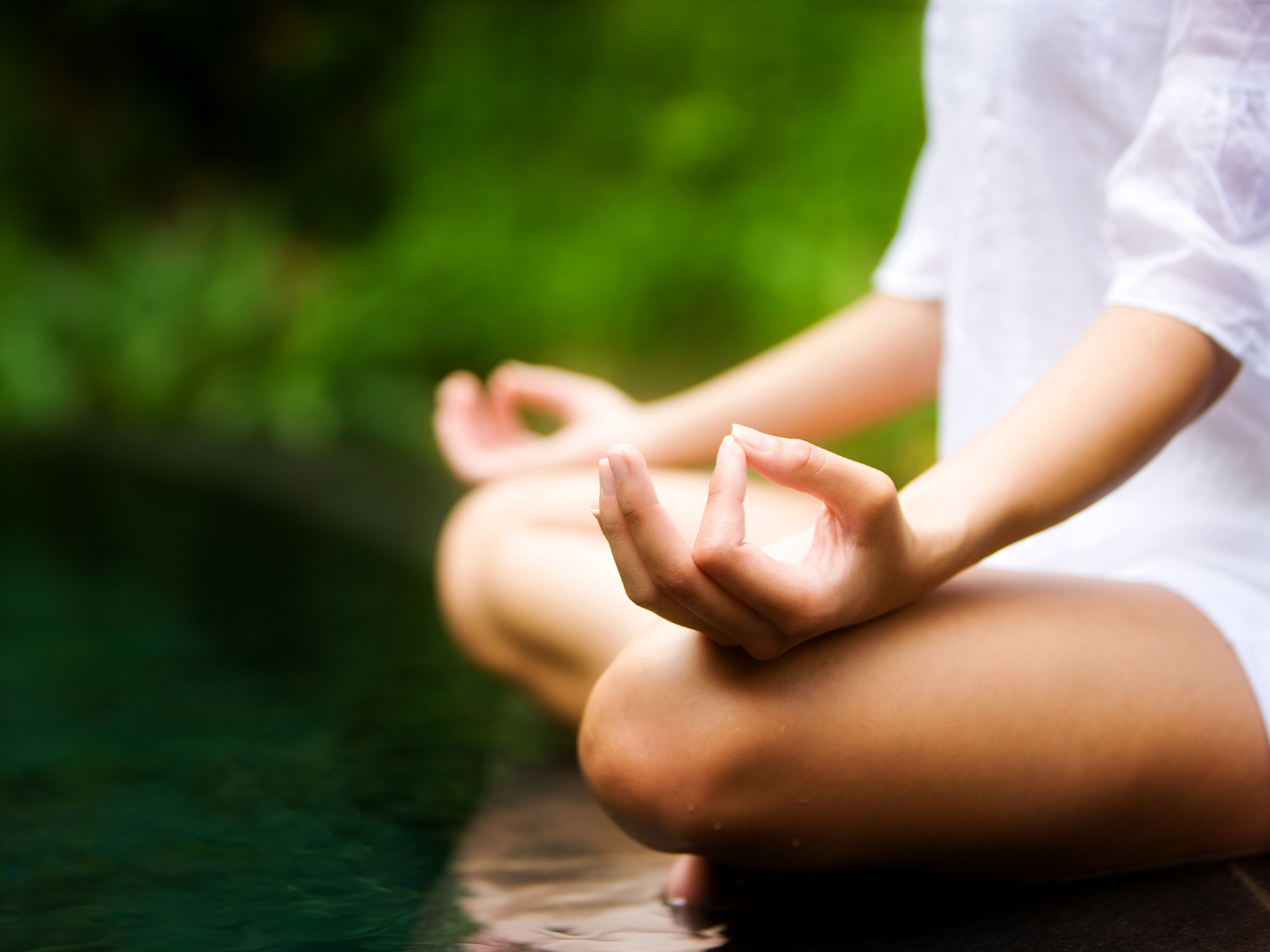
meditationMeditation and prayer are sometimes seen as the same thing. It depends on what tradition you belong to, what form of meditation you take, and how you define prayer.  For some in the Christian tradition, prayer is about talking to God, meditation is about listening to God.  Others see prayer as a form of magic, with words and thoughts sent out in the hopes of altering what seems to be a predetermined course. Others still see prayer as a moment to reflect on our lives, and develop gratitude and compassion.  All of these things can be applied to meditation as well.

We meditate in order to create harmony in our lives, to work through a problem, to live a more authentic life filled with awareness. There is a goal in mind, even in Zen meditation, where we come across the conundrum of the goalless goal. Seeing our lives for the wonder that they are, we also raise compassion and empathy for all things within our souls.  The lines between prayer and meditation often blur.

Where prayer and meditation meet is in that quiet stillness, like that moment at dusk, when the world is hushed and we can truly listen, not only with our ears but with our hearts. It is a moment of utter peace, in the here and now. It is life, plain and simple.

Druid Magic

magic circleDruids aren’t associated with magic in the same way that other Pagan traditions, such as Wicca or Witchcraft seem to be.  Yet I’ve found that in every spiritual path, there are elements of magic contained within that are often very similar in nature.

What is Druid magic? Do Druids cast spells? Have magical tools? Do we think of Gandalf, brandishing his staff and saying mightily “You Shall Not Pass!” or his mushroom-addled fellow, Radagast, who lives in the woods, talks to animals and, according to the latest Hobbit films, has a rabbit-powered all-terrain sleigh and brings hedgehogs back from the dead?

Of course it’s none of these things. It would be pretty cool if it were. But Druid magic, like all magic, is subtler than what we see on the screen or read in books.  There isn’t lightning shooting from fingertips or fire balls sparking from one’s eyes.  In fact, many modern Druids don’t use magic at all, or don’t call it magic.

So what is magic? It has often been quoted these days as manipulating the natural forces of energy within nature to provide a desired result.  This could have many interpretations.  Flicking a switch and having my living room lit up at night could fall within this category, but I’m being a bit facetious. It is also often said that magic should be the last recourse after having tried all mundane means of solving a problem.  So how do Druids use magic, if at all?

There is a growing trend of blending Wicca and Druidry, as in Philip Carr-Gomm’s new book, Druidcraft.  This is a lovely way of expressing the divide between two very similar paths; kind of bridging the gap that lies between.  I thought the book, especially the audio book, was brilliant, and yet I’m still not one to perform spells on a regular basis.  Why is that?

As stated previously, magic is often the last recourse to a situation.  If all other means have been tried, and I’m plum run out of ideas, then I might turn to magic. I might equally turn to prayer. Praying for some guidance, asking the gods, the spirits, the ancestors for a little advice when I’m stuck could be called a spell – it could also be called a prayer.  Lighting a candle and some incense, meditating and then seeking some clarification or inspiration from the ancestors could indeed look like the workings of a magical spell. I think perhaps the difference is in the intention – in both magic and prayer, we are hoping for a result, but the results are often different.

In prayer, asking for the gods to solve a problem for us rarely, if ever, works in my own experience.  I prefer to ask them for inspiration on how to get through this, or my spirit guides on where to go to next in order to resolve and issue.  Casting a spell bypasses the question, in a way, and seeks to get an answer to a question not asked.  Perhaps this is why I resort to magic so little, I always like to ask the input of others to seek out different perspectives on a situation. Again, this is only my own personal views, and others may have other ways of both prayer and spell-casting that are vastly different to my own.

For me, as a Druid I am always questing the awen – for me, awen is the Grail.  Inspiration, flowing spirit – it is such a beautiful word from the Welsh language that has so many different meanings.  To me, awen is magic, though perhaps not in the spellcaster’s sense of the word.  It is energy, it is flowing, it is the Tao and The Force of the Jedi Knight.  It is something to be tapped into in order to gain a new perspective, to see the bigger picture, to obtain compassion. Awen is Buddhist enlightenment.  It is the Christian “God is Love”.

Instead of performing a magic spell, I might wander the heathland or forest, looking for inspiration around me. I might find a place to pray, using that inspiration to guide my prayers to better understanding of myself, the situation, the world.  When all other recourses have failed, then I might try magic – the last recourse.

I feel that magic is something special, something not to be abused or overused.  We often hear the term “god-bothering” and magic may indeed be another form of “bothering” – whether it is the elements, the energy of nature, or something else entirely. I feel that Druids on the whole would turn to awen rather than magic, but perhaps with the blending of Druidry and other traditions this could indeed change, or maybe even change back to the way Druidry used to be – who knows?

Perhaps my quest for awen is my magic.  Magic includes transformation, and questing the awen will indeed change someone.  None of the knights on the Grail quest were ever the same.  None who seek enlightenment will ever be the same person they were before. We are constantly changing anyways, living a life of impermanence and fluidity, of change and flux.

Perhaps just tapping into that idea is magic, is awen.

(Reblogged from my channel at SageWoman: http://www.witchesandpagans.com/SageWoman-Blogs/druid-magic.html)

Walk lightly in Spring, for the Earth is pregnant

The light is growing – each and every day, the sun sets a little further along the horizon.  Though it’s still cold, it’s nice to drive home in the light – and light enough to still be able to go for a walk when I get home.  Though walking in the dark is nice, it’s a little difficult where I live unless you carry a torch – there are no lights, no light pollution. It is complete darkness.  Torches kind of spoil it, but they do prevent you from falling in ditches…

I’ve always loved going for walks.  A chance to be alone with nature, to listen and smell and feel the earth beneath my feet.  To walk under the shared space of trees, roots curling around stones hidden beneath the ground.  Feeling the breeze on my face, in my hair.  It’s a form of prayer.

I usually go for a walk a couple of times a week, on my “days off”, ie. days when I’m writing or preparing my dance classes, workshops or performances.  I’ve decided that I’m going to try and take a walk almost every day after work – Mondays and Thursdays are a little tricky sometimes, with work and then classes the same day – but I’m still going to give it a go.  Daily sitting meditation has worked well, and now will try daily moving meditation.

Like my sitting meditation, it is a time to be fully in the moment, to be present in this space and time that I am occupying.  Unlike my sitting meditation, this seems to involve more things, more stimuli, more interaction.  Instead of just sitting on my cushion in front of my altar, listening to the sounds of the house, focusing on my breath, hearing the birds outside, feeling my spine relax, the outdoor walking meditation involves even more interaction, with so many more beings.

Connection is integral to Druidry.  A walking meditation, or an outdoor meditation, for me is the best way to establish this connection, which to me is also a form of prayer.  Prayer is communion, and communion with nature is what it’s all about.  I can walk with compassion through the landscape, honouring the land upon which I live, honouring the people that share that landscape – neighbours walking the bridleway, the dog that always barks as I walk past his domain, the hazel hollow that is dark even on the brightest of days.  Doing this daily is a great opportunity to see the community and landscape as it changes throughout the seasons, and even day by day.

It’s also a great way to de-stress, and centre yourself before you come home.  Doing something physical, even something gentle like walking, will do your body a world of good.  Even only 15 – 20 minutes a day is beneficial.  Yesterday when I entered my home, touching the doorway and saying a prayer as I crossed the threshold, I entered in a completely different frame of mind than if I had just gone from my car to porch.  Tired from work, working through anger in issues of human nature, that walk helped me to resolve everything and made me feel more refreshed and relaxed at the same time.  Simply breathing in fresh air after a day in a stuffy office, the scent of warming earth and woodsmoke on the wind, blew away the cobwebs and gave me inspiration on multiple levels – I now had the way to deal with difficult human problems, as well as more mundane issues.

I am reminded of the Native American proverb – “Walk lightly upon the Earth in the Spring, for she is pregnant…”  We must take care of our planet, our minds and our bodies, and walk with compasion.

I look forward to my walk tonight.


The Nature of Prayer

A television show that I enjoy, which originally aired in the late 90’s through to 2002, is Dharma and Gregg. It is about a free-spirited woman with two hippy parents who is very spiritual, very loving and very funny. She marries a conservative born and bred lawyer, and the exchange and growth between the two is what makes this such a great show.

At one point Dharma is praying in a hospital chapel, and her spirit guide, a Native American named George whom she connected with personally before he died, comes to her aid and offers advice in her time of need. He hears her praying, having a conversation with whatever deity will listen, and offers these very poignant words which I remember to this very day.

“So, you’re having a conversation with the Great Spirit, the Creator of All Things, and you’re doing the talking?”

This, indeed defines for me the nature of what prayer is seen as today. Even if we are not asking for anything, a lot of prayer consists of a one-way conversation between the individual and the deity/spirit in question. Prayer is a relationship, for me – and as such necessitates a give and take in everything, including both spoken and unspoken words. Too often in prayer, we forget to listen.

Have you ever had to listen to someone go on and on, and know that they are simply enjoying their own drama? If someone comes to you and asks sincerely for advice, then they will tell their tale and then listen – otherwise it is simply a self-indulgence that is ego-based. Communing with deity means a communication from both sides.

Prayer is also not something done only in times of need. How annoying is it when a friend only comes to you when they need something? A good relationship is being there for someone, to listen and aid a friend, and with a Zen attitude, not expect anything in return. This is a huge ask. I’m not terribly great at it – I still have some expectations, though I am working on the philosophy behind the Zen attitude. I’ve had friends that only take from you, physically or spiritually, and give nothing back. It isn’t nurturing, and that is the main difference, I think.

For relationships don’t simply happen – they do require nurturing and attention, kind of like a houseplant, when I come to think of it. There are some friends who I don’t see for years, due to distance, but when I do see them it is like no time has ever passed, no miles could ever come between. It is because these friends nourish me, as I hope I do for them. It is the same with the gods – some I haven’t communed with for years, but they still hold a special place in my heart, which is renewed upon experience. I sincerely hope this doesn’t sound too self-centred.

I’ve since dropped the friends who are no longer nurturing, who only have their best interests to heart. I have been used by several people, and it’s never nice. The same goes with any deity – I will not pray to any god or goddess who is simply in it for themselves. I seek wholesome, nurturing relationships with my gods, my friends and the environment – it is part and parcel of being a Druid.

So what is the nature of Prayer? The nature is to nurture. It is to establish a connection that sustains everyone involved and which makes this world a better place. It is a give and take, listening and responding, with honour and with integrity and to the best of our ability.

Life itself is prayer.