Reblog: Reach for the light, rooted in the earth…

The days are getting so long, with early sunrises and late sunsets. And yet, there still doesn’t seem to be enough time to do everything in a day at this time of year. My schedule is packed, and I’m very tired but happy at the end of each day. Summer madness has sprung, with so much to do! This is a re-blog from my latest post at SageWoman, where during this time of greatest light it’s essential to keep our feet rooted in the ground while reaching for the heavens.

The swirls and eddies of the rising tide pull us ever closer into the dizzying dance that is summer. Here in the British Isles, summer is when everything happens: festivals appear from May to September, weekend events and week-long retreats. It’s a busy time of year, when we ride the solar energies to the point of highest light. We feel our spirits rising with the sun, and let its rays illuminate our paths and nourish us body and soul.

It’s easy to get caught up in the frenzy. My schedule is packed until October, with pagan events, priestly duties and more. By the end of May I can already begin to feel a little burned out, and summer hasn’t even really gotten into its stride yet. What I have to do is look to nature for inspiration.

The growing tides of light can entice us to do more than we should, to overbook or overcommit ourselves. What we don’t want to happen is to have the summer solstice upon us and be too tired to celebrate it. We need to harness our energies, to pool our resources so that we can access those lush depths when the time is right…

To read the full article, click HERE.

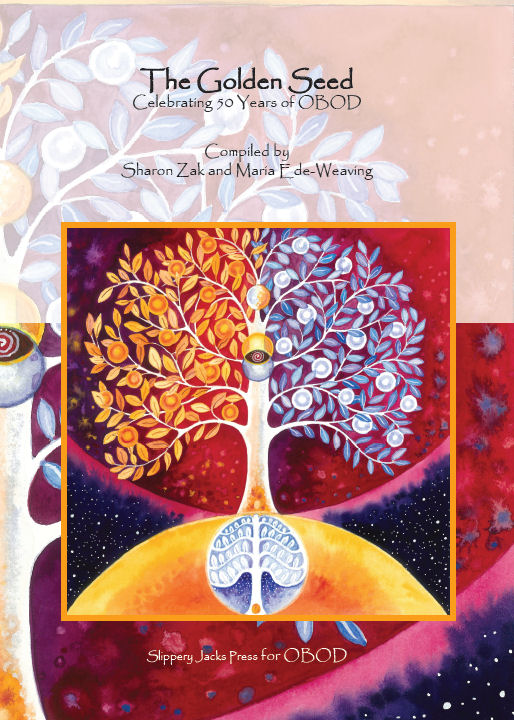
The Golden Seed out now!

50 Druids were selected to contribute to Order of Bards Ovates and Druids (OBOD) 50th anniversary celebration book, The Golden Seed, and I was honoured and delighted to be one of them. Order your copy now of this wonderful book, with fabulous illustrations and also a DVD of the 50th Anniversary event in Glastonbury with photos and music by Damh the Bard! Pre-ordered copies are in the mail as of today – yay!

Golden Seed

Gypsy Dreams at the Wild Warrior Beltane Picnic Festival

Here’s some highlights of our performance to a packed out crowd at Hadleigh Country Park this weekend – thank you all so much, you were brilliant! (Note the little man who danced the whole way through behind us – adorable!)

Dancing with Spriggan Mist

What a busy weekend we’ve had! Saturday night we were invited to dance with the lovely pagan rock band, Spriggan Mist at the Steamboat in Ipswich for their Myths and Legends Tour.  This is the opening number, which we hadn’t heard before, and danced improv to – we love it when it all comes together! I love my belly sisters…

Heaven, hell and Jeremy Clarkson

We are our deeds. It’s a popular heathen saying, and the title of a well-written heathen book by Eric Wodening. What we say, what we do is a reflection of our own self. How we behave is what defines us.

Our society is full of examples, however, of bad behaviour being rewarded, or being applauded. In Britain, famous television presenter Jeremy Clarkson was fired from the popular television show, Top Gear, because he had punched a producer in the face when he found out that there was no hot food available on set. No charges have been made against Clarkson’s assault, and indeed, he is making light of the whole situation, thereby condoning violence. In a recent spin-off live show in Belfast it opened with a video of him throwing a left-hook, as if it were right to punch a colleague in the face. Everyone cheered. When it was rumoured that comedian Sue Perkins would possibly replace Clarkson on the show, she had to leave Twitter because of all the death threats that she was receiving. Violence breeds violence.

What we think, what we say, what we do defines our self. When we live in a world that no longer seems to care about personal responsibility, about compassion, about just being nice to other people, it is even more important that we take up the reins and provide an example of how to be in the world in good, honourable relationship.

We are blessed with foresight. We can think about the outcomes of our actions. We have memories of the past to consider when making our actions. And yet some people still behave badly, willfully, out of spite and their own demons, or out of ignorance that there is a choice.

This is what it all comes down to: we always have a choice. We can choose to behave badly, remaining stuck in our bad habits, remaining trapped in our attachments, allowing our emotions to run riot over ourselves and others. Or we can choose to take up personal responsibility, to think about things that we have done and things that we are going to do, and how they will affect others. It’s not fun being mean to other people. It makes our hearts small. It tightens and constricts them until we become mere shadows of ourselves. We may hide behind comedy, delusions or the lies that we have told ourselves over and over again to justify our behaviour. Ultimately, however, we know on a deep level when we are doing things that are wrong, and we can choose to continue or not.

Take responsibility for your actions. Shrugging off bad behaviour doesn’t make it right, and you will eventually have to face it at some point in your life. Clarkson knows that what he did was wrong, which is why he’s making fun of it rather than face up to the fact that he was wrong. It’s all about saving face, about personal egos, illusions and delusions. How many other people do you know who are like that?

If nothing at all, these people remind us of who we do not wish to be. We can still have compassion for them, seeing that they suffer from their own demons. However, that does not mean condoning their behaviour. We can speak out against it, and still hope that they find peace in their own lives.

There is a Zen story about a samurai who asks a monk about heaven and hell:

Hakuin, the fiery and intensely dynamic Zen master, was once visited by a samurai warrior.

“I want to know about heaven and hell,” said the samurai. “Do they really exist?” he asked Hakuin.
Hakuin looked at the soldier and asked, “Who are you?”

“I am a samurai,” announced the proud warrior.

“Ha!” exclaimed Hakuin. “What makes you think you can understand such insightful things? You are merely a callous, brutish soldier! Go away and do not waste my time with your foolish questions,” Hakuin said, waving his hand to drive away the samurai.

The enraged samurai couldn’t take Hakuin’s insults. He drew his sword, readied for the kill, when Hakuin calmly retorted, “This is hell.”

The soldier was taken aback. His face softened. Humbled by the wisdom of Hakuin, he put away his sword and bowed before the Zen Master.

“And this is heaven,” Hakuin stated, just as calmly.

May all beings find peace.

New book on its way!

Well, it would appear that I’ve written another book, which took me by surprise lol!

I’ve collated selected bits of my personal writings into a little book which will be called The Stillness Within: A collection of writings on Zen, meditation and compassion.  This book will be published soon, and all royalties from the sale of this book will be going to charity.

More info to come!

Words to live by…

I came across this quote from Lao Tzu, and it just said everything about living an honourable life  so simply and eloquently. This is my mantra. Peace and big love to you all!

watch your thoughts lao tzu

P.S. A HUGE thank you to everyone who has supported me, my work and this blog over the years, and welcome to all the new folk who have subscribed!  Your support really means so much to me, and the incredible reception that my latest book, The Awen Alone: Walking the Path of the Solitary Druid has been totally unexpected and a joyous surprise. Thank you, thank you, thank you. x

Not as I was before

Sharing the inspiration… here is Aurora’s beautiful journey into Transformation…

Aurora J Stone's avatarGray Bear in the Middle

I just discovered something I recorded in the autumn near Samhain last year. I feel it is not an accident that it has surfaced once more. As I re-read these words I feel the press of them upon my soul and the weight of them at the centre of my being, my creative core. I shiver reading these words, this message. It is a message for me, but I feel it is also a wider message and may have meaning for others. For myself, I rediscovered them on a retreat day, a day with no interactions except with the cats and the gods, and with my blog as I post these words. I have removed the name since that is for me alone.

My name is ———, and I live beyond your perception, most of the time, unless I choose to reveal myself to you. I watch the portals you…

View original post 2,181 more words

Reblog: Immanence and Transcendence

Here is a lovely reblog from a fellow wanderer down the forest path and friend.  Her words are beautiful, moving, and resonate deeply within my blood and bones…

I have been pondering these two words in relation to spiritual beliefs and religious practise for some time off and on, now and then, here and there. As these things happen they came back to me as I was bent over cleaning out the cats’ litter trays late last week.

I have ruminated about the nature of earth based and book based belief systems. I have pondered upon the impact on the peoples from earth based and book based religions with regards to migration. I have wondered how to frame an understanding of immanence and transcendence that works for me and in my religious and spiritual life as a Druid…

To read the full article, click HERE.

Reblog: A Guide to Cultivating Compassion

Here is a reblog from Leo’s wonderful site.  Number six is the most difficult, but perhaps the most important.  🙂

A Guide to Cultivating Compassion in Your Life, With 7 Practices

“If you want others to be happy, practice compassion. If you want to be happy, practice compassion.– Dalai Lama

By Leo Babauta

I believe compassion to be one of the few things we can practice that will bring immediate and long-term happiness to our lives. I’m not talking about the short-term gratification of pleasures like sex, drugs or gambling (though I’m not knocking them), but something that will bring true and lasting happiness. The kind that sticks.

The key to developing compassion in your life is to make it a daily practice.

Meditate upon it in the morning (you can do it while checking email), think about it when you interact with others, and reflect on it at night. In this way, it becomes a part of your life. Or as the Dalai Lama also said, “This is my simple religion. There is no need for temples; no need for complicated philosophy. Our own brain, our own heart is our temple; the philosophy is kindness.”

Definition
Let’s use the Wikipedia definition of Compassion:

Compassion is an emotion that is a sense of shared suffering, most often combined with a desire to alleviate or reduce the suffering of another; to show special kindness to those who suffer. Compassion essentially arises through empathy, and is often characterized through actions, wherein a person acting with compassion will seek to aid those they feel compassionate for.

Compassionate acts are generally considered those which take into account the suffering of others and attempt to alleviate that suffering as if it were one’s own. In this sense, the various forms of the Golden Rule are clearly based on the concept of compassion.

Compassion differs from other forms of helpful or humane behavior in that its focus is primarily on the alleviation of suffering.

Benefits
Why develop compassion in your life? Well, there are scientific studies that suggest there are physical benefits to practicing compassion — people who practice it produce 100 percent more DHEA, which is a hormone that counteracts the aging process, and 23 percent less cortisol — the “stress hormone.”

But there are other benefits as well, and these are emotional and spiritual. The main benefit is that it helps you to be more happy, and brings others around you to be more happy. If we agree that it is a common aim of each of us to strive to be happy, then compassion is one of the main tools for achieving that happiness. It is therefore of utmost importance that we cultivate compassion in our lives and practice compassion every day.

How do we do that? This guide contains 7 different practices that you can try out and perhaps incorporate into your every day life.

7 Compassion Practices

  1. Morning ritual. Greet each morning with a ritual. Try this one, suggest by the Dalai Lama: “Today I am fortunate to have woken up, I am alive, I have a precious human life, I am not going to waste it. I am going to use all my energies to develop myself, to expand my heart out to others, to achieve enlightenment for the benefit of all beings, I am going to have kind thoughts towards others, I am not going to get angry or think badly about others, I am going to benefit others as much as I can.” Then, when you’ve done this, try one of the practices below.
  2. Empathy Practice. The first step in cultivating compassion is to develop empathy for your fellow human beings. Many of us believe that we have empathy, and on some level nearly all of us do. But many times we are centered on ourselves (I’m no exception) and we let our sense of empathy get rusty. Try this practice: Imagine that a loved one is suffering. Something terrible has happened to him or her. Now try to imagine the pain they are going through. Imagine the suffering in as much detail as possible. After doing this practice for a couple of weeks, you should try moving on to imagining the suffering of others you know, not just those who are close to you.
  3. Commonalities practice. Instead of recognizing the differences between yourself and others, try to recognize what you have in common. At the root of it all, we are all human beings. We need food, and shelter, and love. We crave attention, and recognition, and affection, and above all, happiness. Reflect on these commonalities you have with every other human being, and ignore the differences. One of my favorite exercises comes from a great article from Ode Magazine — it’s a five-step exercise to try when you meet friends and strangers. Do it discreetly and try to do all the steps with the same person. With your attention geared to the other person, tell yourself:
    1. Step 1: “Just like me, this person is seeking happiness in his/her life.”
    2. Step 2: “Just like me, this person is trying to avoid suffering in his/her life.”
    3. Step 3: “Just like me, this person has known sadness, loneliness and despair.”
    4. Step 4: “Just like me, this person is seeking to fill his/her needs.”
    5. Step 5: “Just like me, this person is learning about life.”
  4. Relief of suffering practice. Once you can empathize with another person, and understand his humanity and suffering, the next step is to want that person to be free from suffering. This is the heart of compassion — actually the definition of it. Try this exercise: Imagine the suffering of a human being you’ve met recently. Now imagine that you are the one going through that suffering. Reflect on how much you would like that suffering to end. Reflect on how happy you would be if another human being desired your suffering to end, and acted upon it. Open your heart to that human being and if you feel even a little that you’d want their suffering to end, reflect on that feeling. That’s the feeling that you want to develop. With constant practice, that feeling can be grown and nurtured.
  5. Act of kindness practice. Now that you’ve gotten good at the 4th practice, take the exercise a step further. Imagine again the suffering of someone you know or met recently. Imagine again that you are that person, and are going through that suffering. Now imagine that another human being would like your suffering to end — perhaps your mother or another loved one. What would you like for that person to do to end your suffering? Now reverse roles: you are the person who desires for the other person’s suffering to end. Imagine that you do something to help ease the suffering, or end it completely. Once you get good at this stage, practice doing something small each day to help end the suffering of others, even in a tiny way. Even a smile, or a kind word, or doing an errand or chore, or just talking about a problem with another person. Practice doing something kind to help ease the suffering of others. When you are good at this, find a way to make it a daily practice, and eventually a throughout-the-day practice.
  6. Those who mistreat us practice. The final stage in these compassion practices is to not only want to ease the suffering of those we love and meet, but even those who mistreat us. When we encounter someone who mistreats us, instead of acting in anger, withdraw. Later, when you are calm and more detached, reflect on that person who mistreated you. Try to imagine the background of that person. Try to imagine what that person was taught as a child. Try to imagine the day or week that person was going through, and what kind of bad things had happened to that person. Try to imagine the mood and state of mind that person was in — the suffering that person must have been going through to mistreat you that way. And understand that their action was not about you, but about what they were going through. Now think some more about the suffering of that poor person, and see if you can imagine trying to stop the suffering of that person. And then reflect that if you mistreated someone, and they acted with kindness and compassion toward you, whether that would make you less likely to mistreat that person the next time, and more likely to be kind to that person. Once you have mastered this practice of reflection, try acting with compassion and understanding the next time a person treats you. Do it in little doses, until you are good at it. Practice makes perfect.
  7. Evening routine. I highly recommend that you take a few minutes before you go to bed to reflect upon your day. Think about the people you met and talked to, and how you treated each other. Think about your goal that you stated this morning, to act with compassion towards others. How well did you do? What could you do better? What did you learn from your experiences today? And if you have time, try one of the above practices and exercises.

These compassionate practices can be done anywhere, any time. At work, at home, on the road, while traveling, while at a store, while at the home of a friend or family member. By sandwiching your day with a morning and evening ritual, you can frame your day properly, in an attitude of trying to practice compassion and develop it within yourself. And with practice, you can begin to do it throughout the day, and throughout your lifetime.

This, above all, with bring happiness to your life and to those around you.

“My message is the practice of compassion, love and kindness. These things are very useful in our daily life, and also for the whole of human society these practices can be very important.” – Dalai Lama