Researching some videos to accompany my online Zen Druidry course, I came across this gem – in fact, all of her videos are brilliant!

Researching some videos to accompany my online Zen Druidry course, I came across this gem – in fact, all of her videos are brilliant!
This is a reblog from my channel for SageWoman Magazine at Witches and Pagans. To read the full article, click HERE.
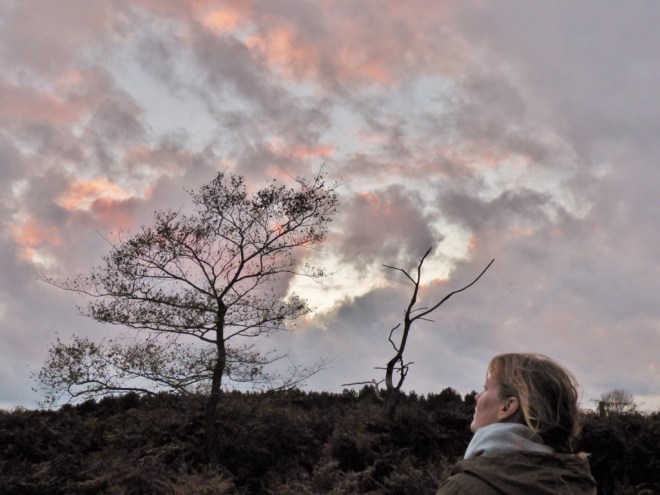 Druidry is all about relationship, and you cannot have relationship without some form of communication. It may not always be in words, human to human, but opening those lines of communication helps us to perceive that the world is more than just our own sense of self. When we begin to see that there are other perspectives, other points of view we also come to an awareness that the world is being experienced by each being individually, in a collective state of unity dictated by space and time.
Events around the world this year have shone a spotlight on discordance, in human to human relationship, and in human to other-than-human relationships. Violent attacks, disregard for the environment, the increasing gap between the rich and the poor and more can be attributed to an “Us” and “Them” mentality. When we remove this dualist point of view, and encompass a more holistic approach, we see that what we do to others, we do to ourselves. In Buddhism, it is acknowledged that suffering exists in the world, and that this suffering is caused by the illusion of separation. If we look deeply enough scientifically, anthropologically, and even spiritually we can see that there is more that binds us together than tears us apart.
As a Druid, nature teaches me the impermanence of all things, through the cycles of birth and death, energy in constant motion. It has taught me of unity and ancestry, for in my body are electrons which have previously been in trees, in a child in Mexico, in the deer and the blackbird. The air that I breathe is the breath of the ancestors, and the shared breath of the world. We all have star-stuff within us. Not in a “hippy-dippy” sense, but in a real, visceral sense that this connection is all pervasive; we simply choose to ignore it for whatever reason…
Continued at Witches and Pagans HERE.
Praying today for the civilians of Raqqa, who live under terrorist rule and are now being bombed by France, sanctioned by the rest of the West’s powers. Praying for all those across the globe, from Beirut to the United States, who suffer from humanity’s dualistic “Us” and “Them” mentality. Praying for the world today.
Druids were documented as having been able to walk between the lines of warring people. Diodorus Siculus wrote “Often when the combatants are ranged face to face, and swords are drawn and spears are bristling, these men come between the armies and stay the battle, just as wild beasts are sometimes held spellbound. Thus even among the most savage barbarians anger yields to wisdom, and Mars is shamed before the Muses.”
Maintaining our peace, we are better able to work in the world to create peace. May we be peace.
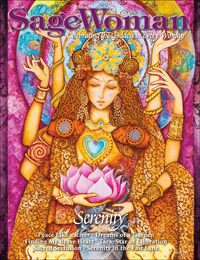
SageWoman’s latest magazine is now available for download and to be mailed to subscribers; this issue is Serenity, and contains a Zen/Druid article by yours truly. To find out more, click HERE.
Most of us hope that when we die, we are able to pass on with a little grace and dignity. However, what is important to me right now is living in the present moment, awake and aware to the flow of life, of awen, hearing the songs of the ancestors and truly finding the meaning of the word, grace, within my own life.
Grace is a brilliant word that has so many meaning: to favour, to honour, elegance or beauty in form, ease, fluidity, mercy, clemency and pardon, just to name a few. If we look to the Latin languages’ use of the word, we find echoes in the Italian grazie or Spanish gracias, or in the French merci. The Latin root is grātia, meaning: (1) a pleasing quality, (2) favour or goodwill, and (3) gratitude or thanks. All three of these I find are essential to living honourably in today’s world.
To have a pleasing quality can have a myriad of meanings, from being aesthetically pleasing to simply being kind. The key word in this description is please in a verb form, which is something that makes one happy, whether it is the self or another. Why would we not want to make another happy? As long as it isn’t at our own expense, or hurtful towards ourselves, it seems a wonderful way to live. When we are hurtful towards another person, it doesn’t make us feel very good – or if it does, there might be something rather wrong with the brain’s chemistry. This doesn’t mean that our lives are not our own, and that we have to make others happy first – finding happiness within the self should come first, as should love for the self, in order to spread it around a little bit. Finding a peace and contentment within helps us to bring that to others. When we are not at peace with our sense of self, we cannot bring peace to others.
To have goodwill for others is at the heart of living with compassion, and also living with grace. The moment we wish another being harm, we have stepped outside of grace and into a hellish world of anger, retribution, revenge, bitterness and so on. We will not always immediately have good will for another being, especially if we have been hurt by someone in the past. Sitting with our own hurt, and then recognising the other’s pain helps us to open up our perspective from just ourselves to the wider situation. People who hurt others are often very hurt themselves. Those who try to pick-apart, to undermine, to speak unkindly to/about, who cause emotional pain – we can work with this with grace. We can see their hurt, empathise with it (though we don’t have to engage it, especially if it means further hurt or abuse from them towards ourselves), and feel compassion for them. We can wish them well, wish them love and peace, which feeds our own inner peace and peace throughout the world. The compassionate being is one who lives gracefully. (Please note: If you are being physically or psychologically abused, please do talk to someone about it right away and seek help.)
For me, perhaps the most important part of grace and its root word is to give thanks. To have gratitude is one of the key components of my Druid path, along with reverence, honour and compassion. When we have gratitude, again we step outside of our “small self” and enter into a way of being in which everything is part of everything else. No longer separate from the world, we are able to experience a deep gratitude for the world, our experiences, our loves and our lives. Our ancestors have brought us to where we are today, and it is through their strengths and weaknesses that we walk upon the earth. Our future ancestors are the ones to which we will be accountable for our actions in the present moment. Having a deep gratitude for our ancestors, not only human but also other-than-human ancestors helps us to see the inter-connectedness of all existence. Again, it shifts the perspective away from the self and into a broader, more integrated view.
This is the essence of grace – widening our world and our views, and in doing so living with kindness and compassion. It is something that is achievable for all, and something that will lead us to lives with more peace and harmony. Listening to the notes of the Great Song, the Oran Mòr, we are able to move with grace, to live with grace and to extol grace upon others.
Working on my online course for Zen Druidry and putting into words a deeper exploration of Zen Buddhist concepts with Druid philosophy and way of life has opened my eyes even more to the wonder that is life, the suffering and the joy that we create and the freedom in distinguishing between the functional ego and the representational ego that causes so much unnecessary difficulty in our lives.
I think meditation is the key to unlocking these concepts, for by stilling the body we can still the mind enough to see clearly, to ponder concepts such as the Four Noble Truths and the Eightfold Path in a Druid context with a deeper insight as a result of simply being quiet and mindful. I sit in meditation for 30 – 40 minutes a day, with a large chunk of that time being spent simply being present in the moment, in all its pain and glory, up and downs, its successes and difficulties. It’s a simple thing to do, but can be quite difficult to do when we begin to realise just how our minds work, and how hard it is to let them be, to not get attached to thoughts and feelings and simply be the observer of the mind’s functioning. We love to judge, we love to recreate scenarios, we love to think, think, think about everything to the point where we leave our bodies behind. At the other extreme we run our bodies into the ground and by doing so, without stilling them for any amount of time our minds become as frazzled as our nerves and we cannot find any sense of peace.
Sitting in silence, we can feel extreme joy even as we can feel extreme pain. Our attachment to either is what causes us suffering. When we attach to joy, we want to feel it over and over again, and crave it, striving for it with all our being, sometimes living lost in the future anticipation of that joy, or lost in the past of when we had it in our lives. Our attachment to pain causes us to suffer further, again becoming lost in the future with thoughts of “when will this pain every end?” or lost in the past “this is the cause of my pain, if only…”; when we drop our attachment and simply be in the present moment, we can take care of our thoughts and our emotions with great skill, thereby being compassionate to ourselves.
When we sit with either joyful or painful feelings, when we observe them without judging them or anyone else, when we simply see them as a part of life, as an emotion, we can also begin to understand their impermanence. Buddhism talks a lot about the impermanence of everything, and this is reflected in the Druid tradition of honouring the ever-changing cycles of life. We look at a river and see that it is never the same river twice, but constantly flowing, moving downwards to the sea, being filled with rain and experiencing a cycle of existence that has no single, unchangeable part. When we see concepts of birth and death both within a Druid and Buddhist perspective, we realise that there is no such thing as a beginning or ending that is so often tied to these concepts. They are simply events in our lives that all things experience. My view is that we are all a part of nature’s soul, that everything that exists is nature undergoes changes in form through transformation, energy being patterned by conditions and environment in an endless cycle. When we see life in such a context, we see that joy and suffering are also impermanent, and we are able to sit and be with them, to take them by the hand and allow ourselves to experience them without getting caught up in their form, for we know that they are transitory, as are we.
In the quiet and stillness we are able to gain a greater perspective of the whole, rather than the chattering monologue that runs through our minds for the majority of our lives. To step outside of our minds is a great liberation. To see the interconnectedness of all things dissolves the separate ego, instead allowing us a deep realisation of the weave of each form in the tapestry of life. We understand and acknowledge the functional ego that allows us to be in this world, while letting go of the representational ego that strives for and causes separation through the illusion of an Us and Them mindset. We’re all in this together.
In the Ten Ox-herding Pictures (or The Ten Bulls) we see the final part as being able to work in the world without that separate sense of self. I think this is very important for Druidry and for all Paganism, for if we stop at the realisation of self we are at risk of self-importance. It is necessary to find out who we are, and then to work on letting that go as we realise that self is part of another system, which is part of another system, and so on throughout the universe. Rafting the currents of human emotion become so much easier when we lose the idea of a separate self, for not only are we not hurt by others as much and are able to feel compassion to create a more harmonious and peaceful existence, but we also become a part of the flow of that current. We find that with time our meditation and contemplation allows us to let go of the raft and simply become the river, thereby not having to fight it anymore, or fight to keep our seat as we hurtle through obstacles on our journey to the sea.
It’s our choice, however, to do the work necessary in order to achieve this sense of wholeness and peace, for no one can do it for us.
For a look into how Druidry can be related to the Ten Ox-herding pictures, see my post HERE.
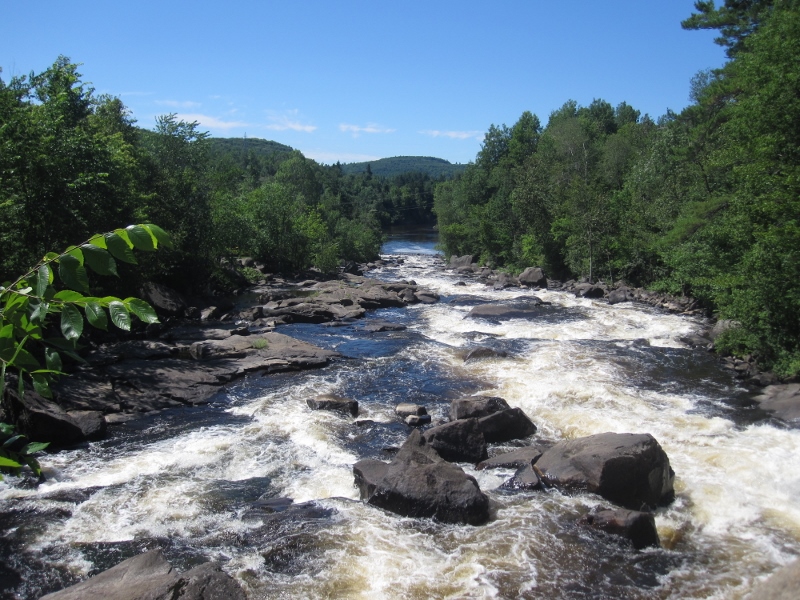 Sitting on the edge of the North River where I grew up, I feel the energies of the water’s flow, the water molecules and its soulsong moving through the landscape and through my own soul. Known for its rapids, it attracts many visitors in the spring (when its wild rush from snowmelt takes the breath away) and in the autumn (when the trees’ fiery colours blaze against the white foam). There are many places to sit amidst the rapids when the water is low enough, and that’s where most people like to sit, right in the heart of the dramatic whirl and rush of water as it crashes, engulfing the senses until you can hear nothing but water, water, water.
But it’s not here that I like to sit – I much prefer to be at the bottom of the rapids, where the drama ends and then there’s a flat stillness, where the bubbles and foam slowly pop as they moves downriver, the surface reflecting the trees and sky above. I sit on a rock and feel the rush of movement to my right, the great dramatic unfolding of the rapids. To my left is utter stillness, where the ducks and gulls are fishing. Right before me is where the two meet, slowing into stillness, settling into another current of energy. Where edges meet there is great power and learning.
I turn my head to the right and look back up to the rapids, and see my own thoughts as the rocks that the waters of my soul crash up against time and again, causing the water to explode high into the air or tumble in whirlpools, hitting one rock and then another on its way down. Those rocks are someone who still tries to upset, annoy, or undermine me and I smile to those rocks, compassion flowing though my soul and the through the landscape towards that person as I see their own personal suffering, even though I long ago decided I wouldn’t stick around for further abuse. I see my physical limitations, my body slamming against the rocks of rheumatoid arthritis and perimenopause, and the hidden rocks within my genes that may surface one day as breast cancer or high blood pressure. I smile to these rocks as well, knowing that even as I crash against them I am still moving around them, ever downriver towards the calm when there are no more rocks. I see a myriad of thoughts that my brain crashes against, creating dramas and I smile to all of these rocks, turning my head to follow the flow and see ahead of me where it begins to settle, as I settle upon my rock watching the willow leaves fall around me and into the river, a heron flying past.
I see that water is water, whether it is still or riding on great foaming crests that reach many metres into the sky. The water that roils is the same water that settles, and when all the obstacles are taken away it resolves to a beautiful and serene flat plain that reflects everything around it. Through meditation and compassion, integration with the world around me, seeing the soul behind the soul and the true nature of all existence, I too settle and reflect the world around me, a calm and peace from deep within. Though there may be more rapids ahead, I know the nature of water and of my own soul, for they are one and the same.
Yesterday I was able to catch up with two friends from high school – we three haven’t been together for around 13 years. Having friends that you can talk to, about absolutely anything, and know that they’re really listening, that they’re there for you, that they love you no matter what distance lies between you or how much time has passed is one of life’s greatest blessings. I am so utterly blessed in that I have made some truly wonderful and remarkable friends both where I grew up in Canada and where I have lived for the past 18 years in the UK.
Today I am also helping my Mom host a huge family reunion BBQ in our backyard. We have nearly 40 people coming, some family members I haven’t seen for twenty years, cousins I used to babysit who now have children of their own. We’ve always had a close family, spending every weekend at the grandparents’ when we were little, all the cousins playing while the aunts and uncles talked about grown-up things with my Oma and Opa. It’s so amazing that we’re all still able to get together, to laugh and to celebrate simply being alive on this gorgeous autumnal day. I’m sure my Oma and Opa would have loved to have seen everyone together again, and I shall be having a glass of punch for both of them who live on inside me, looking out through my eyes and the eyes and hearts of the rest of the family in this beautiful part of the world.
A loving family is a real treasure. Good friends are a true blessing. Never take these for granted. Breathe, smile, and be in the moment. Be present for them, and take them deep into your heart. Love and joy are boundless, and like the soul cannot be contained within the body. The soul is the container for the body, not the other way around, and the soul expands outwards as far as the horizon can see.
Today, my soul is flying high in the clearest of blue skies, riding autumnal breezes, smiling from my heart and enjoying my Mom’s delicious punch.
May your soul be free as well. x
 Zen Buddhist monk Thich Nhat Hanh suffered a massive stroke and brain haemorrhage last year, which left him incapacitated for many months. He is now able to move slightly, and recently managed to utter his first few words (pictured on the right). His joy for life, whatever suffering he may be going through, is an inspiration to all. He has changed some of his therapists’ lives through his example of mindfulness, one therapist even breaking down and crying when she realised just how she had never really seen the beautiful blue sky before in San Francisco. Thay couldn’t yet speak, however he did was point to the window to remind her of the beauty of the sky and the gift of opening our perception to it. It changed her world, and they were both happy.
The beauty and wonder of the present moment is there for us all. All we have to do is open our perception to see it. In the midst of great suffering there is the possibility of great compassion. In this compassion there is the power of love and beauty, two words that may be bandied about recklessly in our modern-day, but words, concepts and energies that have real power within them.
Through our suffering, we can make small steps towards awareness and mindfulness by becoming awake and aware, thereby easing our suffering and that of the world around us. We notice things that we wouldn’t otherwise notice in our suffering, as we turn our gaze outwards and perceive the world in its entirety rather than just our own suffering. Thich Nhat Hanh is a wonderful example of one who has seen and experienced the suffering of war, of exile, of persecution and physical trauma and still sees the power of love and beauty in the world around him. When I suffer, I shall breathe in and out, look at the sky, the trees, into the eyes of a loved one and know happiness and joy, there finding the deepest gratitude for my blessings.
 Down the Forest Path