Sacrifice

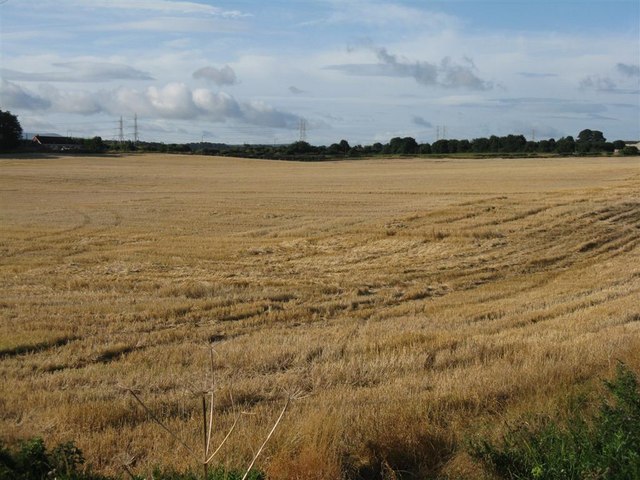
barley stubbleSacrifice – it’s one of those “old” words, like honour and duty. Many who have read Roman accounts of the Druids associate the word, sacrifice, with the priest caste of the Celtic people at that particular time. However, the word goes even further back into the beginnings of time for the human animal, when the importance of relationship with nature was everything, when we knew that to disconnect ourselves from the natural world meant death. Today, we must remember this, remember each and every day how much we are a part of the world, how much our everyday actions count, no matter how small. Each day is also an opportunity to give thanks for the blessings that we have. At Lammas, however, just giving thanks doesn’t seem quite enough. When the first crop is harvested, and the land lies stark and naked, shaved and shorn from under the combine harvester, giving thanks and saying words over the field doesn’t feel adequate. This, for me, is where sacrifice comes into play.

It’s hard as the line keeps shifting between giving thanks and the notion of sacrifice. What might be an offering to one person might be seen as a sacrifice to another. I can only speak from my own personal viewpoint, as I may value things differently from my neighbours, my family, and members of my pagan community. So, what is the difference between an offering and a sacrifice?

For me, sacrifice is something of significant value. This is not necessarily a monetary value, but could be something that is cherished, prized, something that is utterly loved and which has a representative value of the threads of connection we hold with the gods, the ancestors, the spirits of place. What is it that I have which I value? What am I willing to give back in return for the flow of awen, that spark where soul touches soul and is inspired? What am I willing to do to achieve that?

When the barley in the field by my house is cut, the energy of the land drastically changes. Between the homes and the heathland there are two arable fields, one which was harvested in the spring for green barley, and one which still has the golden, bowed stalks waiting to be harvested. Acknowledging the change isn’t enough, for when we hear the songs of the ancestors, I feel how important these crops were for them, how important their relationship with the land meant their survival and success. In a field of growing barley, there is potential, a shimmering energy waiting to be harvested. When that field is cut, the potential can be scattered if the land is not honoured. The ancestors knew this, but we have forgotten. Modern farming depletes the soil of essential nutrients that must be replaced, often by less-than-natural means. The barley is cut, and the field then stands, barren and forgotten for weeks, until the farmer and his tractor are ready to plough in the winter or spring crops.

The land isn’t respected, isn’t acknowledged anymore. As an animist, I find this appalling. When the land has been used, has given us so much in a beautiful field of barley, and we don’t even give thanks, much less sacrifice then there is dishonour. As with any relationship, if one side continually gives and gives, and the other continually takes and takes, the balance will shift, the relationship will crumble and great suffering will ensue.

What can I give that will honour the lives that this crop will feed, that will honour the land that grew it, that will honour the ancestors that worked it, that will honour the spirits of place who live there? What will be a significant gift for all we have received?

The sacrifice will change year upon year. What matters most is the importance of the sacrifice to me personally.

Offerings represent a more daily interaction, little gifts and niceties that you would present to any friend that you meet: a cup of tea, a biscuit, some of the fresh-baked bread you just made, or your home-brew mead. Finding out what the local spirits of place would like is as polite as asking your guest how she would like her tea: with or without milk, honey or sugar? When it comes to sacrifice, however, the shift of focus changes to become more introverted rather than extroverted.

I’ve previously in earlier articles described sacrifice as something that is not only of great value, but also as something that can help you “get to the next level”, so to speak. No, we’re not playing at Druids on World of Warcraft, but we are seeking to deepen our relationship with the land. Sacrifice is key in this regard, helping us to go deeper, to give more of ourselves in order to understand more of the land.

Many within the Pagan traditions see the Sun King as offering himself as sacrifice at this time of year, to be cut down as the grain is cut, to be reborn at Yule. Yet are we comfortable allowing the Sun King to do this each and every year, or should we also take our part in the sacrifice, participating rather than simply watching the cycles of life unfold?

And so I will spend the next few weeks walking the land, finding out what I can give, what I can do to deepen my relationship with it, to be an active contributor instead of a passive spectator. Some aspect of my self must be willing to die alongside John Barleycorn in order to understand the cycles of nature. Some sacrifice must be made.
Working with the Gods of Time

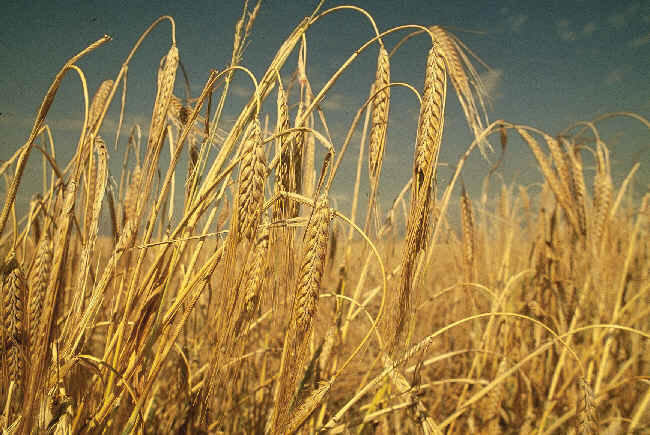
barleyDruidry is hard work. If you want to establish a deep and meaningful relationship with the land, the gods and the ancestors you have to work at it, each and every day, really walking the talk and living your religious or spiritual path. Like most things in life, you get out what you put in.

At this time of year, things can seem crazy busy, with all the plans that we dreamt up over the winter months and put into action in the spring finally coming to fruition. Working as a Druid priest, not only do I have my own personal plans to attend to, but also those of the community. July and August are heavy months in my diary, filled with handfastings and weddings mostly. In the later summer months we are inspired to a deep commitment, not only in our work but in our love lives as well. If we want our harvest to be successful, we have to work at it.

The warm months encourage us outside, even though we may have a pile of work waiting on our desk. It’s important to experience these months physically, as well as on a spiritual level, especially here in the UK where sometimes the summer can seem so short. It makes greater demands on our time, and I find that I do not get nearly as much writing done from June to October as I would like, with other duties and the hot sunshine or warm rain calling me outdoors. It’s equally important to be outside in all kinds of weather, but perhaps it is because I was born in August that this month really appeals to me, with more thunderstorms, hot sunshine, refreshing rains and muggy weather. Though autumn is my favourite season, it can often be too short, whereas summer (hopefully) lingers on in the heat of the stones and the land, the smell of the rain, the flowers and the scent of mown grass.

So even though my work goes a bit nuts at this time of year, I take time out each day to remind myself of that commitment that I made with the land. To work with her, to honour her, to be with her, to learn from her. I hear the songs of the ancestors flowing through the land. My lady Brighid sings deep within my soul, every day.

Even though I had only a small window of opportunity yesterday to get out there, still I went to the field opposite my house to be with the barley before the harvest, listening to the brilliant rustle of the drying stalks under the sun, hearing the songs of the land and the troubles with the bluebell woodland beyond. Saying my prayers and blessings over the crop and the land, connecting with the earth and her nourishment, giving of myself in return was a necessary part of the day. Like being in any long-term relationship, it requires constant presence and not taking anything for granted. This was really brought home to me when I studied with Bobcat many years ago in the beautiful setting of the Cotswolds, when we discussed with the other students the gods of time. Working with time is a great learning curve, coming to learn how to relate to the gods of time, working with deep integrity and honesty.

So you will please excuse me if there are fewer posts between now and the end of August – in the few moments of brief respite from other duties and obligations, I’m probably out in the fields or forest, heathland or seashore, spending time with the ancestors, honouring the gods of time and reminding myself to be present.

Blessings of the harvest!

Druid College, Year 1 this October!

HF2We’re getting all geared up for Year One this October at Druid College UK!

In Year One We will be looking at core principles and teachings of Druidry, Living with Honour, Rooting in the Earth, Working with the Ancestors, Animism and the Spirits of Place, Listening and Druid meditation, Awen and the cycle of creativity, Working with the Nemeton, Developing Authentic Relationship, Inspiration and the Poetic arts, Storytelling and cultural heritage, The Cycle of Life and the “Wheel of the Year”, Working with the Gods/Deity, Anarchism and the end of Submission, Emotions and “riding the energies”.

Your tutors are me (Joanna van der Hoeven) and Robin Herne, and there are still places available: for more information visit www.uk.druidcollege.org

The challenge of the ancestors…

I’ve had some hard teachers in my life. Teachers who challenged me on every level, whose words inspired me to look deep into my soul, my habits and behaviour, my relationship with the world. Accepting a challenge is a very difficult thing to do. We have to be willing to take on that challenge, otherwise when it seems that the challenge is thrown upon us we can react defensively, our barriers instantly put up, walls to surround ourselves with.
I give my utmost thanks to my teachers who have inspired and challenged me in every part of my life. Even when I did not agree with their words, I saw the intention behind them, to wake myself up and be in the world, aware of my story and the stories of others. To these ancestors of tradition, know that you are honoured.

Thich Nhat Hanh on No Self

Meditating upon this for a couple of years now, I was absolutely delighted to come across this little question and answer session with Thay back in 2010.  His thoughts on ancestors, on no self and awareness were exactly the same as my own, and resonate deeply within my soul.

Whoever I am.

Reblog: The Ancestors from Moon Books’ blog

Here is my latest blog for the Moon Books’ main blog page. May the ancestors guide you well! x http://moon-books.net/blogs/moonbooks/ancestors/

Samhain is a time to think on the ancestors, as it is often said that at this time of the year, the veil between the worlds is thin.  Our ancestors can mean so much to us, and yet, how much do we acknowledge them in our lives?

If you stop to think about it, you are the result of hundreds of thousands of years of ancestors, their numbers legion.  You, right now, are the result of evolution.  Taking a moment to stop and think about this can have great impact upon our lives.  We may suddenly realise that we are not alone – that we have the songs of millions of ancestors running through our veins.  That we are part of a grander cycle of life, death and birth that makes the little dramas, worries and events in our lives pale by comparison. It also reminds us that we are connected to all living things – that if you go back far enough, we have the stuff of stars in the minerals of our blood, the water of the vast oceans in our bodies, the sunlight and storms of times gone by.  In this way, there is absolutely no way we could say that we are an entity alone on this planet, and yet so many of us feel to be disconnected from everything and everyone around us.

Why do we feel this disconnection?  Ancestor worship used to be common, and still is, among many societies around the globe.  While the word worship may prove to be difficult for some, perhaps simple acknowledgement of the ancestors would be more apt. We have the good, bad and the ugly in our heritage – we need not worship any of them. However, connecting with and knowing that they are there, with all their glory and all their faults allows us the time and space to truly see life for what it really is – a culmination of everything that has previously happened, and the potential that lies within the future, with this present moment the very real blessing that it is if we are awake enough to immerse ourselves within it.

So why have we lost this connection to our ancestors? I don’t really know – I can only speculate.  Our real, blood ancestors may have been replaced by myths from the dominant religion, or pushed aside to form the secular culture of today.  Patronymic and matronymic Names such as Svensson or Gudrunsdottir were pushed aside by governments and churches in order to identify people according to the fashion of the time.  Women were forced to give up their maiden names when they married, and whole lineages were lost in a patriarchal society.  Voices were muted, or forcibly silenced.

What we can do now is to piece together the fragments that remain, in order to connect with our ancestors.  For some this is easier than others – broken homes and families, orphans and adoptees face a very and ever increasing challenge in coming to know and understand the ancestors.  Through rising conflicts in various countries, researching your genealogy might reveal some truths best left hidden from your social peers.  There may not even be access to records available – so what is a person to do?  We must remember that it is not only the secular world we live in, but also a spiritual world, where our ancestors await us if we choose to meet with them.

And so we do, in an odd fashion, at this time of year without really knowing why.  Stories of ghosts and witches and the dead coming to life flit through the minds of children and adults alike, as they dress up in ghoulish costumes ready to tackle the dark streets with other like-minded adventurers.  I remember fondly my years of trick-or-treating with my brother and sister – roaming the streets full of children, very little adult presence, dressed up in scary or not so scary costumes, out past the normal time allowed and going onto neighbours’ properties, walking beneath the bared branches of the trees, the moon shining spookily through just like in all the pictures we’d been drawing in school, a cat running across our path.  Ghosts lurked behind every bush and darkened window, witches flew on brooms past the rounded face of the moon, skeletons danced in the graveyards.  These images of the dead, the scary, the ancestors were still so evocative and ignited the imagination of every child wandering and testing the dark streets of both their neighbourhood and their soul.

We have a very real fear of death in our society.  We do not talk about it. We go to visit dying relatives in the hospital and tell them that they will be okay.  When they do die, we send the bodies off for preparation by someone most likely not a family member – if we are lucky, the family knows the undertaker through their previous work.  On this night, the night of Samhain, Hallowe’en, we the masses are allowed to talk of death, or if not talk about it, act it out in a sugar induced high as children, or an alcohol induced platitude in our adulthood.

Taking a step back from all this and really acknowledging the season for what it is, for what it means to relate to our ancestors, is what Samhain is really about for me.  I acknowledge not only my human ancestors, but all those who have gone before, whether they be cat or tree, mountain or sea.  The tides of time and life and constantly changing, and death is always around us, as is life.  However, at this time of year, where here in the UK the leaves are changing colour and falling to the ground, the ground foliage dying back and bare earth being exposed for the first time in many months, the smell of death and decay all around – it is easier and much more obvious to honour the cycle of death.  Rebirth will happen when the sun begins to warm up the earth, when the days begin to become longer. Right now, the darkness awaits, and in that darkness, the stillness of death. Taking a moment to be still ourselves, to experience a little death on this most hallowed night, is so utterly freeing and grounding at the same time.

We are so often not human beings, but human doings. To stop, to cease doing things, to stop being active is to become old, or worse, dead.  Yet we are not annihilated when we cease to run around on the hamster wheel – instead we are immersed in the wonder of life and death, of creation and destruction.  That immersion is, for me as a Druid, what it is all about.  Dropping that sense of self to be free within the world is all important.  Knowing who you are first is essential – for when you know who you are, you can then let it go into the dark void of potential, into the cauldron of unknowing.

So this Samhain, take a moment to stop and connect with the ancestors.  Realise that the threads are always with you, shimmering along ethereal lines of connectivity in a grander tapestry of life.  Some may have faded with time, some may need mending, but we have the magic lying within our very souls to do this.  Pick up the veil that lies between the worlds, and see the shimmering lives of the ancestors on the other side – and know that there is no other side in truth.  We are all here together, but our minds create the gauzy veil between the worlds.  Lift that veil.  Look death in the eye.  Smile, and death will smile back at you.  Rejoice in the impermanence of all things, and know that one day you too will be an ancestor, your threads still connecting you to all that is within the web of existence. Dance in the present moment, with the ancestors of past the future dancing alongside you.

Reblog from SageWoman: Samhain and the Ancestors

samhain

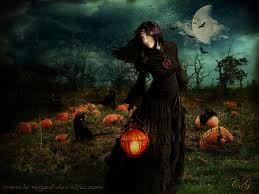
digital artwork by Pumpkin Photography, available on devianart

Reblog from my post over at SageWoman’s blog channel – Samhain blessings to you all!

What with the rage of the storm St Jude passing over our area on Monday morning, we were without power for a couple of days (as well as being without land line phones -mobile masts were also out).  At this time of year, when the clocks have gone back and the nights are drawing in, the change can be quite dramatic, especially when you are living without power.

The weather had turned cold in the evenings, but luckily we have a fireplace, so the evenings were spent gathered around the hearth, with the darkness all around just outside the circle of candle and firelight, and the wind howling outside. Pretty much confined to one room in the light and warmth, we took the time to simply be – to sit together and watch the flames dancing in the darkness.

Preparations had to be made before the light began to fail.  Food was prepared in the daylight, and the candles and fire readied for when darkness fell.  There’s nothing worse than being caught out in pitch blackness, looking for a match or a torch and stumbling in the darkness.  Time was very much in the forefront of my mind – I had to make sure things were ready.  The days and nights seemed to stretch in length, without the distraction of any media to divert our attention away from the inky blackness outside our windows.

Outside, when it was safe enough to go out, we looked up and saw even more stars than we can usually see.  Living as we do in a rural area near the coast of the North Sea, we have a pretty amazing night sky as it is, without very much light pollution. These last few nights were something really special. We also noticed just how many planes were in the sky as well – an alarming number, all things considered.

At this time of year, the ancestors are often in my thoughts – in Druidry, we have the ancestors of blood, of place and of tradition to work with.  I felt even more connected to the ancestors of the past, without any electricity, filling my days with manual work and enjoying relaxing by the fire in the evenings.  My blood ancestors hummed in my veins as I watched the flames in the fireplace, seeing lines stretching off into the darkness of the past and stretching to include hundreds, thousands of people who have gone before.  The ancestors of place were all around me, and the very real notion that the living are walking, working, living and loving on the bodies on the dead was very real to me.  The bodies of all flora and fauna who have gone before provided this very land upon which we live, and at this time of year when it appears that everything is slowly dying to the coming winter, it really hit home.  Every morning I was also reminded of the life amidst the world of the dead, as the stags were calling to their does, and the rutting season beginning here upon the heathland.  The ancestors of tradition opened up my mind to all that was occurring around me, allowing me to see and experience the mysteries firsthand. I wondered what the future ancestors would experience from our legacy.

When our power did finally come back on, in the early hours of the morning a few days later, I physically felt it.  Fast asleep, I awoke in the darkness that was not quite so dark, wondering why I had just sat up in bed. I felt a buzzing in my body, as if everything around me was humming. Looking out the window, I saw that our neighbours across the street had their outside light come on, and that the darkness was not so thick, both inside and out.  I could feel the electricity come back on.  The heating then came on, and I listened to the sounds of the furnace firing up, and the house creaking under the sudden change in temperature. I was a bit saddened by the return of electricity – it meant that deadlines were now due, that work awaited me when all I wanted to do was retreat into hibernation mode.  It meant that we would have to make a special effort not to sink back into the luxury that is electricity, and to not take it for granted. (I was, however, very much looking forward to a hot bath in the morning).

I welcome the darkness, with the rest after a long and busy summer that it brings.  I look forward to the shortening days until the winter solstice, when the evenings stretch into hours of sacred time and sacred space. I will fill these hours with meditation, with ritual, with remembrance, instead of ignoring the darkness with the buzzing of electricity and the drone of the media.  I will remember our days spent closer to the ancestors, and will welcome the connection to them in the growing darkness.

http://www.witchesandpagans.com/SageWoman-Blogs/samhain-and-the-ancestors.html