Changing Times

thank youDruid College begins in a couple of weeks, and I’m so very excited about it. This is the first time I’ve taught this many students at once – thirteen in all have signed up for Year 1! It promises to bring a lot of change to my life, and I look forward to it.

This year has already brought about many changes in my life, and has led to a deeper relationship with my gods, the ancestors and my environment. I feel so blessed to be on this journey, a journey that is shared with my friends and family, with readers of my blogs, my students and fellow colleagues on the Druid path. I have lived my Druidry full-time for many years now, and now it is a full-time “job” as well as a way of life! There are also more books underway, which I hope you will enjoy.

I aim to live in service to this land, to this planet, in whatever shape or form I can. I feel that it is our duty as part of an earth-based religion to serve, with truth and honour. I heartily thank all my teachers and guides along the way, and hope that I can continue the cycle of inspiration, of awen, after having been so inspired by so many people, both human and non-human, as well as that wonderful serpent energy contained within these British Isles. I honour my roots and work towards a future that I hope will be integrated, inclusive and inspiring.

Thank you, all from the depths of my heart.

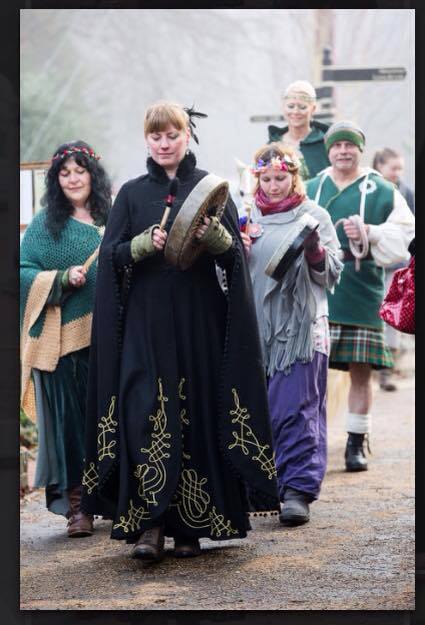
Druid College, Year 1 this October!

HF2We’re getting all geared up for Year One this October at Druid College UK!

In Year One We will be looking at core principles and teachings of Druidry, Living with Honour, Rooting in the Earth, Working with the Ancestors, Animism and the Spirits of Place, Listening and Druid meditation, Awen and the cycle of creativity, Working with the Nemeton, Developing Authentic Relationship, Inspiration and the Poetic arts, Storytelling and cultural heritage, The Cycle of Life and the “Wheel of the Year”, Working with the Gods/Deity, Anarchism and the end of Submission, Emotions and “riding the energies”.

Your tutors are me (Joanna van der Hoeven) and Robin Herne, and there are still places available: for more information visit www.uk.druidcollege.org

Happy Canada Day

Today is Canada Day, 1st July. Back home in Canada there will be fireworks, music and celebrations from backyard barbeques to city-wide parties and festivals. Days like this I miss my homeland, my mother country. As today has approached, I’ve been giving some thought about what it means to be a Druid in a land that is not “your own”, living in a foreign land.

A Druid’s relationship is with the land, first and foremost. It is the defining part of our spiritual tradition, religion and philosophy. We deepen that relationship through working with the ancestors, deities, the three worlds, etc. However, at the heart of the matter is the land upon which you live. Establishing a deep and sacred relationship with it is the main part of our work as Druids. But what is this relationship?

We have to know the environment we are living in, in order to live well in it. If we live with ignorance, we might cause damage. If we run against the currents of energy that are flowing through our land, say for example spending inordinate amounts of energy during the winter holidays when the darkness is actually calling us to rest a moment, to get in touch with the depths of winter, then we become exhausted, ill, suffering from diseases and dis-ease. We have to dance with the land, and when dancing with another it is of utmost importance to acknowledge the other’s movements, in order not to cause injury or step on anyone’s toes. We have to be aware of what is going on, each and every day in our landscape. It is not enough to celebrate the eight festivals of the modern pagan Wheel of the Year – to be a Druid requires much more than that.

It is a relationship that is not one way. Singer/composer/pianist Tori Amos once described her relationship to the land through her Cherokee grandfather’s guiding words: “We are either caretakers, or takers. It’s your choice”. While as Druids we don’t really have a sense of stewardship of the earth, for that would place us in a hierarchal order of being that doesn’t really make any sense, we do know that taking too much is damaging and so we work to live in harmony, in balance. Inspired by the ecosystems around us, we see how to fit in, to work with each other, whether that be human or beetle, stinging nettle or oak tree.

My relationship with the land began in Canada, where I was born. I drank from the rivers and lakes: that water is in my body. I grew up in the Laurentian mountains: those granite hills are also in my bones, in my foundation. The wild thunderstorms of summer are in my blood, the cold crisp air of winter in my lungs. They are a part of me and I am a part of it. We are inseparable, the land and I. The conditions manifested at the right time to bring me into being in that space and in that time, and I cannot disengage with it any more than I can wilfully cut off an arm or a leg.

But I live in the UK now. I am a resident of this country, and have been for many, many years. I have been here almost as long as I have lived in Canada. I have learned to dance to the rhythms of this land, with its differently beating heart, its slower pulses and island mentality. I have felt Brighid’s serpent rising and falling with each passing year, deep within the earth, dancing in the light of the sun in summer and retreating again, curled up within the depths of winter’s darkness and at the base of my spine. I have seen different gods of thunder and lightning, of seas and oceans, rivers and deep, cold lakes. I have felt and honoured the ancestors of this land, feeling their stories sung in the evening breeze, feeding from their bodies in the food grown on this land, breathing the air they breathed. I have walked many, many miles all across this land, coming to know its vast and intricate landscape, from craggy sea cliffs to heather moorland, from the Scottish Highlands to the White Cliffs of Dover. I have danced in this energy, so different and still similar to that of my mother country.

The questions remains: to whom do I belong?

I have roved many parts of this world, been in many places on this beautiful blue planet. I belong to this planet, I would say, first and foremost. Though I still carry a Canadian passport, I am a citizen of Earth more than a citizen of any country. Those lines on a map really mean nothing to me, spiritually. A land defines its spirituality, for sure, but there is a shared spirituality as well, as we are all part of this huge ecosystem called Earth. The energies run differently here in the UK than they do in Canada, on the surface, at least. But delve deep enough, in to the core of this spherical mass hurtling through space and it’s a shared centre, with sacred fire holding it all together.

I feel equally at home here in the UK as I do in Canada. There are other places on this planet that I feel at home – Sweden is one. I cannot date my ancestry back to either Scandavian or Celtic roots, but I know that I did come from the same basic ancestors as we all did those many, many years ago. It matters not what more modern root I come from in my Druidry. I was baptised and confirmed a Protestant, but I am a Pagan Druid. I honour different gods from all traditions, and still question the existence of all of them. I quest the awen daily, searching for inspiration, looking for answers, searching for the right questions, sitting in silence and dancing in delight. It doesn’t matter where I came from. What matters most is what I do now, in the land that I am in, whether it is the UK, Norway, France or USA. What matters is that deep connection to the spirits of the land, to the essence of nature wherever I am, and in that connection an honourable, sacred and sustainable relationship. I am not a tourist anywhere.

Yet still I call myself Canadian for the most part. My accent, though much bastardised, is still different and people will ask me where I’m from. Legally I am a Canadian who is resident in the UK. Yet I vote on UK policies, not Canadian ones. I follow deities that are from this land. I honour the deities of Canada and North America, those different energies moving along swifter currents and wilder ways. But I work with the land beneath which I walk, barefoot on the grass in my backyard, the ash trees whispering ancient secrets to me beneath a mackerel evening sky. Perhaps I am not a Canadian. I am not British. But I am Druid.

Walking together down life’s pathways…

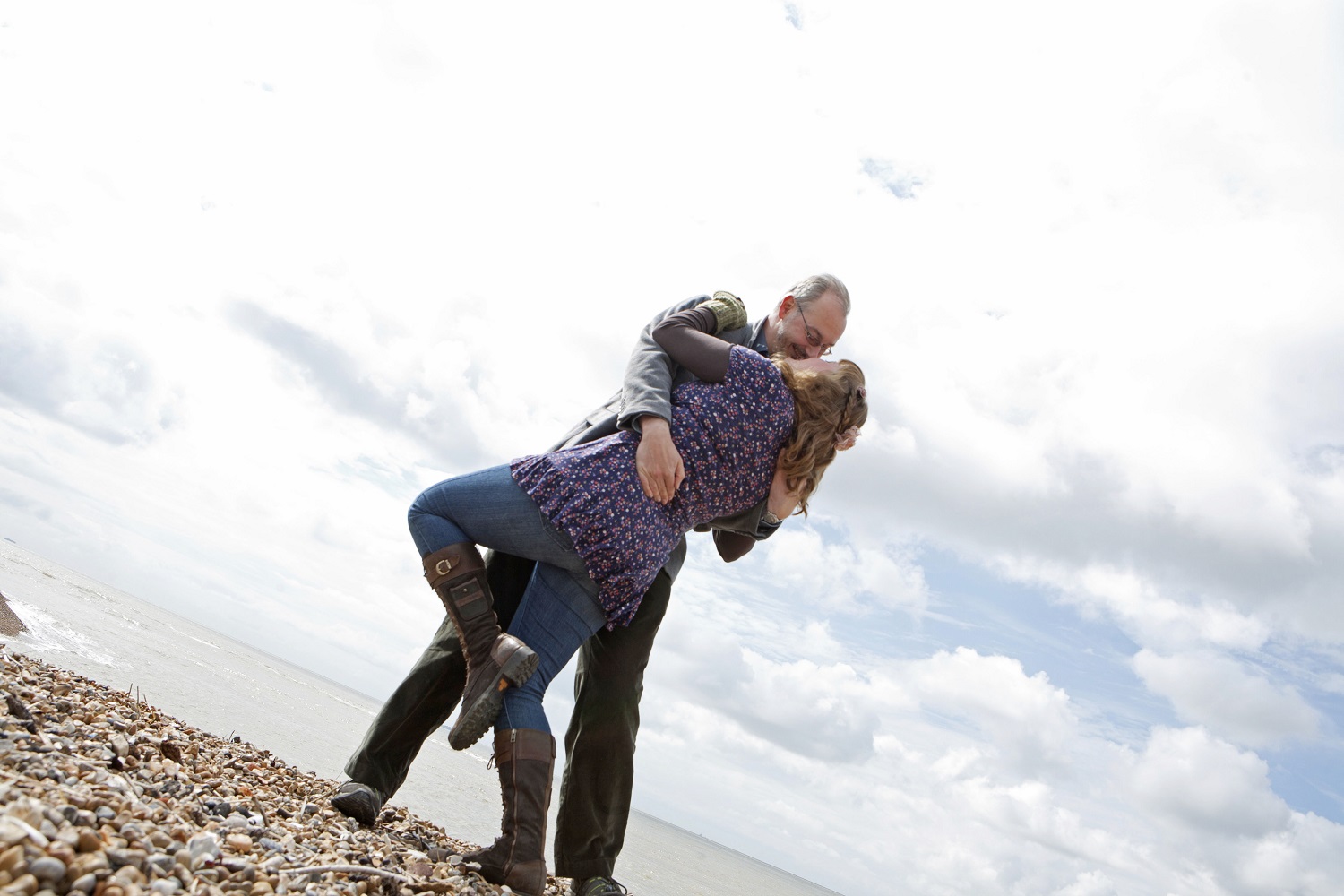
Jo&Family-67Today I am getting married. I am marrying the man I married nearly six years ago to the day.

Love changes with the passage of time. This change is like a fine wine, aging quietly, mellowing and creating a deeper, richer flavour to delight the palette. Things have changed between us, as we are not the same people we were six years ago. Things remain the same, as we hold many things close to our hearts as we did six years ago. Life experience has flavoured our journey together, giving it a sweetness and a spice that was only hinted at all those years ago.

We’ve been lovers for fourteen years. We’ve been married for six of those fourteen years, enjoying each other’s company, riding the currents of this river of time together, paddling together through the rapids, floundering when we’re not concentrating on working together. We’re best friends who hold many things in common, loving many of the same things. We are also polar opposites, having many differences in outlook, upbringing, ways of thinking. Having grown together, especially these last two to three years and working through various difficulties has made us see the best and the worst in each other. We don’t take certain things, like health, for granted anymore. We don’t take each other for granted anymore.

As my love for my husband has deepened, so too shall my vows today reflect that change. Nothing stays the same, life is always in constant change and flux. The impermanence of everything helps me to see the joys of life greatly, even in the deepest sorrow and pain.

I am deeply honoured to have married a wonderful man who both adores me and is not afraid to stand up to me. He loves me for who I am, never asking me to change, supporting me in all that I do even when he doesn’t really understand it. He has taught me so much about myself, about the give and take in a relationship, about what it means to nurture something and really being there for each other. Today I pledge my love for him once again, witnessed by friends, the ancestors and the spirits of place.

May love guide us in our journey.

Words to live by…

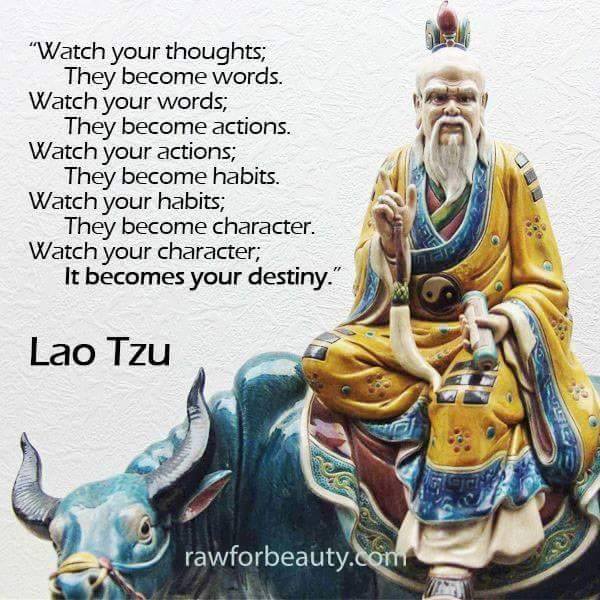
I came across this quote from Lao Tzu, and it just said everything about living an honourable life  so simply and eloquently. This is my mantra. Peace and big love to you all!

watch your thoughts lao tzu

P.S. A HUGE thank you to everyone who has supported me, my work and this blog over the years, and welcome to all the new folk who have subscribed!  Your support really means so much to me, and the incredible reception that my latest book, The Awen Alone: Walking the Path of the Solitary Druid has been totally unexpected and a joyous surprise. Thank you, thank you, thank you. x

Nemetona: Goddess of Boundaries and Edges, Sanctuary and Freedom Presentation

I had a wonderful time yesterday at the Leaping Hare Pagan Conference in Colchester, Essex.  I was honoured to be asked by the organisers at the end of last year to present, give a talk on the goddess Nemetona after having received requests throughout the year following the release of my second book, Dancing With Nemetona: A Druid’s Exploration of Sanctuary and Sacred Space.

It was a really enjoyable experience. I have been going to Leaping Hare for many, many years now and there is a real community spirit, a real sense of well-being and support. Thank you to everyone for your kind words, messages and emails following the talk – may we be the awen!

The food debate

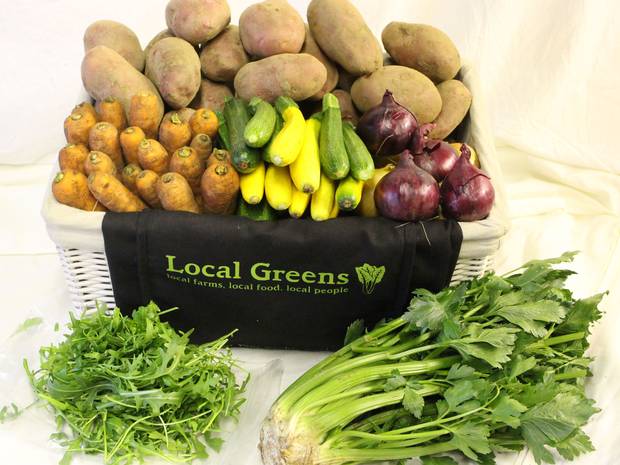
local greensThe ethics of food and diet is such a diverse and difficult topic to cover. For every ethical answer to a question, there are other equally valid ethical answers dependent upon differing circumstances, considerations and priorities. I have been a vegan for over a year now, and in the last month have been seriously reconsidering the ethical implications of my diet regarding the impact that I am having on the whole.

It’s easy to find statistics to back up pretty much any argument. It really depends on who is funding the research, for the most part. However, it is up to us personally to make out own choices, and to educate ourselves as best we can so that we make informed choices about our lives and the way we live them. I chose to be vegan because I thought that it was the most ethically environmentally sound option. However, now I’m not so sure.

The first thing to consider is food miles. Much of the vegan’s diet comes from lands thousands of miles away. The carbon footprint of air travel to bring these foods to the UK is considerable. The second thing to think about is what the growing of these crops is doing to these faraway lands and their people. Quinoa and rice are traditional crops for South America and China respectively, however, now that the West’s desire for these foods has grown the demand for growing them has increased drastically. This has caused the prices of these foods to soar, a lot of time to a level that the farmers themselves cannot afford to put what they grow onto their families’ plates. The third thing to think about is what effect these crops are having on the native land. As crops such as soy, rice, quinoa, lentils, etc are all grown “far away” we don’t really have an understanding of what it is doing to the land itself, as we don’t see it. Out of sight, out of mind. Soy is a great factor in the destruction of rainforest, whether through legal or illegal logging to create new monoculture crops. The monoculture crop itself has a great impact on the land as well – the earth loves and needs diversity. Monoculture is not sustainable, and susceptible to a great many attacks that a bio-diverse ecology would be able to fend off. There are hundreds of other factors to consider – these are just a few.

I’ve been studying permaculture these last few months, learning more about it and how it works. Working with the principles, it seems to me personally that the most ethical way that I can sustain myself it to eat local and organic, either growing my own or supporting those who do. I can check on what they claim, how they go about it as they are just down the road from me. What is happening is not happening thousands of miles away. I know that there are laws in place to protect people, land and animals. I feel like I have a little more control over my diet, knowing where it comes from, how it was grown, etc.

It’s not an easy choice. It requires a lot of research and investigation. It would be easier just to be vegan. I have to read food labels for everything. I have to check farms. I have to talk to neighbours and others in the village if I want to eat their surplus food. It requires an actual positive relationship with not only my food, but my environment.

We grow some of our own food, and will have a small vegetable garden this year. However, our garden is mostly a wildlife garden, dedicated to supporting birds, bees and other pollinating insects, hedgehogs, badgers and the occasional deer that come scrounging through. We decided not to grow the majority of our food, as there is an organic farm down the road that we would like to support instead. It’s their livelihood, and we want to ensure that it is as successful as can be. They grow organic crops, but also raise meat for livestock. It is an ethical consideration that must be taken into account.

Studying more and more about permaculture, I’ve found that I was quite ignorant about the keeping of livestock in small, organic flocks. Large scale industrial farming and monoculture crops are seriously threatening the earth, however, small scale flocks that are organic and actually benefit certain ecosystems, especially where crop growing isn’t a viable alternative. There are also ways to raise livestock alongside different crops that are beneficial to all involved – the very essence of permaculture.

While it’s beyond the scope of this blog to go into the details of permaculture, there are many good resources out there to find out more about the subject (see below).

So, after weighing the pros and cons of being vegan, I’ve decided to go local and organic, with a little dairy in the form of cheese from local farms and eggs from neighbours who keep and love their hens. It’s easy to just say that being vegan is the best thing for the planet, but it leaves out a lot of considerations for the planet that are perhaps “outside the box” in the usual arguments for making the switch.

As with everything, there is no black and white answer, no single answer to such a debate. All we can do is to enlighten ourselves with all the arguments, the pros and cons of each side, and make our own choices based upon what we know.

We also have to know that the choices we make are the choices WE make. We cannot make these choices for others. We cannot push our lifestyle on others. We can inform them of why we make the choices we do, but we cannot condemn them for the choice they make – we are not “better” for the choices we make. It is a trap that is easy to fall into, a sense of self-righteousness that we are definitely doing the right thing. No one really knows that the right thing is, really, or even if there is a right thing at all.

I remember being disappointed when my friend (and now Druid College colleague) Kevin made the switch to eating local meat that he had killed himself. I saw no need from my vegan perspective for the killing of another animal. Having spent time further researching the various implications of western diets on the rest of the world, I’ve changed my mind about his choice, and while I wouldn’t eat meat myself I applaud the well-researched and informed choice he made about Conscious Killing .

We all have to take responsibility for our lives. We have to walk our talk and work to make this world a better place for all, in any way that we can. We have to inform ourselves of the issues that our living has upon the rest of the planet. If like me you follow an earth-based religious or spiritual path, that is a major consideration and part of your path – otherwise why follow it at all?

I can say that after I made the switch two weeks ago (while still using up old foodstuffs like soy in the freezer) I feel a lot better physically. I feel like I have more energy. Whether this is because I’m eating food that hasn’t been treated for long world-wide journeys, eating food in season, eating local and organic I’m not sure – although I think that has a large part. I feel more connected to this land, its rhythms and cycles. So this will be the last month that I eat apples until end of August or beginning of September, providing that local UK apples will not be available in April (dependent upon quantities). There are even further issues that I need to look into, such as the amount of energy required to refrigerate apples throughout the winter from the various local farms. Spring greens in the form of soups are a staple this month. The nettles are growing in my garden – the perfect spring tonic. The sheep and goats are lactating – a new vintage of cheese will soon be available. Purple sprouting broccoli and artichokes will soon be out. Rhubarb is growing outside my conservatory, which will replace the apples in my baking and sauces. It makes the next variety of food available a real event, a real marker of the season.

Whatever your path, whatever your decision, I support you in making honourable choices for the benefit of the whole based on intelligent research and empathy for the land upon which you live. Talk to the gods, the ancestors and discuss these issues with them. Walk the land in reverence and find out how you can fit within that landscape with the least amount of impact. An earth-based tradition is all about relationship, whatever the path it is that we take. Let us take it right back to the earth in every shape and form, in every choice that we make.

What’s in season in the UK

The quinoa debate

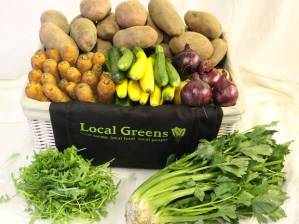
Local and organic veg box scheme UK

The Earth Care Manual: A Permaculture Handbook for Britain and Other Temperate Climates

What Druidry Is Not…

abbeyFor me, Druidry is not a white-robed affair. Crawling under low scrub pines and getting inside secret places of gorse bushes where only the deer trod, or standing on the seashore in the howling rain, or in the heart of the forest with the badgers and mosquitos – it just doesn’t work.

Druidry is not clean. It’s not an exercise only for the mind. It requires experience to turn what you have learned into real wisdom. It’s not just book-learning. Until you get out there and commune with the landscape, it’s not felt in the soul. It cannot live in the head. It will get you dirty, wet, hot, sweating, cold, scratched, bitten. It is dirty fingernails and peering under bushes. It is a return to the curiosity and wonder of the child, yet it is not child-like. It is deep learning, deep experience.

Druidry is not a male-centred religion or spirituality, nor is it female-centric. It is about equality and egality, anarchic and subject first and foremost to the teachings of nature.

It not just about standing in stone circles waving swords and reading off of sheets of paper with a group of other people, the media and tourists alike taking photographs. It is doing work in the heart of where you live, often without thanks or regard of any kind. It is giving back to the land, honouring the cycles and working for the community – and by community, I mean each and every living thing in that area wherein you live and call home, not just human. It is not about power and ego, but about communion and deep relationship. It is about dropping ideas of the self to better fit in the landscape.

It is not about writing loads of books and offering courses, achieving kudos through output, students and media. It is about the sharing of inspiration, acknowledging the inspiration of others and allowing the awen the flow through you in whatever way you see fit. One may be a teacher, or an author, or someone with whom the media interact – but they are not a spokesperson for all Druidry, nor a guru of any sort, and have no monopoly on wisdom. There is little room in deep Druidry for ego.

There are no titles, save those bestowed either by a person on him or herself, or by a group of people following a shared path and learning. These titles are not relevant to all Druids – just to the person or the group. Claiming to be an arch-druid of so and so has no bearing on those who are outside of the group. There is no central authority in Druidry.

Druidry is not about having things – it is about doing things. It is being utterly mindful of personal and global consumerism. It is about looking at everything that you do, everything that you have, everything that you take and everything that you give back. It is not about doing the bare minimum. It is about sacrifice, of time and ignorance, of ego and of desire. It is about constant re-evaluation of ethics, values and honour. It is about constant learning.

Druidry is not about attaining levels of initiation or ordination within learning, however. Courses and instruction may guide us, may open our minds and shatter pre-conceived notions, expanding awareness – but they are not there to gratify the ego through the bestowing of grade or rank. Druidry is also not about a specific point in time, where to call oneself a Druid means to have studied for twenty-some years, learned the genealogies of kings, etc. The Druidry of the past is not the Druidry of today. The Druidry of a small frame in time within the past and from a small, specific region is most certainly not the Druidry of today. Its wisdom can guide us, but it is just one window in a mansion of many halls. The Classical Druids were the Classical Druids – we are not, nor can ever be, Classical Druids.

Druidry is not just an exploration of the self. It goes beyond the self, to a life lived in service to others.

These are just a few things of what Druidy is not.

So what is Druidry?

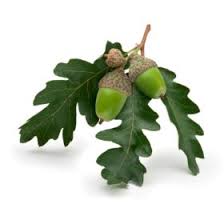
It is allowing the wisdom of the oak to guide you in all that you do.

Truth, Honour, Service

Druidry can be summed up in three words – truth, honour and service. Yet these words can be very vague – what do they mean to the Druid?

 
Truth is not just figurative and literal truth. There are other dimensions to the word when we see it in accordance with our views of the world and religion or spirituality. Druids live in reverence of nature, connecting the world through awen, the flowing inspiration that guides and directs, that is each thing’s own soul song. When each thing is living in accordance to its own soul song, in accordance to its own nature, then it is following its own truth.

 
The world around us tries to muddy the waters of our truth, making us believe we need more than we could possibly know what to do with, making us think we are above others, making us feel inferior, unworthy and unloved. It tries to tell us that we are lacking. When we take a step back away from the world, we can examine it from a different perspective, seeing what is often termed in Druidry as “the truth against the world”.

 
This truth is our soul song. It shines from us when we live in accordance with nature. If flows like the awen when we care for ourselves, others and the planet. It springs forth when we acknowledge the times and tides of life and death. When we step away from what really matters, from living our own truth, we can feel distanced from the world and from each other, and perhaps even our own selves. We must return to the basics of what is our place is within nature, and how we can live in harmony and balance with it. When we do, we are then living our truth.

Honour is another word that lies in the hazy mists of time. It has connotations of chivalry, fealty and nobility. Yet honour is simply the courage to live our soul truth in the world. It is standing strong by our principles of balance and harmony, making the world a better for all. Returning again to what really matters, to our place in the world, is at the heart of honour. It is not a one-time thing that we can achieve and then sit back, resting on our laurels. Honour requires hard work, all the time, to see that we are indeed living our soul truths to the best of our ability.


When we come to understand truth and honour, the natural outcome is service. We live our lives in service to our Druidry – we can do no other. We are not subservient to anyone but ourselves. Living in accordance to our own nature, our own truths and finding sustainability through honour, it naturally results in service to the world – that same world that tries to rail against our truth! The cycle is ever flowing, and we work in service to the truth and the world in equal measure. That is where we find the most balance and harmony. That is what makes it so special, as well as bloody hard work sometimes.

 
Truth. Honour. Service. Three words; three concepts that are inextricably linked to each other, like beautiful Celtic knotwork.

 
Beltane blessings,
Jo.x

What does it mean to be a Druid today?

acornWhat does it mean to be a Druid in this modern day and age?

Being a Druid today does not mean trying to live in the same manner as our Celtic ancestors did in this land. We simply couldn’t – with our technology and changed world, our religion or spirituality must change. We can still follow the intention of our ancestors of blood, of the land or of tradition.  We can honour the land upon which we live, work to live in tune with the natural cycles of life, and live a life that is filled with honour, integrity and truth.  These latter three haven’t changed much over the course of millennia; they are still pretty much the same as they always were. Honour is living with great respect for yourself and for the world, for living a life filled with integrity and truth. Integrity is having the will to stand for what you believe in, even through the darkest nights of the soul.  It is standing strong though buffeted by high winds; it is living your soul truth.  Truth is living in accordance to the natural principle of life; it is finding your place in life and not working out of the bounds that our own bodies and souls are bound to in this life.  It is living in accordance with the natural world.

The Druids of old lived their religion – it wasn’t just a matter for the weekend, or eight times a year during the festivals.  Today we too can truly live our religion, allowing it to imbue our spirit with the inspiration to live a life that is wholly integrated between the spiritual and the mundane – in fact, the Druid would say that there is no separation, whether she be a Druid from the Iron Age or a Druid today. It is living in service, giving back for that which sustains us. We may not have the status of the Druids of old, which could be of benefit or detriment – power can corrupt, even as it can make the world a better place. Druids today show their power in their service and devotion to the natural world – from being a judge in the law courts to an RSPCA animal rescuer.  Our love of nature, whether bestowed by ancient or modern Druids, guides our way of life and our worldview.

The Druids of old were of the Celtic peoples – yet today one can be called a Druid without any Celtic ancestry.  Within Druidry, we honour the ancestors in a triad – ancestors of blood, of land and of tradition.  Where we may lack in one, we may find inspiration and guidance from the other two.  As far as I am aware, I have no Celtic ancestry in my recent heritage, however living in Britain and following teachers on the Druid path fill out two sides of the triad, providing me with balance.  I learn from studying what the Celtic worldview was like, from politics and culture, art and history, archaeology and more.  This fills in the last gap, which, all things considered, even those people who can claim Celtic descent should fully investigate. For those of Celtic descent living in other places of the world, their blood and tradition help to balance out their work with the spirits of a new land, and so on.

I do not try to reconstruct what the ancients did – that would not make sense in the modern world.  I understand things that the ancestors did not about nature – equally they understood things that I never could.  I use my knowledge, which is ever growing, to help me adapt my religion to better harmonise and be in balance with the world.  I use the Celtic worldview, as stated above, to guide me to live in accordance with the time and space of the here and now.

Druidry is all about relationship, whether ancient or modern.  While the ancient Druids may have tried to placate the gods with offerings or sacrifice, modern Druids may appear to do the same, but not for quite the same reasons.  We can never truly know the reasons why the ancients did what they did, as they did not write it down.  However, today we may offer daily gifts of thanks to the spirits of place in order to establish a relationship with them, to better understand and to show our gratitude. In relationship there is give and take – we seek the balance in all things.  We may howl at the wind in an attempt to understand why we are standing in the rain, soaked to our underwear, and receive the most blessed inspiration in doing so. We may just get wet.

Ancient Druids were the educated class, from what we can gather from the historical accounts by others about Druidry.  Today, Druids seek to sacrifice ignorance and to learn all that we can about our place in the world.  A Druid might be inspired to heal with herbs, and learn all that he can about that path. Another might be a poet or author, and use words to convey the awen bestowed by the gods, the ancestors and the land. Yet another might be a park ranger, working to protect wildlife – the possibilities are endless.  What links them all is in the continuous learning – we can never know everything about anything.  Druids are constantly learning. Even teachers and priests in the community are always learning, and never afraid to do so, for to do otherwise is simply allowing pride and passivity to come in the way of our relationship with the world.

It goes without saying that all Druids have a love and affinity with nature.  This love guides us in all that we do; it is our inspiration, our awen.  To be a Druid today is to live in accordance with nature, honouring nature in all that we do, with dedication and devotion, in service to the land, our gods and the community. In that, it is not so different from what we believe the ancients did!