Happy Anniversary!

It’s been four years today that this blog has been going, and I just wanted to take this opportunity to thank you all for reading, following, commenting, supporting and generally just being lovely!

I received a letter yesterday from a lady in India who runs a school influenced by the teachings of Krishnamurti and many Buddhist concepts.  She also has a great love of Celtic theology and music, and took the time to write to me telling me how much she loved my first book,  Zen Druidry. It’s so wonderful to receive letters like these, and I’m continually both surprised and delighted that so many people have taken the time to get in touch.  I feel really connected to the readers of this blog and my books, and I thank you from the bottom of my heart for your words, your suggestions, your reviews, your letters, your support and more.

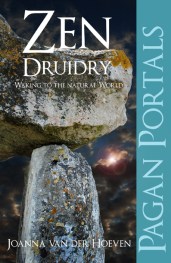
And the timing of that letter was brilliant; there is some good news to share as well! It looks very much like a follow-up to my first book, Zen Druidry will be published this year! Taking the ideas from Zen Druidry in the Pagan Portals series by Moon Books (this is a series of books that offer an introduction on  subject in around 100 pages or less), these ideas are further expanded in this new book, as well as offering more ways to blend Zen and Druidry, Eastern and Western traditions to create a holistic worldview based on reverence for the natural world, utterly awake and aware to the present moment.

I’ll keep you all posted on updates, and once again, thank you all so very much!

Zen Druidry Online Course now available!

zen druidryIt’s finally here: the Zen Druidry online course! An extension of my first Pagan Portals book, Zen Druidry: Living a Natural Life in Full Awareness, this 75 page online course delves deeper into the subject matter with practical exercises, links to videos and talks, provides questions to help the practitioner develop a broader level of understanding and more. A basic meditation audio file also comes with the course, to help beginners and the more adept alike in furthering their meditation practice. For more information on this course, please email autumnsong@hotmail.co.uk. £40

Excerpt from my upcoming Zen Druidry Online Course

Busy here getting the Zen Druidry online course ready, so apologies for the haphazard posting of late!

Here’s a short excerpt from the upcoming online Zen Druidry course, that delves deeper into the subject matter that was introduced in my first book, Zen Druidry as part of the Pagan Portals introductory books series. This course is quite extensive, with practical exercises, video links, audio files and more. We hope to release it by the Winter Solstice – keep everything crossed!

This excerpt is from the Wheel of the Year section, where each festival is looked at in depth and culminates in practical work that combines the elements of Zen Buddhism and Druidry.

Imbolc

The days are becoming longer, and though the air is still cold, the first signs of Spring emerge.

Extract from Zen Druidry: Living a Natural Life with Full Awareness by Joanna van der Hoeven:

At Imbolc we welcome the lengthening days and the first of the flowers, with the snowdrops coming into season. For those that celebrate by the calendar, Imbolc occurs on the 2nd February. I prefer to celebrate when the snowdrops are out, as I find this more in tune with the seasons. This could happen anytime from beginning of January to as late as March, depending on the winter. Imbolc is also the time when the sheep begin to produce milk – ewe’s milk, which is where we get the name Imbolc from. For our ancestors, this was a celebratory time, when cheeses and butter could once again be made to replenish the winter stores. Again, the milking time can occur anytime in February onwards – it’s always a joy to watch the fields and wait to see the new lambs scampering, flipping their ridiculous tails! This is a time for preparing the seeds of what we wish to achieve in the coming year, dreamt up over the long winter nights, but not yet ready to plant – we must still keep these dreams safe. With Zen, we can apply Right Concentration to this time of year, and focus on total immersion in the present moment.

As we have been using Right Mindfulness in the time from the Winter Solstice to the time of Imbolc, we will notice in our environment when the first snowdrops come out, the increasing amount of sunlight each day, the slow warming of the earth. We will feel the energy softly changing, moving from an introspective feel outwards towards the growing light.

The festival of Imbolc is one of gentle joy. Agriculturally our ancestors in the British Isles celebrated the time of lactation, when ewes first began to produce milk. The winter stores could be replenished with fresh milk and cheeses, to last the hungry time through Spring until the land began to offer her bounty once more and awake from her winter’s slumber. Imbolc is also a Fire Festival in the Celtic year, along with Samhain, Beltane and Lughnasad. The goddess Brighid has long been associated with this festival. She is a goddess of fire and water, of healing, poetry, smithcraft and more. This festival became Christianised as Candlemas, again showing the fire aspect of this time. The growing sunlight is reflected through earthly fire and flame. There are many ways to celebrate Imbolc, including household blessings, the making of Bride dolls, Brigid’s crosses, and more.

Become aware of how fire is a central aspect of your life, in all its manifestations. Give thanks when your central heating comes on. Give thanks for the sunlight that keeps our planet from becoming an ice cube hurtling through space. Give thanks for the gas that powers your stove/cooker, allowing you to have a hot meal. Look into a candle’s flame, or a fire in the hearth, and commune with the spirit of fire. Look at how fire is manifested within the body, in energy, emotion and more.

The Druid pays attention to her surroundings. With Right Concentration (sometimes referred to as Right Focus) she can hone her skills in mindfulness. Concentrating on being fully present, little will escape our attention and we will live a more integrated life with the natural world around us. Right Concentration is a skill that can be achieved through daily meditation. We begin with focusing on the breath and the body in meditation, and keeping our concentration centred within. We then move that focus outwards, without losing the concentration that keep us from distractions, from our chattering “monkey mind“.

It is easy to berate ourselves for not having enough concentration in our lives. In fact, when we look at modern-day society, we see that we are being bombarded by things that actually lessen our ability to concentrate for any period of time. We have smart phones that allow us to stop whatever it is we are doing at any given moment (apart from driving, we hope!) and look at/think about something else. We have telephones that ring us when we are at home. We have television shows, sometimes divided into 4-7 minute segments (mostly American shows) with advertising breaks in between. Our attention spans are becoming shorter and shorter simply through the media that we use. Twitter has a 140 character length, and if you can’t communicate what you have to say in that short space then you can’t say it at all. Their Vine app makes looping videos that are only 6.5 seconds long. The list continues.

We have to relearn how to concentrate, how to bring our awareness in directed focus on a subject in order for our minds, bodies and lives to begin to settle once more. As infants, we absorbed information in rapt attention, no matter if it was a light shining overhead or our mother’s voice. Toddlers exploring the world are intensely focused, beginning with their first steps and then on their goal. We begin to lose our abilities to concentrate with the more information we have to hand, thinking that we can absorb it all without actually realising the repercussions it has on our lives. Technology has advanced so much that our human bodies simply aren’t able to cope with the information overload, and we need to take a step back and refocus.

Most of the information we are receiving is not necessary to our daily function. Reading some celebrity’s tweet will not put dinner on the table. Checking replies to our Facebook status will not get our toilets cleaned. If you’ve spent a media-free day a week during the Winter Solstice to Imbolc period, then you probably have realised the benefit of stopping the information overload.

We begin with a simple candle meditation, incorporating the fire aspect of the season and the one-pointed focus required in this meditation. Sit before a candle, and simple watch its flame. When thoughts arise, notice them by saying “lunch” or “meeting” or “cat” and then let it go, returning your focus to the candle’s flame. If you have a family, it might be better to do this meditation either early in the morning or late at night when everyone is in bed. It doesn’t matter how many times you have to bring your focus back to the candle – what matters most is that you do it. Bring your attention and concentration back however many times you need to. Concentration is a skill, and any skill is something which is developed over time. It doesn’t happen in an instant.

Now is the time to take it a step further. Literally.

Walking meditation is a brilliant way draw focus into what we are doing, and help us to integrate with our natural surroundings on the Druid path. We can think of each step we take as kissing the earth, celebrating our love for life on this planet. Walking meditation began as an interlude to zazen, or sitting meditation, to allow the meditator to continue with their meditation while easing their body from a sedentary pose to a moving one, allowing for good circulation and bringing some exercise into the practice.

Walking meditation can be done indoors or outdoors. Zendos (Zen centres) will accommodate both practices in their buildings, but incorporating the Druid path into our spirituality means that we need to engage further with the natural world around us. Remaining indoors has its benefits, enabling us to concentrate better with less distractions, however, we can practice this outdoors with great joy. We can then let this practice become part of our lives to such a great extent that we walk mindfully, aware of our movements wherever we go, whatever we are doing. It requires Right Concentration. Do what you can, whether indoors or out.

Not only will we benefit personally from walking meditation, but the land will benefit as well. If we walk with love and with joy, instead of walking with anger or suffering, the land will also share in this experience. Too often we believe that we are the only beings experiencing, however, we can walk in the rain and experience the rain, knowing that the rain is also experiencing us. Let us make this a good experience.

With the exercise and fresh air, we also release stress and anxiety, as well as developing a practice that allows us to be in the world by silencing our monkey mind and embracing the world as it really is.

If you are lucky enough to have a backyard, these are ideal places to begin. It is out of doors, and relatively quiet, safe and secure. If you don’t have a backyard, you can try a local park that you feel is safe and secure, or a botanical garden, or even a friend’s backyard (with their permission, of course!). If you live deep in the heart of a city and don’t feel that you are able to access public parks with safety on your own, ask a friend or relative to join you. If you have wild stretches of forest or heathland at your doorstep, go for it, but do ensure that someone is aware of where you are going, and what you are doing. Again, take someone along if it makes you feel more at ease. If you have a young family, doing walking meditation with them is a great way to spend time together.

Barefoot walking is a great way to bring focus and attention to each and every step. However, it depends on your circumstances and whether this is a safe thing to do. Broken glass and other debris on city streets are not conducive to good barefoot walking meditation; neither is walking through gorse-laden brush in adder country. Be safe and responsible.

Really notice the feel of movement in your body as you slowly take one step, then another. Engage your whole foot in the step, touching the ground with the heel first, then rolling all the way to the tips of the toes. Be aware of what both feet are doing at the same time. This is surprisingly difficult at first, but it will hone your concentration. Breathe mindfully as if in meditation. Feel the air on your skin, the sunlight or the rain. Notice the light or darkness, the sounds and scents. Do not become lost in these, however; simply notice. Notice without judgement. You can even say to yourself “sunlight”, “dog barking”, “snowdrop”, “icy path” and allow your awareness of everything to keep you going. When you find the mind starting to wander, or you feel you begin to judge something, bring your attention back into your feet and your breath.

Walk as slowly or as quickly as feels comfortable. Most Zen walking meditation is done slowly, but some Zen centres do practice kinhin quickly, to get the blood flowing. As with everything, mindfulness is key. Do this every day if you can, noticing how your environment is changing through the seasons.

Some things to consider from Imbolc to the Spring Equinox are:

  1. Look at how fire manifests in your life. Look at the inner fire within. See how fire can destroy as well as bring nourishment and comfort. Learn how to harness the power of fire responsibly.
  2. Do the candle meditation each day, and then begin walking meditation after you have sufficiently honed your concentration with the candle meditation.
  3. Be kind and gentle with yourself. This is a season which can be difficult, even as it was for our ancestors, who lived through the lean months of Spring until food sources became more abundant.
  4. Do a house-blessing – research various forms or come up with your own.
  5. Prepare the seeds of your intention that you kept safe over Samhain and dreamt over during the Winter Solstice. Find out what they will require to bring them into fruition, but do not plant them just yet. Wait until the sun is a little stronger, the air a little warmer, and life generally a little more forgiving. Learn the value of patience.

The Zen of Jeremy Corbyn

LONDON, ENGLAND - AUGUST 18:  Jeremy Corbyn answers questions from the media outside King's Cross Station on August 18, 2015 in London, England. Jeremy Corbyn was launching his rail nationalisation plans today as action for Rail held protests at stations in England and Scotland against fare rises which has risen almost three times faster than wages over the past five years according to a new report.  (Photo by Dan Kitwood/Getty Images)

LONDON, ENGLAND – AUGUST 18: Jeremy Corbyn answers questions from the media outside King’s Cross Station on August 18, 2015 in London, England. Jeremy Corbyn was launching his rail nationalisation plans today as action for Rail held protests at stations in England and Scotland against fare rises which has risen almost three times faster than wages over the past five years according to a new report. (Photo by Dan Kitwood/Getty Images)

Jeremy Corbyn, leader of the Labour Party in the UK, might not be the first thing someone would imagine when they think of Zen. However, this Islington resident shows us the way in focusing on important work, without letting the ego and the self get in the way, doing what is necessary without resorting to the usual slander and back-stabbing that is so prevalent in politics today.

The 66 year old has been an MP for Islington North since 1983. He has worked on the issues that matter to him with real dedication to the values that he holds dear, such as social equality, world peace and the end of nuclear weapons, just to name a few. He was able to get on with his work fairly inconspicuously, until he baffled his opponents in the leadership race and became the head of the Labour Party through his dedication to change politics, largely thanks to a grass-roots movement that supported him not unlike Justin Trudeau, the new Prime Minister of Canada who came out of “nowhere” (his party was third in the race and not predicted to win) recently to take the election by storm through voters who wanted change.

While Corbyn might not have the swooning good looks and charisma of Trudeau, they hold many things in common, including the dedication of their followers and supporters. This writer does indeed have a nerd crush on Corbyn, totally in love with his morals and ethics, his way of working. He is a Zen master, and here’s why.

In the face of public denigration by the Conservative party, who try to put Corbyn down any way they can through personal attacks, not once has Corbyn retaliated. Corbyn cares about the issues, not about his ego. He does the work and considers it important, without considering himself important. He works with the “I”, without letting the “Me” get in the way.

Even in the face out outright lies about his character, such as at the Cenotaph memorial story presented by the Conservative-backed “newspaper” The Sun, Corbyn has just gotten on with his work. In the Prime Minister’s Questions, when he is regularly personally attacked by the Prime Minister he simply reminds Cameron of the original questions, despite the boos, jeers and laughter from Cameron’s cronies. Corbyn presents the questions from the people, taking a personal step back to allow other voices to be “heard” (among the laughter and jeers from opposition in so called “civilised debate”). It’s not all about Corbyn, but about the people that he represents.

trudeau 2

Justin Trudeau

This is a real-life example of how we can live in the face of adversity with honour and integrity. Not once has Corbyn resorted to mud-slinging in retaliation to anything thrown at him. He responds with pushing forward the issues that need attention, and doing his job to the best of his ability. We can be inspired by his behaviour in order to make the world a better place. When someone is trying to take us down, we can take a step back from our egos and focus on what really matters, instead of throwing insults back and forth across some imaginary playground. When all the playground bullies can do is insult the person, not the agenda, then it becomes clear who is in the right and who is in the wrong. We’ve seen time and again how Conservative media is trying to portray Corbyn in a bad light, and we can see the desperation behind that because they’ve got nothing on him (similar to Trudeau and the Conservatives’ campaign against him: “nice hair though“). We don’t spend all our energy defending our fragile ego, but instead doing the work without letting it get in the way.

When we’re suffering the slings and arrows of those who are trying to undermine and attack us, we can let it go and focus on what’s important. What is important is the work that we are doing and the way that we live our lives. When we are able to let go of a self-centred point of view, with the “me” being all-consuming, then we broaden our perspective to encompass everyone and everything. This is compassion in its truest form.

Let the haters hate. Do the work, be true to yourself and see with the eyes of compassion. This is what makes Jeremy Corbyn Zen.

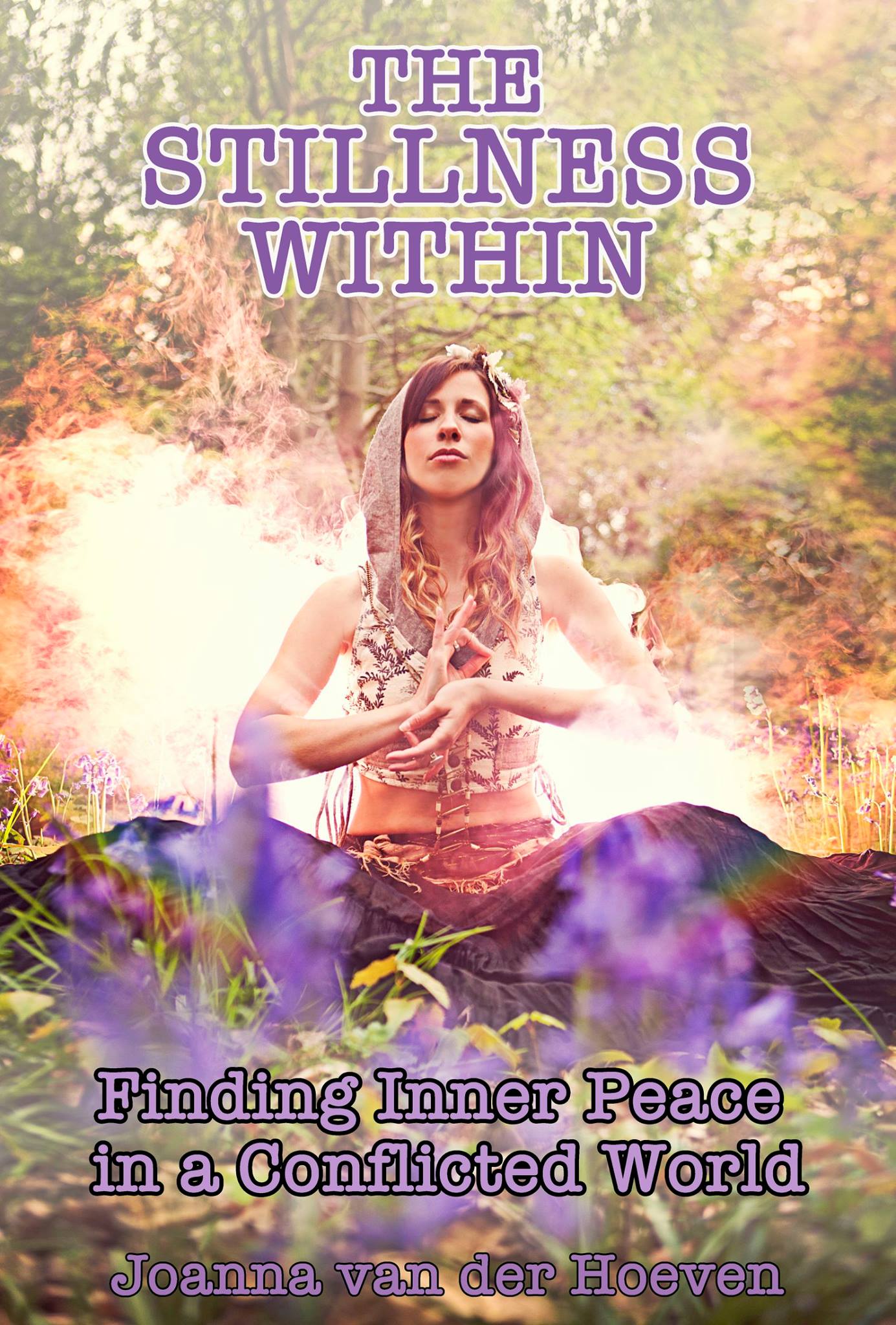
The Stillness Within – out soon!

My fourth book, The Stillness Within: A collection of writings on finding inner peace in a conflicted world will be out fairly shortly.  Available in electronic format only, it is my aspiration with this book to keep overhead production costs as low as possible so that the full proceeds of sale can go to Woodland Trust and Orangutan Appeal UK.  I’ll keep you posted when the book become available!

Cover 1

Sitting still – the joy, the suffering, transformation and impermanence

Working on my online course for Zen Druidry and putting into words a deeper exploration of Zen Buddhist concepts with Druid philosophy and way of life has opened my eyes even more to the wonder that is life, the suffering and the joy that we create and the freedom in distinguishing between the functional ego and the representational ego that causes so much unnecessary difficulty in our lives.

I think meditation is the key to unlocking these concepts, for by stilling the body we can still the mind enough to see clearly, to ponder concepts such as the Four Noble Truths and the Eightfold Path in a Druid context with a deeper insight as a result of simply being quiet and mindful. I sit in meditation for 30 – 40 minutes a day, with a large chunk of that time being spent simply being present in the moment, in all its pain and glory, up and downs, its successes and difficulties. It’s a simple thing to do, but can be quite difficult to do when we begin to realise just how our minds work, and how hard it is to let them be, to not get attached to thoughts and feelings and simply be the observer of the mind’s functioning. We love to judge, we love to recreate scenarios, we love to think, think, think about everything to the point where we leave our bodies behind. At the other extreme we run our bodies into the ground and by doing so, without stilling them for any amount of time our minds become as frazzled as our nerves and we cannot find any sense of peace.

Sitting in silence, we can feel extreme joy even as we can feel extreme pain. Our attachment to either is what causes us suffering. When we attach to joy, we want to feel it over and over again, and crave it, striving for it with all our being, sometimes living lost in the future anticipation of that joy, or lost in the past of when we had it in our lives. Our attachment to pain causes us to suffer further, again becoming lost in the future with thoughts of “when will this pain every end?” or lost in the past “this is the cause of my pain, if only…”; when we drop our attachment and simply be in the present moment, we can take care of our thoughts and our emotions with great skill, thereby being compassionate to ourselves.

When we sit with either joyful or painful feelings, when we observe them without judging them or anyone else, when we simply see them as a part of life, as an emotion, we can also begin to understand their impermanence. Buddhism talks a lot about the impermanence of everything, and this is reflected in the Druid tradition of honouring the ever-changing cycles of life. We look at a river and see that it is never the same river twice, but constantly flowing, moving downwards to the sea, being filled with rain and experiencing a cycle of existence that has no single, unchangeable part. When we see concepts of birth and death both within a Druid and Buddhist perspective, we realise that there is no such thing as a beginning or ending that is so often tied to these concepts. They are simply events in our lives that all things experience. My view is that we are all a part of nature’s soul, that everything that exists is nature undergoes changes in form through transformation, energy being patterned by conditions and environment in an endless cycle. When we see life in such a context, we see that joy and suffering are also impermanent, and we are able to sit and be with them, to take them by the hand and allow ourselves to experience them without getting caught up in their form, for we know that they are transitory, as are we.

In the quiet and stillness we are able to gain a greater perspective of the whole, rather than the chattering monologue that runs through our minds for the majority of our lives. To step outside of our minds is a great liberation. To see the interconnectedness of all things dissolves the separate ego, instead allowing us a deep realisation of the weave of each form in the tapestry of life. We understand and acknowledge the functional ego that allows us to be in this world, while letting go of the representational ego that strives for and causes separation through the illusion of an Us and Them mindset. We’re all in this together.

In the Ten Ox-herding Pictures (or The Ten Bulls)  we see the final part as being able to work in the world without that separate sense of self. I think this is very important for Druidry and for all Paganism, for if we stop at the realisation of self we are at risk of self-importance. It is necessary to find out who we are, and then to work on letting that go as we realise that self is part of another system, which is part of another system, and so on throughout the universe. Rafting the currents of human emotion become so much easier when we lose the idea of a separate self, for not only are we not hurt by others as much and are able to feel compassion to create a more harmonious and peaceful existence, but we also become a part of the flow of that current. We find that with time our meditation and contemplation allows us to let go of the raft and simply become the river, thereby not having to fight it anymore, or fight to keep our seat as we hurtle through obstacles on our journey to the sea.

It’s our choice, however, to do the work necessary in order to achieve this sense of wholeness and peace, for no one can do it for us.

For a look into how Druidry can be related to the Ten Ox-herding pictures, see my post HERE.

Karma – It’s not about what we do…

This is a brilliant article by Culadasa and Matthew Immergut on the nature of Karma, what it is and isn’t in relation to the Buddha’s teachings: specifically, the teaching of “no self”.  Click HERE for the full article.

Karma: that word that gets thrown around a lot.

People talk about “good” karma versus “bad” karma, or “your” karma versus “mine.”

But despite the term’s popularity, it seems like everybody has a different idea about what it actually means. If karma is truly one of the Buddha’s most important teachings, as he himself repeatedly emphasized, then to follow in his footsteps, we need to be clear about its definition.

The Problems with “Agricultural” Karma

Probably one of the most popular misunderstandings about Buddhist Karma is the idea that everything that happens to us is our karma. If we win the lottery or have an attractive partner, it’s because we performed good deeds in the past—we have “good” karma. If we get hit by a truck or our partner cheats on us, it’s because we misbehaved and have “bad” karma. And, of course, what we do now will determine our future results. Let’s just call this the agricultural view of karma: we reap what we sow.

So, what’s wrong with this idea? Well, whether we’re Buddhist or not, it creates lots of intellectual problems.

READ MORE…

Reblog: The Soul Behind the Soul

Here is a taster of my latest blog post for SageWoman’s channel at Witches and Pagans – to read the full article, click HERE. Exploring the soul behind the soul, the boundless nature of existence, love, compassion and more, with some Carl Sagan thrown in 🙂

Hildegard von Bingen wrote: “The soul is not in the body; the body is in the soul.” (Vol XXII, No. 5). This is a concept that I’ve been thinking about all week, and how we have tried to place unnatural limitations upon the body and soul based on our dualistic way of thinking. I suppose a true Zen answer would be the body is the soul and the soul is the body, but right now I’m enjoying thinking that the soul contains the body. Next week I’ll probably veer off into a more Zennist approach.

For this to happen, the soul must accept the body, not the other way around. As I’m not entirely certain that there is even such as thing as an individual soul, it’s an interesting concept. What if the “life force” on this little ball of rock hurtling through space is all soul, all an expression of soul? What if everything is an expression of the Earth’s soul, or the soul of the universe?

In Druidry many see the gods as being many, in a polytheistic approach. Some see them all as aspects of one deity, or of nature itself as a single entity, which is a more pantheistic approach. But what lies beyond the concepts of polytheism and pantheism? I don’t know yet, I just thought I’d throw that question out there.

After many brilliant short essays on the nature of the soul in a Celtic context, Tom Cowan towards the end of his fabulous book, Yearning for the Wind tantalises us with something similar. In an exercise that he suggests, we are offered the opportunity to try to see the soul behind the soul. While Cowan seems to willingly accept a single Creator deity (which doesn’t feel right to me, I’m much more of a “everything is soul and soul is everything” without the need for any one Creator or Creatrix) he does speak of a certain “yearning” for the soul to express itself. For me, this is close to what I’m currently exploring in terms of everthing being an expression of either a collective soul or an ongoing soul that has no begninning and that has no end. I’m not satisfied with the Big Bang Theory (the scientific theory, I love the show), in that there has to be a starting point for all creation. I see the universe as constantly being in flow, things arising and falling away, matter being transformed into other things along the way. Carl Sagan said “ The nitrogen in our DNA, the calcium in our teeth, the iron in our blood, the carbon in our apples pies were made in the interiors of collapsing stars. We are made of star stuff.” I’ve no burning need to document a start point for this process, for I simply don’t see one; when does the life cycle of an oak tree begin? When the acorn grows on the branch? When it falls to the ground? When the seedling emerges from the soil? Half of me existed as an egg in my mother’s womb while she was growing in her own mother’s womb. When did I start to be?

Continued – to read the full article, click HERE.

So Happy

So happyZen Buddhist monk Thich Nhat Hanh suffered a massive stroke and brain haemorrhage last year, which left him incapacitated for many months. He is now able to move slightly, and recently managed to utter his first few words (pictured on the right). His joy for life, whatever suffering he may be going through, is an inspiration to all. He has changed some of his therapists’ lives through his example of mindfulness, one therapist even breaking down and crying when she realised just how she had never really seen the beautiful blue sky before in San Francisco. Thay couldn’t yet speak, however he did was point to the window to remind her of the beauty of the sky and the gift of opening our perception to it. It changed her world, and they were both happy.

The beauty and wonder of the present moment is there for us all. All we have to do is open our perception to see it. In the midst of great suffering there is the possibility of great compassion. In this compassion there is the power of love and beauty, two words that may be bandied about recklessly in our modern-day, but words, concepts and energies that have real power within them.

Through our suffering, we can make small steps towards awareness and mindfulness by becoming awake and aware, thereby easing our suffering and that of the world around us. We notice things that we wouldn’t otherwise notice in our suffering, as we turn our gaze outwards and perceive the world in its entirety rather than just our own suffering. Thich Nhat Hanh is a wonderful example of one who has seen and experienced the suffering of war, of exile, of persecution and physical trauma and still sees the power of love and beauty in the world around him. When I suffer, I shall breathe in and out, look at the sky, the trees, into the eyes of a loved one and know happiness and joy, there finding the deepest gratitude for my blessings.

Meditation and Acceptance

meditation 3I found this good article on meditation by Chad Foreman, and this paragraph especially struck a chord within me:

“You have probably heard all this sort of thing about accepting and letting go before, but here is the secret to accepting and allowing to truly be able to relax:- You do not have to actually accept the present moment or actually let go of anything because that would imply effort, and that would imply things are not already perfect just the way they are. trying to accept would require you to do something with will power and subtle aggression, the secret is to simply FIND that part of yourself that is already allowing and accommodating the present situation. Neither accept or reject anything. This is the key instructions of Tibetan Buddhist Masters.”

To read the full article, click HERE.