Swift, Celebrity, Stories and Sovereignty

Yes, I am a Swiftie. Unabashedly a Swiftie. Always have been, most likely always will. I’m loving the new song (total earworm!) and the video is a little bit of genius. It’s also gotten me thinking, which is what all art/social commentary should do, no?

Musician and singer/songwriter Loreena McKennitt has spoken about the cult of celebrity for a few years now, how it has changed music makers from being artists to being commodities.  The face of music has changed so drastically in the last ten years that it’s becoming more and more difficult to express yourself musically, as an artist, rather than going for the superficial jugular of celebrity status. While I’m not saying that Taylor Swift has never sought celebrity, this clever woman has criticised it and examined it from many angles over the span of her career.

Taylor Swift’s most recent song and video, “Look What You Made Me Do“, is another critique of how people see her, based on assumptions made from the media, other artists, the haters and the Swifties alike. (She previously covered one assumption a few years back in her video, “Blank Space“, poking fun at the  media image of her being an over-emotional, co-dependent serial relationship junkie.) It’s a very good tongue-in-cheek look at the many personas that others have created for her, such as the leader of “The Squad” (a media reference to her circle of famous friends), her so-called “surprise face” when she wins awards, her “love” of playing the victim and more. Before the song was released, Taylor had wiped all social media, deleted all Facebook, Twitter and Instagram posts, as well as having her website simply showing a black screen. It’s a very shrewd move, personally deleting everything that the media could interpret about her, which she knows as well as we do that it’s only a part of who she is, a representation of a facet of a person. No one is their Facebook or Twitter account.

Taylor Swift ReputationThe song and video also points out that we need to take responsibility in our lives, which includes personal and emotional responsibility. The title, “Look What You Made Me Do” is referencing that fact that we often blame others for so many things, which engenders a lack of personal responsibility when it comes to the art of basic living. We need to take responsibility back for ourselves, for our actions, our words, our thoughts and emotions. When we do so, we pull of the mask that allows us to stay in our wounded selves, and to fly free with the wings of freedom and sovereignty. The reaction of others to this, well, what can I say? Some may praise you for it, some may criticise, some may hate and some may love you for it. The title is also a comment on how the media have created and fabricated all these stories about her, making her as a media-created character do and say things that are completely false. Taylor Swift’s new album (available beginning of November) is called Reputation, is yet another examination of the power of story, and who is telling it, and to whom.

This year, on a pilgrimage to Glastonbury, I met with the goddess Bloedewedd at the White Spring. She cautioned me to choose the mask that I wish to present to the world, otherwise others would do it for me. As I was watching Taylor’s video, these words came back to me, reflecting that everyone needs to choose, otherwise the choices will be made for them. Some would argue that we should simply take off all masks, and I would agree with this statement up to a point. We need boundaries, and certain barriers in place for different situations.

When I am working in a professional capacity, I can’t be the silly goof that I am in my dance troupe, twerking in the middle of a choreography just to make the others laugh. When I am teaching, I can’t be the child running to the bottom of the garden in search of faeries, or seeing how much of the alphabet I can burp after several glasses of Prosecco. We have different masks, different hats that we wear in different situations, because I am a daughter, a wife, a Druid, an author, a dancer, a woman, a teacher, a friend, a sister, a lover. To some, I am even a challenge, an enemy, a fraud, a hypocrite, a liar, and more. While this may not be true, other people’s interpretation of me is something that I have very little control over. They may have their reasons for believing in the story that they hold of me, they may not. But we have to remember: it’s just a story.

What is important is that our story is something that we can be proud of. Not in order to impress others, but for ourselves, so that we can move forward and add to our story with honour and integrity. We can shake off other people’s perceptions of us, because we have very little control over that anyway. We can choose to not be commodified inasmuch as we are able, and to take the reins in our journey and guide ourselves towards the sovereignty and the story that we wish to fulfill. Only we know the truth of our story, the terrible lows and the glorious highs. Only we can choose to move forward with honesty and good self-examination, in order to achieve our goals and to live a life that’s more integrated, with deep and sustainable relationships.

I’m proud of my story.

And so is Taylor Swift.


Please consider contributing/subscribing to this blog! Click HERE for more details.

Working with Anger, Working with Community

An article by Sophie Dòbhran and Joanna van der Hoeven

As Druids, as Pagans, and also in the role of priestess it can sometimes become really hard to stay connected with people who are cultivating rage and anger towards an event that creates a painful gap between what they wish and what is happening. One reason might be that they seem so shocked towards the event, as if they had just realized that such things are possible in our world. The first surge of anger is necessary, in order to provide a little release from the pain and suffering of the first wounding, but then we keep wounding ourselves again and again by cultivating the anger. And in doing so through our connection with others, we cultivate misery and pain together and nurture our being entitled to it.

Is it in how we resist a situation, and in doing so how we are ourselves nurturing the rage and anger and blind suffering that we so loudly condemn?

Even more troubling, is that it seems that the journey stops there: misery seeks misery, people suffer together then turn the page and go back to watching violent forms of entertainment on television and in the movie theatres but all that’s acceptable in our society. Until the next shocking thing happens. It’s like awakening sporadically is so painful and shocking that it doesn’t stick.

It is so difficult to feel the anger properly, and then to let it go. Anger perpetuates more anger, more suffering, and more pain.

Sometimes we need anger to begin a new motivation, a new revolution. However, a revolt that is perpetually based in anger turns into the riots in the streets of London a few years back, where innocent people were hurt, shops destroyed and more. That sort of anger doesn’t produce any results other than more suffering. Yet the anger that the women of the suffragette movement felt turned into courageous and defiant acts against the establishment that won women the vote, and more rights to come.

We could look at it as differentiating between holding the anger as motivation, or holding the anger as instigation. The preferable way would be the former, and then with a level-head find the solution after gone through the initial suffering. But there is a boiling anger in society that’s continuously being repressed, both here in the UK and in the USA, which will eventually explode if nothing is done about it, if there isn’t an outlet for it. Peaceful demonstrations seem to have little effect anymore on the establishment, and the media can just block it out as if it never happened. So, there’s the anger there, and it’s not going away soon…

Perhaps it has to do with the general isolation that has taken place, people being so disconnected from each other, and from Nature. We are no longer used to being mindful, to listen to silence. We are addicted to all kinds of fake relationships, superficial activities, superficial foods, and so on.

We need to remember that it’s all energy; sometimes the energy of anger isn’t appropriate. And when it’s no longer appropriate, when it becomes harmful instead of leading us out of apathy, for instance, then we need to repurpose that energy into something useful.

“Useful” is something each person must define for themselves, for each situation is unique. In order to do that, we need to step back from the situation and get perspective in order to discern just action. Anger, like a barking dog, can alert us that our boundaries have been crossed. But are we going to let the dog address this situation for us? How about when we cultivate anger together and become a pack of barking dogs?

Perspective needs distance and silence to produce clarity. No one can understand just why we are so angry better than we do. What follows is compassion. Compassion is not always soft and gentle. Sometimes, compassion means strengthening boundaries or raising one’s voice to be heard. Compassion means observing the situation with distance and clarity in order to discern the best path of action inherent to it.

It’s easy to be angry and feel desperate, lost and confused. Or to think that a public demonstration will change things, because we are now used to getting immediate satisfaction all the time. And yet if we truly pay attention, we realize that we can truly cultivate the change we want to see in the world. On a much smaller scale, maybe, but it is real and it is tangible, and it is satisfying.

Given that we are already what we condemn, we never have to look very far to create mindful actions that reverse that negative flow. It doesn’t change the world or impact politicians, but it changes our world, from our nemeton to another’s nemeton. Aren’t our nemetons microcosms?

Druidry is a religion based on locality first and foremost, and so, when we are upset or angry, it’s our immediate locality that bears the brunt of it. Our immediate locality is also the thing that we can affect most in our lives. When we’re angry at the government or our employers, we can do what we can to be heard: writing letters, signing petitions, talking and organizing unions, etc. But we have no control over what happens after that.

However, in our own environment, in our own bodies and for the most part, in our own houses and land we do have some control, and these are the areas that we can affect to effect change. Only we can change ourselves. We can think and act locally first and foremost, instead of the usual “think globally, act locally” because our range of influence is not all-encompassing. We can think all we want (and post all we want on social media), but that does not effect change. If we bring it down into bitesize chunks that we can handle, then we’re able to really do the work that needs doing.

So, we work in our area, to clear litter, to do ritual work, to contact the Fair Folk, to work with the ancestors and the spirits of place because that is where we live, because that is where we get our nourishment and sustenance. It is also useful to become members of their parish council, or join other committees in the community. That way, we have a real vote on planning applications and housing developments, environmental and health issues and more. In doing so, our environment affects us and we affect it. Then, like little ripples from a pond, that changed and charged energy can spread out. We create an effect in the world.

Think of your locality, think of your tribe. When your tribe is strong, let that energy permeate the rest of the world. This is not to say that we must become insular, separatist and isolated, but more as a ways and means of really affecting change in our own worlds. Become aware of the energy of anger, and how it is being used. Take care of your community, of your locality, and be conscious of the choices you are making and the reasons behind those choices. When we are conscious of our behaviour, we work with right action, and our work will benefit in a holistic pattern that emanates from a strong and true core of personal sovereignty.

Sophie Dòbhran was born in Quebec and lives in a farmhouse on a small island near Quebec city with her husband, her son, two cats and a dog. She studied under Swami Premananda Saraswati for a certification in Hatha yoga and also studied with the Order of Bards, Ovates and Druids. She joined the Sisterhood of Avalon in 2014 and has been actively cultivating an avalonian spiritual practice since. She facilitates Red Tents once a month, as well as druidic rituals and an SOA learning circle in her community. To find out more, visit her website at http://www.ileauxpommes.wordpress.com.  

Joanna van der Hoeven is a Druid, Witch and a best-selling author. She has been working in Pagan traditions for over 20 years and is also a member of the Sisterhood of Avalon. She is the Director of Druid College UK, helping to re-weave the connection to the land and teaching a modern interpretation of the ancient Celtic religion. To find out more, please visit http://www.joannavanderhoeven.com

Wonderful news!

A lovely thing arrived in the post this afternoon – my fully signed contract with Llewellyn!  It’s an honour and a pleasure to write for this publishing company. My very first book (Scott Cunningham’s Wicca: A Guide for the Solitary Practitioner) started me on my journey down the Pagan path around 25 years ago. Since then, many Llewellyn volumes are displayed proudly on my bookshelf, and in 2019 my book will be joining them!

More details to come, but for now, that’s all that I can say 🙂

A very early teaser…

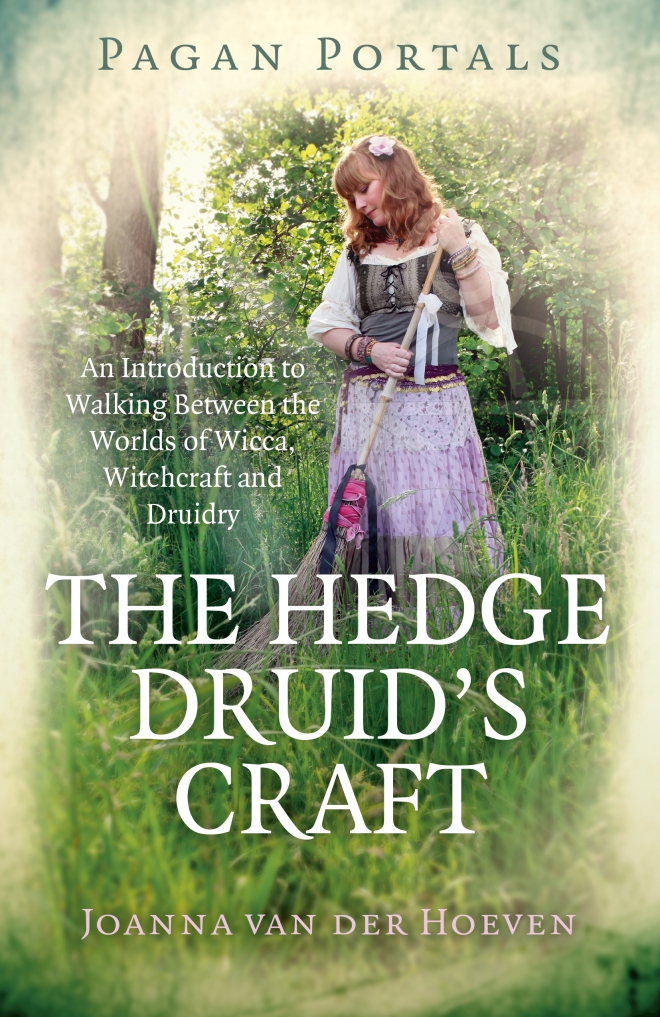
So, here’s a little teaser about the work that I did a couple of months ago, when the gods decided to sit me down quite literally and make this book happen. This book will not be available until 29 June 2018 through Moon Books, but I just thought I’d leave this here…  🙂

Cover high res

Endorsement by Mabh Savage, author of A Modern Celt and Celtic Witchcraft:

“This book is an absolute must for anyone seeking to deepen their magical nature or set out upon a path to connect with the world around them. Jo is incredibly inclusive and covers aspects of witchcraft, Wicca and druidism interspersed with an alamanac-style folklore juxtaposed against modern science and a common-sense realism about the modern world we find ourselves in. As a witch on an eclectic path, and a trainee Bard, many of Jo’s words and experiences really resonated with me. Like Jo, I have always been a witch, but appreciate this can mean different things to different people, and I also have found that some Druidic paths can at first appear dry and academic, but with this volume you can sink your toes into the earth and reach high into the sky to touch the stars; to feel what being a Hedge-Druid can really mean; how it can change your world. Jo works with herbs, plants and animals, examining all types of creature, from what we might consider the lowest, such as insects and invertebrates, to the magnificent mammals such as stags and horses. She reminds us that each has a vital place in the world, and in its eco-system, and even shows us how we might go about finding our own animal ally. As well as the earthly beings we can connect to, Jo teaches us how to connect to the celestial beings; the sun, moon and stars, and the aspects of our earth that they control, such as the tides and the seasons. Jo speaks to us of the inherent goodness in some people; how we can look past the horrors that some humans have brought upon the world and see the hard work of those (including many druids and those on similar paths) who are trying to fix the damage and repair the connection between humans and nature. Jo reminds us that we can fill each day with ‘the magical and the mystical’, and gives us the tools and knowledge to create our own deeper understanding of this truly wondrous world we live in.”

The birds have gone…

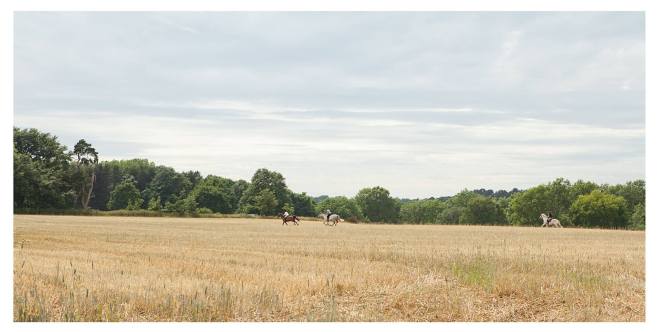
It is a melancholy time of year. Most of the fields are now lying still, shorn and with the stubbly remains jutting defiantly into the last of the summer sunshine. The house martins departed over the weekend; I had spent much of last week watching the elders teach the young ones how to glide and ride the air currents in preparation for their long trek to their winter homes. The sky is so silent and still without them, and there is a small space in my heart that is sad to have said goodbye to them. Good luck on your journey, little ones. May you be as safe as can be, and I hope to see you again next summer, when you herald in the start of the season of warmth and sunlight once again, alongside the calls of the cuckoo.

The full moon makes sleep difficult; dreams are seemingly random and exhausting, and will only have meaning when the actual events happen. My skills in divination and the sight are through dreams more than anything, but right now I’m so tired that I’ll be lucky to remember anything upon waking. It’s only in the actual doing or being somewhere that I’ll remember that I dreamt it, like on Saturday when I signed a new contract, and remembered writing an email with a query regarding it. In the dream, I had no idea who I was writing to or why; now it all makes perfect sense.

It is a time when we are seeing the fruits of our labour. But it is also a time when we cannot yet rest or lay down our tools, for there is still much to be done. There are many other harvests that await. I have had a good crop of raspberries this summer, and another one on the way. The first apple harvest was abundant, and the second looks to be even better from my three little trees. I have just released my seventh book, with another written and in production, and a whole new one to work on. Druid College’s next Year 1 session begins in October, but we have our first session of our Year 3 apprentices beforehand to journey with on pilgrimage to Glastonbury in September. There is still much to be done.

The leaves are beginning to change, and a soft sadness tinged with relief lies within my breast. It feels like I’ve cried a long time, and am releasing that juddery sigh that often follows a good sob. New things await, but the old ones are being put to bed first. Everything in its own time. Nature does not hurry, and yet everything gets done.

So this evening I will be honouring the full moon and the Lammastide, with ritual in the company of a couple of lovely ladies. As the combine harvesters grumble relentlessly in the background, we shall sing to the moon, and share in the bounty that we have received with the spirits of place, the ancestors and the gods. Bread that I will bake this afternoon will be our offering, as well as words and vows of the work to come.

The times of sadness and stillness are required, just as the times of light and laughter. For we cannot have one without the other. They are not opposites, but simply on different places in the spectrum of human emotion. We ride the currents in keeping with the tides and seasons, and work towards integration and harmony.

May we be the awen.

6

If you’ve enjoyed reading this blog post, or any others on this site, please consider contributing towards the future of Down the Forest Path with a £10 donation for a year’s support of the work. You can donate by clicking HERE.

The Awen I Sing

cropped-mg_9433.jpgBlessings!

After last night’s ritual to honour the first harvest, this song came to me as I was leaving the offering. It’s inspired me to create an album of songs and chants for the Hedge Druid. You can have a listen here: https://joannavanderhoeven.bandcamp.com/track/the-awen-i-sing