
There seems to be some confusion over just what Hedge Druidry is, even in the Druid community. I should hope that my writing will clear up some of this confusion and misperception, and for a full account there is always the work that I am most proud of, which is The Book of Hedge Druidry: A Complete Guide for the Solitary Seeker. However, here in blog post I will address some of the misconceptions, and share my love, knowledge and experience of the tradition.
Let’s begin with one of the latest misconceptions that I have come across. I have read in a recently released book on Druidry that Hedge Druids are those “who believe that each Druid can make it up as they go along, collecting bits of lore and ways of worshipping from disparate sources, Druid or not, both ancient and recently invented.” The tone of this seems to be a bit condescending and condemning, and perhaps comes from an uninformed point of view regarding Hedge Druidry as a specific tradition.
Hedge Druidry is deeply connected to the culture, language and study of ancient and modern Druidry. Without that, it wouldn’t be Druidry. Only by understanding the history and context of Druidry, both ancient and modern, can we create an inspirational tradition today that is rooted in the past, but not chained to it. For Druidry does evolve, in order to be relevant to today’s world. But the above statement isn’t entirely untrue either, though probably not in the light that it was presented.
Do we make it up as we go along? Well I much prefer spontaneous ritual, that’s for certain. My words in ritual are never written down. I have an idea of what I am going to say, along with the ritual actions and intention based upon my decades of research into Druidry and the many, many rituals that I have performed over the years. I might write down my ritual beforehand, especially if I am sharing it with others, with a set ritual format to follow, but the words, the feelings and motions are totally spontaneous, deeply in the moment and connected to the spirits of time and place. My rituals are based on a knowledge and love of Celtic lore and my rituals, offerings, and prayers are all rooted in that soil. I have studied Druid ritual in many, many forms and, as no one single tradition of Druidry has survived since ancient times, we are all just trying to create rituals that are sound and which are inspiring, which connect us to the time, place, ancestors and deities based on what we know from history and what is meaningful today. Druidry has no liturgy, but many of my own rituals and those of other Hedge Druids follow a stylised format entrenched in Celtic lore and deeply connected to the land. It gives us an outline to follow, to which our spontaneous words spoken in the moment to those who are with us, both human and other-than-human, can witness.
Do we collect bits of lore and ways of worshipping from disparate sources, Druid or not, both ancient and recently invented? Of course we do. So do all Druids, whether they are Celtic Reconstructionist or from any other branch on the Druidic tree. We have ancient Classical Greek accounts, Roman accounts, and Irish and Welsh records written by Christian monks. We also pull from modern archaeology and, for some, the Romantic and other Revival periods in history, art and literature. We also look through the lens of comparative religion, in order to better understand and make links to the Druid tradition where there might be gaps in the knowledge, looking at shared proto-Indo European roots such as with Hinduism.
As well, there is the importance of the hedge in Hedge Druidry, which is often forgotten, not mentioned or not even known to some in the Druid community.
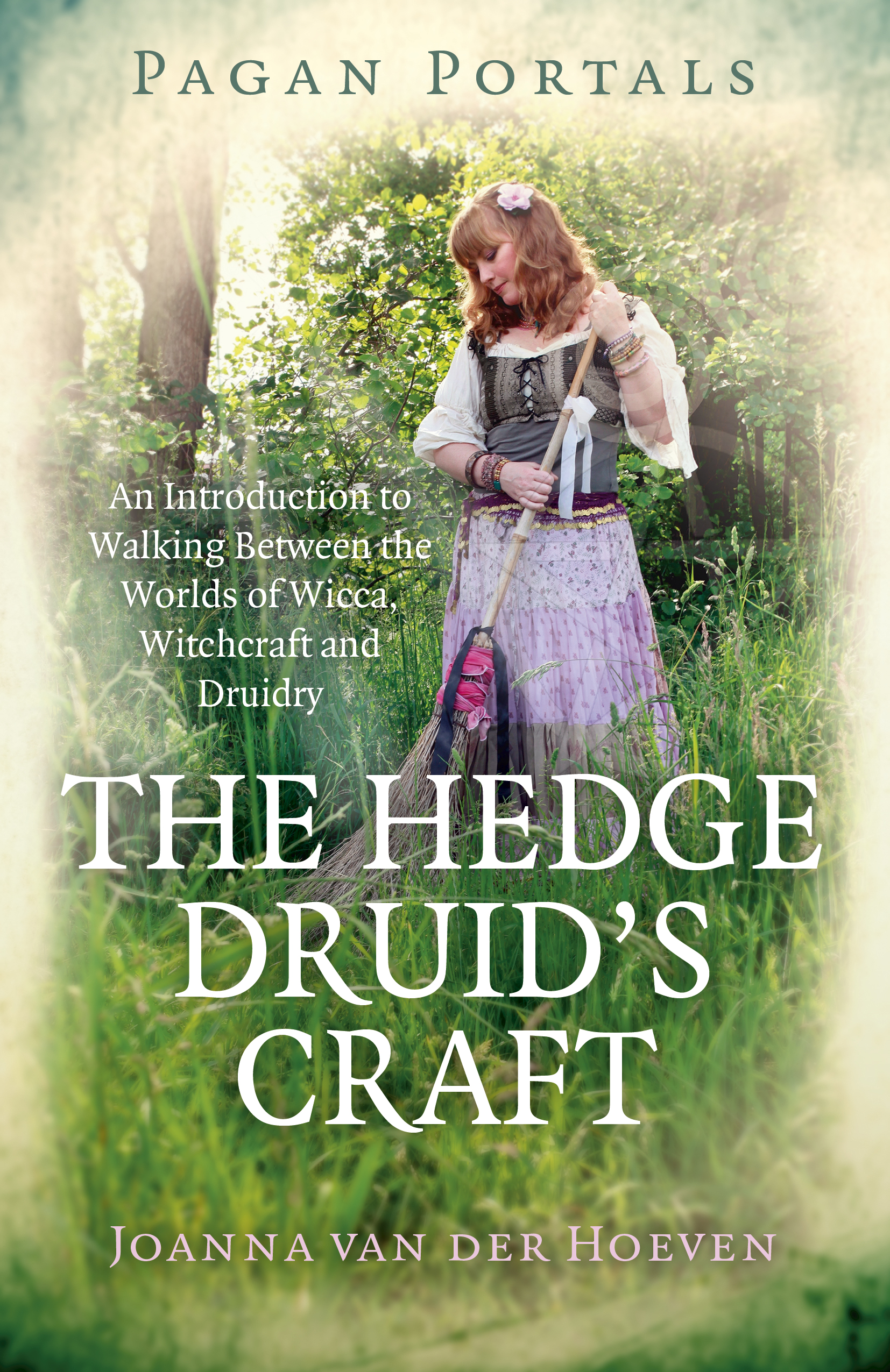
So just what is Hedge Druidry then? Well, here’s an excerpt from the beginning of my book, The Book of Hedge Druidry:
The Hedge Druid is a more recent term that applies to someone who walks the Druid path for the most part alone, using their wit and intelligence, the wisdom gained from long hours of research and practical experience in order to create their own tradition that is right for them and their environment. The term “hedge” when applied to Druidry stems from the 19th century term, “hedge priest”, which denoted a priest of the Christian faith who did not follow a particular or established tradition, had no church per se and who preached “from the hedgerow”. The term was first applied to Witchcraft in modern Paganism, and popularised by the author Rae Beth. The term then spread to Druidry, and became synonymous with solitary practitioners, who were not part of any Order or Grove or other established sect. Not all solitary practitioners of Druidry would call themselves Hedge Druids, however it is a term that is growing in popularity. However, in this work I shall show how Hedge Druidry goes beyond the notion of a solitary practitioner, into something that is deeper and more connected to the natural world.
The Hedge Druid is also one who rides the hedge, who travels between the worlds, who works with boundaries and the liminal places where the edges blend and meet. The term “hedge-riding” is a practice found in the Pagan community, mostly in Witchcraft traditions. It stems from the German word hagazissa which means “hedge sitter”. The Saxon term is “haegtessa” and both are where we get our word “hag”. Someone who rides the hedge can straddle the worlds, this world and the Otherworld, to bring back wisdom and information to use in our world, the Middleworld. We will learn more about the importance of the hedge and also hedge riding in later chapters. Suffice it to say that working with the boundaries of the civilised world and that which lies beyond the hedgerow is the world of the Hedge Druid, connecting and weaving together those threads to shape the world and find balance and harmony with the whole. It is the known world and the wilderness beyond that shapes and informs our earth-based tradition.
For me, Druidry is mostly a solitary path, though I do belong to some Druid Orders and networks, and celebrate the seasons with a few friends. But the everyday Druidry, the currents of intention that flow through me and my home and through the landscape where I live is my main focus. It is a mostly solitary pursuit. Like learning, I always preferred to do it on my own, rather than working with a group, for I found that my concentration was higher, and I could have a deeper level of experience than I could with the influence of others upon my work. The day to day living of my Druid path is what is most important, punctuated by the celebration of the seasons and festivals with others.
Of course, we are never truly solitary creatures, but in this sense I am using the word “solitary” with regards to other humans. I am never truly solitary, for I am always surrounded by nature and all its creatures every single second of my life. I am always a part of an inter-connected web of existence. Living this connection, weaving the threads of my life to that of my environment and all that exists within it, means that there is no separation, no isolation. Yet, when asked to describe my path, I use the word solitary or Hedge Druid in the sense that I prefer to find such connection on my own, without other humans around. Why this should be so is perhaps due to my nature: naturally shy, and sensitive to noise, light, barometric pressure and other phenomena, it is just easier to be “alone” most of the time.
It is similar to the path of the mystic, or a monastic. The path of the mystic is much the same; a solitary path where personal connection to the divine is the central focus. Some would say that the mystic path is the search for the nature of reality. For me, Druidry is the search for reality within nature, and so the two can walk hand in hand down this forest path. There are many elements of mysticism in my everyday life, where the songs of the land and the power of the gods flow through me, the knowledge from the ancestors deep within my blood and deep within the land upon which I live, rooted in its soil and sharing its stories on the breeze. To hold that connection, day in and day out, to live life fully within the threads of that tapestry is what I aspire to do, each and every moment. Sometimes a thread is dropped, and it requires a deep mindfulness to restore it, but practice helps when we search for those connecting threads, becoming easier with time and patience both with the world and with your own self.
The monastic retreats from the world to connect with the essence of the divine, however you may describe it. There is a deliberate intention to be separate from the so-called “mundane” world, or secular culture. However, within Druidry we realise that there is no such thing as mundane, and the duality between the physical and the spiritual is something that is anathema to the tradition. Learning how to be in the world is of great value, even as great value is found in being alone. For some, I’m sure a monastic Druid tradition would be a most agreeable way to live, but for most they prefer to work in the world rather than separate themselves from it, because they understand that separation is merely an illusion. Most non-gregarious Druids would prefer the path of the mystic, rather than the monastic, for that very reason. The mystic seeks integration, the monastic separation.
Yet both have many other similarities. Both seek to release the vice-like grip we have on our sense of self, the ego that we try to protect at all costs. The dissolution of the ego can be seen as at the heart of many Eastern traditions. Druidry teaches us integration, our ego perhaps not dissolving but blending in with that of our own environment. We don’t think less of ourselves, but rather think of ourselves less. The animism that is a large part of Druidry for many helps us to see the sacredness of all existence, and in doing so we are not seeking annihilation, but integration. We can perhaps dissolve the notions and out-dated perceptions that we have, both about the world and about ourselves, leaving the self to find its own edges and then blending in to the world around us, truly becoming part of an ecosystem where selflessness is not altruistic, but necessary for the survival of the system.
The flowing inspiration (otherwise known as the awen) where soul touches soul and the edges melt away into an integrated way of being has always been at the heart of Druidry. The three drops of inspiration or wisdom from the goddess Ceridwen’s cauldron contain that connection; they contain the awen that, with enough practice, is accessible to all. We have to spend time brewing our own cauldron of inspiration, filling it with both knowledge and experience before we can taste the delicious awen upon our lips. Some prefer to do this with others; some prefer to do so alone.
It is easier to quiet the noise of humanity, and of our own minds, when we are alone without distraction. Notice I said “easier” and not “easy”, because again it takes practice. But time spent alone, daily connecting and reweaving the threads that we have dropped can help us create a wonderful, rich tapestry that inspires us to continue in our journey through life, whatever may happen along the way. Though the solitary path might not be for everyone, having these moments of solitude can be a great tool for deep learning, working on your own as well as working within a group, Grove or Order. Sometimes we need to remove ourselves from the world in order to better understand it, and then come back into the fold with a new awareness and integration filled with awen, filled with inspiration.
The Hedge Druid is not afraid to be alone, nor with others, but seeks deep and utter integration in the world. Being a Hedge Druid requires determination, in seeking out the ancient and modern lore, and finding what aspects resonate within our soul. Not everything ancient is valid today, and not all modern aspects have integrity. We need to take a step back from declaring authenticity when there is doubt, and instead search for validity in our spiritual path. The Hedge Druid learns to walk her path with integrity, with solid research and experiential wisdom. She does the work, in the physical as well as the academic. Our learning is our own personal responsibility.
I hope that this blog post clears up some of the confusion of just what Hedge Druidry is, compared to other traditions within the Druidic diaspora. It is a deeply transformational way of being in the world, that appeals to those who wish to be connected to the land, the ancestors and the ancient Celtic heritage, while also at the same time work with the allies and guides of the Otherworld, or the three realms of land, sea and sky through hedge riding experiences. A Hedge Druid is deeply connected to the concept of the World Tree, the importance and significance of the bilé, to inform their world and how they work within it. And, as are all Druids, we are questing the awen: that sense of connection, of deeply integrated relationship with the land and with each other.
May we be the awen.

 Down the Forest Path