The blessing of Imbolc

Fantasy artwork by Mictones

Fantasy artwork by Mictones

Imbolc is fast approaching. Here in my garden in the UK, the crocuses are starting to come out, and a lone daffodil stands courageously amidst the dried, chopped stalks of last year’s growth. Traditionally, it was the time when the ewes began to lactate, providing much needed milk for the farmers whose food stores were becoming low. Nowadays, the sheep are birthing at different times of the year – at one farm here where I live in Suffolk, the farmer timed it so that they would birth during the Christmas holidays, as that was when he had the most time to dedicate to them, to see to their health and welfare during this time. Luckily for all, it has been a mild winter, all things considered – I would hope that if weather conditions were harsh, the farmer would be prepared to bring them all indoors. Some pagans celebrate Imbolc when the first snowdrops are out, but again that could be anywhere from beginning of January to March, weather depending. I’ve even seen snowdrops out on a sunny bank in December. Most Pagans today follow the festivals by the calendar year, and the 2nd of February (or the evening before, as the Celts began their day at sunset) is when this special time is celebrated.

It is also a festival connected to Brighid, whether it be the Celtic goddess or the Irish saint. If you do a little research into Her, you will find many connotations, associations and roles that she plays both in mythology and in the cycles of life and death. For me, Brighde as I know her is a little less known; she is the White Serpent of Albion.

You won’t find much lore relating to this aspect of Her. This is based on small snippets of information and a huge amount of experiential ritual, practice and connection. She first came to me several years ago at Imbolc, as I was performing a solitary ritual in my backyard on the mossy ground beneath the beech tree. I placed my hands upon the soft earth, grounding and feeling the earth’s energies stirring as the growing heat of the sun shone on my head and shoulders. An image of a large, coiled white serpent or a dragon beneath the dark earth sprang into my mind. The serpent was slowly stirring, rising up through the ground, slowly uncoiling towards the warmth and light from its dark and comfortable winter slumber. A flash, and suddenly I was connected to sacred sites across this whole island – Avebury and Glastonbury, stone circles in the Scottish Highlands, dolmen in Ireland and Wales, the tumuli several fields over. As quickly as it flashed through my mind it was gone, but I felt the energy, the connection thrumming through my veins for days afterwards. Even simply thinking about that experience brings the connection back, though every now and then I go to my little sacred spot in the garden and perform this ritual again, to re-establish or reaffirm that connection when the need arises.

This is Brighde as I know Her. The serpent energy that connects and flows through these lands. Her gift is awen, inspiration, the fire in the head and the fire in the belly. There is fire within her serpentine body, fire in the sky that she rises towards in her journey throughout the year. After the summer solstice she begins her descent again into the earth, into the darkness. Nwyfre, the life force, flows through her; she is the life force itself. Where she touches flows awen, inspiration and connection to that force. It is beautiful and powerful, a kind of power that sparks the soul and body into action, into seeing beyond the self and into a whole other world that might otherwise go unnoticed. Through that connection, everything is sacred.

I’ve worked with Brighde’s serpent energy for a couple of years now, and it sings to me in times of joy and in times of despair. When I need that connection I can simply remember that moment, if I am not able to go outside and touch the earth. Touching the earth is such a great experience – every Pagan should try it. It takes the gods, the ancestors, the elements out of an abstract and into being. It is life and death, the cycle, the spiral, the great dance.

And so I look forward to this special time of year, and re-establishing that connection, feeling my energies rising even as the serpent below me uncoils towards the surface. I can feel it in my spine, chakras opening as the serpent rises through my body. I can feel it humming in the spirals of my DNA. I can feel it resonating throughout the spiral galaxy and beyond.

I wish you all a blessed Imbolc and Brighde’s blessing to you all.
Interview with Emma Restall Orr, March 2014

Photo courtesy of emmarestallorr.org

Photo courtesy of emmarestallorr.org

Below is a fairly recent interview (March 2014) with Emma Restall Orr, author, founder and director of Honouring the Ancient Dead, and former Head of The Druid Network. Here, she is talks about Druidry, labels, the priesthood, anarchy, understanding the self and the importance of earth-based religions. Enjoy!

Listen HERE.

My interview with Philip Carr-Gomm

Druidcast 94 is now out, with the Order of Bards, Ovates and Druids‘ Chosen Chief, Philip Carr-Gomm interviewing me last June for their 50th anniversary gala. We talked about religion and philosophy, my books and also what is Druidry today. Have a listen, and check some great music and another great talk by Jonathan Wooley on Druidry and the young adult!

http://druidcast.libsyn.com/druidcast-a-druid-podcast-episode-94

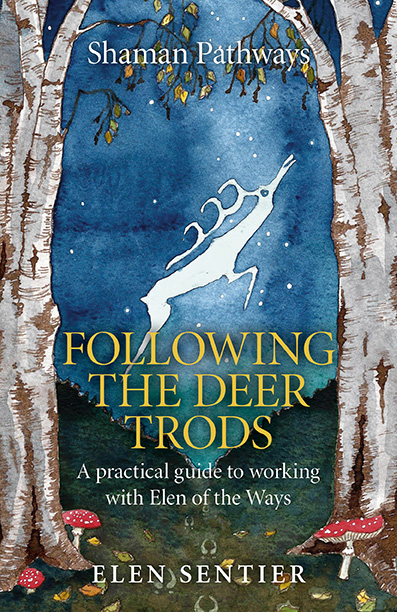
Book Review: Following the Deer Trods – Shaman Pathways

FTDTFollowing the Deer Trods – Elen Sentier

This Shaman Pathways book from Moon Books provides an introduction to the subject of the Awenydd, the Brythonic shaman working with the goddess Elen of the Ways. The author herself is an Awenydd, it having been in her family for many generations.

Sentier’s words are clear and very informal – it’s as if you’re having a chat in your kitchen with a cup of tea. She won’t dumb it down for you, neither will she make it impossible for you to understand – she uses the vernacular throughout. As a Shaman Pathways book, it has to provide an introduction to the topic in about 100 pages or less, which is quite difficult in any subject. In this book, Sentier does it quite clearly and concisely.

I saw many parallels between the function of the Awenydd and that of the Druid. As well, I could see a similar East meets West approach to some of the subjects, especially those considering the ego which I could relate to on many levels. I especially liked the foot dowsing, or walking the earth in the footsteps of the deer, listening to the many stories around us rather than focusing and hearing only our own. Vietnamese monk, Thich Nhat Hanh, once described this sort of walking as “kissing the ground with your feet”, making each step one made in peace. Sentier points out “when any of us step, walk, run, touch the Earth with our feet, we give our and pick up energy with each step. This happens whether we are conscious of it or not; walking, following the deer trods is partly about becoming conscious of this and about how we do it.”

I also found kindred alliance with the concept of the Awenydd being one that is in service to the community, rather than focusing on the concept of personal development. For me, this is what Druidry is all about. We can begin with the self, but it must not end there. As Sentier points out, “In the British tradition our [awenyddion, the plural of an awenydd] primary goal is to help the Earth and in order to do this we learn to ask her what she needs rather than thinking we know best”. Sentier also brings forward the concept that the healer or awenydd is not one that cures, but rather the one that uses a holistic approach, literally makes things whole. This may not include a cure, but it takes into consideration all aspects of healing.

My only criticism of this book is that the author tends to write in an anti-Christian tone every now and then, which I find off-putting. Having Christian family as well as Christian, Jewish and Muslim friends, and also working with Christian Druids I sometimes find remarks like “cruelty seems to be an integral part of all three of the Religions of the Book (the Bible) Christianity, Judaism and Muslimism” a little hard to bear. Indeed, the second half of the Bible deals with the teachings of Christ, which are mainly about love, not cruelty. Cruelty is not specific to a religious creed. The author’s rather low view of Christianity, in my opinion, is not conducive to getting the message across in a positive and peaceful way, all things considered.

This is really a book that is jam-packed with really useful information, exercises and different ideas that aren’t really found elsewhere. If the delivery hadn’t included the author’s views on Christianity, I would be happy to recommend it to anyone. However, considering some of the words said throughout the text, I could not recommend it to anyone who follows any of the three Abrahamic faiths alongside their own Paganism.

A new journey begins…

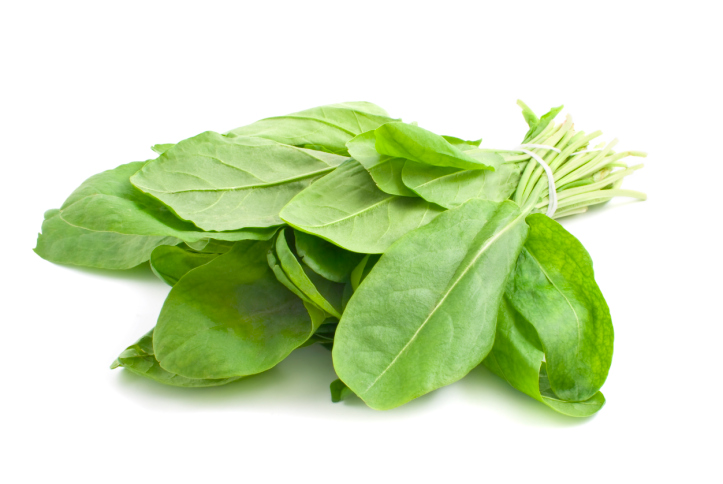
sorrel-leavesAt the end of 2014, some things began to wind down, not least of all my office hours at the music company that I work at part-time.  It seems every five to ten years the fates give me a kick up the behind; just when things get very comfortable, very stable something happens that pulls the rug out from under my feet.  At the time, it can feel dreadful – for the most part we humans hate change. But change can be a good thing, keeping us from stagnation, from seeing this from only one perspective.  Nothing ever stays the same. The seasons are always turning, the river is always flowing, we are endlessly spinning through the cosmos. Change is everything.

And so I’ve made a big decision. I’ve decided to train as a professional herbalist (meeting new EU regulations) with Herbcraft, run by Melanie Cardwell in association with the ANM (Association of Natural Medicine).  I’ve created a new blog, The Druid Herbalist, to record my progress through this journey that begins in April.  This new blog focuses solely on herbalism and natural healing.  Down the Forest Path will still remain my primary blog site, but please feel free to join me on The Druid Herbalist as well!

My journey begins, to deepen my service to the land, the people, the ancestors and the gods.  Wish me luck!

J. x

The Sacred Landscape

Most, if not all Druids, see the land is utterly sacred. Even if there is no belief in deity, the sanctity of nature is still understood in a way that inspires reverence and respect. Each Druid has his or her own landscape that they live in, whether it is wild heathland and moor, or on the edge of a forest, in the heart of suburbia or in the downtown area of a major metropolis. What each Druid can do is find the sacredness of that landscape, and relate it to their own life, their path and their journey. In effect, this is creating a sacred landscape that is also a soul-map, onto which we can identify areas where we can go to help solve a problem, to be inspired, to celebrate the seasonal festivals, to make love under the stars.

Simply getting out there and discovering this landscape is wondrous enough. You may have to do a little research in your area to find wonders such as water flows that may be hidden underground, beneath city streets or where they surface in beautiful springs out in the countryside. See if there are any tumuli in the area. Look into ley lines, or street names. You may look into the history and geology of a place, to become even more acquainted with it. Once the knowledge is gained, the experience brings an intimacy that can provide a constant flow of awen into our lives.

Find these sacred spots in your landscape. You may identify them with the chakras of the human body, or Celtic myth. See yourself reflected in the landscape in which you live. Then allow the beauty and inspiration to fill your soul, and give back to this land accordingly.

It is what makes the Druid path so utterly gorgeous and inspiring.


Acts of Compassion

There are many ways we can be compassionate in today’s society. Compassion is merely trying to understand, to see beyond your own point of view and share in humanity as a whole.  An act of compassion need not be grand – it can be as simple as giving up your seat on the bus, or smiling at someone who looks down as you walk past them on the street.

I came across this beautiful story from Jason at Parallax Press today, and had to share it. May peace and love fill your heart and soul, and flow out into the wider world.

I just came back from the Deer Park Holiday Retreat last week, and the theme this year was “New Year, New You.”

While there, we watched Thich Nhat Hanh’s New Year dharma talk from 2013. In the talk, he said something that was very interesting: “There can’t be a new year if there isn’t also a new you.” If we do not have the intention to water the seeds of transformation within us, he elaborated, the so-called new year will continue to be very much like the old, not only for us, but also the world.

With that in mind, I had the privilege of sharing my own insights on the transformative practice of compassion with many of you at the retreat. I shared the story of a life-changing incident that occurred many years ago when I was sixteen and volunteering at a community legal clinic for those who could not afford attorneys.

It was while working there as a receptionist that I encountered a very literal case of “saying hello to your suffering.”

One day at the clinic, I picked up the phone to answer a call as I routinely did, and I heard the sound of a woman crying and what sounded like the humming and whirring of a train or subway car pulling into a station.

“My husband has been beating me and I have no money for a divorce. I should jump onto these tracks and kill myself.”

I realize now that this woman had not only called the clinic for help, but had begun the process of saying hello to her suffering. And suffering had said hello to me that day.

Even as she contemplated her own annihilation on those steel tracks with the train arriving ever closer, she had enough strength within herself to call a total stranger who happened to be a completely unprepared sixteen year old.

In his latest book No Mud, No Lotus, Thich Nhat Hanh writes:

The work of mindfulness is first to recognize the suffering and second to embrace it. A mother taking care of a crying baby naturally will take the child into her arms without suppressing, judging it, or ignoring the crying. Mindfulness is like that mother, recognizing and embracing suffering without judgment. So the practice is not to fight or suppress the feeling, but rather to cradle it with a lot of tenderness, (pp. 26-27).
Rather than saying to the woman, “I’m only sixteen years old; I don’t know what your suffering is, nor how to help you,” I simply listened to her with all my heart, cradling her suffering gently in my arms.

I listened to her for an hour or more, and gradually the crying stopped and I could not hear the train.

I am not so presumptuous to claim that I saved this woman’s life, but what I can say is that my act of compassion sprouted within her the beginnings of a lotus from the mud.

If you’re going through a difficult time, Parallax hopes that the new year leads to the blossoming of a new you. To help get you started, here’s one of my favorite passages from No Mud, No Lotus: 

Releasing the Arrow

There is a Buddhist teaching found in the Sallatha Sutta, known as The Arrow. It says if an arrow hits you, you will feel pain in that part of your body where the arrow hit; and then if a second arrow comes and strikes exactly at the same spot, the pain will not be only double, it will become at least ten times more intense.

The unwelcome things that sometimes happen in life—being
rejected, losing a valuable object, failing a test, getting injured in an accident—are analogous to the first arrow. They cause some pain.

The second arrow, fired by our own selves, is our reaction, our storyline, and our anxiety. All these things magnify the suffering. Many times, the ultimate disaster we’re ruminating upon hasn’t even happened.

We may worry, for example, that we have cancer and that we’re going to die soon. We don’t know, and our fear of the unknown makes the pain grow even bigger.

The second arrow may take the form of judgment (“how could I have been so stupid?”), fear (“what if the pain doesn’t go away?”), or anger (“I hate that I’m in pain. I don’t deserve this!”). We can quickly conjure up a hell realm of negativity in our minds that multiplies the stress of the actual event, by ten times or even more.

Part of the art of suffering well is learning not to magnify our pain by getting carried away in fear, anger, and despair. We build and maintain our energy reserves to handle the big sufferings; the little sufferings we can let go…

Reblog: Druidry, Animism and The Meaning of Life

This post is a reblog extract from my channel at SageWoman. To read the full article, click HERE.

For many people, myself included, Druidry and Animism go hand in hand. Since the Age of Enlightenment and perhaps even further back in history (perhaps with coming of Christianity) Animism has gotten the reputation of being somehow backward, a superstitious and childish view of the world wherein everything is “alive”. This belief is completely biased in that it is totally from a human-centric point of view; those who believe it to be silly would say that believing a stone has a soul is absolutely ridiculous. This point of view is a projection of our human perspective, of what is alive and what isn’t, what is ensouled and what isn’t. It doesn’t take into consideration differences in the metaphysical. This perspective is often derogatory of Animism, yet it fails to actually understand just what Animism actually means, and what living with an Animistic perspective can bring to human consciousness.

In my opinion, we are in great debt to author Emma Restall Orr for exploring Animism in her two books, Living With Honour and The Wakeful World. In both, she goes into just what it means to be an Animist, putting aside the childish perspective and engaging with the concept in a very rational and yet spiritual manner. I remember when I first saw her speak at Witchfest in Croydon many years ago, when she shouted from the stage that the moon was “just a big f*cking rock in the sky!” (which it is). Believing that the moon is deity is perhaps a childish view of the moon, however, seeing the deity within the rock is closer to the mark, dependent upon your concept of deity. In her two latest books, defining the often used words in Animism of soul and spirit, she shows the interconnectedness of all things in contexts of philosophy, spirituality and science.

This interconnectedness is reflected in many, if not most religions and spiritualities throughout the world. Zen monk Thich Nhat Hanh uses the term “interbeing”, even founding The Order of Interbeing, a way to live your life fully aware of the interconnections of all things. We cannot exist without each other – we are fully co-existing together. In a piece of paper, there is the sun, the tree, the rain, the wind, nitrogen, carbon dioxide, stars, clouds, loggers, factory workers, their ancestors, the ancestors of place, the foods that they ate – the list goes on forever. Since the beginning of time, if there ever was a beginning, we all come from the same source, if there is a source. We are all star-stuff.

Continued… to read the full article, click HERE.


Mindful Mondays

Mindfulness is THE buzzword in self-improvement and New Age circles, but what does it really mean? If we go back to basics, we find that it is rooted in Buddhism, and can be easily explained in two simple phrases.

Chop wood. Carry water.

This is actually a pared down version of a slightly longer Zen story, wherein an enlightened monk recalls his process to enlightenment. He stated “When I was unenlightened, I chopped wood and carried water. When I became enlightened, I chopped wood and carried water.”

A lot of the time it can feel like we’re carrying wood and chopping water – not really getting anywhere, flailing around with a dripping axe. But when we stop, focus and concentrate, usually things become smoother, get done quicker and with little drama. Some may not want that – they enjoy the distraction that the flailing causes, or the drama, but after a while it can wear thin. Applying mindfulness, which is simply paying attention, can help alleviate any dis-ease that we may feel in our lives. That’s not to say that we’ll feel great all the time, but just by being in the present moment and not attaching to past experiences, dwelling on them or getting stuck in an emotion we can just get on with plain living.

So, with all that in mind, I’ve decided to dedicate an entire day to mindfulness each week. Ideally, I try to be mindful all the time, but I’m no Buddha. Having an entire day to focus on this will hopefully trickle down into the rest of the week, and all my thoughts, actions and their consequences. I’ve deemed this my Mindful Mondays.

So, what does this all mean? It means that when I’m eating breakfast, I’m just eating breakfast – not reading a book or article. When I’m washing the dishes, I’m just washing the dishes and not singing along to the latest Taylor Swift album. When I’m out walking, I am walking mindfully, at whatever speed, paying attention to my steps and my surroundings – not planning my evening meal. When I’m stroking my cat, I’m not thinking about writing the next chapter of my book. When I’m driving I’m really feeling the road beneath me, not dwelling on the driver that decided to overtake me on a blind summit. When I’m out for a meal with friends, I’m really paying attention to what they are saying, and not already forming a reply to their words before they’ve even finished talking.

Mindful Mondays are all about paying attention.

With that centred awareness, with that focus, we can simplify our lives immensely (part of my New Year’s resolution). People often fear that we will be less productive, but actually we will do jobs better, more efficiently, if we maintain that focus.

Being aware of your movements as well is doing a great kindness to your body. When we are walking down the stairs, we are focusing on our body moving. We will find that our movements may become less hurried and more graceful. A calm descends on our way of being. Like a leaf falling from the tree, we simply are in that moment, either floating down serenely or caught in a whirlwhind – either way it is done with grace.

So, like the monk who realised that life doesn’t change after enlightenment and that you still have to do the things you have to do, what you can change is how you do them. Mindfully, with awareness, focus and concentration. Give it a try, and let me know how you get on! Even if a day is too much, try an hour or half an hour each day. You don’t have to change your schedule, just do everything in it mindfully.

May you be peace as you chop wood and carry water.

ch5

Happy New Year!

The end of another calendar year, and a time to reflect. What a fabulous year it has been. The ups as well as the downs, all of it has been a great experience. Life certainly is the best teacher.

So, what are the plans for next year? Well, I shall be continuing to write, a much longer book than those of the Pagan Portals series for Moon Books. This new project is called “Hedge Druidry”, and is basically an extension of The Awen Alone: Walking the Path of the Solitary Druid.

I also plan to start a much bigger vegetable garden next year, and go on a mushrooming course so that I am able to identify more mushrooms than just the parasol ones we munch on here that grow in the beautiful sandy soil.

I also have a wonderful new project that will hopefully start up in the autumn of 2015, but I can’t tell you about that just yet – I will hopefully have news for you very shortly! Hint – it’s about learning Druidry…

Lastly, I aim to simplify even more. This year I already reduced the time spent on social media, cleared the clutter in my house and spent even more time in meditation. I hope to continue on this path, making more time for the people that I love, the places that I love and the things that I really love doing.

In this time of reflection, don’t feel bad about the things you didn’t accomplish. Instead, reaffirm your resolve to try again, and persevere with a good heart and a pure mind. Make resolutions for the New Year, but for yourself and not for anyone else. If you want to lose weight, that’s great – but do it for your own health, with a doctor’s or nutritionist’s advice. Don’t do it to make yourself more beautiful – you already are beautiful. Likewise, quitting bad habits such as smoking or drinking are equally good resolutions to make, as long as you are truly willing to go the distance, for your own health and well-being. If we can do such things for ourselves, then we see that we can serve others as well. We have to take care of ourselves as well as each other.

And so I wish you a very Happy New Year. May you love one another, may peace fill your hearts. Love and peace are there, seeds waiting to be nourished by you and only you, not anyone else. Give them the attention that they need, and watch them bloom. Only you can do this.

With peace and love, and many thanks for following me down the forest path,

Jo. x