Here is a taster from my latest blog post at SageWoman – I’ve also got an article coming up in the next print edition of SageWoman magazine, so keep an eye out!
I learned something fascinating this weekend. I learned that as women, when we are in our mother’s womb, we already have all the ovum (eggs) that we will release during our fertile years. So, to put that into context, when my mother was in my grandmother’s womb, I was also there, partly, as one of the eggs that would be fertilised by my father. This link only occurs in women, and it just blew my mind. I was in my grandmother’s womb.
Our lines of ancestry can be glorious and transformational journeys of discovery. Not only in a historical sense, exploring records and genealogy, but also connecting spiritually with our ancestors. As the darkness creeps in and the days get shorter, in the cooling air with the harvest being taken in the fields all around me, my thoughts turn to my ancestors and to the self, releasing into the approaching autumn and finding great comfort and joy in the letting go.
In order to release that sense of self, however, we must first come to know our self.
Exploring who we are, where we came from, what makes us “us” is key to this work. Understanding circumstances, experiences, lines of ancestry can enrich our lives and help us to uncover depths of our own soul that may have previously escaped our notice.
As the 25th anniversary of the Oka Crisis is upon us, there is a new Indeigogo film project underway that seeks to recount what happened during that year-long struggle, and how it has impacted upon the First Nations people ever since. Here is a video about the project, and an essay that I wrote many years ago now on what began that summer of 1990. You can contribute the project by clicking HERE (url doesn’t work in youtube video).
The Curse of Self-Awareness by Joanna van der Hoeven (originally posted on The Druid Network)
As I sit here, looking out the window, watching the clouds float by in a pale blue sky, I am reminded that the fights and troubles of humankind matters not to them. Still they float past, unrattled by humanity, simply being. The forsythia is in bloom, the sun is out and casting shadows upon the ground. The curse of self-awareness is not upon them. They know nothing of land ownership. They all share in this world, living where they can, with no knowledge of property deeds, legalities and borders. On this bright afternoon, I am reminded of Kanasetake, and the Oka Crisis that began on March 11, 1990 in Quebec, Canada. Why? Because I am human. I carry these memories and cannot forget them. The curse of self-awareness.
Land ownership. The concept is entirely human. The wolf knows its territory, but once the wolf has died, the concept of any claim on land is lost. It cannot be handed down to others through a Will, or any legal documents. You cannot take your land with you when you die. The concept of territory to a wolf is to ensure a sufficient food supply for a hunter and predator. It will share this with the pack, should it be part of one. The wolf does not own its land, it merely claims the right to live on it. With writing these words, I am reminded of Chief Seattle’s words in a letter to the US government, “I never said the land was mine to do with as I choose. The one who created it is the one who has a right to dispose of it. I claim a right to live on my land, and accord you the privilege to return to yours.” Are these words creating a boundary, or defining a territory? In this global village, can we truly live in a land without borders? Where walls and fences do not exist? Can we ever return?
The fight for land ownership, or defending a territory? Are they one and the same? I think there may be a difference between the two, which essentially always ends up merged into the former. The Oka Crisis, spring 1990. The snows were receding, the air beginning to soften with the call of the season. I was sixteen, just graduating from high school and moving on to college later that fall. The news on the television came through as we sat down to our evening meal. The Mohawk people of the Kanasetake reservation had put up roadblocks, to stop anyone from entering land they held sacred. A year previously, the mayor of Oka, Jean Ouellette, decreed that the pine forest, which included a native burial ground next to the reservation, was to be cleared to expand a golf course from nine to eighteen holes. Ouellette was also a member of the golf club. The golf club stood to make a profit for this expansion.
The ownership of the land had been in dispute for 260 years. The governor of New France in 1717 granted the lands to a seminary priest to hold on trust for the Mohawks. The Church then expanded on this agreement, to enable them to have ownership of the entire land, and began selling off the resources. The Mohawks rose against the missionaries but were imprisoned by the police. The remaining land was sold by the missionaries, who then left. In 1961, a nine hole golf course was built. The Mohawk nation legally protested but to no avail, the land was already being cleared right next to their burial ground. Through much red tape, the Mohawk demand was finally thrown out, “failing to meet criteria”.
And so, in 1990 the roadblock was erected. For years the natives and their European descended counterparts had shared the land, though not in fair and judicial proportions. This was not the golf club’s fighting for territory from which to live. It was not necessary to its survival. It stood to profit in excess of what it needed. Land ownership and greed, hand in hand. Respect for the territory of another pack, lost. Self-awareness leading to selfishness.
The Sûreté du Québec, the Provincial police force, were called in by order of the mayor on July 11. The warriors at the barricades turned to the matriarchs for advice, asking whether they should keep the amassed weapons. The women replied that they should not be used unless the SQ opened fire first. Tear gas canisters were thrown in by the SQ along with concussion grenades. CBC reporter Laurent Levigne was live on the radio at the time, and said that he heard the first shot of gunfire sound. When asked from which side, he replied he thought it came from the SQ police. The reporter could no longer continue with his report, and had to retreat due to the teargas. Corporal Marcel Lemay of the SQ was shot and killed during the brief gun battle. After the funeral, flags from both opposing forces were raised to half mast.
The idea of land ownership did not stop there. Racial hatred had begun to show it’s ugly head, fanned by radio host Gilles Proulx and echoed by the federal member of parliament for the district of Chateauguay, who spoke of exiling natives to Labrador, “if they wanted their own country so much”. The new wolves were attacking the forced roadblock where before there had been none. Divides were perhaps not created between people, but solidified that summer. The Mohawks fought to defend their land from the awaiting bulldozers and golfers. They recalled their previous entreaties to grant them the land that they lived on, and the many refusals. The land became a tool of war. Blood lay upon it. I pause here, to ask myself – did the land care? Did the pines weep as the guns shot across the barricades? The dawn continued, regardless of the attack. Did the land care? Was the self-awareness of the humans provoking this encounter? Did the mourning cries of the ancestors at that sacred site awaken the hearts of the warriors and the women? Or did the wind blow through the boughs as it always had, heedless of the humanity beneath its green canopy?
On August 29th, two days after my 17th birthday, the negotiations came to an end after the army had been called in. The stand off had lasted for three months. The army came through the barricades and the women ordered their warriors back. The guns were slowly put away. By 25th September the fights were with hoses and water balloons. On 26th September, the warriors threw their guns into a septic tank and surrendered, with the ceremonial burning of tobacco lingering in the air. The First Nations Policing Policy was developed, and Canada listed on Amnesty International’s list of human rights violators. A year later, the mayor was re-elected, and when asked if he could have done things differently, he said that he would not have changed a thing. For nine holes in the ground, a man lost his life.
The fight for land ownership or the fight for territory. The right to live on your land or the right to own the land upon which you live. On 1st April 1999 a new territory, Nunavut was created in Canada. In Inuit, it means ‘Our Land’. 85% of the population are Inuit. To me, this raises another question though. Is this simply another way of claiming land to own? Of setting up borders? Is this an answer to the problems? Our global community, should it even know any boundaries? What would happen if land ownership simply ceased to be?
Memories flood through us every day. The curse of self-awareness. And outside my window, the sun is still shining.
THE PEOPLE Today we have gathered and we see that the cycles of life continue. We have been given the duty to live in balance and harmony with each other and all living things. So now, we bring our minds together as one as we give greetings and thanks to each other as people. Now our minds are one. THE EARTH MOTHER We are all thankful to our Mother, the Earth, for she gives us all that we need for life. She supports our feet as we walk about upon her. It gives us joy that she continues to care for us as she has from the beginning of time. To our mother, we send greetings and thanks. Now our minds are one.
THE WATERS We give thanks to all the waters of the world for quenching our thirst and providing us with strength. Water is life. We know its power in many forms-waterfalls and rain, mists and streams, rivers and oceans. With one mind, we send greetings and thanks to the spirit of Water. Now our minds are one.
THE FISH We turn our minds to the all the Fish life in the water. They were instructed to cleanse and purify the water. They also give themselves to us as food. We are grateful that we can still find pure water. So, we turn now to the Fish and send our greetings and thanks. Now our minds are one.
THE PLANTS Now we turn toward the vast fields of Plant life. As far as the eye can see, the Plants grow, working many wonders. They sustain many life forms. With our minds gathered together, we give thanks and look forward to seeing Plant life for many generations to come. Now our minds are one.
THE FOOD PLANTS With one mind, we turn to honor and thank all the Food Plants we harvest from the garden. Since the beginning of time, the grains, vegetables, beans and berries have helped the people survive. Many other living things draw strength from them too. We gather all the Plant Foods together as one and send them a greeting of thanks. Now our minds are one.
THE MEDICINE HERBS Now we turn to all the Medicine herbs of the world. From the beginning they were instructed to take away sickness. They are always waiting and ready to heal us. We are happy there are still among us those special few who remember how to use these plants for healing. With one mind, we send greetings and thanks to the Medicines and to the keepers of the Medicines. Now our minds are one.
THE ANIMALS We gather our minds together to send greetings and thanks to all the Animal life in the world. They have many things to teach us as people. We are honored by them when they give up their lives so we may use their bodies as food for our people. We see them near our homes and in the deep forests. We are glad they are still here and we hope that it will always be so. Now our minds are one.
THE TREES We now turn our thoughts to the Trees. The Earth has many families of Trees who have their own instructions and uses. Some provide us with shelter and shade, others with fruit, beauty and other useful things. Many people of the world use a Tree as a symbol of peace and strength. With one mind, we greet and thank the Tree life. Now our minds are one.
THE BIRDS We put our minds together as one and thank all the Birds who move and fly about over our heads. The Creator gave them beautiful songs. Each day they remind us to enjoy and appreciate life. The Eagle was chosen to be their leader. To all the Birds-from the smallest to the largest-we send our joyful greetings and thanks. Now our minds are one.
THE FOUR WINDS We are all thankful to the powers we know as the Four Winds. We hear their voices in the moving air as they refresh us and purify the air we breathe. They help us to bring the change of seasons. From the four directions they come, bringing us messages and giving us strength. With one mind, we send our greetings and thanks to the Four Winds. Now our minds are one.
THE THUNDERERS Now we turn to the west where our grandfathers, the Thunder Beings, live. With lightning and thundering voices, they bring with them the water that renews life. We are thankful that they keep those evil things made by Okwiseres underground. We bring our minds together as one to send greetings and thanks to our Grandfathers, the Thunderers. Now our minds are one.
THE SUN We now send greetings and thanks to our eldest Brother, the Sun. Each day without fail he travels the sky from east to west, bringing the light of a new day. He is the source of all the fires of life. With one mind, we send greetings and thanks to our Brother, the Sun. Now our minds are one.
GRANDMOTHER MOON We put our minds together to give thanks to our oldest Grandmother, the Moon, who lights the night-time sky. She is the leader of woman all over the world, and she governs the movement of the ocean tides. By her changing face we measure time, and it is the Moon who watches over the arrival of children here on Earth. With one mind, we send greetings and thanks to our Grandmother, the Moon. Now our minds are one.
THE STARS We give thanks to the Stars who are spread across the sky like jewelry. We see them in the night, helping the Moon to light the darkness and bringing dew to the gardens and growing things. When we travel at night, they guide us home. With our minds gathered together as one, we send greetings and thanks to the Stars. Now our minds are one.
THE ENLIGHTENED TEACHERS We gather our minds to greet and thank the enlightened Teachers who have come to help throughout the ages. When we forget how to live in harmony, they remind us of the way we were instructed to live as people. With one mind, we send greetings and thanks to these caring teachers. Now our minds are one.
THE CREATOR Now we turn our thoughts to the creator, or Great Spirit, and send greetings and thanks for all the gifts of Creation. Everything we need to live a good life is here on this Mother Earth. For all the love that is still around us, we gather our minds together as one and send our choicest words of greetings and thanks to the Creator. Now our minds are one.
CLOSING WORDS………. We have now arrived at the place where we end our words. Of all the things we have named, it was not our intention to leave anything out. If something was forgotten, we leave it to each individual to send such greetings and thanks in their own way. Now our minds are one.
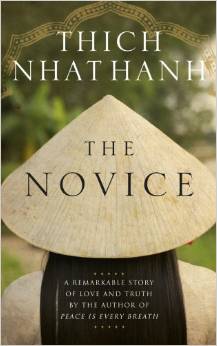
Whilst on holiday in Brittany the past week (blog and photos to come!) I read Zen monk Thich Nhat Hanh’s novel, The Novice. It is his first novel, that tells the story of a young woman who has become a legend in Vietnam for paving the way for women to be nuns in the Buddhist tradition. It’s a short book, eloquently written and filled with wisdom throughout.
Kinh Tam is a beautiful young woman who has always felt a calling for deep learning through Buddhist enlightenment. As there were no temples for nuns at the time, she felt that her only option was to do what women did back then – marry and have children. However, her marriage failed as her in-laws falsely accused her of trying to kill her husband one night. Kinh Tam goes back home then, cuts off her hair and disguises herself as a boy, wandering for five days until she comes to a temple where she asks to be taken in as a novice.
She shows an aptitude unlike any other monk in her devotion to the Zen Buddhist teachings and carrying them out. She lives the perfections of generosity, mindfulness, magnanimity, diligence, patience and insight. She has already been through much, after the false accusations of attempted murder, and yet she holds true to her path, holding no malice to those who have wronged her through their own false perceptions.
A young noblewoman who visits the temple falls in love with the young “boy” monk, seeing in him such beauty that only an open-heart can radiate. Kinh Tam avoids her, with as much compassion as possible, as her secret cannot be found out else she faces expulsion. After Kinh Tam turns down the noblewoman’s request for a private meeting, the noblewoman woman becomes enraged, filled with her own anger and wounded pride, accusing the young novice of impregnating her when it was really a servant boy from her household whom she took to bed in anger and despair of not being able to sway the young novice from his devoted path.
Kinh Tam faces the dilemma of choice: tell everyone that it’s not possible, as she is a woman, or face beatings for her “transgressions”. Her love for her path is so strong that it sees her through the beatings, and yet again she never holds any malice towards the young woman (Mau), those who believe her false accusations and even those who beat her. She knows it is only their wrong perception of her that makes them act as they do, and the strength of loving kindness overcomes all the pain she endures.
Kinh Tam goes through further hardships, yet always with the endurance of a loving heart and the deep well of forgiveness. I won’t tell you the ending, but I was in tears as I read it – it was just so beautiful.
Kinh Tam’s story is one that can help anyone going through a rough time. It doesn’t matter what it is that you are enduring, whether it is being shot at, beaten, false accusations or someone trying to undermine you and your work – the open heart of compassion and seeing the unity of all things is stronger than any of these. Anyone can relate to Kinh Tam’s story. As a woman, I felt a deep bond with her struggles and an empathy for her trials and tribulations. I felt deeply the tug of sadness as one woman falsely accuses another (albeit unknowingly regarding the disguised gender, yet with an intended malice in any event). As a practitioner of Zen I found deep wisdom in the teachings that lay like little stars filled with light across the pages, twinkling with their insight into living a life of less suffering. We all suffer, for various reasons, but we can lessen that suffering through the open heart of compassion. Those who try to hurt us, physically, emotionally, intellectually, who undermine our person and our work, who tell lies and allow their pride, anger and other emotions to overwhelm their reason and the ability to see clearly the heart of the matter – these are things we all go through at some point in our lives. Whether it is through war, office/work politics or family issues, the cause is the same: wrong perceptions. Because they have a wrong perception of us, they act out, lash out, are ruled by the monkeys riding on their backs.
Yet we don’t have retaliate like for like. We can see their suffering, and still send them our love and compassion, even from afar. Because they perhaps have not seen that there is another option, they have no way out. Living through our actions, of opening our eyes to all possibilities and the reality of the present moment we can hopefully provide an example for a peaceful way of life that benefits the whole. We can forgive these misjudgements from others, as they are easily created. Through diligence we can work to dissolve these false perceptions within ourselves, through meditation, deep insight and the other teachings of Zen Buddhism.
I always doubted whether humans were truly capable of forgiveness. When explained through the words and story told by Thich Nhat Hanh, it makes so much more sense; it is so easy. There are three appendices to the story, one describing further the legend of Kinh Tam, the second describing the legacy of Kinh Tam by Sister Chan Khong of Plum Village monastery, and Thich Nhat Hanh’s own addendum about practicing love. These appendices are just as important as the story itself, for it shows “Engaged Buddhism” in action as Sister Chan Khong and Thich Nhat Hanh both relate how the practice of compassion helped them through the suffering of the Vietnam war, exile and more. We see first-hand how the Zen Buddhist precepts are put into practice, actually lived out in the lives of those who worked in the DMZ, offering wisdom and deep insight into how suffering is different for each individual and yet can be overcome when held in the arms of compassion.
In the UK, you can buy this wonderful little book from as little as £1.04 second-hand; do try to read it if you are at all interested in Zen Buddhism, mindfulness, compassion or loving kindness. If you feel you are suffering in any shape or form, this book might be able to help you find the way to transforming suffering into something that instead brings peace and harmony to your world, and thereby to the world at large.
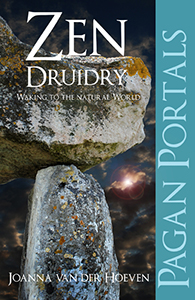
Going through my old gwers (small course books) from the Order of Bards, Ovates and Druids’ online correspondence course that I did many years ago, I found a section of a few gwers that made me smile, as it resonated with me then and still does, on so many levels and is also a major part of the way that I live my life. It focuses on the here and now, on the beauty and wonder of the present moment, and how important the present moment is. Leaving the past to the past, and the future to the future, these gwers really highlighted the importance of focus on the here and now. I did this through incorporating elements of Zen Buddhism into my life (see my first book, Zen Druidry) which has helped me to fully actualise the present moment, to not take it for granted and to learn to simply be, wherever I am and whatever I am doing.
Being comfortable in the present is key to finding lasting happiness. Knowing that the past exists, but that it serves only as a guide to the present moment helps us to release many things that can have a negative effect on the present moment, such as anger, grief, fear or hate. Knowing that the future exists only as a flexible plan helps us to not get too stuck in our ways and habits, and can also alleviate feelings such as fear. Our focus should always been on the now, to live life fully.
But what if the “now” isn’t all that great? What if in the “now” we are stuck outside in the pouring rain without an umbrella or coat, waiting for a bus that never turns up? Yep – that’s all part of it. Buddhism teaches in the first noble truth that all beings suffer. You can’t escape it. That might sound like one helluva downer, but the upside is that the other noble truths help us to alleviate that suffering. One of the ways to do so is the fully be in your self, in your body and mind (there is no separation) and in doing so, the suffering eases. That doesn’t mean you won’t get soaked to your knickers, but at least you spent the time feeling the rain upon your body, smelled the earth responding to the rain and smiled to your own heart rather than get angry at the bus driver, or grumpy about the wetness, wondering why this sort of thing always happens to you.
For some people who are living in extreme conditions, say in the middle of a war zone for instance, the above may sound trite. However, Vietnemese monk Thich Nhat Hanh experienced the horrors of war first hand and learned how to be in the present moment, to help alleviate the suffering. (See the Miracle of Mindfulness by Thich Nhat Hanh .) When we are in the present moment we will know how to respond to any situation better than if we were responding from the past or future. Our clarity sharpens and we respond in a manner that is wholly and utterly relevant to the situation at hand rather than drudging up issues from the past or worries about the future.
I have had to deal with uncomfortable situations and difficult people. Being in the present helped me to not drudge up the past to project it onto a particular situation in negative ways, but to enable me to deal with the issues as they are, up front without any extra baggage. That doesn’t necessarily mean that we enjoy dealing with this sort of stuff, but we can get through it with a lighter heart, finding our peace more quickly and able to spread that out to the world. It helps you see reality, as it really is. Eventually you may find that your inner peace becomes less and less disturbed, no matter what life throws at you, and that peace and calm will radiate out into the world in beautiful and positive ways.
May you enjoy the present moment for all that it is. Remember the old saying, “Yesterday’s the past, tomorrow’s the future, but today is a gift. That’s why it’s called the present”.
Leo Babuata’s recent blog post about reality came at a serendipitous moment when I was reading Thich Nhat Hanh’s “The World We Have: A Buddhist Approach to Peace and Ecology“. It is often said that we create our own reality, but I think that those words are often misinterpreted. Those who are suffering from famine or abuse have not necessarily created that reality – everyone’s reality is also a combination of others’ reality. However, what Leo and Thay point out that it is what we consume that helps to create our reality.
We are a consumer culture, here in the West. Some of us are trying to bring more awareness to what we consume, whether that is in material goods, food, petrol or electricity consumption, etc. What Leo and Thay speak of however is what we are consuming with our soul, with our heart, with our brain, mainly through media but also in the form of speech, gossip, etc. Thay speaks eloquently about this matter, stating that a lot of what we visually consume from the media is toxic. We watch television shows that are violent, or that pit people against each other in dishonourable ways. We are influenced by advertising. We may speak ill or dishonestly of others, or about ourselves. When we are doing this, we are taking in a toxicity that affects our very being. We can stand up for ourselves, certainly, speaking out against injustice with honesty and awareness. It doesn’t mean we will never speak out. What it does mean is that we become engaged in our living, in our being, in a positive way that benefits the whole, not just the self.
Life is a choice, for the most part. We can choose to not take in this toxicity, or be a part of it. That is not to say that we shut ourselves off from what is happening in the world. We need to know of the suffering that is occurring in the world in order to help alleviate it. But we can say no to violence as entertainment, to disrespect someone in order to “pass the time”. Everyone knows the saying “You are what you eat”. Let’s open this out to everything else that we consume. We can choose to be a part of this world, aware of what is happening, without taking in the vast amounts of toxic images and words; it is within our power.
Be aware of the world. Know that people are suffering from a horrific tragedy in Kenya. Know that people are suffering in your own hometown. Know too that you can choose to not play violent video games, or watch gory movies, to intake that violence into your consciousness. You can fill your heart with peace and loving kindness – it is your choice. You don’t have to read that magazine with photoshopped men and women. You don’t have to comment negatively on someone’s Facebook status. You don’t have to gossip about someone, or read about it in the latest trashy mag. You choose what you put out there into the world.
When we fill ourselves with positive things instead of toxic things, we can hopefully make this world a better place. What are your thoughts?
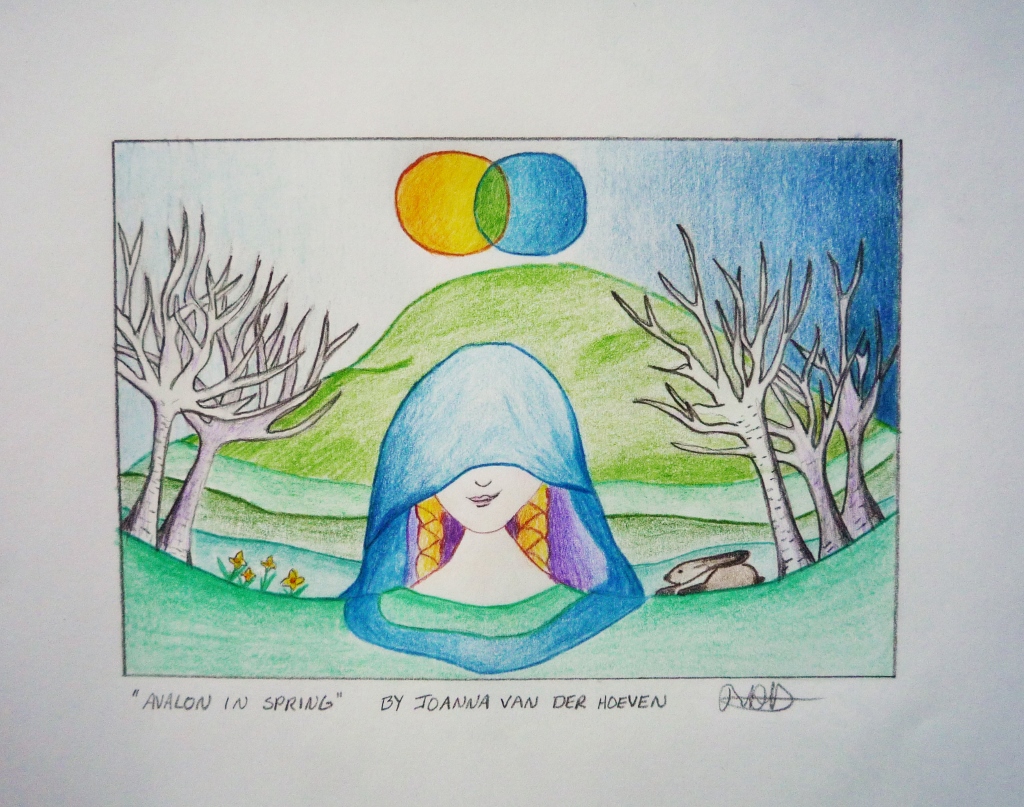
This long bank holiday weekend just gone has been spent mostly listening. I’ve stopped talking, for the most part; I’ve stopped the mental chatter to gain clarity. My aid in this exercise was drawing, working with coloured pencils where the only thing that mattered was the lines, the colours, the paper. My self had fallen away, and I was better able to see clearly. Art is liberation. Art is freedom.
As a writer, sometimes it’s hard to just stop. I’m usually always writing, at least in my head. Like a musician who writes their own music, who is always composing, I am always putting into words what is influencing me, what the muses whisper. It’s hard to turn that off sometimes. Through meditation I am able for thirty minutes to an hour to switch it off. Days of mindfulness. Through trancing I am able to leave it behind. Dancing also does it – especially dancing with my professional dance troupe, where when we are improvising we have to listen so hard to each other’s bodies that our own selves don’t get in the way. But this weekend the awen came through drawing and colouring.
When we’re quiet, when we’re still, we’re able to hear the world around us. When we stop that mental chatter, when we stop telling and retelling ourselves the story of our selves then we can hear the stories of others. We can be influenced and learn from the stories of others. We learn that we are not always right. We learn that we are not always wrong. We learn that we are never the same person every morning that we wake up. We change, we grow, we recede, we die and do it all over again the next day. In this exercise we learn that it is okay to differ from the person you were yesterday, that your opinions and thoughts will change over time, else they become dogma.
But essentially we have to learn to switch off first, before we can get to that head space. We need to find the silence, the void, the empty cauldron. Only when we are empty can we be filled. Only when we’ve poured out all the contents can we refill it with what nourishes us. We can’t subsist on the same old same old each and every day. We have to let things go, we have to have new ideas, new inspiration. Living in the present moment is what this is all about. Stuck in the past, we are not open to new ideas. Lost in the future, those ideas will never come. Here and now. Perfect freedom.
Tomorrow I will be a different person. Today I am different from yesterday. I question who this person really is, and then I let the question go. It doesn’t really matter. What really matters is freedom.
When I really want to be in the moment, when I really desire to let that sense of self slip away and enter into the present, in perfect freedom – I draw. It’s a wonderful, meditative, creative process. You stop thinking about the past. You stop thinking about the future. All that matters, for those precious hours, are the lines, the colours the shapes and the shading. I am no longer there – I am in the drawing. I am in the sun and the wood of the pencils, I am in the rain and cloud of the paper. There is a real connection, where the thinking self falls away and there is time to just “be”. Mostly I use sitting meditation for this, but when I really need to go deeper, I draw. Yet, who is this person drawing, colouring?
The word peace means many different things to many different people. Some see peace as simply the cessation of aggression or violence. Others see it as a way of life, a philosophy. Still again others see it as a mere dream, while others see it as the ultimate goal. But just what is peace, and what does it mean in a Druid context?
In our society, we strive for so much. Some things are worth working for, putting all our heart and soul into, such as equality, environmentalism and a better way of life for all beings. Some things we strive for are not so worthy – material wealth, social, economic and political power, fame or authority. For many in today’s society, it’s a dog eat dog world, and to get ahead you have to step over others in the race for the top. In reality, there is no top rung on that ladder – there isn’t even a ladder to begin with. All these notions of power are entirely illusionary, when looked at from a basic ultimate view that we are all just beings co-existing with each other on this little planet. Allow me explain.
The illusion of separateness has caused our world so much pain. When we see ourselves as separate, we begin to lose the notion of the sacredness in everything. There is absolutely no possible way for anyone or anything to be separate from anything else. We human beings are made up of minerals and atoms, of genetic information from all our ancestors (human and non-human), of sunlight and wind and rain. We are all star-stuff. We have not come out of nowhere, to suddenly exist and then just as suddenly depart when our earthly lives are snuffed out. The clouds in the sky have always been, and always will be. They may change their form, becoming humid wisps of cloud and ice, to larger clouds that then change into rain. That rain falls onto the earth, to be drunk by human and non-human animals alike, by the garden plants and the trees, by the birds and the bees. This water is released once more into the atmosphere through a myriad of ways – sweat, piss, moist exhalation, dewdrops. Back into the sky it goes, to once again form a cloud. We have clouds within our bodies, in the food that we eat, in the water that we drink, in our genetic makeup. We are clouds and the clouds are us.
Once we see the interconnectedness of all things, we realise that to strive for power or control over anything is as fleeting as the life of a cloud. All things are connected, and all things are impermanent. This is an essential tenet of Eastern philosophies, which is strongly reflected in a Druid’s perspective when viewed as part of the natural cycle. Nothing ever stays the same, not the river, not the sky, not the grass, not the tadpole. Everything is in constant change and flux. The key to finding peace within this constant change is acceptance of the impermanence, allowing our hearts to find ease from the fears and insecurities that arise when we fight against change.
A wave does not stress out about dying when it crashes upon the shoreline. It knows that it is water. The wave is simply the form that it took for however long a time. It knows that it is connected with everything else on this planet – there is nothing that exists outside it in a separate context. The web of life, the threads of connections are all around us. When we see those threads we lose the fear of death, instead seeing the cycles that allow us to really come to terms with the concept of changing forms. Death is not annihilation – it is simply becoming a new form, a new way of being.
The basic fact of life is that we will all die. So what is this struggle, what is this constant striving towards ideas of ownership, of power and rule, of games played with lives? To what purpose does it serve when we will all return to the earth in some form or another, when we come to an understanding that we are not separate from anything else? When can we move from concepts such as birth and death?
As humans we have developed a sense of self-awareness that actually hinders the possibility of finding a true and real sense of peace. We are often so self-focused that we are blinkered to everything else, to the entirety of existence. When we are only in tune with ourselves, how can we ever find harmony without? Stuck within the whirls and eddies of the mind, we will never notice the birdsong, or the rain upon our shoulders, the cry of a hungry child or the yowl of a cat in heat. When we look beyond ourselves is when we will be able to find peace. When we are able to work for the benefit of others instead of just ourselves, the world will know harmony. As we are all co-existing on this planet, it just makes sense to work together. However, the illusion of separateness is strong.
Peace is not just something for stoned hippies to think about and discuss – it is a very real and powerful way of being in the world. Through sensing our connection to the world we find a place of true power, power that comes from within that allows us to work for the benefit of all. This power cannot and will never be a “power over” anyone or anything else, as writer and activist Starhawk expresses often in her work. This power from within is the deep core of true expression, of a sustainable relationship working in tune with the entirety of existence.
Peace is not just a cessation to war and violence. Peace comes from a very real and deep understanding of our selves, of our behaviour and our way of being in the world. Many people within the pagan community seek to find a better way of being in the world. They focus on working on the self, through years of self-discovery, journeys, pilgrimages, workshops, training and the like. For many, the journey stops there, at the betterment of the self. What I would posit in this essay is that in order to bring about true peace in the world, we then have to let go of ideas of the self, in order to focus on the wider world. It is a letting go of the blinkers that hinder our ability to work with others compassionately, in real empathy and attunement to the natural cycles.
This is deep integration, of immersion in the world to allow for true peace to flow. Where there are no barriers of you and me, no sense of the “other”, then we can truly work together to bring balance and harmony to our world. It is often said in historical and academic accounts that Druids were the peacemakers of their world and their society. Did they have a deep understanding of the connectedness of all life, did they allow their sense of self to fall away in order to bring about peace between warring tribes, between the workings of the human race and other species, in their work with the gods? We will never know, but it is something that I think is perhaps lost in today’s Druidry.
Peace is often not the main focus for those who come to Druidry. They often seek a spiritual path that allows them to explore the true nature of their self, to affirm their beliefs in a like-minded community. This is brilliant, and of course very useful for all, however it cannot end there. In my opinion, there must be a return for the lessons that we learn, an exchange, a flow from one to the other that allows for true and sustainable relationship. When we step beyond our selves and begin to truly understand what it means as a Druid to live a life in service to the gods, the community and the land then we are really coming to terms with the concept of peace within a Druid context.
Too many are living a reactionary life, caught within the trapping of their minds and unwilling or unable to see the world around them and their part in the weave that is the tapestry of life. They cannot sense all the other threads around them, or if they do sometimes they feel competition, or aggressiveness towards them. It is a sickness in our culture and society that we are brought up in such an environment. Instead of supporting each other and rooting for each other, if we have an issue with someone we do the exact opposite, for whatever reason. In sacred relationship, especially within a Druid context, we don’t have to like everyone we meet or interact with. However, we can see them for what they are: a part of the sacredness in all life. As Bobcat once wrote many years ago, it’s all about sacred relationship – when we walk through the woods we avoid the nettles. We don’t have to cut them all down in order to continue, yet we can still honour their existence and their place in the web of life. Essentially, we don’t have to hurt others who may even have hurt us – if we do that, we are simply living reactionary lives. Let’s live active lives instead, claiming full responsibility for our actions and in doing so achieve peace. Even if others hurt us, we don’t have to continue the cycle of hurt – we can walk around the nettles.
Peace must first come from within. If we are hurt or angry, we are not at peace. We must take some time to look at our hurt and our anger, and see where they really stem from. As Zen Buddhist monk Thich Nhat Hanh states, we must take care of our anger in order to transform it. When we finally sit with our emotions, we open the doors to empathy and compassion. Compassion is as mis-interpreted as the concept of peace is: compassion is simply looking at the bigger picture, attempting to understand the whole. It doesn’t necessarily mean unconditional love for all beings, though if we are truly and utterly open in our hearts that will ultimately be the outcome. It’s a tough call for most to make – in fact, only the Buddha himself has done it so far. However, we can take the wisdom of wider learning to help us understand others and thereby finding peace. If someone hurts us, we can sit with our anger and hurt, looking at it relating to our self. We can then extend that investigation – this is where most contemplation ends in day to day life. However, working through an entirely self-focused view, we can then begin to look at the person who hurt us, seeing that they too suffer. It’s not pleasant to cause suffering – not unless there is something severely wrong with the brain and a mental fissure stops that basic understanding and empathy. Have you ever betrayed anyone or said anything unkind? Did it make you feel better? Have you ever intentionally said something to hurt someone? Did you ever believe in the illusion that to being someone down raises you up? We all have. What we can do now is stop that cycle and truly live a life filled with intention, instead of reactionary living.
The Druid looks to nature for inspiration on how to live a live immersed and integrated with the whole. When we see the complex web of existence, when we bring our focus to an ecosystem, we see how everything works with the other in some shape or form to bring about the continuation of existence. We can look to ideas from permaculture, from biology, from ecology in order to grasp that sense of working together to create a beneficent environment. As Druids we don’t look to humanity for authority – we seek that from nature instead.
In gaining the wider perspective we can allow room in our hearts for a deep and abiding peace. We can still work actively in the world to bring about peace – we needn’t suddenly find peace and sit back while the world struggles on around us, our environment is destroyed and people are attacking each other. It means that from a very deep well we can work to nourish our communities, bringing a much-needed draught of inspiration or awen. In doing so, we are Druid.
At the centre of the circle is where we find peace. We walk and work the edges, sometimes moving inwards towards the centre, sometimes finding ourselves on the outskirts. Walking a beautiful turf labyrinth today, and doing ritual in a wonderful tree henge, the lessons of finding the centre have been deep and utterly soul-awakening. May we be peace, may we find the stillness of the centre. xoxo
Some people find comfort and deep learning in solitude. Others find inspiration and wisdom in the interaction with others, where the edges of our souls meet. I find a good balance between the two in my life, needing solitary reflective contemplation and the shared words, laughter and brilliance of my friends to encourage and nourish creativity. I have a strong circle of female friends with whom I share ritual practice, dance, creative crafts and good food, alongside weekends away, sometimes as “girly” weekends, sometimes as spiritual pilgrimages.
I have found ritual with these ladies deeply inspiring, and the bond that it creates reminds me of the sanctity within all our relationships. However, I mostly practice my Druidry on a solitary level, literally walking the wild paths of the heath or deep into the heart of the forest alone. In those moments I feel a deep connection to the world around me, whereas in ritual with others I feel a deep connection to them.
I think a balance is definitely required, in working both alone and with others. But here I shall speak of working alone, and the benefits that can be obtained from following a spiritual path with your own wits, instinct and inspiration to guide you.
I think that more of us need to spend quality time alone. I realise that in our society many people already feel alienated and isolated, but I wonder how much of that stems from not really being able to properly be with your self. I worry about the next generation, who have phones and tablets and a constant barrage of virtual communication that they can resort to anytime they are left alone. I remember a time when my husband was away for a work conference, and feeling the need for human company I went down to the local pub to chat with others from the village at the bar. There was conversation between the customers and the publican, but as soon as she left to go to the kitchen conversation died, and people went straight to their phones rather than talk to each other. I sat there, wondering what on earth has gone wrong with our society in that we cannot talk to each other anymore, but I digress.
The need for other human companionship can be strong, and it’s not a need that we should ignore, being a social species. However, what I would posit is that we certainly do need to learn how to be alone, to listen to ourselves, to become attuned to our thoughts and behaviour in order to better understand ourselves. I strongly feel that when we understand ourselves, we understand others and can be in the world with more empathy and compassion. Often I have taken time out away from the world in order to better understand it – in this I feel a very strong connection with monastic traditions. By removal from the world and the thoughts of others I can better hear the gods, the ancestors and the spirits of place all around me. By spending time alone with my thoughts I learn the cycles that they go through, paying attention to them and really noting them. With a little Zen, when we actually pay attention to our thoughts they don’t control us as much as they might otherwise, offering us an opportunity to live with real intention instead of leading reactive lives.
Spending time in mediation alone, learning how the mind works we can then begin to hear the songs of others as naturally our thoughts quiet down. We have paid them attention, and now that our thoughts have received the attention they desired, they no longer crave more. We hear the birdsong, we feel the sunlight on our skin, the wind in our hair where otherwise we might have been distracted by thoughts, feelings, emotions and situations. The world opens up, and we are once again reminded that the world is more than just us – that we are a part of a beautiful living, breathing system where everything is inter-related. It is an exquisite gift.
Spend more time with yourself. If you can, spend half an hour, an hour or a couple of hours each day alone, perhaps going for a walk or meditating. If at all possible, go on a weekend solo retreat, or a weeklong solo retreat in a place that inspires you, where you can really connect with what is important and with your own beautiful self. Learn to love that self for what she is, for who she is and connect with her, giving her as much time as you would your dearest friends.
When we learn to love our own self, that love will then spill out into the wider world, nourishing and sustaining others.


 Down the Forest Path