Looking at the feelings of guilt that can arise when following an Earth-based religion/spirituality, and how to get beyond them towards a life of integration.

Looking at the feelings of guilt that can arise when following an Earth-based religion/spirituality, and how to get beyond them towards a life of integration.
When I really want to be in the moment, when I really desire to let that sense of self slip away and enter into the present, in perfect freedom – I draw. It’s a wonderful, meditative, creative process. You stop thinking about the past. You stop thinking about the future. All that matters, for those precious hours, are the lines, the colours the shapes and the shading. I am no longer there – I am in the drawing. I am in the sun and the wood of the pencils, I am in the rain and cloud of the paper. There is a real connection, where the thinking self falls away and there is time to just “be”. Mostly I use sitting meditation for this, but when I really need to go deeper, I draw. Yet, who is this person drawing, colouring?
No idea.
It just is. 🙂
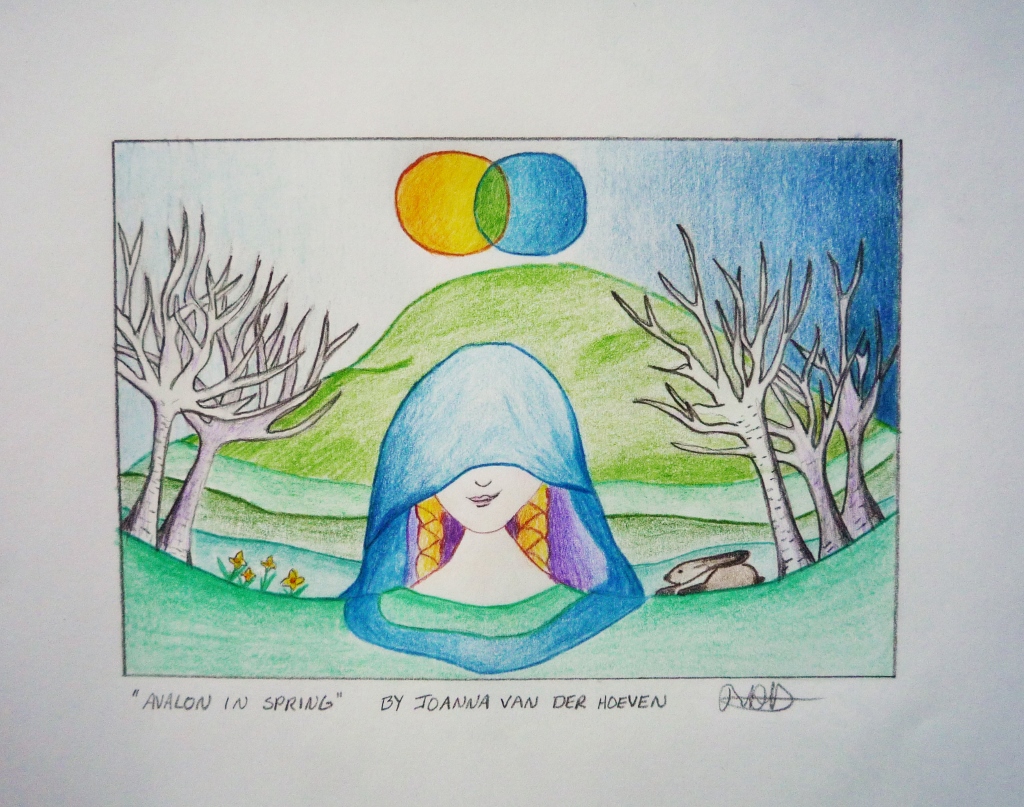
“Avalon in Spring” © Joanna van der Hoeven 2015
I’ve had several requests for a transcript of the talk I gave last weekend at Leaping Hare Pagan Conference in Colchester, Essex. So, here you go! x
Nemetona: Goddess of Boundaries and Edges, Sanctuary and Freedom
In this talk I am going to explore the goddess Nemetona as the Lady of Boundaries and Edges, and also her role in personal freedom and sanctuary. Not much is known academically of the goddess Nemetona: there are a few inscriptions at sacred spots such as at Altripp, Trier and Eisenberg in Germany. There is also an inscription to her at Bath. She was known in Gaul and in Spain we find the Nemetatae tribe. The word nemeton or similar versions are mentioned throughout Europe, especially in place names. Nemeton means Sacred Grove, and in this regard she is sometimes connected with Druids. However, this talk is not an academic discussion of this particular goddess, but an experiential one. We will explore boundaries and edges of ecosystems and of our own selves, our own nemetons, inspired by the goddess of the sacred grove, where the edge of the wood meets open space. We will see where those boundaries meet, touching soul to soul and awakening awen or inspiration. My perspective comes from a Druid tradition, languaged as it is within a religion that is animistic and polytheistic.
A Druid looks to nature in order to find inspiration. Authority is found in nature rather than in human constructs and society. Our relationships are inspired by the natural connection we see in everything, the threads of the web that connect us all. We realise that we do not exist separately from the world – we are a part of it, a thread in the tapestry. We know that without other beings we could not exist. Zen Buddhist monk Thich Nhat Hanh calls this Interbeing – that we inter-are with everything on the planet. Nothing exists separately. We live in ecosystems, living environments that support and sustain us. It isn’t human animals that define how the Druid interacts – the land provides us with a way to be in the world, teaches us of co-existing in harmony, in the flow of perpetual change and in the times and tides of life. It can be regarded as anarchic in that sense, but it is not a disregard for the laws of humanity that keep a society together, a cohesive social order – rather it is more seeking the wisdom of the oak, as the word Druid means – dru, meaning oak, and wid, meaning wisdom. Gods of nature, of an earth-based religion inspire us in different ways from the secular world. The gods are both brutal and beautiful.
Working with the gods, the ancestors and the land we learn about harmony, about ecosystems, about where edges meet and how it works co-operatively. Nemetona teaches us this as we explore our own nemeton. Our personal nemeton is that space around us, sometimes called our aura, that we only allow those we trust to enter. That space is sometimes expanded in ritual, to create a sacred circle or sacred space, where we find ourselves within the greater cosmos, defined in a smaller, set form and boundary which is easier to understand. In that boundary we are safe, we are free.
Nemetona teaches us of that perfect freedom. In Wicca, it is often said that one enters the circle “In perfect love and perfect trust”. We open our souls wide within the limits of our circle, guided by the gods to inspire and receive inspiration. In that perfect freedom we know our true selves. As goddess of the sacred grove, Nemetona teaches us of this perfect trust, and how it relates to the rest of the world. Calling to her to help hold that space, we explore the nature of our own self, coming to truly know it and understand it. Having secured our sense of identity we can then work in the world from strong standpoint, where we know that the world doesn’t end at us – we work in service to the world. We have to step beyond the boundaries of ego and self-importance if we are to work for true harmony.
Working with edges, our own and understanding how to use them to benefit the whole is at the heart of what Nemetona teaches us. Our personal nemetons will change their appearance according to our current lives and how well we are at using them intentionally. If we are unaware of our nemeton, then we often find we clash with other people, or have a hard time connecting with others, or withdraw into ourselves so much that others may pass us by when we would like them to acknowledge us. Conscious manipulation of our nemeton can indeed change the way we feel about ourselves and how we are perceived. As with everything in Druidry, this must be done with honour and integrity.
Opening our nemeton requires a level of ability and trust. We close ourselves off on so many levels each and every day simply because of the sensory overload that we are exposed to through people, media and more. We have so many demands on our life that if a stranger came up to us in need after a hectic day, we may shut ourselves off completely from them and not provide the help that they might need, however simple and genuine their request may be. Our cat may come to us for a cuddle, and we don’t even notice as we are too busy distracting ourselves with television and high fat or sugary food. We switch off constantly, and we must relearn how not to do this, and instead be aware and mindful of our nemeton and how it interacts with others.
The nemeton is a sacred and holy space. When we interact with others, we must always bear this in mind. Using our nemeton to gain attention needlessly or simply to get what we want is dishonouring both ourselves, others and the Goddess.
We must honour the nemeton of others as much as we honour our own. They are all sacred. By discovering where our edges lie, we can also learn to see where and how other nemetons work, and in doing so work honourably with them.
Nemetona teaches us to open ourselves. She also teaches us how to listen. Listening is one of the greatest teachings in Druidry. We need compassion, which is basically simple understanding. We need to listen without judgement in order to work with compassion. We see how relationships work in nature. We study the way things work in order to better understand them. We see how sometimes relationships don’t work, in nature and in our own lives. If it doesn’t work, we find out why it didn’t work. If we are working with the soil, we know that some things simply won’t work in our home environments. We cannot grow bananas in the UK. The soil in my back garden is very acidic – I have to know and understand the soil in order to know what will grow best in that environment. Some relationships just can’t thrive in certain environments, and it is up to us to quest for the understanding. Sometimes we simply have to let go of relationships that don’t work. We cannot continue to try growing bananas in our backyards if we try repeatedly and fail. We must understand why it doesn’t work and move on in order to nourish and be nourished.
When we are rooted in our selves, finding our place in the environment, working with our edges we understand where we came from. With that understanding, we can reach out to others, where soul meets soul, when boundaries and edges touch. In that touch there is relationship and inspiration. In Druidry we call that awen, where soul touches soul and the spark of inspiration occurs. Where the seeds lands on the soil, where those edges meet, something wonderful happens and new life occurs. When we meet another human being with honesty and compassion, utterly awake and aware to the connection around us we are inspired. If we are aware of where we come from, aware of our ancestors, the land upon which we live, we can work from a place of deep connection. As the Tao Te Ching states, “Stay at the centre of the circle and let all things take their course”.
But it doesn’t stop at the self. Self-improvement is not the goal in Druidry. Nemetona teaches us to root and find our edges in the sacred grove, but then nudges us to go and seek out those edges in the wider world, where we can truly be inspired. Self-focused creativity is not as inspiring as that which is connected to the whole. Getting the self out of the way is key in this learning, of learning to live in service. We need to find out how and what we can give in order to have sustainable relationship.
Giving is essential in a culture and lifestyle that takes so much. We live in a consumer culture. We need to balance consumerism with the inspiration we receive from nature, where if we take too much it dies. If one creature starts to take too much the whole ecosystem is affected, and is at risk. As homo sapiens, the beings that are supposedly aware, we still take too much. We can look to nature to find out how to work better in and with the world. The curse of self-awareness means that we are often so focused on our selves that we do not see the wider world. We are so busy looking inwards that we forget to look outwards. We forget that what benefits us may not benefit the whole, and we are a part of that whole, therefore selfishness can be so detrimental – if only we are able to look beyond the self (and we are). Relationships require a give and take. We cannot always give nor can we always take. We are honour bound to give back for what we have received if we are working from a place of deep connection. Nature shows us how. Otherwise it is simply not sustainable. A forest is able to sustain itself without any human interaction. The sacred grove in the forest, where the edges of woodland meet open space are filled with potential, able to sustain itself with integrity.
Nemetona allows us that sacred space to explore our emotions and find ways through the internal formations of our minds so that we can act with intention in the world, rather than living a purely reactive life. This is the blessing of self-awareness, one that we should use much more often than we do. By taking time to explore our boundaries and edges and where they meet in the world we turn what could otherwise be a solely inward-focusing exercise into pure integration with the rest of the world. Within the circle, within the sacred grove we are able to work clearly. Human emotion can often overwhelm us, causing us to act out in ways that are not sustainable, in ways that are dishonourable. Anger, rage, love and lust can consume us if we are not aware of where our edges meet. In sacred space we can come to understand them as forces of nature that need to be worked with creatively to transform them, thereby benefiting the whole. Druidry is about seeing the bigger picture, stepping beyond our selves and our own internal worlds through a deep knowledge of the self, working from a place rooted space and time. We can serve the world best if we are working from a place of strong, honourable intention.
The importance is placed on holding, holding space not only for ourselves but for others. That is the role of teaching and guidance. In learning, in deep learning held in a place of sanctuary we work beyond the realms of language into true experiential learning. Coming from a safe place, we begin to realise that we know nothing, and in that knowing is exquisite learning, an openness to all of reality as it really is, aware and wide awake, both eyes open, all our senses open. In Zen this is often called Beginners Mind, where when we realise we know nothing at all our horizons are expanded, the self is dropped and we are open to endless possibility. That word, possibility is so evocative. From the latin, possibilis meaning “that which can be done” and posse “be able”. The door is opened and it is for us to walk through. It is a call to action.
Shunryu Suzuki wrote a book called Zen Mind, Beginner’s Mind, and there are many beautiful expressions of possibility therein, showing how we can move beyond our selves. One such quote is “In the beginner’s mind there are many possibilities, but in the expert’s there are few”. He also states ““A mind full of preconceived ideas, subjective intentions, or habits it not open to things as they are.” Going deeper into ideas of attachment, he states “Not to be attached to something is to be aware of its absolute value. Everything you do should be based on such an awareness, and not on material or self-centered ideas of value.” When we able to step beyond ourselves we perceive reality as it really is, and can work from a place of understanding and compassion. If we come from a viewpoint that everything is sacred, if we learn to perceive the sacredness of everything, we will be inspired to have sustainable relationship.
Community is important. Right here, right now in this very room our edges are touching, blending, breaking or standing fast against each other. There are also non-human edges that we are coming into contact with – the chair, the floor, the air around us, the ancestors. Learning to work together, inspired by the gods and by nature, by the earth-based traditions that we belong to we can work with an awareness of the sacred in our own community. There is strength in that awareness, making the community itself strong. We can show how sustainable relationships work. We can walk our talk and inspire others. We can’t live only for ourselves – we have to be individually strong yes, but where we work together, our edges touching is where the true strength lies. Finding authority in the natural world helps us to build this strong awareness and community. Learning to work with boundaries, co-operative work and practice is tantamount. If we are simply focused on the self, our community suffers. If we focus solely on the community, the self suffers. Balance and harmony, the wider perspective, is what is needed.
Leading by example through sustainable relationship can be the greatest inspiration, the greatest motivator. The energy of connection in relationship is where the real power lies. The inter-relatedness of everything is where the true strength is found. The root of the word community comes from communis – meaning common. I am not important. You are not important. Humans are not important. But where our edges meet, whether that is with another human or tree, mountain or beetle, where we find relationship is where the power lies. In our interaction is where there is the greatest potential. Nemetona teaches us of this power, by working co-operatively we can find new ways to trickle that energy up through the various social strata and spheres to affect the whole. The way we treat each other, run our businesses, live our lives and relate to each other can and does affect the wider world. We are not self-contained units. We are part of the whole.
The Celts had a very strong sense of personal and social responsibility. There were honour prices to be paid if someone had wronged another of the community. This implies a very real sense of ownership to one’s behaviour. Not working or living in a world isolated, working together requires us to acknowledge and work with the edges of other people, human and non-human in a myriad of ways. The Celtic metaphysic demonstrated that we simply cannot do as we want – being part of a whole, we have to consider others in every aspect of our lives. There is a strong notion of free-will, but the important thing to remember is that everything is a choice. When we choose with a wider sense of perspective we lean more towards benefiting the whole rather than just the self. Co-incidentally, when we benefit the whole we are also benefiting ourselves. Working in a society that focuses on responsibility, rather than punishment can lead to a better society in which everyone is an active participant, rather than being taken care of by a nanny state. Without personal responsibility, such as in our current judicial system, someone else will take care of it. There is a passiveness in our relationships with each other.
I remember seeing on the news a couple of weeks ago how the driver of a car ran into someone on horseback. A man and his wife were out for a horse ride, she in front and he behind down a quiet little country lane. A car came up, driving too fast, and the man on horseback had two options – move his horse out of the way and let his wife and her horse be hit, or take the impact himself. Tears fell from my eyes as I imagined what it would be like to be in his predicament, where no matter what you do someone you love will die due to the carelessness of another. And the horse that he was riding, to not bolt or run away at the danger, to believe in his rider so much that he would take the impact was just overwhelming in its power of relationship. Needless to say, the horse died, but the man and his wife, and her mount survived.
What happened to the car driver? Nothing. He didn’t even get a caution, or a ticket for careless or reckless driving. Now, I’m not saying that the man needed to be punished, but what I would like to see in our society is personal responsibility. If we still followed a society where personal responsibility was paramount to honour and integrity, an honour price should have been paid to the man who lost his horse. Whether in money or work, it doesn’t matter. The driver should have found some way to make amends. Instead, our society is at the hands of a judicial system which encourages passive behaviour, seeing just what we can get away with and allowing others to make the decisions for us. We live in a world where personal responsibility requires reinforcement from an outside authority. We need to take personal responsibility back into our own hands, taking our authority from nature. Perhaps then we will move from passiveness into lives filled with intention, even as the bluebell opens out to the warming sunshine.
We have to learn how to communicate, and here we see how the words community and communicate come together. Each community is different, each ecosystem balanced in different ways. Only through communication can we work and relate honourably in different ecosystems. The winds, the smells, the flora and fauna in the ecosystem of my home are different to that of Ipswich, only 15 miles away. Coastal, heathland and forest – I find systems within systems in my very own backyard. We have to learn about each system, how it works to relate properly and effectively to the whole and not just tramp all over it, devastating it with our own self-centred arrogance. We have to learn to recognise each other’s edges without putting our own projections onto them. Working with others, working with the self, working with Nemetona we find how to be of service without ego getting in the way.
I have seen the goddess Nemetona in the principles of permaculture. The basis behind permaculture is something I’ve been talking about all along: how to take what we see in natural ecosystems and use that as a model for our own living, creating sustainability and diversity. Permaculture acknowledges that it is at the edges where there is the most potential, the most diversity. The edge of a forest is where you will find the most plants, where the herds of deer wander. It teaches of self-regulatory systems where each element has its own personal intention which also works to the benefit of the whole. The diversity of beneficial relationships is what makes an ecosystem work and be self-sustaining.
We may already have all the elements necessary to have a self-sustaining ecosystem – all they may need is a little rearranging in order to create harmonious relationships. We are a part of nature, therefore we need to re-learn how to be in nature without messing it all up. Permaculture begins with working with what is already there. Then we can research and study what works best and help to create a system that is sustainable. This is what we do when as Pagans when we are working with our own personal nemeton, and also when we are in larger groups, perhaps even group ritual. The diversity, the edges are at the heart of all interaction. We can create systems that are healthy and balanced simply by paying attention. Within permaculture, each species of animal or plant has what is known as a niche – its own function within the ecosystem in relation to other species. Likewise, we all have our own talents and abilities that we can contribute in relations to society at large. When we see each other’s niches we can work around and with that, recognising their edges and creating new ways of being in the world that work co-operatively instead of competitively.
In permaculture, where one ecosystem meets another it is known as the edge effect. Conflict between what could be seen as competing plants due to finite levels of light on a forest edge are overcome naturally by having different plants growing at different times of the year. This acknowledgement of space helps all to thrive in their own time. Imagine how our human world would be if we could adopt these same principles! I think it would be more courteous world, to say the least.
Where woodland and grassland meet, we find some advantages coming from both ecosystems. The berry-producing bushes at the forest edge make the best use of the greater amount of light than that found deep within the heart of the wood. Birds of prey nest at field and forest edges to benefit from the security provided by tree cover and the food provided by open spaces in the form of voles, mice and other small animals. Deer, as mentioned previously, favour the edges as it gives them the best of both worlds – grazing and shelter from predators. Permaculture learns how to lessen the rigidity of edges, so that there isn’t a strong forest meets field edge, but rather a co-operative blend of the two as would be found naturally, instead of the forced edge of a farmer’s monoculture field and that of ancient woodland.
Becoming aware of your edges is only the beginning to coming to an understanding of this sacred Goddess. Once we know where our edges are, we can also be freed of them in the right environment, finding immersion in our landscapes that it utterly exhilarating and deeply inspiring, at one with the rest of the world and in perfect harmony.
Blessings from the edge to you all.
I had a wonderful time yesterday at the Leaping Hare Pagan Conference in Colchester, Essex. I was honoured to be asked by the organisers at the end of last year to present, give a talk on the goddess Nemetona after having received requests throughout the year following the release of my second book, Dancing With Nemetona: A Druid’s Exploration of Sanctuary and Sacred Space.
It was a really enjoyable experience. I have been going to Leaping Hare for many, many years now and there is a real community spirit, a real sense of well-being and support. Thank you to everyone for your kind words, messages and emails following the talk – may we be the awen!
Here is a reblog from my channel, Druidheart at SageWoman on the Witches and Pagans website, exploring a little of what the solitary path means to me.
Posted by Joanna van der Hoeven on Tuesday, 10 March 2015 in SageWoman Blogs
 Some people find comfort and deep learning in solitude. Others find inspiration and wisdom in the interaction with others, where the edges of our souls meet. I find a good balance between the two in my life, needing solitary reflective contemplation and the shared words, laughter and brilliance of my friends to encourage and nourish creativity. I have a strong circle of female friends with whom I share ritual practice, dance, creative crafts and good food, alongside weekends away, sometimes as “girly” weekends, sometimes as spiritual pilgrimages.
I have found ritual with these ladies deeply inspiring, and the bond that it creates reminds me of the sanctity within all our relationships. However, I mostly practice my Druidry on a solitary level, literally walking the wild paths of the heath or deep into the heart of the forest alone. In those moments I feel a deep connection to the world around me, whereas in ritual with others I feel a deep connection to them.
I think a balance is definitely required, in working both alone and with others. But here I shall speak of working alone, and the benefits that can be obtained from following a spiritual path with your own wits, instinct and inspiration to guide you.
I think that more of us need to spend quality time alone. I realise that in our society many people already feel alienated and isolated, but I wonder how much of that stems from not really being able to properly be with your self. I worry about the next generation, who have phones and tablets and a constant barrage of virtual communication that they can resort to anytime they are left alone. I remember a time when my husband was away for a work conference, and feeling the need for human company I went down to the local pub to chat with others from the village at the bar. There was conversation between the customers and the publican, but as soon as she left to go to the kitchen conversation died, and people went straight to their phones rather than talk to each other. I sat there, wondering what on earth has gone wrong with our society in that we cannot talk to each other anymore, but I digress.
The need for other human companionship can be strong, and it’s not a need that we should ignore, being a social species. However, what I would posit is that we certainly do need to learn how to be alone, to listen to ourselves, to become attuned to our thoughts and behaviour in order to better understand ourselves. I strongly feel that when we understand ourselves, we understand others and can be in the world with more empathy and compassion. Often I have taken time out away from the world in order to better understand it – in this I feel a very strong connection with monastic traditions. By removal from the world and the thoughts of others I can better hear the gods, the ancestors and the spirits of place all around me. By spending time alone with my thoughts I learn the cycles that they go through, paying attention to them and really noting them. With a little Zen, when we actually pay attention to our thoughts they don’t control us as much as they might otherwise, offering us an opportunity to live with real intention instead of leading reactive lives.
Spending time in mediation alone, learning how the mind works we can then begin to hear the songs of others as naturally our thoughts quiet down. We have paid them attention, and now that our thoughts have received the attention they desired, they no longer crave more. We hear the birdsong, we feel the sunlight on our skin, the wind in our hair where otherwise we might have been distracted by thoughts, feelings, emotions and situations. The world opens up, and we are once again reminded that the world is more than just us – that we are a part of a beautiful living, breathing system where everything is inter-related. It is an exquisite gift.
Spend more time with yourself. If you can, spend half an hour, an hour or a couple of hours each day alone, perhaps going for a walk or meditating. If at all possible, go on a weekend solo retreat, or a weeklong solo retreat in a place that inspires you, where you can really connect with what is important and with your own beautiful self. Learn to love that self for what she is, for who she is and connect with her, giving her as much time as you would your dearest friends.
When we learn to love our own self, that love will then spill out into the wider world, nourishing and sustaining others.
For more on the solitary path, see my latest book The Awen Alone: Walking the Path of the Solitary Druid, available now through Moon Books.
This is a reblog of my post, The coolest kids on the playground, for my blog channel DruidHeart at Witches and Pagans.
There is a favourite saying of mine, “You do not have to blow out someone else’s candle for yours to burn more brightly”. Sadly, it seems that in our modern society, this is the way things “work”.
Watch a political debate. It’s just tossing around attempts to besmirch the other party, rather than actually getting things done. It’s infuriating. Sound bites on the news are all about how another party is crap, and theirs is better, without actually talking about the issue at hand.
See what happens on a school playground. Those who are different, who don’t fit in with the popular kids, are usually pushed around or gossiped/rumour mongered by those who are a part of the elite popular gang. I have no idea why it happens, but it happened over thirty years ago when I was in elementary and high school, it happens now and it will happen in the future, most likely. I don’t know if kids learn this from their parents, or television, or society – all I know is that kids can be cruel.
Even in Pagan circles, people put down or condemn others for various reasons: the “newbie”, the “fluffy bunny”, the rival coven, hearth or Order. All it comes down to, basically, is this playground mentality. Some people never got out of it. Even the most intelligent, articulate person can fall back into this frame of mind, to make themselves feel better.
This is not to say that we shouldn’t look critically at others’ behaviour, and especially our own. What I am trying to say is that we do not need to belittle anyone whose path may be different from our own.
I have known some popular Pagan leaders to put down other Pagans in front of their own group. This always leaves me with a bad feeling in my mouth – it is utterly distasteful. It does a disservice to everyone involved. Even the most militant, ethically-minded person I know has failed in this regard on at least one occasion, shuddering at the thought of once belonging to another group and verbally putting them down in front of a gathering of about a dozen individuals. This shocked me, but then I realised that we are all human, and we all have failings. We can all regress to the playground.
To read the full article, click HERE
This is a reblog from my post at SageWoman Magazine’s blog channel on Witches and Pagans.
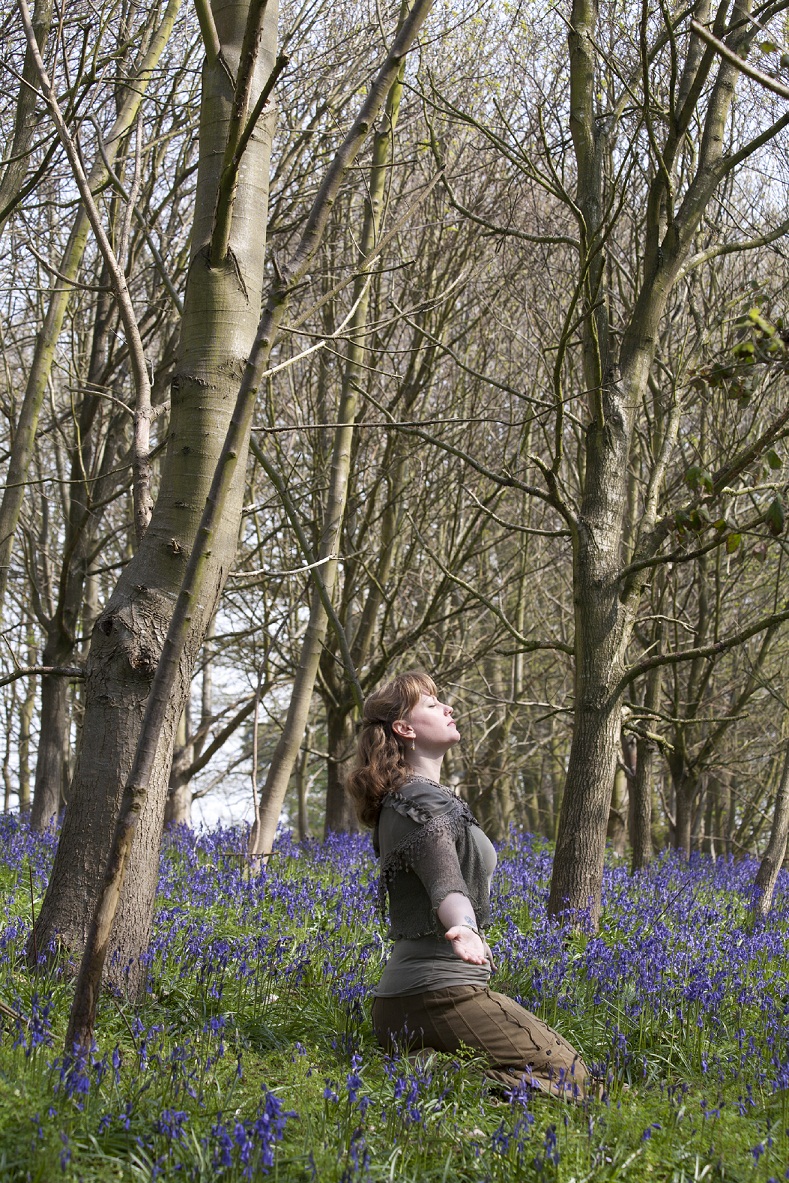 Beltane is fast upon us – here in Suffolk, the hawthorn is in bloom already, and I have heard the first cuckoo of summer. The oak leaves are just coming out, and the beech and ash are lagging behind, sluggish after their long sleep. The garden is abloom, and the forest is filled with bluebells, their soft energy shimmering in the sunlight. It is, indeed, Beltane.
Beltane is a pagan festival that relates to fertility and sexuality. It is a celebration of passion, of the fire within the blood and the rising sap within nature and in our own bodies. Yet for the single woman, what does Beltane mean to her? To the pagan without a partner, they can often feel left out during this holiday, this celebration of sexuality, where it is often depicted as the Goddess and God coming together to create new life. What of those women who have no significant other in their life at this time?
Beltane can be celebrated by the singleton as much as with a partner. In Druidry, we take inspiration from the natural world around us, the gods and our ancestors. We know that we are all connected, therefore we can never truly be alone. We take this sense of connection and work with it in everything that we do.
At this time of year, we can work with the energies of flowing, of fire and creativity. We don’t have to just celebrate sex and the act of sexual union – that is only one facet of this festival. It is a fire festival, and so we can take inspiration from the flames and work that into our own lives…
To see the whole post, click HERE.
 Druids aren’t associated with magic in the same way that other Pagan traditions, such as Wicca or Witchcraft seem to be. Yet I’ve found that in every spiritual path, there are elements of magic contained within that are often very similar in nature.
What is Druid magic? Do Druids cast spells? Have magical tools? Do we think of Gandalf, brandishing his staff and saying mightily “You Shall Not Pass!” or his mushroom-addled fellow, Radagast, who lives in the woods, talks to animals and, according to the latest Hobbit films, has a rabbit-powered all-terrain sleigh and brings hedgehogs back from the dead?
Of course it’s none of these things. It would be pretty cool if it were. But Druid magic, like all magic, is subtler than what we see on the screen or read in books. There isn’t lightning shooting from fingertips or fire balls sparking from one’s eyes. In fact, many modern Druids don’t use magic at all, or don’t call it magic.
So what is magic? It has often been quoted these days as manipulating the natural forces of energy within nature to provide a desired result. This could have many interpretations. Flicking a switch and having my living room lit up at night could fall within this category, but I’m being a bit facetious. It is also often said that magic should be the last recourse after having tried all mundane means of solving a problem. So how do Druids use magic, if at all?
There is a growing trend of blending Wicca and Druidry, as in Philip Carr-Gomm’s new book, Druidcraft. This is a lovely way of expressing the divide between two very similar paths; kind of bridging the gap that lies between. I thought the book, especially the audio book, was brilliant, and yet I’m still not one to perform spells on a regular basis. Why is that?
As stated previously, magic is often the last recourse to a situation. If all other means have been tried, and I’m plum run out of ideas, then I might turn to magic. I might equally turn to prayer. Praying for some guidance, asking the gods, the spirits, the ancestors for a little advice when I’m stuck could be called a spell – it could also be called a prayer. Lighting a candle and some incense, meditating and then seeking some clarification or inspiration from the ancestors could indeed look like the workings of a magical spell. I think perhaps the difference is in the intention – in both magic and prayer, we are hoping for a result, but the results are often different.
In prayer, asking for the gods to solve a problem for us rarely, if ever, works in my own experience. I prefer to ask them for inspiration on how to get through this, or my spirit guides on where to go to next in order to resolve and issue. Casting a spell bypasses the question, in a way, and seeks to get an answer to a question not asked. Perhaps this is why I resort to magic so little, I always like to ask the input of others to seek out different perspectives on a situation. Again, this is only my own personal views, and others may have other ways of both prayer and spell-casting that are vastly different to my own.
For me, as a Druid I am always questing the awen – for me, awen is the Grail. Inspiration, flowing spirit – it is such a beautiful word from the Welsh language that has so many different meanings. To me, awen is magic, though perhaps not in the spellcaster’s sense of the word. It is energy, it is flowing, it is the Tao and The Force of the Jedi Knight. It is something to be tapped into in order to gain a new perspective, to see the bigger picture, to obtain compassion. Awen is Buddhist enlightenment. It is the Christian “God is Love”.
Instead of performing a magic spell, I might wander the heathland or forest, looking for inspiration around me. I might find a place to pray, using that inspiration to guide my prayers to better understanding of myself, the situation, the world. When all other recourses have failed, then I might try magic – the last recourse.
I feel that magic is something special, something not to be abused or overused. We often hear the term “god-bothering” and magic may indeed be another form of “bothering” – whether it is the elements, the energy of nature, or something else entirely. I feel that Druids on the whole would turn to awen rather than magic, but perhaps with the blending of Druidry and other traditions this could indeed change, or maybe even change back to the way Druidry used to be – who knows?
Perhaps my quest for awen is my magic. Magic includes transformation, and questing the awen will indeed change someone. None of the knights on the Grail quest were ever the same. None who seek enlightenment will ever be the same person they were before. We are constantly changing anyways, living a life of impermanence and fluidity, of change and flux.
Perhaps just tapping into that idea is magic, is awen.
(Reblogged from my channel at SageWoman: http://www.witchesandpagans.com/SageWoman-Blogs/druid-magic.html)
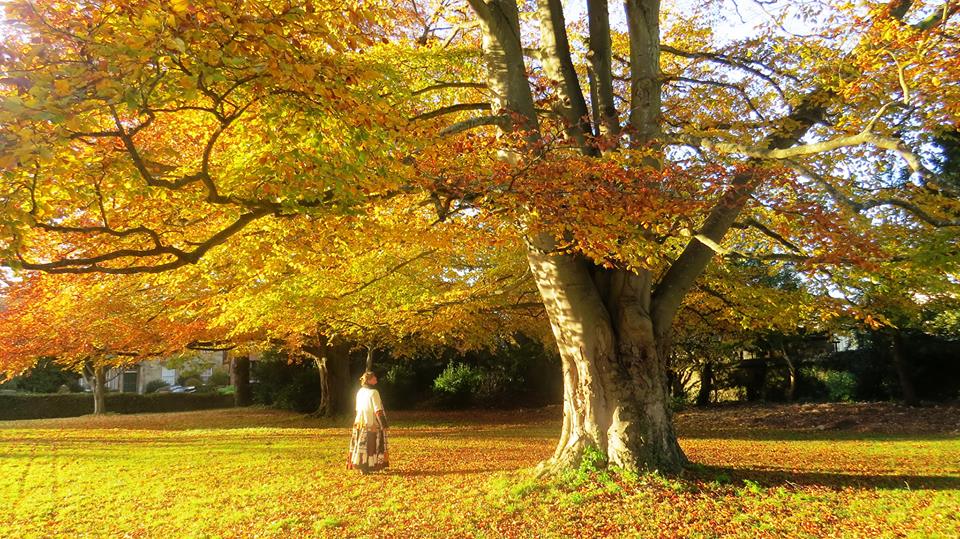 Within Druidry, and indeed in modern Paganism, it is usual to adopt a craft name within your tradition. It is not necessary, and if you feel that you don’t need one, or one doesn’t appeal, then by all means forego the craft name. However, choosing a craft name, or having one bestowed upon you can enhance your connection to your tradition, if you allow it.
Craft names can provide an air of mystery and magic. We can choose something that reflects our work, such as Oak Seeker, Coll (hazel, if working with ogham), or Pathfinder. We can choose something that reflects a part of the environment that we love – Alder, Willow, Rain. We can put two words together that express a deep part of our soul, or a deep love that we have, such as Gentle Bear, Running Horse, or my craft name – Autumn Song. We can adopt names of the gods and goddesses that we love, such as Nehalennia, Freya, Lugh, Branwen, Rhiannon, Bridget. There are also mythological names like Merlin, Morgan and Nimue that might strike a chord deep within our hearts. We can even choose names from fantasy books that we love – Gandalf, Radagast, Arwen, Goldberry, Eomer, Eowyn, Faramir (all Lord of the Rings names). What matters most is that our name expresses a deep part of our soul; that when we utter it, write it, exhale it into the twilight it means something to us, connects us to the awen.
You can inscribe your craft name upon your altar, or your tools. You can sign correspondence with it. You may even change your name to your craft name if you feel that better reflects who you are. I like having both names, as I can honour my two grandmothers for whom I am named after, and honour my tradition with my craft name. Besides, it took me long enough to learn how to write my own name, and I’m sticking to it…
We might choose our craft name, or we might be gifted it by another. We could meditate, commune with the local spirits of place, or deity, and ask that they bestow us a name. In some magical traditions, a craft name is given upon initiation into the tradition, or upon completion of various grades. When working alone, we do not have to wait to have a name bestowed upon us – we can seek it out ourselves from whatever inspires us whenever we feel ready. We can ask our ancestors, our spirit guides, even friends and family for ideas and inspiration.
Our craft names may also change with time. As we grow and develop in our spirituality, we might find that we outgrow our name, and thereby be inspired to choose another that better suits our current work. We can include our naming in ceremonies, whether it is our first time or our fifth time in choosing a craft name. Taking on a name is not something to be done lightly, however. It requires much thought and meditation if you wish for it to be important to your work.
Whatever name you choose, or however you decide to be named, honour that name with all that you are. Find ways of being that reflect your name in deep and compassionate ways, working to create peace and harmony in your life and in all life around you.
Here is my blog for Moon Books’ blog page – I write the monthly essay. Check out some of their other blogs as well – really good stuff there!
I remember, quite a few years ago now, reading Ronald Hutton’s Triumph of the Moon. I had always known, vaguely, that modern paganism was just that – modern. After reading that book, and finding out just how modern most of our rituals and celebrations are, I had a bit of a religious crisis. I was having a really hard time coming to terms with the fact that the spiritual path I was following was essentially made up by two guys in the 1950’s and 60’s.
For a couple of weeks I toiled with this issue, until it finally dawned on me that all religions, at some point, were made up by some people. Simply because someone made it up 200, 2,000 or 20,000 years ago didn’t make it any more valid. I realised that authenticity did not equal validity.
There was no way of tracing pagan roots back to what we would imagine to be a more “pagan time” – ie. for most this would be before Christianity. Paganism didn’t write or record much down in words, though we can catch remnant in snatches of old folk songs, rhymes and the like. If our paganism is inspired by an even older spirituality, such as our Neolithic ancestors, then certainly we have no written records – a few artefacts, burial mounds and sacred sites to draw inspiration on, but nothing of their words to live by. We still do not know, and can never be certain, what they actually believed, how they lived their lives and how they communed with their gods, if any. We can only speculate.
And so, two men, Gerald Gardner and Ross Nichols pieced together a spirituality as best they could, after looking into folk traditions and seeking inspiration from the natural world itself. This evolved into what is recognised as Wicca and Druidry today. These paths are not hundreds of years old, though they have been inspired by older traditions. This does not invalidate them in any way.
I would personally have a harder time believing in the validity of someone’s path who told me that they were following a “thousands year old British tradition” than someone who told me that they made up their own spiritual path. Why? Because the need for justification of a tradition bothers me – why do we need to justify our paths? Our good Druid friend, Iolo Morganwg, made up a lot of stuff when he couldn’t find any reference to it a couple of hundred years ago, and yet the stuff that he made up has great resonance and beauty for some druids. Yes, he passed it on as “real”, and was only caught out fairly recently in his forgeries, however they still remain beautiful and meaningful forgeries nonetheless for many. It bothers me that he felt the need to forge these documents, but it doesn’t make his tradition any less valid for himself and others with whom it inspires. The question of lying about the authenticity of a tradition is what invalidates it for many.
Why do we feel the need to authenticate a religion or spiritual path before we embark upon it? Does this have anything to do with the Age of Enlightenment vs the Age of Reason? Why should one be more valid than the other, simply because it has hard facts that it can draw upon?
A religious and spiritual path is such a personal thing, that I find it hard to believe that any one path is good for more than one person. We can certainly be inspired by it, but the path must be walked by us, and us alone – no one else can do it for us. Buddha said “Be a light unto thyself”. We have to find our own ways of communing, our own relationship with the world in order for it to make full sense to our hearts, bodies, minds and souls. Oftentimes the words and teachings of others can come close, and yet they are still not quite as personal as a one to one relationship.
Protestants have a more personal relationship with God, for the most part, than Catholics when it comes down to it. That in an inherent part of Protestantism, one that is explored and made quite poignant in Arthur Miller’s The Crucible. Protestantism placed a great emphasis on personal, individual reading of the Bible, thereby increasing the personal relationship with God – no other could really do that for you. Sadly, within history and especially after the birth of Calvinism, fundamentalism became de rigeur.
How much of our paganism today is influenced by this Protestant way of thinking? It’s hard to tell, but it’s not something I have a problem with. I like the idea of everyone having to find their own personal relationship with God, or a god, or goddess, or the spirits of place, their ancestors or the three worlds of land, sea and sky. This idea is, of course, not solely attributed to Protestantism (remember Buddha’s quote?) but it is one of the more recent religious institutions in the UK, of which we are currently exploring the legacy.
How far back the tradition of personal relationship with deity goes is, to me, of no consequence. It’s nice to have historical authenticity, but it does not a spirituality make. It is within the personal relationship with whatever it is that you are communing with, and which changes you, inspires you or moves you that is really what matters in this life. Whether you pray using a prayer that is a thousand years old, or one that you made up on the spot, it is in the feeling and intent behind it that matters most, not in the words themselves. It must connect you with what it is you are trying to reach, else what is the point?
So, to all those out there who are making it up as they go along, who find spiritual validity in what they do, I give a hearty hail! To those whose find the words of others resonate deeply within their soul, and blend their historic traditions with personal experience, again I give a hearty hail! Life is too short to follow a path simply because others have trodden it – we can learn from that path, but ultimately it is we who are doing the walking, no one else, and in that is our own validity and personal experience found and blessing us along the way.
http://moon-books.net/blogs/moonbooks/authenticity-v-validity/
 Down the Forest Path