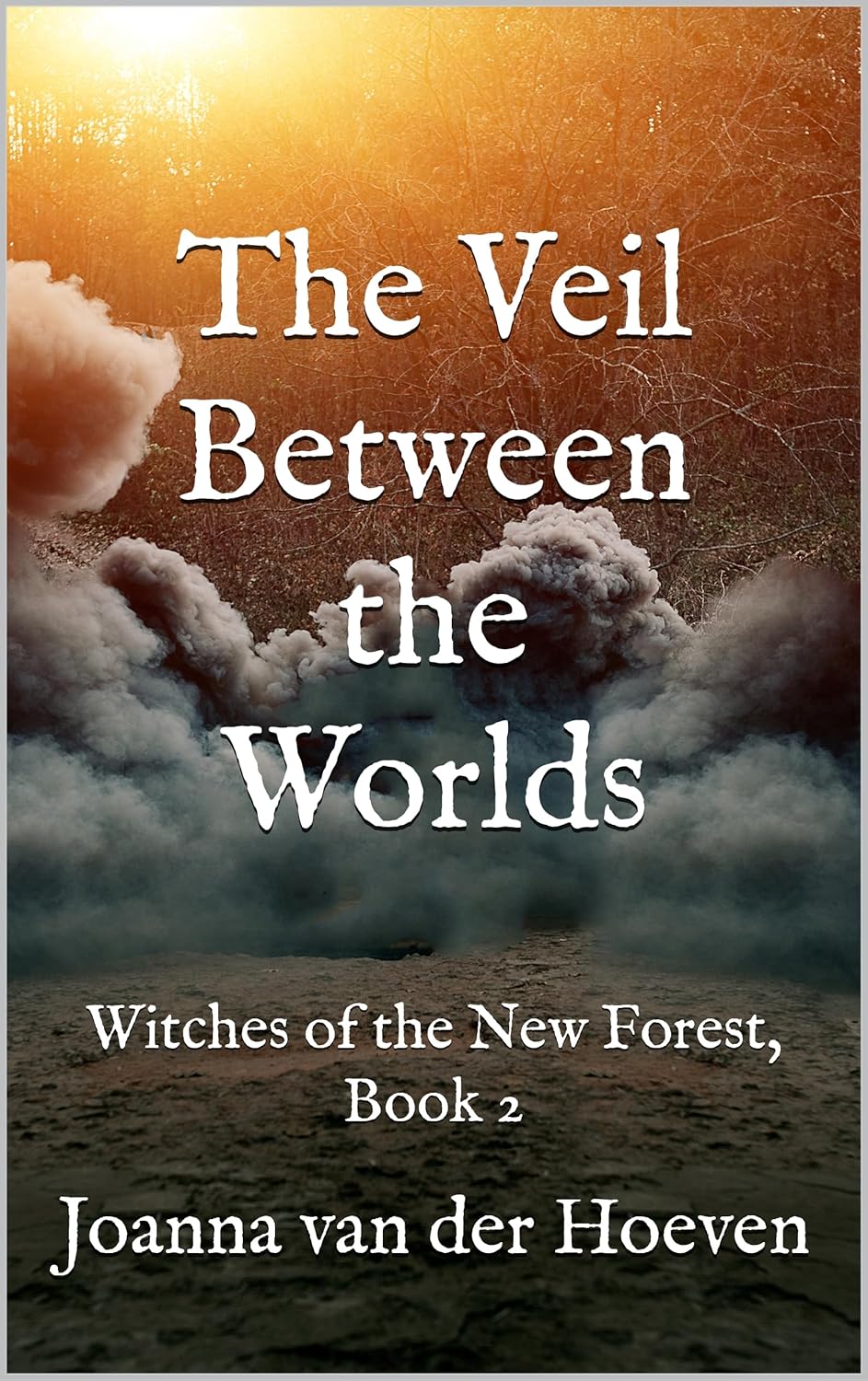
No, I know, Samhain has come and gone. But the second book in my new ficion series, Witches of the New Forest, is now available for pre-order on Amazon! This is only for the Kindle edition, but the paperback will be released the very same day. Both will be released on 1 December 2024. Order your copy now! And don’t forget, books also make wonderful holiday gifts
Synopsis
Hunter is dealing with the fallout that came from her last hedge riding ritual. Her world has been turned upside down, and now she must focus and throw herself into her studies in order avoid thinking about her relationship with Jack. She and her sister, Ryder, are currently thousands of miles away from home, in the little village of Burley deep in the New Forest of England. This quaint little tourist spot hides many magickal secrets, and is a liminal place where magick, myth and legend are very real. The sisters have already been confronted with many challenges as they learn more about their magickal heritage and legacy. However, now they have even bigger problems to hand.
It seems that Hunter has made some powerful enemies, and she must keep her friends and family safe. As she learns even more about her heritage and what that means to her as a magickal practitioner, she grows in power. But is she using it wisely? And just what will happen when she finally does cross the veil between the worlds?
This is Book 2 of the Witches of the New Forest series, and is the second part of Hunter’s trilogy.
Praise for Hedge Witch, Book 1 of Witches of the New Forest series
“I have really enjoyed all of Joanna’s books and couldn’t wait to start this fiction one. Wow I wasn’t disappointed, I couldn’t put it down and escaped to the beautiful New forest with the wonderful characters with great dynamics. Her knowledge of witchcraft makes it one of the best and believable witchy books I have ever read. Can’t wait for the next instalment.” Amazon 5 star review (UK)
“The story is absolutely enchanting while also being quite educational. Trust me when I say that this book is entirely worth every cent it costs. I can’t wait for the next installment to come out.” – Amazon 5 star review (US)
“Highly recommended. A contemporary story about witchcraft [benign] set in The New Forest, England. Very readable, strong story line, a good sense of geographical place and interesting characters. A love story develops between two of the central characters, which features some intense erotic writing! When you have finished, you will definitely want to read the sequel!” Amazon 5 star review (UK)
Pagan books sales have gone down radically in the last year and a half, despite the increasing number of books being made available. It seems to reflect what many of us authors have been worried about for several years now. The sales aren’t even made up with e-books, as those have dropped significantly as well. Audiobooks for non-fiction still aren’t that popular either, and the revenue from them has always been minimal. So why is there this sudden and sharp decline in books sales?
When I first started learning about and practicing various forms of Paganism in the early 1990’s, books and events were the go-to places to gather the information that I sought out. The choice of books available in the bookstores was only a handful stuffed somewhere in the “New Age” section. The internet didn’t exist, but you could order books from glossy catalogues that companies such as Llewellyn provided, which wasn’t too bad if you lived in the US but if you lived anywhere else, the shipping fees were astronomical. And so you just had to make do with what your local bookstore provided. If you were lucky to have a witchy type shop near you, the selection was a little better, but shelf space was always at a premium. And we didn’t even bother much with libraries back then, because they would never stock those sorts of books in the first place. Finding books to read was a real struggle, but such a joy when you did find one that resonated with you.
The coming of the internet was a huge blessing for the Pagan community who wanted to connect with others, talk about authors and books and find solace with others when the community was so small and so widespread. Books began to be marketed online, which was a real boon to the publishing industry. And yet, with more people online than ever before, what has happened to book sales lately? Surely they should still be increasing?
Nope. I’ve talked to my publishers, I’ve talked to other authors and everyone is seeing a real downturn in books sales. We’ve been scratching our heads, trying to figure out why. As book lovers ourselves, it’s difficult to fathom how this downturn has come about so suddenly. So here is my take on what’s going on, and how it could very well spell the end of non-fiction books in the coming future.
People can get information for free online. As people are online more and more and there are so many different channels to get information from, why buy a book? You could watch a video, read a blog and receive a ton of information anywhere for free. I know that if I was a youngster just starting out, the majority of my information would be garnered from this form of transmission simply because it is free.
People don’t have spare cash to buy books right now. Everyone I know is hurting more and more financially, and if it comes down to buying your groceries for the week or buying a book, you will buy the food. I hope.
You can find pirated copies of pretty much anything online. Need I say more?
Attention spans are waning. It’s a fact. “In the early 2000s, she and her team tracked people while they used an electronic device and noted each time their focus shifted to something new—roughly every 2.5 minutes, on average. In recent repeats of that experiment, she says, the average has gone down to about 47 seconds.” https://time.com/6302294/why-you-cant-focus-anymore-and-what-to-do-about-it/ (I actually had trouble reading this article, not because of attention span but because four different pop-ups kept interrupting my reading. Oh, the irony.)
When a book is released, it is competing will millions of other books these days. With so much choice, it’s wonderful for the reader out there. But for the author? It seriously dilutes the sales. Unless you have a slick marketing team that works for you.
Authors can’t afford slick marketing teams. The shift in lots of publishing has been to place the onus of marketing up on the author, as the publishers have to make cuts somewhere just to stay competitive. Most authors aren’t marketers. I spent nearly a decade in marketing for a world-famous music venue here in England. That has seen me in good stead for the last ten years, but even now I’m struggling against a tide of everything that I’ve mentioned above.
The struggle is real, folks. I hope one day that books will have a resurgence, that cosying up with a book on a rainy day will replace hiding under your duvet with your smartphone. There is just something about a book, something that feels like an old friend you can turn to, something that you can hold in your hands, that ages even as you age, the feel of something material rather than something immaterial.
Go analogue for a while. Slow down. Smell the books along the way. Because who knows how long they’ll be here?
As some of you may know from a previous review, I simply love Val Thomas’ Of Chalk and Flint and have been recommending it to pretty much everyone I meet. This year we have a new offering from Val, which is all about the Hallowtide, that liminal period from Samhain and into November. The book is called Hallowtide: A Dark Devotional and is available from Troy Books.
It felt a little strange to be reading about it in the thick of the Beltane season, but it also provided a nice contrast and, as usual, Val gives us plenty to think about in her prosaic words. We follow Val and her thoughts through Samhain to Martinmas, on the 11th of November. Past reminisces, thoughts of the future and what is happening around her in the present moment all contribute to a wonderfully ethereal, in-between space where words seems to come out of the shadows of the season and then fall silently back, captured in the cobwebs of the mind to be used later. It is full of lore, and Val is a veritable font of information as she has walked this path and doesn’t just talk the talk. This writing comes from a deep well of experience, decades of it, and you can see from her words that witchcraft is her very soul.
Some of her stories will have you smiling, recalling similar events in your life. Others may bring tears to your eyes, as this is a time of farewells for so many as we honour our dead. There is folklore, herbcraft, ritual inspiration, poetry and philosophy all wrapped into a beautiful, meaningful work. At the end of the book are nine dark devotionals that you can perform during this tide: insightful and deep work excellent for this time of year.
Once again, I highly recommend Val’s work, so don’t wait until Samhain and the Hallowtide: get your copy now!!!
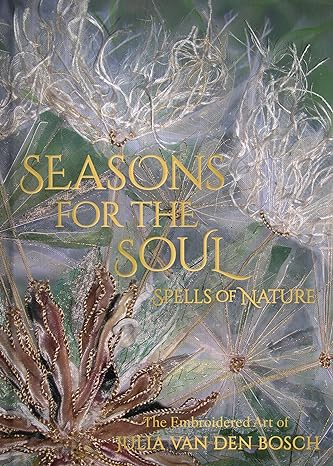
Seasons for the Soul: Spells of Natureis a very different book from what I’m used to reading. It is about the magic of the seasons, the gifts of each and the beauty, but all this comes from the perspective of one who works in embroidery. And it’s beautiful.
What Julia van den Bosch creates is just stunning. Taking inspiration from nature, she recreates stunning moments in time and offers them up to the reader, alongside herbal information, poetry, the seasonal flora and fauna and more. It’s a book that takes time to read, because each piece of her art that is pictured requires attention. Your gaze is drawn into all the fine details that are put into each piece.
Van den Bosch takes us through some of the process, why she uses certain crystals in her works, the meanings behind them and what they give to the piece itself. It is clear that she understands the cycles and the seasons intimately, and weaves us into a world that is utterly enchanting. From the tiniest moth or bats, to the great towering stalks of cow parsley, the humble but persistent dandelion, to magical and mysterious mushrooms, snowdrops and the unfurling fronds of ferns, all of these are presented beautifully and artfully in this work.
If you are into your arts and crafts, I am sure this book will be a joy to you. If you are a nature lover, this book will also sing to your soul. If you are both, well, then you are in for a real treat.
I thought I would share with you some top ten lists of my favourite books on Witchcraft, Druidry, history and reference material, herbcraft and spellcraft. I hope you like them, and that you try some of these works, if you haven’t already! I haven’t included my own books such as The Path of the Hedge Witch or The Book of Hedge Druidry and others as I wanted to reccomend other authors, but of course I highly recommend my own works right alongside these as well 🙂 Please find my Top 10 Lists below 🙂
Top 10 Beginner Books on Wicca and Witchcraft
Wicca: A Guide for the Solitary Practitioner by Scott Cunningham
Living Wicca: A Further Guide for the Solitary Practitioner by Scott Cunningham
The Complete Idiot’s Guide to Wicca and Witchcraft by Denise Zimmerman and Katherine A. Gleason
A Witch Alone by Marian Green
The Green Hedge Witch by Rae Beth
The Earth Path by Starhawk
Solitary Wicca for Life by Arin Murphy-Hiscock
Natural Witchery by Ellen Dugan
How to Become a Witch by Amber K, Azrael Arynn K
Natural Witchcraft by Marian Green
Top 10 Advanced Books on Wicca and Witchcraft
The Witch’s Path by Thorn Mooney
The Circle Within by Dianne Sylvan
Philosophy of Wicca by Amber Fisher
The Inner Mysteries by Janet Farrar and Gavin Bone
Of Chalk and Flint by Val Thomas
Transformative Witchcraft by Jason Mankey
The Twelve Wild Swans by Starhawk and Hilary Valentine
The Wiccan Warrior by Kerr Cuhulain
The Study of Witchraft by Deborah Lipp
Walking the Tides by Nigel Pearson
Top 10 Books on Druidry
Spritis of the Sacred Grove by Emma Restall Orr
Living Druidry by Emma Restall Orr
Ritual by Emma Restall Orr
The Salmon in the Spring by Jason Kirkey
Way of the Druid by Graeme Tallboys
Natural Druidry by Kristoffer Hughes
Celtic Devotional by John and Caitlinn Matthews
Wild Magic by Danu Forest
The Druid Way by Phillip Carr-Gomm
Living With Honour by Emma Restall Orr
Top 10 Books on History and also Reference Material
The Element Encyclopedia of Witchcraft by Judika Illes
An ABC of Witchcraft by Doreen Valiente
Stations of the Sun by Ronald Hutton
The Witch by Ronald Hutton
The Triumph of the Moon by Ronald Hutton
The Book of Witchery by Ellen Dugan
Buckland’s Complete Book of Witchcraft by Raymond Buckland
The Spiral Dance by Starhawk
Cunningham’s Encyclopedias (all of them: Magical Herbs, Wicca in the Kitchen, Crystal Gem, Incense Oils, etc.)
The Devil’s Plantation by Nigel Pearson
Top 10 Herbcraft Books
Hedgerow Medicine by Julie Bruton Seal et al
Herbs for Healthy Living by Dr. Ute Künkele et als
Brighid’s Healing by Gina McGarry
Wild Witchcraft by Marian Green
Garden Witchery by Ellen Dugan
The Garden Witch’s Herbal by Ellen Dugan
Magical Herbalism by Scott Cunningham
The Hearth Witch’s Compendium by Anna Franklin
A Druid’s Herbal by Ellen Evert Hopman
The Herbalist’s Bible by Julie Bruton Seal et al
Top 10 Spellcraft Books
Earth Power and also the follow-up book, Earth, Air, Fire and Water by Scott Cunningham
Protection Magic by Ellen Dugan
Prosperity Magic by Ellen Dugan
The Natural Magician by Vivianne Crowley
Spellcraft for Hedge Witches by Rae Beth
Magickal Self-Defense by Kerr Cuhulain
Spellcrafts by Scott Cunningham
Spells and How They Work by Janet and Stewart Farrar
The Book of Celtic Magic by Kristoffer Hughes
Protection Spells by Arin Murphy-Hiscock
I hope that these lists helps you, wherever you are on your path! Blessings.
I don’t normally write bad reviews for books, however, as I received a copy of the re-publication of Raven Grimassi’s Wiccan Mysteries from Crossed Crow books with the promise to write about it, I feel obligated to uphold my promise.
I cannot endorse this book to anyone. I just simply cannot. This book was written in the late 90’s, and quite frankly, it should have stayed there. It should not have been reprinted, in my opinion, because of the gross historical, scientific and theological inaccuracies that run through every single chapter. I’m a fan of late 80’s and 90’s Wicca books, that’s what I grew up on. (I also read pretty much everything new that comes out too.) These older books hold a special place in my heart, and many of them still contain a lot of good stuff that is relevant to today’s forms of Witchcraft. If you’ve read my previous blog post, you’ll know what I’m talking about.
But not this book.
It begins by taking the roots of Wicca back to Neolithic times, with a whopping dose of conjecture about the Neolithic person’s mindset, their customs and rituals, all presented as fact. We just don’t know what our Neolithic ancestors believed, and some of the stuff that Grimassi comes up with in this book is way, waaaay out there. Weird ideas about the development of sexual taboos to make men go out and hunt are just the beginning. This is before he later dives into orgone energy in following chapters, with the pseudoscience of Odic Force. Totally woo-woo.
His insistence that Wicca is derived from a pre-Christian fertility cult runs through this whole work. He acknowledges briefly Gerald Gardner and Doreen Valiente, but states emphatically that this is an old religion, not a new or reconstructed path. There is also a great deal of time spent on the split between “Elder Wiccans” and “Neo Wiccans” with a lot of shaming of the latter because they dare to think for themselves and aren’t inclined to follow dogma. Yes, those are his words. Those youngsters, they just don’t understand The Mysteries!
In fact, the only thing that I could agree on with the author was the insistence on studying the natural world to uncover The Mysteries. This was a very short couple of paragraphs.
Don’t even get me started on his historical facts about the Druids. Just. Don’t.
Or the theology of the Druids presented in this text. There is no Dianus.
In the Sacred Texts chapter, he doesn’t credit the authors of the works in each study of the texts, which is annoying. As well, Doreen Valiente’s “Witch’s Creed” seems to have been doctored at the end, with the last couplet of “The Wiccan Rede” thrown into it for some bizarre reason.
We also have the problem of Grimassi’s cultural appropriation of Strega, and his re-writing a new version of it being referenced throughout the text.
Don’t even bother with the Women’s Mysteries section. Or the Men’s. I just. Can’t. Even. Or the sexual rites. Please don’t use the priestess’ body as an altar. It’s bad for her back.
All in all, this book should never have been reprinted, in my opinion. Its only use would be as a demonstration to those new to the Craft of what not to read, and how inaccurate some of these works can be. Re-releasing this material only adds to the pool of strange facts and made-up histories that are still circulating within the pagan sphere.
Like I said, I’m a huge fan of 90’s Wicca books. But I am so, SO glad that I never came across this one all those years ago.
There’s in nothing an author likes better than a good review. And even a not-so-good review can still help an author to know where their work might be lacking, or where they may have missed the mark. Reviews are so important!
I always try to leave reviews for books, at least on Amazon, and as many of you know, I also review many other author’s works here on this blog. Although the beast that is Amazon is a bit unruly, it is where authors get the most sales, and so a simple review left there does actually really make a difference. It’s important to support your favourite authors in this way, although if you simply cannot tolerate Amazon, there are other review sites such as Goodreads which will benefit them as well.
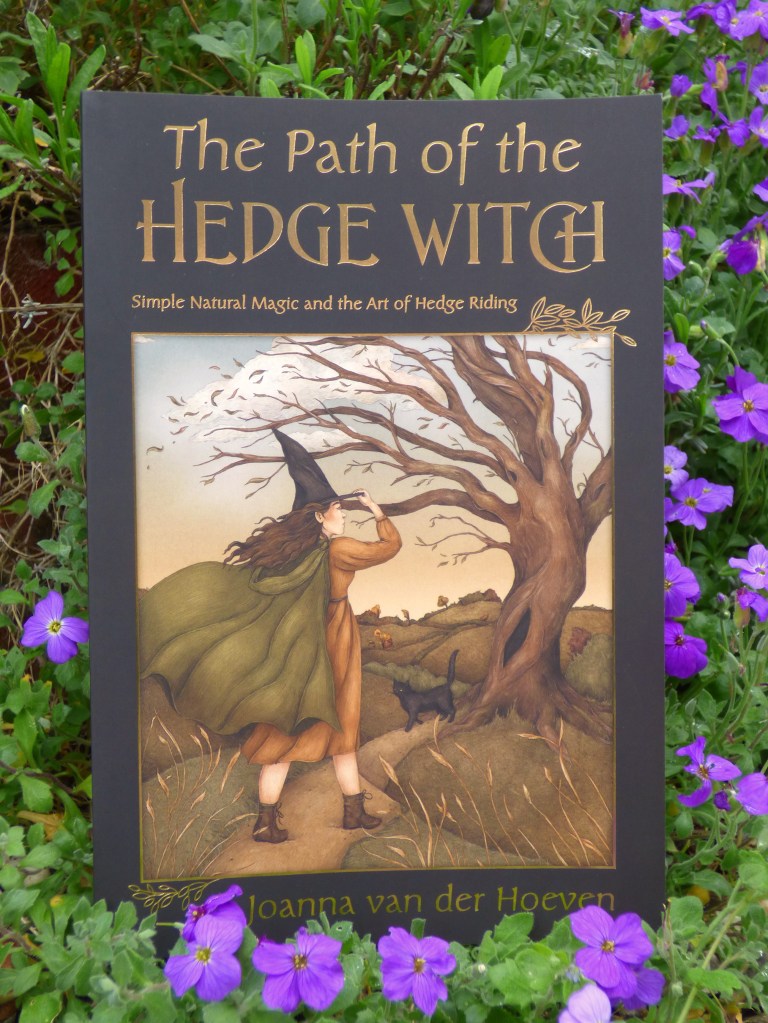
I’m still getting feedback from my latest book, The Path of the Hedge Witch. More is always appreciated, of course, so please, leave a review if you haven’t already! What I would really like to know in a review is:
Did this book help you in some way?
Which parts really resonated with you?
Did you enjoy the style and tone of the work?
Was it easy to understand?
Would you recommend it to others?
If time is of the essence, then simply leave a star rating, eg. 4 out of 5 stars. This takes a mere second to click on the star rating you desire, and then you’re done. You don’t even have to write anything, just rate the book. This is yet another simple and effective way to support your favourite authors.
Last year I wrote a post on how to write meaningful book reviews, which you can always take a look at if you are interested. Not all book reviews need to be glowing endorsements of the work, but you can always write a good, critical review while being respectful and honest. This blog post was written from the perspectives of being an author, a book-lover and reviewer!
So, if you haven’t already, I would love to hear from you regarding The Path of the Hedge Witch. Feel free to leave a review on Amazon, Goodreads, wherever you can, regarding the points mentioned above. This helps me not only to continue as an author, but to improve as an author.
And to everyone who has supported me on this journey of over a decade now, THANK YOU, THANK YOU, THANK YOU!
Kynes’ re-published work through Crossed Crow books brings a long-standing classic back to life. Within its pages you will find good, solid foundations for starting your own practice, whether that is solo or in a group context. Indeed, she provides ritual outlines for both group and solo practices for each sabbat and esbat, which can be invaluable to the beginner.
There are good tables of basic correspondences, including that of the Norse runes. The runes in an esbat ritual are a new addition to the work, which I’m sure many will find interesting. The second chapter that presents the tables of correspondences and symbols in general is in fact new, and is a good starting point for those who are beginning to learn the ins and outs of a witchcraft or wiccan tradition.
The book is well-written, in an easy-going tone that draws the reader in, explaining things concisely without getting too flowery in the descriptions. The author’s own experience comes through in this work, and after having written nineteen books since the first release of this one, has become an established voice in the witchcraft and pagan community.
The only hiccup in this work was, for me, a personal one which others may not find issue with at all. In the October esbat ritual, it is dedicated to Tolkein’s elven mythology. For me it feels a bit wrong to call upon characters based in a set of fantasy books (albeit amazing ones and one of my favourite authors) and honouring them as an established mythos. For others this may present no problem at all.
A whole new generation of witches will be able to access this book once more, now that it is no longer out of print and re-released. I hope they enjoy it too.
I’ve read lots of books. LOTS. And with the internet it is now so easy to leave a review on anything, especially books. There are websites solely dedicated to book reviews. In this blog post, I offer some pointers on how to leave a meaningful, critical book review based on my own experience both as a reviewer, and as one being reviewed.
1.Read the book. I know, this may be a bit of a “duh”, but you’d be surprised how many people leave reviews when they haven’t read the book, or have only read a couple of the first chapters. This means that the review is uninformed, and is really a waste of the reviewer’s time and those who are reading the review. If you just can’t bother any longer with a book, put it down, give it away, whatever – but don’t offer a review. Writing one up based on a couple of chapters isn’t worth the effort. When I’m looking for a book to read and I come across these kinds of reviews, they can be irritating, to say the least as they say very little about the book itself. And as a writer, I’ve had people review my work without having read a single word. One review was a one-star review, which said “bought this for a friend, but I don’t believe in all this witchy stuff”. That review was completely uninformed, and affects the overall rating of the book itself. Don’t be like that person.
2. Offer a critical review, without the ego getting involved. As I read a lot, I also read a lot of book reviews. And some of them are simply ego trips by people who want to try and prove that they know more than the author does about a certain subject. This happens quite often in Pagan non-fiction books. Every book will get at least one review by someone who “knows better” and is showing off that knowledge in their review. When leaving a review, get yourself out of the way first and foremost. The review is about the book, not you. Don’t be tempted to show off.
3. Offer a critical review. Following on from the point above, don’t be afraid to leave a critical review. If you didn’t like a book, say why and give examples.
4. Don’t dismiss a book because you didn’t like something the author said. I have been guilty of this in the past, before I wisened up a little. If I came across something that I didn’t agree with, I’d stop reading and give the book away. What a waste of time and money! It is an immature reaction, which means getting your ego out of way. I’ve had to re-buy books I discarded in the past because I had been overrun by my ego. Keep reading, and take what you want out of the work, rather than throwing the baby out with the bathwater. Granted, some books can be so badly written, or so factually incorrect that after several of these instances you just give up. If that is the case, and you still want to leave a review, then state this clearly and the fact that you have not read the entire work. Give more than three examples, to show that you have tried your best but just can’t get on with it. Or just leave it be. Remember the second point above when writing that kind of review. Review intentionally, rather than writing a reactionary one.
5. Review what is in the book, rather than what you would have liked to have seen in the book. This is another bugbear for me when I’m searching for a book and reading reviews to help my decision making. It’s totally unhelpful to read what someone wanted to see, rather than what was actually in the book. Speaking as an author, there are many reasons why some things haven’t made the cut in a book which you may have liked to have included. Word counts are a big thing. What your editors think should be included or not included is another one. What you want to focus on in your own work is highly important, so don’t play to the gallery. Review what is in the book first and foremost, as that is the most helpful to those who are reading the review.
6. Rate the book appropriately. When handing out stars, be sure you do so correctly, as a single slip of the finger or mouse could mean that you write a glowing review, but only give the book one star. I’ve seen this on more than one occasion.
7. Personal reviews are great to read, and offering a bit of yourself in the review will endear others to engage with it. Whether you liked a book or not, feel free to write about your own personal experiences with the book, or with the book’s topic without getting too self-involved or showing off. This puts a real person behind the reviewer’s handle, and lets you know that a real human being engaged with this work and is leaving a heartfelt review.
8. If you must direct others to books other than the one you are reviewing, check your motives first and foremost. I have seen reviews (mostly bad) left by people in the Pagan community who are just ganging up on someone while trying to promote their mate’s work. Don’t be like those people. It’s bad form and is so easy to spot when reading reviews. If you really feel you must direct people to works other than the book you are reviewing, then try writing a blog post or a post on social media about the book or books you would recommend instead of putting that in another’s book review, as that can be so easily misinterpreted for the reasons that I have given above. It makes it suspect. If you enjoyed the work and can offer similar examples, go for it – those are great reviews to work with, but be clear to state first and foremost why you enjoyed the book you are currently reviewing, before recommending others of a similar vein.
9. What to include in a book review. It’s always good to start with a short summary of the book. Then move on to the important aspects of the work. Give each of these some attention, if there is more than one. Then give examples, and even short quotes if possible. Summarise with a concise conclusion, and be sure to title your review appropriately, as well as leave the proper rating.
10. Be respectful. As Net Galley states: “Be thoughtful and respectful about the work and the author. Aim for meaningful, not mean. Focus on the merits of the book, rather than the author as an individual.” Take your time when writing a review. Don’t rush it, and check your work, ensuring that there aren’t spelling errors, misquotes, etc. as this can make people turn away from your review.
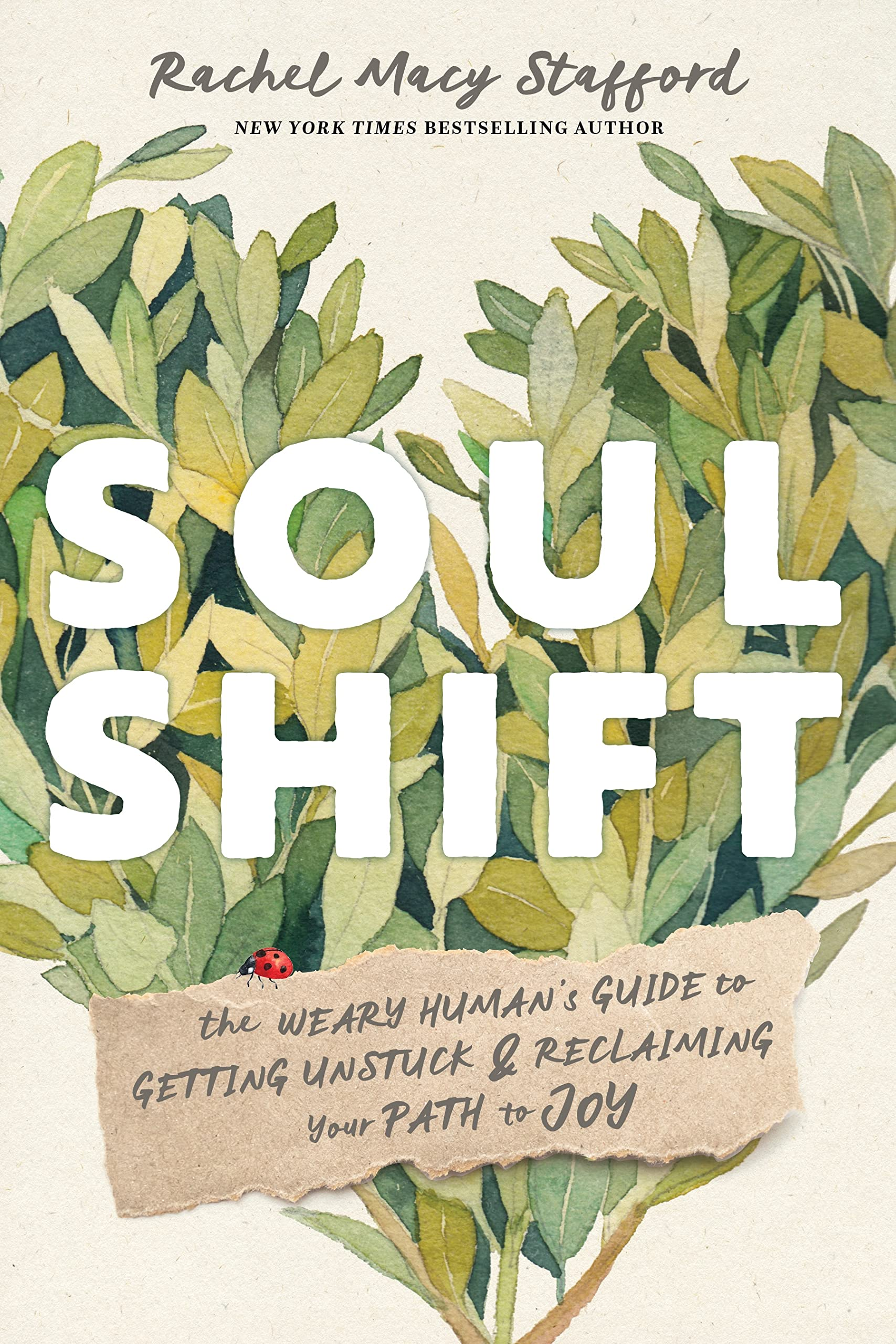
Soul Shift: The Weary Human’s Guide to Getting Unstuck and Reclaiming Your Path to Joy is a wonderful book, filled with wisdom and insight. Through the sharing of personal experience, vulnerability and little victories the author leads us on a journey towards finding our most authentic way of being, and how to show up for our lives. Showing up as our authentic self is not an easy thing in today’s world, however, Soul Shift guides us through the journey in small, easy steps and with inspirational mantras that we can use to return home to ourselves.
What struck me first and foremost was when I read “Just because you made mistakes doesn’t mean you are forever defined by them. Just because you took an unauthentic path doesn’t mean that you must stay the course.” So often we feel guilt and shame over our past mistakes, and we continue to beat ourselves up about them. Through the author’s insight, there is the dawning realisation that mistakes will be made, we will at times be unfaithful to our true self, we will make mistakes and choices that don’t accord with our deep self, but that these are learning points and not shameful events that we must punish ourselves over with again and again. What doesn’t work, the choices that we make that aren’t true to our nature and our own will: these can often tell us so much about how we should be in the world. What doesn’t work can be our greatest teacher.
The “Dreamer Girl”, that authentic part of the self that the author shares with us, resonated deeply with me. I have my own Dreamer Girl, a time before I was inundated with the world’s opinions on how I should be, where I should be, what I should be doing. I have been returning to my Dreamer Girl over these last few years, and a feeling of “coming home to myself” has been strong. Our true selves are always with us. My Dreamer Girl has always been there, and it’s through paying attention to ourselves that we can rediscover that part of our being. Take good care of your “Dreamer Girl”, for it is a part of you that can be your guiding light in the world. I know she is mine.
The author also touches upon a subject regarding how women are often pressured to give and give until there’s nothing left. We must be selfless in order to be worthy. But how she phrased it, by showing us that selfless means “less of self” we can begin to understand how this is not a sustainable way of being. We must learn to take care of ourselves, set clear boundaries that are in accord with our authentic selves, and listen to ourselves. “The practice of True Self-Worth is one of the most transformative practices I’ve cultivated on the journey. It has empowered me to make choices by heart, according to my core values and beliefs, rather than by societal standards or the expectations of others.” She talks about not throwing good energy at bad situations, and how to keep toxic elements out of our lives by protecting ourselves with our own inner guardians.
When we are portraying a false or fake image of ourselves, we are unable to make true, authentic connection. When we are being authentic and true, that’s when the real connection happens and you are able to see it spreading out into the wider world. Your own genuine connections will be stronger for it, for people will be connecting to the true you, not the person you are pretending to be on any given day. Those genuine connections are where love sits deeply and comfortably, both in yourself and with others. “Know these acts of acceptance will lead to more significant surrenders that will bring unexpected joy and peace to your life.” The ability to love and be loved is when we are being our most authentic selves.
Kindness creates peace, as the author so beautifully states. She also mentions how growth and healing are fluid processes, rather than being competitive in nature. “I promised right then and there to reserve ‘best ever’ status to recipes, not humans”. I also took away her words that “Someone else’s opinion is not my truth”. Words to live by. I was also blown by the realisation that other people’s disappointments in me need not shatter my own peace and my own life. I feel that this may be a very powerful way of moving forward in my own life. She states “There’s no peace worth keeping if it requires me to betray myself and what I hold most dear.” We have to be okay with other people’s disappointments in us. In fact, should this happen to me again, I will be using the quote “I am okay with your disappointment in me,” rather than betray a part of myself through sublimation.
Every day our stories are being written. Every day we have an opportunity to show up in our life. This book is not a book about how to be perfect, but rather how to be a perfectly imperfect human being filled with grace and peace, leaning from the stepping stones of our past in order to walk awake and aware into our future. This moment, right now, is what matters most; not yesterday, not tomorrow, but this present moment. It’s the only moment we can truly show up for, in all honesty.
We can all learn how to “walk differently in the world”. Taking steps that are right for us. Connecting with our deep sense of self, who we are, what we will and will not tolerate, what brings us peace and joy. We can make soul-deep connections that nurture and sustain us, rather than upset or drain us. By listening to our self, by being true to who we are, by coming into our own authenticity we can move forward as sovereign beings that make a real difference to the world, simply by showing up and being free.





 Down the Forest Path