Samhain: Ancient and Modern

Here’s a taster of a blog that I put up yesterday for SageWoman’s channel at PaganSquare. To read the full post, click HERE.

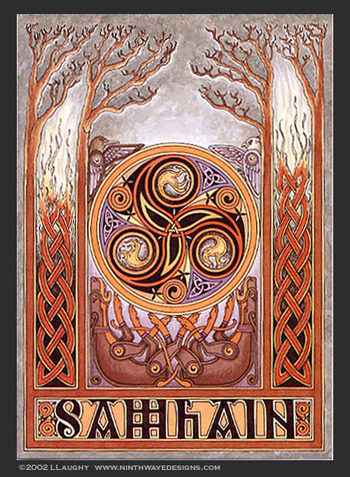
samhain 1Calan Gaeaf (Welsh) or Samhain (Irish) begins at sunset of 31st October and runs to to sunset 1st November according to most Western Pagan traditions. If working by the moon, it is the first full moon when the sun is in Scorpio. If working by the natural landscape, it is when the first frosts bite. Samhain was termed the Celtic New Year, as it marked the ending of one cycle and the beginning of another. The Celts reckoned their days from sunset to sunset, and so the start of the year would begin in the dark time at the beginning of winter. Samhain marked the first day of Winter.

Calan Gaeaf, however, is a time that is not a time, and therefore some Pagans honour this tide and season from 31st October right through to the Winter Solstice. It is a time after many things have died, and there is a stillness to the air, an Otherworldly feel in the silence. It’s a dark time here in the UK, with long nights on our northerly latitude, and usually a very wet time as well. It’s not hard to see how these months could be seen outside of time, outside of the cycles of life, death and rebirth.

Calan Gaeaf, Samhain, Hallowe’en, All Soul’s Night – for many pagans this is the ending of one year and the beginning of another. It is often seen as the third and final harvest – with the last of the apples harvested, the cattle were prepared for winter and the grain stored properly. It is also a time when it is said that the veil between the worlds is thin, and the realms of the living and the dead are laid bare to each other. We are approaching the darkest time of the year, and the killing frosts and snows await just around the corner. It is a time of letting go, of releasing into the dark half of the year, and getting rid of the dross in our lives so that we do not have to carry them with us through the long winter nights. We consciously make the effort to live better, meaningful lives and let go of all that holds us back – our fears and worries, our anger and hatred. We nurture the beneficial and the good that we have in our lives, ensuring that they are well kept for our plans to come at the winter solstice. So the cycle continues.  READ MORE…

Respect and Conduct at Public Sacred Sites

When visiting a sacred site, we can get carried away. We can often forget that at public sacred sites there are others there who are on their own quest, pilgrimage, whatever. We want to rush in, to do the work, to perform ritual, to connect, to sing, chant and celebrate. But we have to think more carefully about shared space.

I recently went to the White Spring with my Druid College Year 3 apprentices. I adore the White Spring; it’s such a lovely site. However, after about 15 minutes various people and groups piled in to temple, and the words “Pagan Circus” comes to mind…

At one point, we had some Druids chanting the awen softly one corner. Lovely. But then another woman began singing in another corner. In a third corner, a man was standing and singing at the top of his lungs (which in that space is really, really loud). Trying to get away from all this noise, I made my way the quietest part of the Mirror Pool in the middle of the temple. I gazed into the water, slowly collecting my thoughts and meditating upon the sacred water, when suddenly three women, two naked and one clothed, clambered into the Mirror Pool, stood in the middle of it and held hands, performing some sort of ritual between themselves. Needless to say, my meditation was, by then, a hopeless cause.

We have so little opportunity to be who we are, especially at such sacred sites as the White Spring. But we also have to bear in mind that this is a public space. There are other Pagans there who are attempting to commune with the energies, the gods and goddesses, the spirits of place, and who don’t need others crashing in on their precious few minutes in that area. These sites are not a Pagan free-for-all. We must respect others and the place. You would never see a group of monks from an abbey in the south of France rock up to Ely Cathedral and suddenly perform Mass, or chant their evensong while the resident monks and visitors alike are doing their thing. We have to bear this in mind, that other people’s experiences are just as important and valid as our own.

And it’s not just Pagans visiting these spaces. The White Spring is open to everyone, from groups of nuns visiting from Spain to families from Yorkshire on a weekend getaway. There are very practical things we need to bear in mind at such places. For one, it’s still illegal to be naked in a public space. For another, not everyone wants to see naked people, for various reasons. Imagine the Catholic nun trying to connect with St Brigid, and then having a group of naked priestesses splashing her habit as they clamber in and out of the sacred pool (there is, indeed, a separate plunge pool for people to dip in, should they wish!). Imagine a primary school teacher asking the young girl what she did on the weekend, and her reply was “Daddy and I went to visit a spring, and watched naked ladies.”

Many of these sacred sites have special out of hours timings for those who wish to hold private ritual. Both Chalice Well and the White Spring offer this, and it should be borne in mind by those who wish to hold ritual at these sites. That way, you won’t be intruding on anyone’s time spent at these sites, or offend anyone who’s beliefs are not your own. It requires advance planning and commitment, but it’s not that hard. I’ve done it myself, and had private time at the White Spring to plunge my naked self in the icy waters with a couple of friends, or visited the Red Spring after closing hours.

Let’s bear in mind other people’s experiences, which are just as valid as our own. Let’s not turn our sacred sites into spaces of competing rituals and rites all happening at the same time. Let’s honour the sacredness of the site, and remember that it’s not just there for us. The energy of these spaces is not only for our own spiritual nourishment. We take, take, take all the time. Receive healing, inspiration and more at these sites, by all means. But remember to give back, by respecting the site, and other people visiting it.

Make it an enjoyable and memorable experience for all.

Druid Ritual

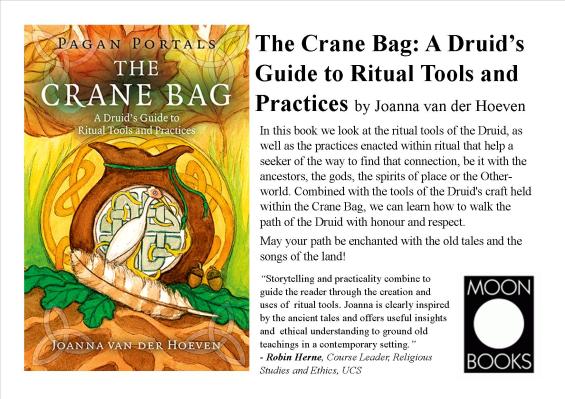
Crane Bag Advert 1It’s all 5 star reviews so far! Here’s an excerpt from my latest book, The Crane Bag: A Druid’s Guide to Ritual Tools and Practices which you can purchase from Amazon, Moon Books, Barnes and Noble and all good book retailers!

What is The Crane Bag?

The Crane Bag: A Druid’s Guide to Ritual Tools and Practices is a book in the Pagan Portals series that describes the ritual tools and practices found in the Druid tradition. As part of the Pagan Portals series, it is intended as a brief introduction to the subject, allowing the reader to further develop their own path in their own time and in their own fashion.

“The Crane Bag” is a wonderful theme in Celtic mythology, found mostly in the tales of the poet-warrior Fionn Mac Cumhail, who inherited the crane bag from his father. This bag held the special treasures of the land and was made from the skin of a crane who was, in actuality, a woman enchanted into crane form. We can view the myths that surround the crane bag as those of the gifts of sovereignty, bestowed by the goddess upon worthy heroes as is typical of Celtic mythology. The Goddess held great abundance and gifts within her womb, and only those who passed the test and were deemed fit were able to be gifted with this most precious treasure.  As the bestower of sovereignty, the Goddess fades and emerges time and again within the old stories, as does the crane bag, appearing and disappearing from myth when there is need.  The sea god, Manannan, is the original owner of the crane bag and through his love for the goddess gives and takes it back throughout the telling of the tales.

Within the mythology of the crane bag, those who follow the Celtic Druid tradition can come to know a very beneficial tool in their learning, the gifts of which are endless.  Within the crane bag are not only the tools of the Druid, but also a symbolism of the gift of the goddess, of sovereignty.  With the proper use, it can further the Druid in working with the tides of nature, finding their proper place in the grand scheme of things, living in balance, harmony and peace. In ritual use, these tools can guide the Druid to deeper levels of meaning and understanding within the tradition, helping the Druid on her journey throughout life towards integration in a holistic way of being in the world. We are able to find a deep connection, be it with the ancestors, the gods, the spirits of place or the Otherworld. Combined with the tools of the Druid’s craft held within the crane bag, we can learn how to walk the path of the Druid with honour and respect.

What is Ritual?

Ritual consists of a prescribed set of words and actions within a particular context used to bring about a desired outcome. Druid ritual uses words and actions within the context of an earth-based tradition to connect with the landscape, the gods, the ancestors and so on. For the Druid, connection, relationship and integration with the landscape are at the heart of all that she does, whether in ritual or not.  Ritual can be seen as a time set apart from daily life to reconnect the threads that bind us together with the land, with nature.  We take a step back from what is perceived as the mundane and acknowledge the sacred. Ultimately, the Druid strives to perceive the sacred in everything, and ritual helps the Druid to achieve that vision.

Our modern lives are so busy, with work, family, media, technology and more. Ritual helps us to step back from the busyness, into another way of being.  It is a change of consciousness, where we can shift our perception away from a singular view to a more plural view, integrating with the land around us, realising that we are a part of an ecosystem. Ritual is the act in the material world that connects us with a wider reality.  It is an experience, not just a thought.

Ritual is that which helps us ground and centre in the present moment. When we stop, when we take a break to perform a ritual, we become aware of who, where and what we are at a particular point in time. We are rooted in the here and now, awake and aware to all that is happening around us. When we are awake, we are able to find our place in harmony with nature, finding a deep peace both within and without. It gives us an intention, a focus with which to work in the Druid tradition, to reweave the threads of connection.

Ritual also helps us to find stability. When we create rituals to perform repeatedly, we bring that sacred perspective more and more into our everyday life. These rituals needn’t be identical each and every time; what is important is that the ritual is actually done.  It is the experience of ritual that helps us to self-locate. We cannot do that simply by thinking about it; we must act as well. When we have acted out our rituals with some regularity, we may find that our connection to the natural world deepens.  The ancient philosopher Lao Tzu once said:

Watch your thoughts, they become words;

watch your words, they become actions;

watch your actions, they become habits;

watch your habits, they become character;

watch your character, for it becomes your destiny.

We as humans are creatures of habit, and indeed these habits define us as people.  A repeated action or behaviour will certainly have an impact on who we are as an individual. By using ritual we can break off from bad habits and thought patterns, for example, and find the sacredness within and all around us. It requires practice, as in the Welsh saying at the beginning of this chapter. We cannot just think about ritual; we must do it.  If we take the time to reconnect with our place in the natural world, over and over again, then we will maintain that connection more and more throughout our lives until they are an example of pure integration and harmony.

Druid ritual is also a celebration.  The eight seasonal festivals of modern Druidry help us to remember what is going on in nature at the present moment. There are many books that cover the eight seasonal festivals, their origins, meanings and ways to celebrate, and so we will not cover that here (see bibliography and suggested reading for more). Rather, we will look at how Druid ritual is set up, from start to finish, using our tools from the crane bag to find our soul map in our own environment.

Ritual is also a tool for transformation. When we have worked with intention and grounded ourselves in the present moment, we cannot help but be transformed as our perception shifts from one perceived reality to another. Through the experience of ritual, we understand that our point of view is not the only one, and that perception shifts with intention. When we broaden our horizons, we cannot help but be transformed.

Re-enchanting the Soul

Work and familial obligations can sometimes weigh us down in a sea of mundane jobs, tasks, and commitments. With Druid ritual, we can re-enchant the soul to bring the magic back into our everyday lives, as we perceive the sacredness of all things. Then, we realise that there is no such thing as the mundane, only the sacred. The division between the two is realised as an illusion, and we are thus able to “travel between the worlds”.

The Druid is always questing for inspiration, or awen. Awen is a Welsh word, sometimes translated as “flowing spirit” or “flowing inspiration”.  Creativity is such a large part of the Druid path, where we are inspired and then inspire others in return. This exchange of inspiration is at the heart of all that we do, in deep relationship with the world around us. When we touch each other soul to soul, where we find intention blending together to work in harmony, then we are inspired. The Druid looks to the natural world around her to gain that inspiration.  She takes her cues from nature as to how to live in the present moment, utterly awake and aware. So inspired, she lives her life as best she can as part of that environment, in tune with all that shares the same space. By doing so, she also inspires others in return.

Simply by getting outside and into “nature”, our awareness shifts. Though nature is something that we are a part of all the time, we often see it as something “out there”, as external to ourselves. When we realise that we are a part of nature, we shift from a self-centred perspective to an integrated one, thereby opening our eyes to the beauty and wonder that lies all around us each and every day. Taking a walk helps us to see the beauty of an oak tree in full leaf, to feel the warm caress of the summer wind, to feel the blessing of the rain or the exhilaration of a snowstorm. We awaken our senses to the world around us simply by being out in it, in nature, away from central heating and electricity, away from cars, phones and computers. Though all these things can be of great benefit, when we re-attune our senses to our “natural” environment, we can also reawaken something that has long lain dormant within our souls. We can re-enchant our lives, re-wilding our souls.  We can return to the very roots of our being. We can find the child-like wonder while looking at an ants’ nest, or listening to the blackbird at dusk.  We no longer become bored or jaded, but rather totally awake to the world around us. Our lives are benefitted from this re-enchantment on every level. This is the awen.

This is also the importance of ritual. When we take the time to re-enchant our souls, we make our lives more magical, more meaningful and more present. We can step outside the realms of 9-5 living.  We enter into a state of intention and enchantment, inspired and inspiring others in return. In this, we find true relationship.

May your path be enchanted with the old tales and the songs of the land!

(Extract from The Crane Bag: A Druid’s Guide to Ritual Tools and Practices by Joanna van der Hoeven. www.joannavanderhoeven.com).

 

Working with Anger, Working with Community

An article by Sophie Dòbhran and Joanna van der Hoeven

As Druids, as Pagans, and also in the role of priestess it can sometimes become really hard to stay connected with people who are cultivating rage and anger towards an event that creates a painful gap between what they wish and what is happening. One reason might be that they seem so shocked towards the event, as if they had just realized that such things are possible in our world. The first surge of anger is necessary, in order to provide a little release from the pain and suffering of the first wounding, but then we keep wounding ourselves again and again by cultivating the anger. And in doing so through our connection with others, we cultivate misery and pain together and nurture our being entitled to it.

Is it in how we resist a situation, and in doing so how we are ourselves nurturing the rage and anger and blind suffering that we so loudly condemn?

Even more troubling, is that it seems that the journey stops there: misery seeks misery, people suffer together then turn the page and go back to watching violent forms of entertainment on television and in the movie theatres but all that’s acceptable in our society. Until the next shocking thing happens. It’s like awakening sporadically is so painful and shocking that it doesn’t stick.

It is so difficult to feel the anger properly, and then to let it go. Anger perpetuates more anger, more suffering, and more pain.

Sometimes we need anger to begin a new motivation, a new revolution. However, a revolt that is perpetually based in anger turns into the riots in the streets of London a few years back, where innocent people were hurt, shops destroyed and more. That sort of anger doesn’t produce any results other than more suffering. Yet the anger that the women of the suffragette movement felt turned into courageous and defiant acts against the establishment that won women the vote, and more rights to come.

We could look at it as differentiating between holding the anger as motivation, or holding the anger as instigation. The preferable way would be the former, and then with a level-head find the solution after gone through the initial suffering. But there is a boiling anger in society that’s continuously being repressed, both here in the UK and in the USA, which will eventually explode if nothing is done about it, if there isn’t an outlet for it. Peaceful demonstrations seem to have little effect anymore on the establishment, and the media can just block it out as if it never happened. So, there’s the anger there, and it’s not going away soon…

Perhaps it has to do with the general isolation that has taken place, people being so disconnected from each other, and from Nature. We are no longer used to being mindful, to listen to silence. We are addicted to all kinds of fake relationships, superficial activities, superficial foods, and so on.

We need to remember that it’s all energy; sometimes the energy of anger isn’t appropriate. And when it’s no longer appropriate, when it becomes harmful instead of leading us out of apathy, for instance, then we need to repurpose that energy into something useful.

“Useful” is something each person must define for themselves, for each situation is unique. In order to do that, we need to step back from the situation and get perspective in order to discern just action. Anger, like a barking dog, can alert us that our boundaries have been crossed. But are we going to let the dog address this situation for us? How about when we cultivate anger together and become a pack of barking dogs?

Perspective needs distance and silence to produce clarity. No one can understand just why we are so angry better than we do. What follows is compassion. Compassion is not always soft and gentle. Sometimes, compassion means strengthening boundaries or raising one’s voice to be heard. Compassion means observing the situation with distance and clarity in order to discern the best path of action inherent to it.

It’s easy to be angry and feel desperate, lost and confused. Or to think that a public demonstration will change things, because we are now used to getting immediate satisfaction all the time. And yet if we truly pay attention, we realize that we can truly cultivate the change we want to see in the world. On a much smaller scale, maybe, but it is real and it is tangible, and it is satisfying.

Given that we are already what we condemn, we never have to look very far to create mindful actions that reverse that negative flow. It doesn’t change the world or impact politicians, but it changes our world, from our nemeton to another’s nemeton. Aren’t our nemetons microcosms?

Druidry is a religion based on locality first and foremost, and so, when we are upset or angry, it’s our immediate locality that bears the brunt of it. Our immediate locality is also the thing that we can affect most in our lives. When we’re angry at the government or our employers, we can do what we can to be heard: writing letters, signing petitions, talking and organizing unions, etc. But we have no control over what happens after that.

However, in our own environment, in our own bodies and for the most part, in our own houses and land we do have some control, and these are the areas that we can affect to effect change. Only we can change ourselves. We can think and act locally first and foremost, instead of the usual “think globally, act locally” because our range of influence is not all-encompassing. We can think all we want (and post all we want on social media), but that does not effect change. If we bring it down into bitesize chunks that we can handle, then we’re able to really do the work that needs doing.

So, we work in our area, to clear litter, to do ritual work, to contact the Fair Folk, to work with the ancestors and the spirits of place because that is where we live, because that is where we get our nourishment and sustenance. It is also useful to become members of their parish council, or join other committees in the community. That way, we have a real vote on planning applications and housing developments, environmental and health issues and more. In doing so, our environment affects us and we affect it. Then, like little ripples from a pond, that changed and charged energy can spread out. We create an effect in the world.

Think of your locality, think of your tribe. When your tribe is strong, let that energy permeate the rest of the world. This is not to say that we must become insular, separatist and isolated, but more as a ways and means of really affecting change in our own worlds. Become aware of the energy of anger, and how it is being used. Take care of your community, of your locality, and be conscious of the choices you are making and the reasons behind those choices. When we are conscious of our behaviour, we work with right action, and our work will benefit in a holistic pattern that emanates from a strong and true core of personal sovereignty.

Sophie Dòbhran was born in Quebec and lives in a farmhouse on a small island near Quebec city with her husband, her son, two cats and a dog. She studied under Swami Premananda Saraswati for a certification in Hatha yoga and also studied with the Order of Bards, Ovates and Druids. She joined the Sisterhood of Avalon in 2014 and has been actively cultivating an avalonian spiritual practice since. She facilitates Red Tents once a month, as well as druidic rituals and an SOA learning circle in her community. To find out more, visit her website at http://www.ileauxpommes.wordpress.com.  

Joanna van der Hoeven is a Druid, Witch and a best-selling author. She has been working in Pagan traditions for over 20 years and is also a member of the Sisterhood of Avalon. She is the Director of Druid College UK, helping to re-weave the connection to the land and teaching a modern interpretation of the ancient Celtic religion. To find out more, please visit http://www.joannavanderhoeven.com

Wonderful news!

A lovely thing arrived in the post this afternoon – my fully signed contract with Llewellyn!  It’s an honour and a pleasure to write for this publishing company. My very first book (Scott Cunningham’s Wicca: A Guide for the Solitary Practitioner) started me on my journey down the Pagan path around 25 years ago. Since then, many Llewellyn volumes are displayed proudly on my bookshelf, and in 2019 my book will be joining them!

More details to come, but for now, that’s all that I can say 🙂

A very early teaser…

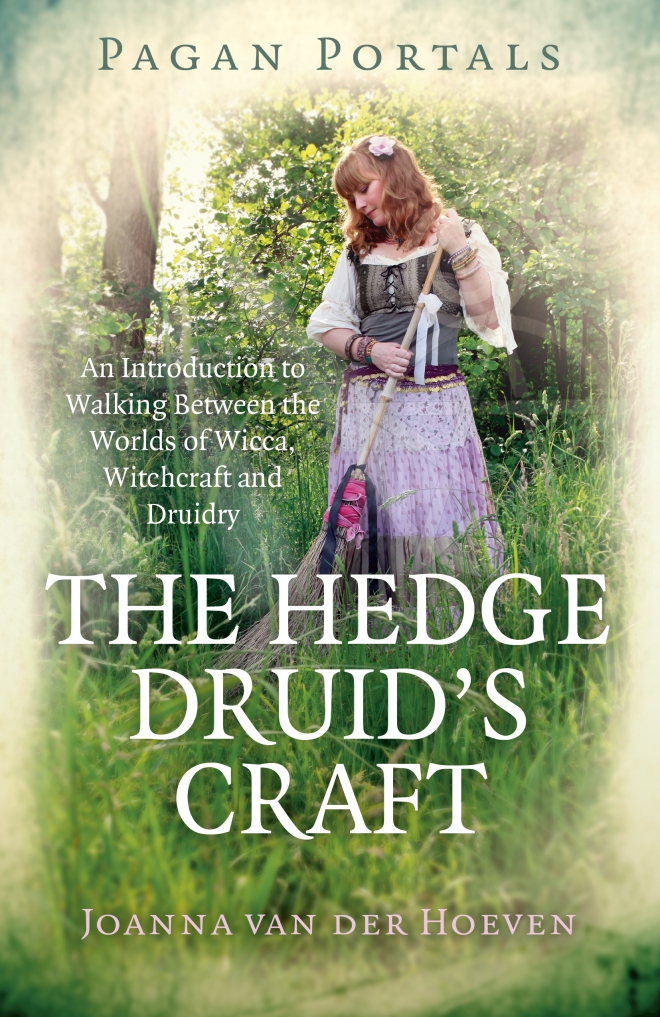
So, here’s a little teaser about the work that I did a couple of months ago, when the gods decided to sit me down quite literally and make this book happen. This book will not be available until 29 June 2018 through Moon Books, but I just thought I’d leave this here…  🙂

Cover high res

Endorsement by Mabh Savage, author of A Modern Celt and Celtic Witchcraft:

“This book is an absolute must for anyone seeking to deepen their magical nature or set out upon a path to connect with the world around them. Jo is incredibly inclusive and covers aspects of witchcraft, Wicca and druidism interspersed with an alamanac-style folklore juxtaposed against modern science and a common-sense realism about the modern world we find ourselves in. As a witch on an eclectic path, and a trainee Bard, many of Jo’s words and experiences really resonated with me. Like Jo, I have always been a witch, but appreciate this can mean different things to different people, and I also have found that some Druidic paths can at first appear dry and academic, but with this volume you can sink your toes into the earth and reach high into the sky to touch the stars; to feel what being a Hedge-Druid can really mean; how it can change your world. Jo works with herbs, plants and animals, examining all types of creature, from what we might consider the lowest, such as insects and invertebrates, to the magnificent mammals such as stags and horses. She reminds us that each has a vital place in the world, and in its eco-system, and even shows us how we might go about finding our own animal ally. As well as the earthly beings we can connect to, Jo teaches us how to connect to the celestial beings; the sun, moon and stars, and the aspects of our earth that they control, such as the tides and the seasons. Jo speaks to us of the inherent goodness in some people; how we can look past the horrors that some humans have brought upon the world and see the hard work of those (including many druids and those on similar paths) who are trying to fix the damage and repair the connection between humans and nature. Jo reminds us that we can fill each day with ‘the magical and the mystical’, and gives us the tools and knowledge to create our own deeper understanding of this truly wondrous world we live in.”

The birds have gone…

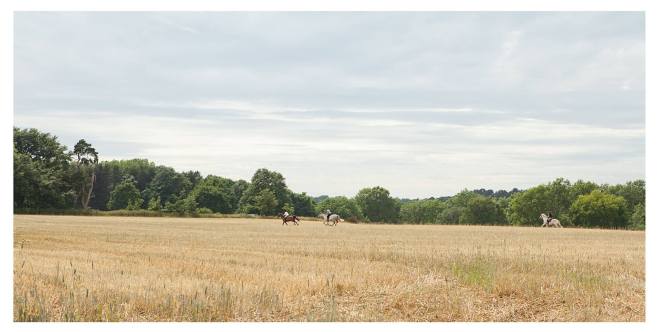
It is a melancholy time of year. Most of the fields are now lying still, shorn and with the stubbly remains jutting defiantly into the last of the summer sunshine. The house martins departed over the weekend; I had spent much of last week watching the elders teach the young ones how to glide and ride the air currents in preparation for their long trek to their winter homes. The sky is so silent and still without them, and there is a small space in my heart that is sad to have said goodbye to them. Good luck on your journey, little ones. May you be as safe as can be, and I hope to see you again next summer, when you herald in the start of the season of warmth and sunlight once again, alongside the calls of the cuckoo.

The full moon makes sleep difficult; dreams are seemingly random and exhausting, and will only have meaning when the actual events happen. My skills in divination and the sight are through dreams more than anything, but right now I’m so tired that I’ll be lucky to remember anything upon waking. It’s only in the actual doing or being somewhere that I’ll remember that I dreamt it, like on Saturday when I signed a new contract, and remembered writing an email with a query regarding it. In the dream, I had no idea who I was writing to or why; now it all makes perfect sense.

It is a time when we are seeing the fruits of our labour. But it is also a time when we cannot yet rest or lay down our tools, for there is still much to be done. There are many other harvests that await. I have had a good crop of raspberries this summer, and another one on the way. The first apple harvest was abundant, and the second looks to be even better from my three little trees. I have just released my seventh book, with another written and in production, and a whole new one to work on. Druid College’s next Year 1 session begins in October, but we have our first session of our Year 3 apprentices beforehand to journey with on pilgrimage to Glastonbury in September. There is still much to be done.

The leaves are beginning to change, and a soft sadness tinged with relief lies within my breast. It feels like I’ve cried a long time, and am releasing that juddery sigh that often follows a good sob. New things await, but the old ones are being put to bed first. Everything in its own time. Nature does not hurry, and yet everything gets done.

So this evening I will be honouring the full moon and the Lammastide, with ritual in the company of a couple of lovely ladies. As the combine harvesters grumble relentlessly in the background, we shall sing to the moon, and share in the bounty that we have received with the spirits of place, the ancestors and the gods. Bread that I will bake this afternoon will be our offering, as well as words and vows of the work to come.

The times of sadness and stillness are required, just as the times of light and laughter. For we cannot have one without the other. They are not opposites, but simply on different places in the spectrum of human emotion. We ride the currents in keeping with the tides and seasons, and work towards integration and harmony.

May we be the awen.

6

If you’ve enjoyed reading this blog post, or any others on this site, please consider contributing towards the future of Down the Forest Path with a £10 donation for a year’s support of the work. You can donate by clicking HERE.

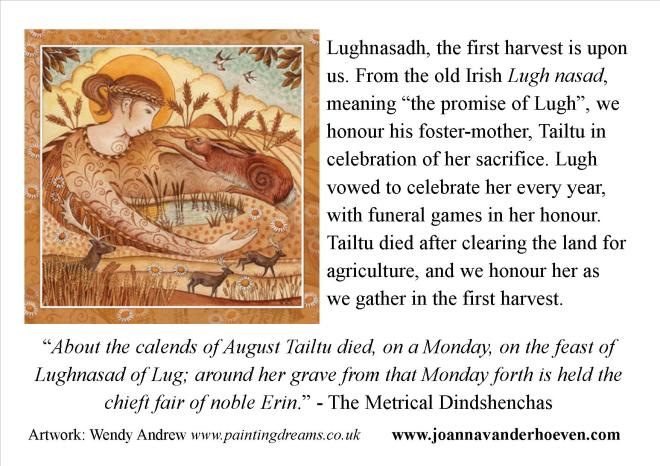
Blessings of the First Harvest

As Lugh pledged to honour his foster-mother, Tailtu with games in her honour every year, what pledge will you make to the land? Let this vow strengthen your resolve through the cycles of the seasons. Lammas/Lughnasadh blessings to you all. x

Lughnasadh

Reblog: Lughnasadh and the State of Grace

Here is a reblog of my post on SageWoman’s channel at Pagan Square. Blessings of the first harvest to you all! (To see the full original post, click HERE.)

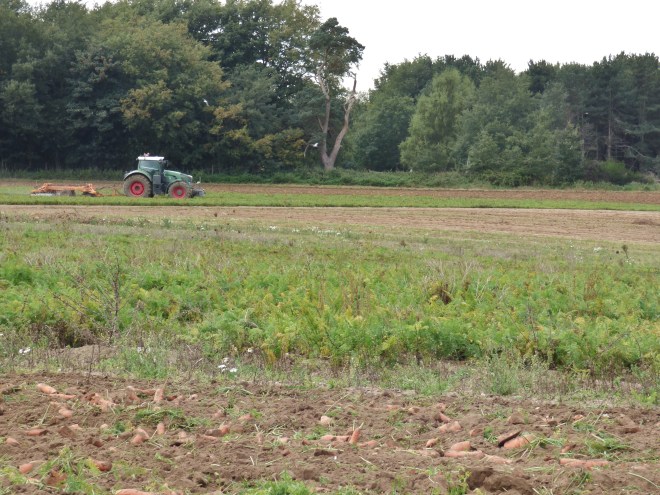
_MG_9378 Lughnasadh is upon us, and the farmers are anxiously looking to the skies for a few clear hours when they can harvest their crops of wheat in my area. It has been a hot, dry summer, and of course, just when the harvest is due to come in we get changeable weather with rain showers every day; not ideal when you need to gather in a crop like wheat totally dry, or else it will rot. So just like our ancestors, we look up and hope and pray for some dry weather, and for the farmers, that they’ve rented the combine harvesters on the best day for it, and not when it’s going to dump it down halfway through their work.

Things are unpredictable in life. It’s just something that we have to accept. With a little grace, we can face the problems and triumphs, the highs and the lows with equanimity. Grace is a word that is little used today, but one which I think is important, and one that I’ve been trying to live each and every day.

It’s not easy, to live with grace. Acceptance does not come easily when things don’t go your way, or when people don’t behave the way you think they should, or the weather turns unexpectedly, or you suddenly find out that you need a root canal, but hey, that’s a good thing, at least they can save the tooth and not have to extract it. (Yes, I’m undergoing quite a bit of dentistry this past month, having cracked a tooth at Gatwick airport on my way to a three-week visit to my family in Canada last month. Not ideal.)

So how do we deal with life’s upsets with grace? By being open to change, to what comes, and not to dwell too much on how we think things should be. Because however much we think we know what’s best, or that we have total control over a situation, the simple fact is that we just don’t; we are viewing life through a single lens of perception, and we have absolutely no control over external influences in our lives. Living as we do alongside myriad other beings, we have some control (I would hope) over ourselves and our reactions and intentions, but very little when it comes to others. And this is a good thing.

Grace is all about working with the concept of freedom and acceptance.

People are free to do what they will, so long as they are not breaking laws or harming others. Live and let live. We as individuals fall into that category, and when we can allow others to be themselves, whether they’re rude and obnoxious, lovely and charming, or everything in between then we are living with grace. We focus on our own self, but without becoming self-obsessed. We are awake and aware to all aspects of ourselves, from the light and the shadow, from the conscious and what lies hidden beneath layers and layers of past experience and trauma.

Grace is often equated with beauty and elegance of form, and when we decide to allow life to happen as it happens, we find that we actually do move through it with less struggle, with less flailing. That doesn’t mean that we will suffer any less, but that we deal with the suffering and the struggle in a manner that is calm, peaceful and accepting. This isn’t easy to do in the slightest. It takes a lot of practice, and is not something that happens overnight. Grace is also synonymous with favour, and we may just find that when we are more accepting of what life throws our way, our luck may change, or at least our perception of it, and we are able to move through the currents with more ease. We are going with the flow of the tide, not against it.

So this harvest season, I am going to remind myself (often) of that single word: grace. When I am flailing, when I am struggling, when I am angry or upset, when I am in the dentist’s chair again next week, I am going to stop, take a moment, see the beauty, feel the pain, and accept. And then I am going to work if I can to change it, and if I can’t then so be it. Just as the wheat in the field awaits a dry, sunny day for harvesting, so too can I work with patience and the tides and times of life, for nature is not in any hurry, and yet all things get done.

The Crane Bag: Out Soon!

Only two more days until my next book, The Crane Bag: A Druid’s Guide to Ritual Tools and Practices is out in paperback and for Kindle. This is my fourth book in the Pagan Portals series, which offers an introduction on a specialised subject at a low price and which we think is good value for money. In this book we cover:

Front coverChapter 1 – What is the Crane Bag?

The Story of How the Crane Bag Came to Be

Crane Bag as Soul Map


Chapter Two – The Importance of Ritual

What is Ritual?

Re-enchanting the Soul


Chapter Three – The Druid’s Tools

The Silver Branch

Staff

The Cup/Bowl or Cauldron

The Drum

Sticks, Stones and other Fetishes

Sickle and/or Knife

Robes

Altars

Fire/Candles

Incense


Chapter Four – Druid Ritual Elements

Call for Peace

Casting the Circle/Creating Sacred Space – Preparing the Nemeton

Honouring the Spirits of Place

Honouring the Three Worlds

Honouring the Four Quarters

Honouring the Ancestors

Honouring the Deities

Ritual Action

Prayers and Magic

Offerings, Eisteddfod and Sacrifice

Feast

Closing


ChaptCB-Chapter5 (655x1024)er Five – Altered States

Meditation

Drumming

Chant and Song

Sensory Deprivation

Sacred Landscapes and Sitting Out


You can pre-order your copy now on Amazon by clicking here: The Crane Bag