Wishing you all Happy Holidays 🙂 xoxo
No, Wait, THIS is the Last Video of the Year!
Wishing you all Happy Holidays 🙂 xoxo

Wishing you all Happy Holidays 🙂 xoxo
Working with the darkness and the light, the Divine Child and Great Mother – for me, it is the defining theme and journey for this time of year.
Hello folks! Just a shout out that on my Patreon page, on top of other benefits that I’m offering there is also an herbal which I add to each and every month (at the Extra-Special Thanks and also Deepest Gratitude tier). This month I’m looking at one of my favourite trees: beech. I thought I’d share this post with you all here on my blog page, in case you are interested in joining me on my Patreon community page as well!
BEECH
(Fagus Sylvatica)
Beech is a tree that, for some reason, often gets overlooked in many modern and magical herbals. It is not part of the Druid tree ogham, and shows up rarely in other Pagan herbals. As an indigenous British tree, I feel that we need to include the beech once again in our herbal grimoires, and honour this most beautiful and magnificent being.
According to Mrs Grieve, the word beech is thought to derive from the Germanic language and refers to the word “book”. It’s thought that early books were made from beech. Maybe this is why the Druids didn’t include it in their tree ogham? As members of an oral tradition, this might be one use that they’re not terribly comfortable with…
It’s one of our largest and most gorgeous trees. It spreads its canopy and isn’t afraid to shine. In the autumn especially, we see its enchanting beauty as the chlorophyll retreats and the golden leaves begin to glow in the late, slanting sunlight. They then turn to a beautiful, rust colour if they’re not blown away by the autumn winds. The pale grey, smooth trunks stand in silent glory, with little to no undergrowth beneath them to mar their stately splendour. They are truly magical beings, and always make me think of the Fair folk, of the elven wood of Lothlorien in Tolkein’s work, these majestic and proud trees.
Beech wood was often used in the making of chairs, wooden panels for furniture, carpenter’s planes and charcoal for gunpowder. But it’s not just the wood that is useful: the nuts (mast) were very valuable for owners of livestock who grazed their animals in the woods and under these trees on the village common. Like acorns, beech nuts are very nutritious for pigs, and the wild deer, squirrels and badgers are also very fond of them. The whole nuts are not good for human consumption, but the oil extracted from them is used in cooking on the continent. You can also use the oil as a furniture polish.
The tar has been used medicinally as an antiseptic, and also for treating chronic bronchitis. You can also make a liquer from the young leaves (pick them before midsummer). Here is a recipe from Anna Franklin: Fill a jar with them, top up with your favourite spirit (for me, that’s gin) and leave for 10 days. Then and add a pound of sugar per pint of spirit, dissolving the sugar over a low heat but do not boil off the alcohol. Bottle, let it sit for three months to a year, and enjoy!
For magical purposes, beech can be used in spells to enhance one’s appearance, or in spells that call for strength, grace, or adaptability. You can use beech to consecrate your Book of Shadows, or even better, use slats of beech wood as the covers! I also think that beech is a great tree to connect to the Fair Folk, though this is from personal experience, and not something that is written down in any lore.
References:
Grive, M. A Modern Herbal, Cresset Press, 1992
Franklin, A. The Hearth Witch’s Compendium, Llewellyn, 2018
Having a devotional practice can be just what you need to keep on track each and every day on your own personal path. In my own Druidry practice, I have a daily devotional set up to honour the goddess Brighid. Though most devotional practices are centred around deity, this is not absolutely necessary, and indeed one can set up a devotional practice around the spirits of place, for example. If working with deity is not your thing, then this might be a good alternative. However, for the most part, devotional work means working with deity.
Every morning I light a candle and say prayers, followed by a short meditation on a different aspect of the season that I currently find myself in. So today, for example, I meditated for a couple of minutes on “the cauldron”, whereas yesterday is was “winter”. Later on in the week it will be community, silence and other concepts that for me relate to the winter season.
The prayers are fairly short, and written by myself. They might be inspired by other prayers, such as those found in the Carmina Gadelica. I begin my opening my soul to Brighid, and then seeking an aspect of the soul, or of personal growth (or both) that is repeated throughout the season (winter being wisdom). Previously last season was about cleansing, preparation for winter’s reflection and working with emotions.
I also include a prayer for others as well, for the wider world in general. This season it is about those who suffer under the duress of winter, and also helping people to find peace within the stillness and silence that can be found in this season, if we know where to look. It is about connecting to what is happening in the natural world, and hoping to shift the threads of the warp and weft of life into something that runs more smoothly, more naturally, with the rhythms of nature in mind and the benefit of all held in the heart.
All in all, my morning devotional takes around five minutes, and the candle is left to burn until it burns out. (It is an ethically sourced soy tealight candle, placed in an enclosed lantern). I try to do another meditation session for a longer time in the afternoon, if my schedule permits. In the evening, I say devotional prayers again, this time as the sun sets. These prayers help me to wind down, to think about the day and where I am going, as well as for a final blessing on hearth and home, friends and family, and the world at large. It allows space to simply be, to sit in silence, to be with Brighid and to come home to myself.
I had a good time creating my own personal devotional, and it is something that really keeps my soul connected to Brighid throughout the day. If you are interested in creating your own devotional, I can highly recommend it. If you feel you need some inspiration to get started, try by Caitlín Matthews’ Celtic Devotional.
If you find that you aren’t as connected as you would like throughout your everyday life, then having your own devotional practice may be just what you need.
Blessings!

I’ve started a new series of devotionals dedicated to the goddess, Brighid. These are available to my everyone in my Patreon community (which starts from as little as £1 a month). In these posts, you will find material that I have written, and material from others that I have come across in my research and work with the goddess (all material is credited, and links provided to find out more).
Brighid is a goddess that came to me as I was diving deeply into my Druid practice many years ago. She helped me greatly with her blessing on Druid College UK, and motivated me to keep it up (sadly, we’re only offering an online course at the moment, due to the pandemic). She has walked with me for many years, and feeling her with me is like the beautiful, golden autumnal light filling my soul.
If you are interested in joining me in my Patreon community, click HERE to find out more.
Blessings of Brighid be with you!
Note: my Patreon community also enjoys many other benefits, including material for everyone from my personal Book of Shadows, photography and more as well as special material for different levels of support.
Yes, it’s back, and I’m very much honoured to be a panelist again for this wonderful event. This year’s keynote speaker is Eimear Burke, the current chosen chief of the Order of Bards, Ovates and Druids. This online conference is happening on 6 November, so get your tickets now!

New video now up on my YouTube channel 🙂
The next installment of the Druid Festival series is now available 🙂 I hope you like it!
Most people in Modern Paganism have heard of the Witch’s Pyramid, sometimes known as the Magician’s Manifesto. In this, there are four goals for a person to achieve their own power, which are: to know, to dare, to will, and to keep silent. I’m discussing each of these one by one in my podcast series, but I’d like to take a closer look at the adage: to keep silent.
Many say that this maxim was used in order to protect witches from “outing” each other during the witch trials and persecution of the Middle Ages. I’m not sure if this quote dates that far back, in all honesty. However, that’s beside the point of this article. There are some beneficial ways that the motto can be used, and also a lot of detrimental ways.
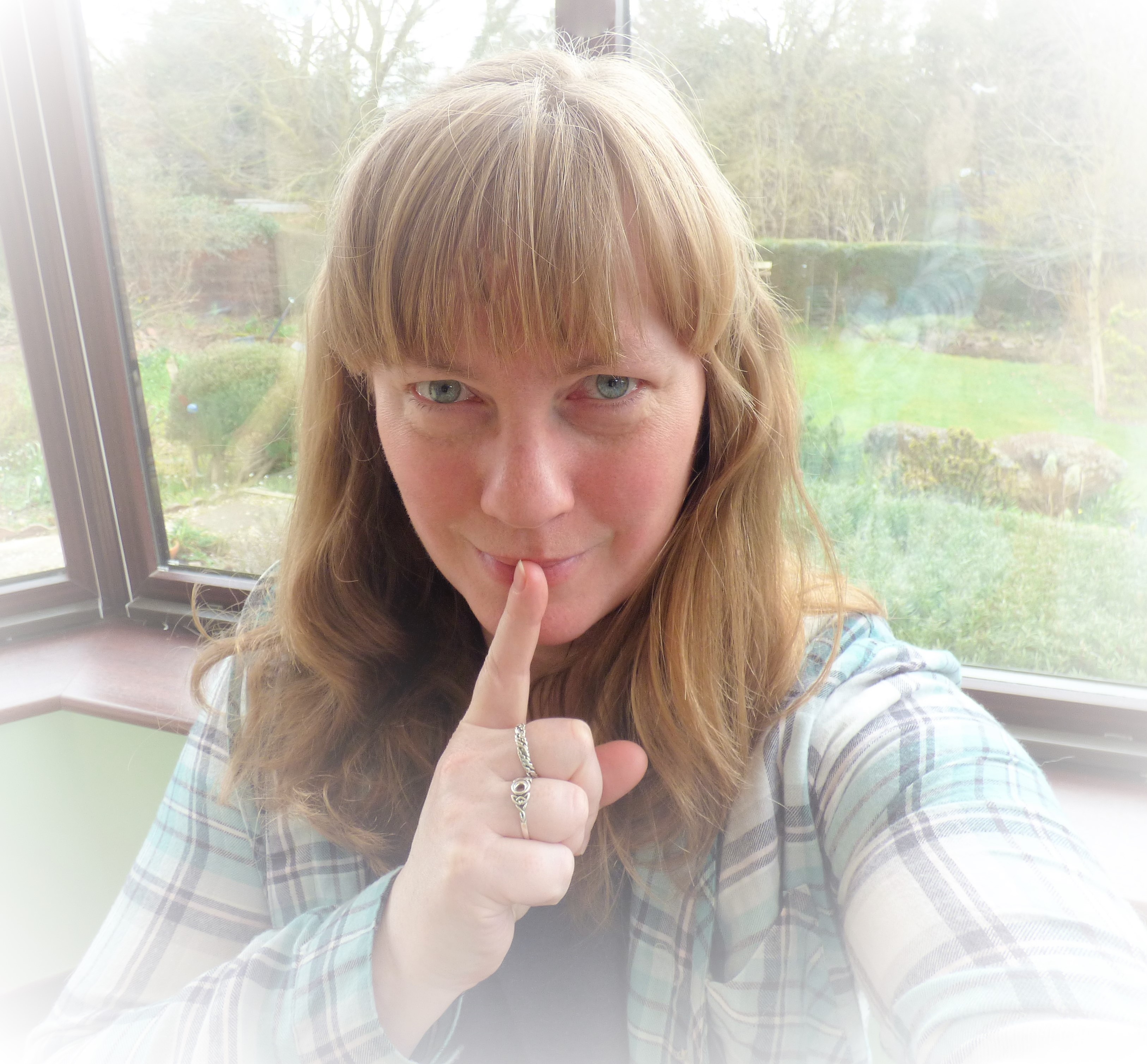
A good point: it teaches people to shut up and listen. You can’t really listen if you aren’t quiet. It also teaches us that words do have power. We need to use our words responsibly, especially in this age of social media and the abuse of people through the anonymity of the internet. A Witch’s word is said to hold power too – lies and half-truths undermine a Witch’s power (this applies to all people, in my opinion). Words can heal or destroy.
Being silent also helps us to see the bigger picture. When we step outside of our ego and its chattering, we begin to hear the stories of others and see the grander scheme of things. We all have egos, and we need to learn to work with them in order to not be ruled by them. When we are ruled by our egos, we aren’t living intentionally: we are instead living reactionary lives.
Being silent is also helpful in teaching us to be alone. With so many gadgets to hand to distract us from ourselves, we’ve forgotten how to be alone, how to be bored and, yes: how to be lonely. It’s only when you truly deal with loneliness that you can come to understand it and work to improve your situation. Then again, there are the more solitary folk who prefer to be alone, and who find solace in this space for themselves, to work, to heal, to dance and to pray. When we have cut ourselves off from all other distractions, we begin to realise that we are never truly alone. We have nature, the gods, the ancestors, all around us, all the time.
But what are some of the detriments to the saying, “to keep silent”? Well, silence has been used to abuse people for a long, long time. When we silence someone, we are exerting our power over them. Taking away a person or a group’s voice can be the most harmful thing you can do socially, politically, environmentally and ethically. Sometimes this even crosses over into the Pagan sphere, where unsavoury and unethical groups or persons use the adage “to keep silent” to use and abuse others. It can also be used to keep power from an individual or group, to not share knowledge in order to control them. It can be used as a front, a guise, a glamour for when someone doesn’t know an answer, and simply quotes this maxim to maintain an air of mystery and power. These kinds of “teachers” are really just in it for their egos. The best teacher will willingly admit to not knowing something, often learns from the student, and is willing to say so openly and honestly.
This sense of secrecy helps a group or person to establish power and mystique. It entices people to come closer, to learn more. The old Victorian orders and groups wove this veil of secrecy around their groups, not only to protect their members but also to make themselves feel more important. This has carried through in various forms throughout the decades, and has led to the history of Modern Witchcraft being a bit of a fuddled mess. If people were open about themselves, where their traditions came from, and who did what, we might have a more cohesive and coherent history to turn to. Even in the last 70 years we are still trying to unravel pieces of the puzzle, from Gardner and his associates and beyond. They can’t tell us – they’ve all passed on to the Summerland, taking their secrets with them. We can’t verify a lot of claims made by people and groups, which in this age of fact-checking has become paramount.
Many people, myself included, have found this utterly frustrating. So many traditions have created false histories in order to claim validity. In this way, they feel their tradition has the stamp of authenticity, because it goes back to so and so, etc. The irony of lies and half-truths to authentic a tradition is, I’m sure, not lost on many. I personally am not one to equate a religious or spiritual path’s age with validity, and there are many others out there who feel the same. If a spiritual path works for someone, and it was created yesterday, it’s just as valid as a 2,000 year-old tradition that spans the globe. But when secrecy is used to obscure fact because of false claims or untruths in a specific tradition, it can devalue it in the eyes of some. It’s never fun when you find out that your tradition had charlatans and forgers, ego maniacs and more thrown into the historical mix.
History will always have a veil of obscurity over it, hidden truths and perspectives written down by “the winners”. But with the adage of “to keep silent”, this can simply perpetuate the wilful abuse of the truth and facts.
Perhaps we need to learn when to speak up, when to speak the truth, our truths, and when to keep silent. When it is appropriate to do so, in order for power to be shared by all. The person with the most power is the person who is most willing to share it. And they usually don’t shout about it either.
Here’s the next installment of my Druid Festival Series of videos on my YouTube channel 🙂
 Down the Forest Path