The Spooky Season and the Weirdos (and the Exhaustion of it All)

It’s at this time of the year when we Witches, Druids, Heathens and Pagans come to attention of many, especially in the media circles. Some are genuinely interested in our way of life, our beliefs and how we interact with the world. Most, however, just see us as a bunch of kooks to be brought out into the light of the jack-o-lanterns of Hallowe’en.

I have wondered lately how long this perception of us as crazy, misguided, weird or strange will last. How is it that believing in deities that are associated with nature is considered bonkers, but a dead guy claiming to be the son of God being resurrected is totally sane? Other religions (because for me, Witchcraft is a religion as well as a Craft) are, for the most part, not treated in a similar manner. Hinduism, Buddhism, Jainism—most of “isms” apart from Paganism—are treated with more respect. The constant mockery of our own past and attempts to reconnect to it just doesn’t make any sense whatsoever to me.

Do some of us like to dress up in robes and carry out ritual observances? Sure, but so does the Catholic Bishop, the Buddhist monk and the Taoist priest. Is it because we Pagans are not considered ordained clergy in the same regard (even if some of us have gone through legal ordination where we live?) and are just “play-acting” at being something we are not? That doesn’t make sense given our huge cultural influence of Protestantism, where one does not have to be a priest in order to connect with deity (or ancestors, spirits of place, whatever one chooses to have a relationship with). One can deny it all they want, but threads of Protestantism are rife within Western culture, from the work ethic to the ideas of self-sufficiency, both in the mundane and in the spiritual sense.

I am so tired of being considered an “outsider” simply because I want to research and recreate a spiritual tradition based on my pre-Christian ancestors and cultural roots. In the grand scheme of things, Christianity is so young, and we as a society have barely even begun to be Christianised, let alone stop being Pagan. We anthropomorphize non-human beings and objects, we have folklore and superstitions that are embedded in every culture, and we have such a real, visceral need to connect to nature that nowadays, when we cannot, we are medically diagnosed as suffering from “nature deficit disorder”.

When will the time come when at a party or gathering if someone asks you about your personal life and you tell them that you are Witch, or a Druid, or a Heathen, you don’t get a strange look, a raised eyebrow, or an instant dismissal of some kind? That people won’t question your intelligence or your sanity because you choose to follow a spirituality that is earth-based, or that incorporates ancestral veneration, or that you have relationships with more than one deity? That won’t scoff when you say that you practice the magickal arts, even as they go to church and take part in the Eucharist where the wine becomes the blood of Christ through consubstantiation? When will all aspects of Paganism become “normal”?

Then again, do we want to be normal? Is there even such a thing? I certainly don’t think so. But it would be nice to not have to explain that we are not worshipping the Devil (unless you are, in which case, it should make for an interesting conversation to say the least, if the person you are talking to doesn’t go running and screaming for the hills), that we don’t dance naked around a fire (unless that’s your thing, but it’s usually too bloody cold or buggy here in the UK for that), or that you can turn people into toads (if only). That the jokes about all these things would be considered politically incorrect, and that we would no longer have to put up with this nonsense. That we wouldn’t be considered freaks, weirdos or nuts. That we just want to practice what our ancestors have done, and try to recreate some of the old ways as much as we possibly can so that we don’t forget our heritage. That we find new ways to practice and adapt the old ways in order to fit into a modern life.

There are some benefits to being an outsider. You can look at things more objectively, when you are not right in the thick of something that is considered culturally normal, even superior. That you are transgressive, in some way, which kind of makes you a little dangerous (and who doesn’t like that feeling every once in a while?). But it is also a constant battle of wills, to try and be seen and heard for what you are without the ridicule, mockery, disbelief and sometimes outright hatred. We think we have moved on from the witch hunts, but just how much have we progressed? And how far do we have to go?

The layers of Christianity and patriarchy that underly all of Western society certainly doesn’t help. But we are in 2025, for the goddess’ sake. In my lifetime alone, we have seen amazing advances in technology, society and psychology. But there is still so much more that needs to be done. And I often wonder if I will ever see a significant change in my lifetime. Will I ever be able to meet someone new, and not feel awkward about telling them about my spiritual life, if they should ask? Will it ever just be easy?

Maybe it’s just not supposed to be easy, at least not yet. There are still many mountains to climb, both literally and figuratively. Maybe we still need to the be the ones who wake others up to a world that lies beyond their own.

But dammit, some days it’s just friggin’ exhausting.

Happy Hallowe’en, Witches!

The Binge Culture

So, one thing I’ve discovered when writing a series is that people like to binge. Whether it’s books, television, food – you name it – binging is a thing right now. And now I am dealing with the added pressure of getting the next book out as soon as possible, because some people have read the third book and instantly want the fourth. Wait, they have to wait six months for the next book to come out?

Yes; yes they certainly do.

I know that most of you know that writing is a process. That if you want a book created instantly, you’d use a nasty AI programme to rip off other people’s works and then sell it as your own. But that’s not what us authors do; no, most certainly not. We think up stories (which takes time) and write them down (which takes even more time), researching and editing (which takes up SO MUCH TIME), pouring hour after hour each and every day to get that book done. And for me, so far the process requires six months to write, edit, and then release a work of fiction. And I think that’s a pretty good time frame.

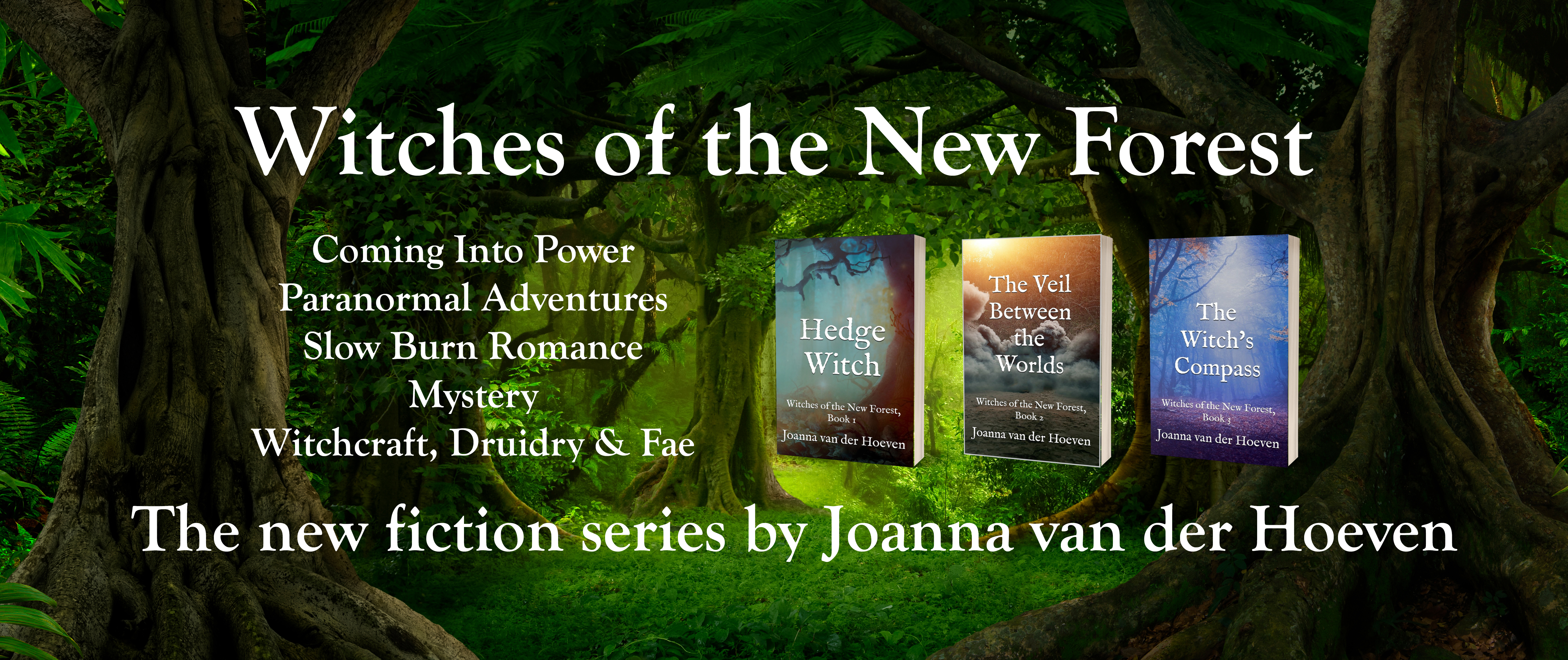
I could have spent a few years just writing the series and then releasing it all at once, but hey, a girl’s gotta eat. And right now the first three books in my fiction series, Witches of the New Forest, are paying the bills. This is actually the first time I’ve made a living wage off of my writing! (More on that later.) So, I will be writing two books a year, release dates around May and October, or thereabouts (possibly even June and December, depending on the book). If the story is set at Yule, for instance, I’ll release it in December. I want readers to get into the vibe and mood of the books as much as they can, and timing the release really does help in that regard.

With my non-fiction writing, it took me two years to release a book. One year was spent reading, researching, and gathering all the material I needed before I started writing. The following year was a writing year, followed by six months usually of editing, going back and forth with the publishers. It was a long process.

I never even considered the pressure that readers would place on an author to get a book out as soon as possible, until I experienced it myself. But I refuse to rush my books, because I want the best book possible for my readers. Romantasy author Rebecca Yarros (Fourth Wing, etc.) rushed her last book, Onyx Storm, and she made the decision to take as long as it needed for the next book to come out, which might be over a year, maybe even two. Some fans were angry, they wanted it right away.

Well, tough!

Our culture of instant gratification is running rampant. We can have entire series downloaded in one go onto our devices. But what we often forget is that those series took years to create, even if it takes us a week or two to binge and watch them all. Remember the days before you could record television shows? No? That’s my GenX background speaking. You had to wait a whole week for the next episode, and then wait three months during the summer while the reruns of the less than popular shows were on before you could watch the next season in September. And those seasons were long, back in the 80’s and 90’s. I remember when a television series was 24 episodes or more! Of course, that was all dependent upon the show. Comedies ran more episodes and for a longer span than dramas, because they took less time to create. Now, you are lucky if a season gets ten episodes. But you can binge the series, wherever and whenever you want!

I think we all need to take a deep breath, slow down, and smell the books. Give authors the time to write without the added pressure. They are likely doing the best that they can. In fact, most authors have other jobs, and so can only write in their spare time. I’m one of the lucky few right now, and that’s only because I’ve persisted for over a decade with writing and earning a meager salary that afforded me to fly back to Canada twice a year and that’s about it. Now, even after I pay for all the advertising campaigns that I run to promote my work, I can also buy groceries!

Let’s support our human authors, and give them the time that they need to tell a good story, without adding extra pressure on them. A rushed story is not the best story. And if you don’t believe me, just ask Rebecca Yarros.

No, don’t ask Rebecca Yarros. She’s probably on a much deserved holiday right now.

The Struggle is Real

Pagan books sales have gone down radically in the last year and a half, despite the increasing number of books being made available. It seems to reflect what many of us authors have been worried about for several years now. The sales aren’t even made up with e-books, as those have dropped significantly as well. Audiobooks for non-fiction still aren’t that popular either, and the revenue from them has always been minimal. So why is there this sudden and sharp decline in books sales?

When I first started learning about and practicing various forms of Paganism in the early 1990’s, books and events were the go-to places to gather the information that I sought out. The choice of books available in the bookstores was only a handful stuffed somewhere in the “New Age” section. The internet didn’t exist, but you could order books from glossy catalogues that companies such as Llewellyn provided, which wasn’t too bad if you lived in the US but if you lived anywhere else, the shipping fees were astronomical. And so you just had to make do with what your local bookstore provided. If you were lucky to have a witchy type shop near you, the selection was a little better, but shelf space was always at a premium. And we didn’t even bother much with libraries back then, because they would never stock those sorts of books in the first place. Finding books to read was a real struggle, but such a joy when you did find one that resonated with you.

The coming of the internet was a huge blessing for the Pagan community who wanted to connect with others, talk about authors and books and find solace with others when the community was so small and so widespread. Books began to be marketed online, which was a real boon to the publishing industry. And yet, with more people online than ever before, what has happened to book sales lately? Surely they should still be increasing?

Nope. I’ve talked to my publishers, I’ve talked to other authors and everyone is seeing a real downturn in books sales. We’ve been scratching our heads, trying to figure out why. As book lovers ourselves, it’s difficult to fathom how this downturn has come about so suddenly. So here is my take on what’s going on, and how it could very well spell the end of non-fiction books in the coming future.

  1. People can get information for free online. As people are online more and more and there are so many different channels to get information from, why buy a book? You could watch a video, read a blog and receive a ton of information anywhere for free. I know that if I was a youngster just starting out, the majority of my information would be garnered from this form of transmission simply because it is free.
  • People don’t have spare cash to buy books right now. Everyone I know is hurting more and more financially, and if it comes down to buying your groceries for the week or buying a book, you will buy the food. I hope.
  • You can find pirated copies of pretty much anything online. Need I say more?
  • Attention spans are waning. It’s a fact. “In the early 2000s, she and her team tracked people while they used an electronic device and noted each time their focus shifted to something new—roughly every 2.5 minutes, on average. In recent repeats of that experiment, she says, the average has gone down to about 47 seconds.” https://time.com/6302294/why-you-cant-focus-anymore-and-what-to-do-about-it/ (I actually had trouble reading this article, not because of attention span but because four different pop-ups kept interrupting my reading. Oh, the irony.)
  • When a book is released, it is competing will millions of other books these days. With so much choice, it’s wonderful for the reader out there. But for the author? It seriously dilutes the sales. Unless you have a slick marketing team that works for you.
  • Authors can’t afford slick marketing teams. The shift in lots of publishing has been to place the onus of marketing up on the author, as the publishers have to make cuts somewhere just to stay competitive. Most authors aren’t marketers. I spent nearly a decade in marketing for a world-famous music venue here in England. That has seen me in good stead for the last ten years, but even now I’m struggling against a tide of everything that I’ve mentioned above.

The struggle is real, folks. I hope one day that books will have a resurgence, that cosying up with a book on a rainy day will replace hiding under your duvet with your smartphone. There is just something about a book, something that feels like an old friend you can turn to, something that you can hold in your hands, that ages even as you age, the feel of something material rather than something immaterial.

 Go analogue for a while. Slow down. Smell the books along the way. Because who knows how long they’ll be here?

July Musings

The hot summer sun beats down, and the humid air lies heavy all around. To go into the forest during the day would be to invite all the biting insects to a feast, and to sit indoor feels almost like sacrilege on these summer days. But it is so hot. The kind of heat where just moving makes you break out in a sweat. Sitting still seems to be the best thing to do. The cat knows and understands this, and so I take my cue from her wisdom of being.


Even the birds have stilled their song in the midday heat. Earlier, the cardinal sang his heart out to his love, who is always nearby. The crows still caw occasionally, but apart from that, all is still except for the long, drawn out trill of the cicadas cooling off. The mosquitoes are all hiding in the woods from the heat, and the black flies have mostly died off. It’s the heat of an August day, in the middle of July, and we have been in this heat wave for two weeks now. Everyone is tired.


Still, my love for nature calls to me. I seek out the shade, and listen and watch the life that exists all around me. It’s in my nature, and was a big part of my Druid training. Be still. Watch. Listen. Learn.


When we still the voices in our minds, those stories of the humans that are part of our lives, we are then open to receive the stories of the other than human world. Whether we are in a city or on a remote hillside overlooking a vast plain of grasses shimmering in the breeze, there are stories all around us. In the flora and fauna, we learn of the countless ecosystems, micro and macro, and how we fit into them as living beings. And hopefully how to do so with love and respect.


The cycle of the seasons is shifting, from the height of midsummer and the ectastic, dancing energy of the tide of highest light, to the slower, more thoughtful tread of the harvest. The wheat is ripening in the fields, the seeds hanging in the trees and the late summer flowers are blooming. The greening is no longer vibrant, but heavy with the responsibility of continuing the legacy of growth, death and rebirth.


What lessons can I take from this oppressive heat, this heavy time, this long outbreath after the days of midsummer? Lammas or Lughnasadh is fast approaching: the first harvest. But we are still in an in-between state; the calm before the storm. It feels like a time to rest, recoup and prepare for the heavy labour that lies ahead when we collect in our dreams of the winter and spring, and which we have brought out into the world and into the light of summer. It’s that morning cup of coffee before the kids awake, or that few minutes in the bathroom of the office where you just need to be alone and regroup. It’s a stroll along a lakefront, the heavy stormclouds gathering overhead.


And so I rest, here with my family, as best I can in the 30+ degree celsius heat. I have just under two weeks remaining to gather up my strength again and reap the harvest that I had planned and worked for all this year. The books are coming along nicely, and the fiction has been especially rewarding. Finalsing that text in August and September will be a joy, and in readiness possibly for a Samhain release.


The breeze blows softly through the leaves of the oak tree my grandfather planted in the backyard. Now huge, its overhang shades the house from the relentless southerly sunshine, as well as standing as a proud reminder of our heritage and our life here in this part of Canada. Many other trees that I grew up with have long since gone, having lived out their life span or destroyed by storms or harsh winters. But the tall oak tree still stands, its large green leaves and developing acorns towering over this end of the village, and looking out towards the great expanse of the valley that is hidden from us humans by a large cedar hedge. This oak tree is part of both worlds: that of the human family that has lived under its boughs for over 50 years, and also that of the surrounding landscape, with the forest and valley, the hills and clouds, the rain and sunshine, sleet and snow that has blessed this landscape since it was formed.


Settling into my roots, deep like the oak tree, I can find the sustenance I need to carry me through.

New Year, New You?

New Year, New You?

It seems like almost every other magazine or online article in January starts with this title, doesn’t it? And just what does it mean? Can there be a new you? What is it that makes the sudden change from the old to the new, when it is only a calendar day apart? What magic is this?

There are many different new year’s traditions from all over the world, celebrated at different times of the year. Here is the western part of the world however, it is the 31st December and the 1st January where the shift happens, where things start afresh, where we have tabla rasa, a clean slate. Or so many would like to think.

Now, I’m not going to poo poo anyone who wants to make a change. Change is great! It means we are developing into our best selves, our truest selves, into forces that make positive change and impact upon our world in whatever way we can. In our secular society we have a whole ritual set up on new year’s eve to achieve this, so why not take advantage of it? When the clock strikes midnight we begin the year anew often with resolutions to better ourselves and in doing so, better the world, for change can only start from within.

It’s wonderful to have this ritual. But can there really be a new you? Or are we working with what is already there, what lies deep within that is buried beneath the weight of years, circumstances, emotional upheavals and general life experience? We often confuse what is new with what is pure, unblemished, something that is perfect in and of itself. But that purity simply does not exist. Nature is compounded, biodiverse imperfect and just plain messy, but it is still wonderful. There is no such thing as purity in nature. We are all made up of different things, originally from star-stuff and beyond. We are all intertwined, and cannot be separated into distinct categories for the sake of purity. If you love and adhere to the cycles of nature, you know that there is no such thing as purity, and that it is a human construct.

Instead of looking for purity, perhaps we should seek out authenticity instead. Our true selves, who we are and who we are meant to be are both one and the same. It’s all there, waiting for us to discover it. When we do this it might feel new, but it really has been something that has lain within us all along.

Many resolutions in the new year relate to happiness and health. These are wonderful goals to strive for and achieve in your daily life. But they have been there all along, in some fashion. It’s not a new you that you are discovering, but rather shifting your perspective and strengthening your resolve to notice and make the changes necessary for that to happen, rather than finding terra incognita.

The magic has always been within, and is not dependent on a calendar date.

That being said, it’s good to have these rituals, for they remind us to do the thing instead of letting our lives roll past without acknowledgement or change. I’m all for rituals, I have many in my life as many of you know from my body of work. And at the beginning of each year, we are given leave by secular society to make new rituals in order to become better people, so who am I to argue this?

This year I’ve committed to two things: to get into better shape and to be more compassionate, especially to those in my inner circle. I’ve let my physical ability slide a bit in the past year, which usually occurs when I’m in a writing year cycle, and spend way too much time at my keyboard typing away. I’ve also noticed that some of this time has been spent on social media when it could have been better spent elsewhere, and so along with getting in better shape and being more compassionate, I’m spending less time on social media too. Over the winter holidays while I spent time with my family in Canada I did not do social media at all for nearly three weeks, which I found amazing and liberating. The constant barrage of other stories, not to mention advertising, was really starting to wear me down, and so I needed to create a space of silence where I could hear myself again.

This year is a “research and experience” year for me. As an author, I need to take time to recharge and try new things so that I have new things to write about. I may even take two years this time to do so, to allow the new experiences to deepen and fully integrate into my soul. Along the way, I will keep to the resolutions that I made at the beginning of the year as best I can, holding myself accountable while still listening to my needs.

Can there be a new me? No, not really. I am made up of my past experiences and the choices that I have made in my life, which have all led me to where I am now. And in all honesty, I wouldn’t want to be a new me, because then I would have to disregard all the past experiences that I have had, for good or bad. Instead, I am returning to a truer and more authentic part of my being, one that listens, pays attention, is compassionate and active. One that sees the magic in the world, and celebrates it with every moment. One that pushes forward, and not getting mired in the past. This will be a change in my current modus operandi, but it will not make me new person.

Magic is change, often in accordance with will. And so let’s make the magic happen.