For the next few blog posts, I’ll be mulling over different kinds of boundaries, namely meant, emotional and spiritual. This was inspired by a blog post that I read today, and I felt compelled to write down my thoughts in order to clarify them to myself, and hopefully be of some use to all you lovely folk too!
In the article, perhaps the most important line is that which begins the discussion, which is:
“Boundaries are guidelines, rules or limits that a person creates to identify for themselves what are reasonable, safe and permissible ways for other people to behave around them and how they will respond when someone steps outside those limits. Boundaries are not rules for someone else to follow.”
This really resonated with me, as it helped me to clarify where I have transgressed in my dealings with others, and where the same has happened to me. When we create a boundary, we have to know that the boundary we have created is for us only, and we cannot dictate that boundary to others in a way that will try to change them. Boundaries are for changing ourselves. It gives us guidelines as to how we will respond to a situation, from a place of intention rather than reaction. Boundaries are rules for our own behaviour, and not for the behaviour of others. We may find the behaviour of others unacceptable, but it is up to them to create their own guidelines and ways of living and interacting with others. It is not for us to change others, but rather to define how we will impact upon the world, hopefully in a way that is compassionate, holistic and intentional. As well, when we live the example we are trying to set, we are fully walking our talk.
So let’s start with mental boundaries. In the article, the definition of mental boundaries are:
“Define your thoughts, values, opinions. You own your thoughts. Each individual decides what is private, what they wish to share or not share. What do you believe? Can you listen with an open mind to others thoughts or opinion without becoming rigid while at the same time not compromising core beliefs?”
Over the last few years, I’ve really been trying to define and articulate my thoughts, values and opinions, without being judgemental about any of them. It’s been an extremely difficult exercise, and I still find judgement creeping in all the time; what has changed is that I am now aware that I am judging a situation/person/opinion, and that helps to open up and clarify somewhat my own perspective. In our work at Druid College, one of the exercises that we each do is to create a list of our personal values, our moral and ethical code, in order to better understand them. When we write it down, it can distill and clarify just what is going on in our heads, and we can then look at it from a place of some distance, in order to judge truly whether or not this is something that holds true for us, that we are attempting to achieve in our lives and how we can better fulfill this goal. Defining something is essential in this exercise, in order to come from a place of true understanding and not have it be only a vague inclination.
Owning my thoughts is a big thing for me. I am constantly considering what is mine, and what is someone else’s thought. Owning my thoughts provides me with intention, allowing me to live a less reactionary life. Taking responsibility for my own thoughts helps me to bypass some of the pitfalls that can lead us into very destructive behaviours; it is something that really keeps us on our toes. It allows me to choose the mask that I present to others, rather than allowing others to choose the mask for me. There are private things that I will never discuss publicly, and these areas have clear definitions.
Really taking time to consider “what do I believe?” is, I think, beneficial for everyone. It lifts what can sometimes be a hazy moral, ethical or spiritual point of view, thought or belief. We are able to see more clearly and act appropriately when we have defined for ourselves exactly what it is that we believe. We can then set out the appropriate boundaries, while still maintaining a clear and open perspective. We allow the beliefs of others to exist, however much we may disagree with them, and we may discuss this in various forms. But we never push our beliefs on to others, because we would not wish for others to do the same to us. We can stand strong in our beliefs, find a strong centre and rootedness within them, while still acknowledging the beliefs and perspectives of others.
This allows us to listen with an open mind, without judging or writing off other person because of their beliefs. They may be in complete opposition to our own, but we can stand strong in our own beliefs without compromising ourselves or forcing them to compromise their own. This is a great skill, and is really difficult to communicate, as egos are so fragile and we are all so invested in our egos, beliefs and opinions. When we are able to come at this concept from a place of sovereignty within ourselves, then we can have strong convictions while not imposing them upon others. We are really able to listen to others, and then to respond appropriately. This is something that I am really working on, to develop the skill to do this without compromising myself into non-existence. It’s a pitfall that one can fall into when trying to work with compassion in all things, and by creating this boundary and being able to express it clearly from a sovereign place, being responsible for your own thoughts, words and actions. It will hopefully then allow the interaction to continue more smoothly when you find boundaries rubbing up against each other. We may not always be successful, and when we come from this centred and sovereign place it may put others on the defensive even more, but we have stayed true to ourselves, our beliefs and have acted with honour and with intention. We know what we are doing and why, and we take full responsibility for it.
In the next blog post, I’ll look at little more closely at emotional boundaries, something which I have discussed previously on this blog and in my books. I hope you’ll join me!
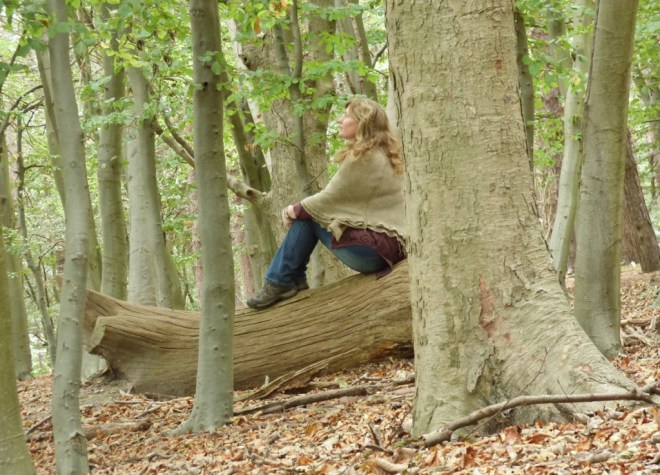

 We will be postponing our next Year 1 session in Essex, as we have something very exciting brewing in the cauldron of inspiration! Starting in January 2019, we will be preparing our new online correspondence course, a full Year 1 programme, which will consist of online meetings, pre-recorded video and audio lectures, booklets to download and more. We have had so many people get in touch wanting to know if we could offer a correspondence course, as they were physically unable to attend our in-house sessions. And so, we aim to provide this for 2020, alongside our next Year 1 in-house programme. Stay tuned for more updates and info!


 Shine, in the coming darkness. Let the spark of awen light the flame within your soul. Guard that flame, the truth against the world. Let it be your guide, let it be your light, to shine out into the world.
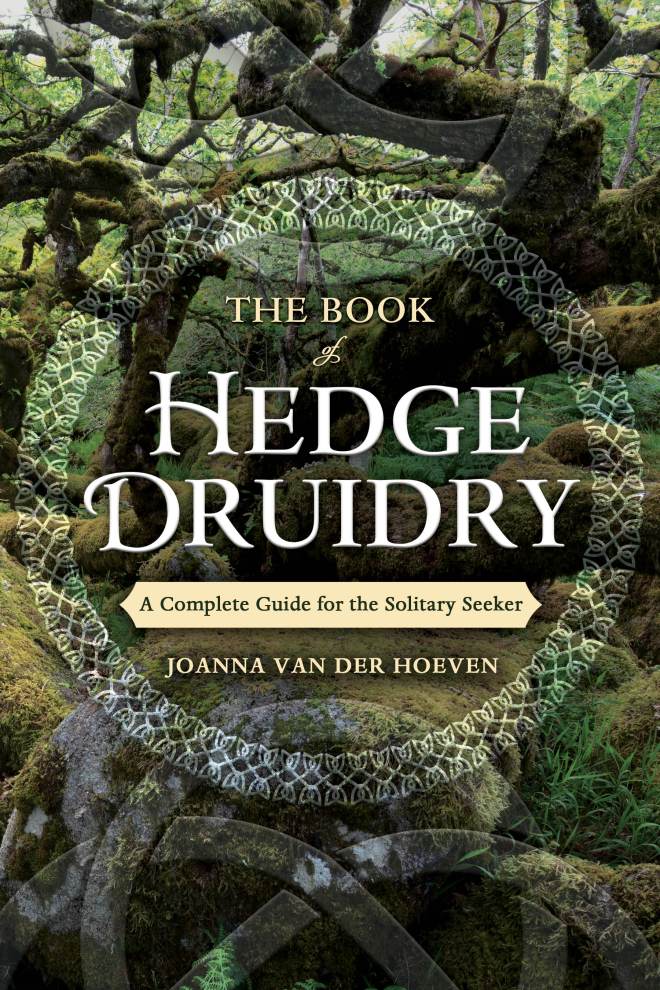
 I’ve loved all of Morgan Daimler’s work, and so when the call went out last year for reviews for her
  Morgan Daimler’s book on
  Riding side-saddle is both easy and difficult. It’s a strange dichotomy of being securely “locked in” and feeling like you’re going to slide out the side at any moment. I took lessons riding side-saddle, and also did some jumping. I even rode down the aisle at my wedding side-saddle! When I compare this to working with the goddess Rhiannon, I can see how she is often portrayed as riding side-saddle, and I think the fact that she’s wearing skirts is only part of the reason.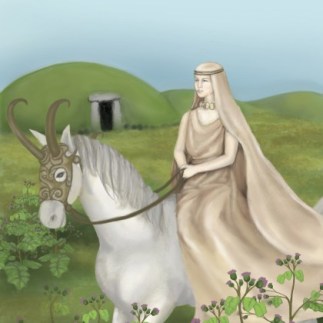
 I’ll be working closely with Rhiannon over the next few months, and I look forward to the insights that she brings. If you are interested in this goddess, there is a brilliant book written by
  Bullying in any shape or form, whether in person or online, is a very difficult thing to deal with. I’ve had my fair share of it, with trolling on my social media sites and the occasional personal attack/character defamation (mostly from people whom I’ve never even met). This has again happened to me very recently, and thankfully it’s only the second personal attack that I’m aware of using myself as the subject. It’s a slog to get through it all, and can make you despair at the human race entirely, but I’ve come up with some ways to deal with bullying, which may help you if you ever find yourself in such a situation. If you are in physical danger, please contact the authorities at once. Here are 10 ways you can work through this situation, should you find yourself being bullied in any shape or form.
 Down the Forest Path