Samhain: The Origins of Hallowe’en

This article is in response to an article in my local village newsletter, declaring the so-called “evils” of Hallowe’en. Hallowe’en is not evil and is, in fact, a very ancient British tradition that spread to North America.

Hallowe’en stems from an ancient British tradition of the Celtic peoples. It was, and still is known as the festival of Calan Gaeaf (Welsh) or Samhain (Irish) which begins at sunset on the 31st October and runs to sunset on the1st November accordingly. The Celtic year was divided into two halves, the light half and the dark half. The light half began at the beginning of May, which marked the start of summer. The dark half began at Samhain (Irish) or Calan Gaeaf (Welsh) which marked the start of winter. The word Samhain is thought to be derived from “summer’s end”, being a linguistic inversion of sam-fuin.  Samhain is a time that lies between times, and is a time that is not a time. It is the end of summer, and marks the time just before we enter the dark half of the year, often referred to as the Celtic New Year. It is a liminal time, and begins at dusk on 31st October on the calendrical year. (All Celtic holidays begin at dusk, the day before the calendrical date.) Some Druids follow a more agricultural or seasonal calendar, and celebrate Samhain when the first frosts appear. 

Samhain is known popularly today as Hallowe’en. This stems from the Christian Hallowmass. What is interesting to note is that the Feast of All Saints, which follows the day after Hallowmass used to take place in May. It was moved in 834 to the 1st November, presumably to compete with the more Pagan traditions in an attempt to move the common folk away from such beliefs and practices.

Samhain is a time to remember the dead, and to welcome them. The dead are never far from us, and the Celtic worldview comprised a sort of ancestor veneration found the world over in Pagan traditions. Deceased relatives could come and visit the home, and so door were often left unlocked so that they could enter. Some use the tradition of a “Dumb Supper”, where food and places are laid out alongside the family’s fare for the dead, and the meal is eaten in silence. These plates were then taken outside as offerings to the spirits and the Fair Folk. Hollowing out turnips or sugar beets, and later pumpkins (which were/are much easier to carve) and placing a candle inside could provide a lantern by which the dead could find their way. Candles may have been left in windows as well, to help guide the way. Apples as well have a place at this festival, for one of the traditions was for a maiden to peel an apple and throw the peel over her shoulder: the letter that it formed was the initial of the name of the man she would marry. The custom of bobbing for apples is also thought to derive from Samhain traditions, with the lucky (and wet!) winners receiving fortune for the rest of the year. Brushing your hair and eating an apple while looking in a mirror at Samhain was said to reveal in the reflection the face of your true love. Modern-day trick or treating is said to come from the ancient buachaillí tui, disguised people who characterised the dead and lead a white mare (hobby horse) called Láir Bhán. This horse was symbolic of the goddess of the land.

At Samhain, when we arrive at summer’s end, is a liminal time. The veils between this world and the Otherworld are thin, and so we see the custom of dressing up or guising to protect the living from the “unhappy dead”. It could also be seen as an acknowledgement of the dead returning, and as a sort of celebration of the fact.

Samhain was celebrated by the Druids in Ireland high on the hilltops with fire, from an ancient ritual on Tlachtga or the Hill or Ward in Meath.  Tlachtga was sacred to the Druids, whereas Tara was the place of the High King. Tlachta could be viewed from Tara, and a fire on Tara may have been lit in response, allowing the Druid’s to light their fire first, in their role as advisors.  The Feast of Tara took place three days before and three days after Samhain. There is an alignment of the sun and moonrise from at Samhain from Tlachtga to a standing stone in Slieve na Caileach and also Lambay Island. Tara has an alignment from the Samhain sunrise to “Lugh’s Seat” at the “Pillars of Samhain” and a cairn dedicated to the goddess, Mór-Ríoghan above the Keash caves in County Sligo.  In Irish tradition many ancient hills and fairyforts were connected by paths which the Sidhe were said to travel. At Samhain, the Celts would be taking their cattle down from the high grounds to their winter lodgings, and so would the Fairy Folk. It was wise to avoid the fairy paths or alignments on this day/night for this very reason.

At Glastonbury in Somerset, England, the Wild Hunt is said to ride out of the hill of Glastonbury Tor, with Gwyn ap Nudd, the Lord of Annwn at its head. He collects the souls of those who have died over the past year, and acts in the role of psychopomp, leading the souls to their rightful place in the Otherworld or afterlife. Fire rituals may well have been a part of ancient ceremony on the Tor, being a hill that could be seen for many miles in the surrounding flat countryside. Recently, a Samhain fire festival honouring The Wild Hunt now takes place at Glastonbury Tor every year, and is hugely popular, with modern-day Druids officiating the ceremonies.

In County Derry in Ireland, they celebrate the Spirit of Samhain, or Spiorad na Samhna. It is a hugely popular event, with over 30,000 people coming to participate and enjoy the festivities today, with a parade and fireworks, acrobats, fire-breathers, stories, song and more. This is echoed in Edinburgh, Scotland, where the Beltane Fire Society also holds a Samhuinn event every year. This began in 1995 and has grown ever since, with street performance and theatre in the heart of the city. A large, dramatic ritual ceremony is created and re-enacted each year by different groups which include dancers, drummers, actors and more.

So as you can see, Hallowe’en is not evil. It is an ancient tradition which people across Britain are still practicing today. It is a celebration and veneration of our ancestors, much as others festivals across the world do at this time of year, such as Dios de los Meurtos, or the Day of the Dead in Mexico. Simply because something is not Christian, doesn’t make it evil.

Resources:

Baker, Des “Spiora na Samhna”, Underground Short Film Festival, 2015

Butler, Dr Jenny ” The Festival of Samhain & Halloween in Ireland “, Crypt Interview

Eastwood, Luke “Tlachtga and the Ancient Roots of Hallowe’en/Samhain”, Order of Bards, Ovates and Druids

Hutton, R. (2011) Blood and Mistletoe: The History of the Druids in Britain: Yale University Press

Restall Orr, (2016) E. This Ancient Heart 2016 Moon Books

Restall Orr, E. (2004) Living Druidry: Magical Spirituality for the Wild Soul: London: Piatkus Books Ltd

Talboys, G. (2002) Way of the Druid: Rebirth of an Ancient Religion: O Books

Telyndru, J. (2005) Avalon Within: A Sacred Journey of Myth, Mystery and Inner Wisdom

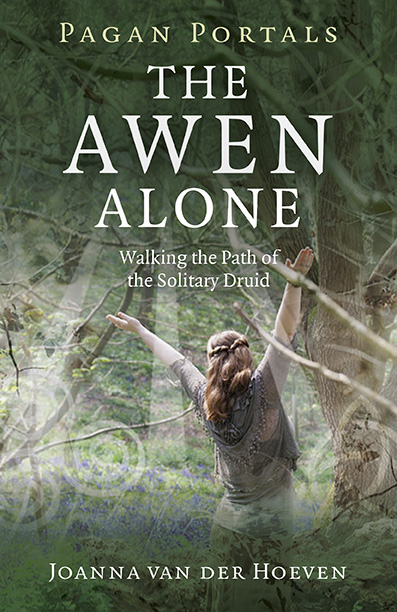
van der Hoeven, J. (2014) The Awen Alone: Walking the Path of the Solitary Druid: Moon Books

van der Hoeven, J. (2021) The Book of Hedge Druidry: A Complete Guide for the Solitary Seeker: Llewellyn Worldwide
The Struggle is Real

Pagan books sales have gone down radically in the last year and a half, despite the increasing number of books being made available. It seems to reflect what many of us authors have been worried about for several years now. The sales aren’t even made up with e-books, as those have dropped significantly as well. Audiobooks for non-fiction still aren’t that popular either, and the revenue from them has always been minimal. So why is there this sudden and sharp decline in books sales?

When I first started learning about and practicing various forms of Paganism in the early 1990’s, books and events were the go-to places to gather the information that I sought out. The choice of books available in the bookstores was only a handful stuffed somewhere in the “New Age” section. The internet didn’t exist, but you could order books from glossy catalogues that companies such as Llewellyn provided, which wasn’t too bad if you lived in the US but if you lived anywhere else, the shipping fees were astronomical. And so you just had to make do with what your local bookstore provided. If you were lucky to have a witchy type shop near you, the selection was a little better, but shelf space was always at a premium. And we didn’t even bother much with libraries back then, because they would never stock those sorts of books in the first place. Finding books to read was a real struggle, but such a joy when you did find one that resonated with you.

The coming of the internet was a huge blessing for the Pagan community who wanted to connect with others, talk about authors and books and find solace with others when the community was so small and so widespread. Books began to be marketed online, which was a real boon to the publishing industry. And yet, with more people online than ever before, what has happened to book sales lately? Surely they should still be increasing?

Nope. I’ve talked to my publishers, I’ve talked to other authors and everyone is seeing a real downturn in books sales. We’ve been scratching our heads, trying to figure out why. As book lovers ourselves, it’s difficult to fathom how this downturn has come about so suddenly. So here is my take on what’s going on, and how it could very well spell the end of non-fiction books in the coming future.

  1. People can get information for free online. As people are online more and more and there are so many different channels to get information from, why buy a book? You could watch a video, read a blog and receive a ton of information anywhere for free. I know that if I was a youngster just starting out, the majority of my information would be garnered from this form of transmission simply because it is free.
  • People don’t have spare cash to buy books right now. Everyone I know is hurting more and more financially, and if it comes down to buying your groceries for the week or buying a book, you will buy the food. I hope.
  • You can find pirated copies of pretty much anything online. Need I say more?
  • Attention spans are waning. It’s a fact. “In the early 2000s, she and her team tracked people while they used an electronic device and noted each time their focus shifted to something new—roughly every 2.5 minutes, on average. In recent repeats of that experiment, she says, the average has gone down to about 47 seconds.” https://time.com/6302294/why-you-cant-focus-anymore-and-what-to-do-about-it/ (I actually had trouble reading this article, not because of attention span but because four different pop-ups kept interrupting my reading. Oh, the irony.)
  • When a book is released, it is competing will millions of other books these days. With so much choice, it’s wonderful for the reader out there. But for the author? It seriously dilutes the sales. Unless you have a slick marketing team that works for you.
  • Authors can’t afford slick marketing teams. The shift in lots of publishing has been to place the onus of marketing up on the author, as the publishers have to make cuts somewhere just to stay competitive. Most authors aren’t marketers. I spent nearly a decade in marketing for a world-famous music venue here in England. That has seen me in good stead for the last ten years, but even now I’m struggling against a tide of everything that I’ve mentioned above.

The struggle is real, folks. I hope one day that books will have a resurgence, that cosying up with a book on a rainy day will replace hiding under your duvet with your smartphone. There is just something about a book, something that feels like an old friend you can turn to, something that you can hold in your hands, that ages even as you age, the feel of something material rather than something immaterial.

 Go analogue for a while. Slow down. Smell the books along the way. Because who knows how long they’ll be here?

A Tribute to Scott Cunningham

It’s been 31 years since the beloved author, Scott Cunningham passed on from this life on 28 March 1993. Like many others in the Pagan community, I never knew Scott personally, though I felt that I knew him through his works which were a foundational part of my spiritual path, and which were the tools that opened my eyes to a wonderful earth-based spirituality.

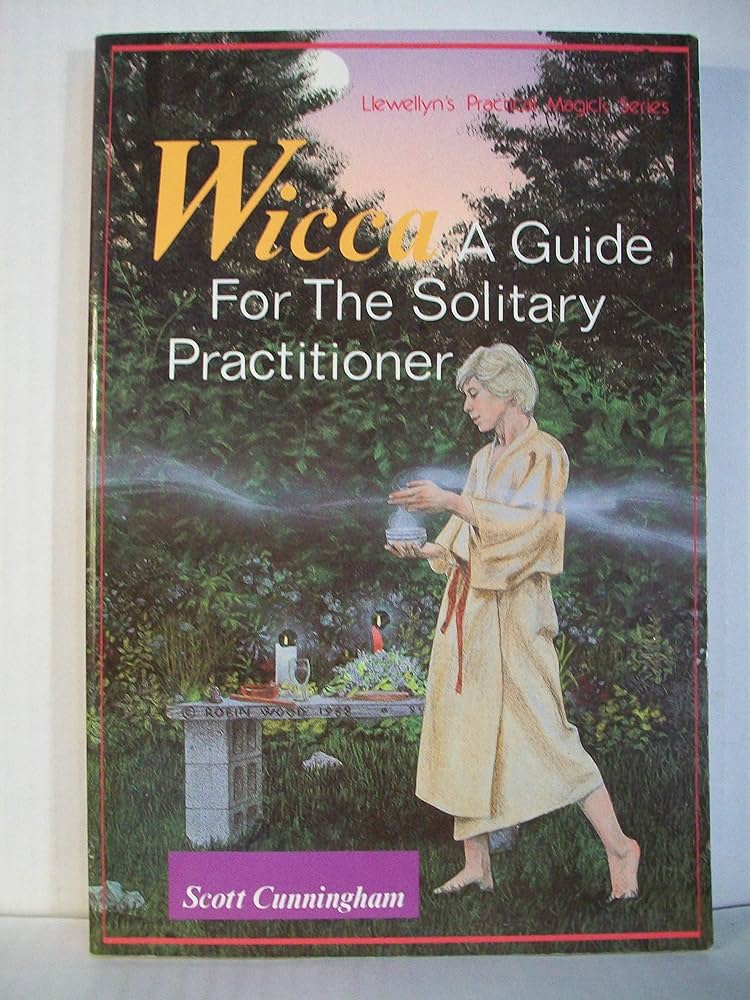
It was the early ‘90s, and a magical Witchcraft shop had opened in Montreal. Melange Magique (The Magical Blend) was located right in the heart of downtown Montreal, on Ste Catherine Street West. I remember walking in and the first thing that I noticed was the amazing smell of handmade incense. It evoked something within me, something that I couldn’t describe at the time, but which I shall never forget and which changed me forever. I wandered the book section, with the cats that lived at the store lounging on shelves and wandering around underfoot. I came to a shelf dedicated to titles on Wicca. I had heard of Wicca only recently, from a course I was taking in college called “Magic, Religion and Science”. I picked up my first book on the subject of Paganism, and it was Scott’s Wicca: A Guide for the Solitary Practitioner. That book literally changed my life. It was the first Pagan book I ever touched, and I am so glad that I did.

Since then, I have read and bought every book that he ever published. And hundreds of other books from hundreds of other authors. Though my path has moved on from Wicca over the years to Druidry and Hedge Witchcraft, I still hold Scott’s words and ideals close to my heart. Yes, I call him Scott, as does everyone who ever read his books. The way that he wrote made you feel like you had a friend on this solitary, seekers path, one that had good advice and common sense. All of us GenXers who got into Paganism came across his works, learned from them and acknowledge (though sometimes grudgingly) that he was a seminal force for so many of us.

I see a growing trend in the last 5 – 10 years or so, of putting down Scott’s work. People say it’s outdated, that we’ve moved on from it, that it holds nothing for today’s Pagan practitioner. I say bollocks. I’ve reread all the books recently, and they still stand up fairly well, considering the time in which they were published. Material was difficult to come by back in the ‘80s and ‘90s, with only a few authors’ works widely available. There is little that I would argue about in his works, even today. Scott researched and tried out everything that he talks about, and so his works come from his own experience. He walked his talk and truly believed in his work and in his spiritual path.

He never claimed that his way of witchcraft was ancient. In fact, at the beginning of Wicca it is clearly established that this is a new tradition, and a new way of working in this spiritual path. He strongly advocated creating and designing your own rituals that work for you, in your particular area, for this was an earth-based path. This is something that I urge everyone to do still, because it means so much to work with your local environment and landscape, wherever that may be.

His style of writing was personal. It felt like he was talking directly to you. He urged the reader to explore, to try new things and not to do it his way, but to use that as inspiration. He also didn’t hold back when he had a strong opinion on certain topics, which I greatly appreciated. He wasn’t afraid to share his opinion, because it came from a strong and valid base of personal experience.

I still have the first editions of his books, because I bought them as they were being released, or within a few years of their initial release. Those early cover artworks, which so many people today often deride or make fun of, were that which sparked me into a magical way of thinking and being. On Wicca, the androgynous man in the robe wafting incense around his back garden by the light of the full moon, that image spoke to me and my romantic soul. I wanted to be that person, that person who chanted the names of the gods under the stars and who connected with the energies of life, death and rebirth that are all around us, all the time.

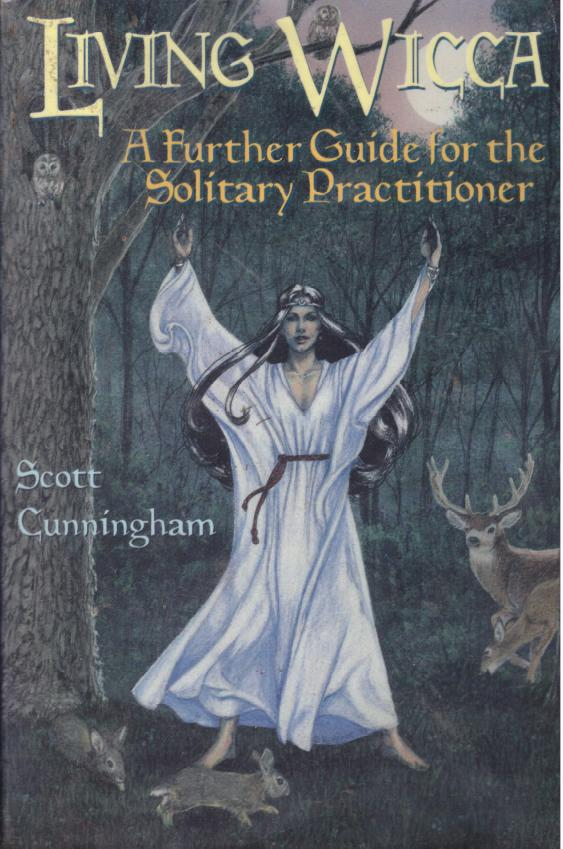
The woman on the cover of Living Wicca, well, I of course I wanted to be her: summoning or invoking the gods while the deer, rabbits and owls crowded around. And indeed I have had similar experiences over my years of practicing my Craft out in the wilds, calling upon my deities, the spirits of place, the ancestors and more. Never could I have imagined back then that it would become a reality, but it was a starting point and an ideal.

I wanted to know a goddess, a female divinity. I wanted the magic that we all have as children come back and be a part of my life in the present moment. These old book covers demonstrated that to me and more. They are now a backdrop to my life.

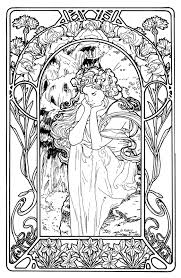
The covers have since changed, of course, to adapt to modern fashions and trends. But the contents within those books remain the same. The inner artwork of his books such as Earth Power and Earth, Air, Fire and Water still give me a little thrill. Illustrated by Robin Wood (who did the original covers of Wicca and the follow-up,  Living Wicca), these art nouveau inspired drawings of people working Scott’s spells and rituals were instrumental in making me want to do these practices. This was a spiritual practice that was meant for me, I knew that when I saw these images. And I could do all these things and more. (See Robin Wood’s tarot deck, too, if you love tarot. It’s really, really good.)

I think that many (though not all) of the people who don’t enjoy Scott’s works are from a different generation. They don’t understand what it’s like having to travel miles out of your way to buy a book on any Pagan spiritual practice, because the internet hadn’t been available back then in Ye Olden Days. Comments picked up directly from Aamzon reviews read as:

“A theme with cunninghams books is that they are all tailored to the novice who has never picked up a book on wicca or read about it online.”

Nevermind not bothering with punctuation, but this review fails to notice that Scott’s books were written before material was available online. And there were only a handful of Pagan authors being published at that time, so there was very little material for the novice to read which is why Scott wrote this book in the first place. It’s utterly ignorant of the timeline of the books’ production, its history and the legacy that Scott provided. Sadly, there are dozens of reviews like that online, stating that the information is readily available online, so why buy the book – sigh. Read the boring copyright and publishing info at the beginning of a book, people: it will tell you a lot about a book, when it was written, how popular it has been with different printings, and whether it has been re-published or re-worked. Scott was never able to re-work his books for a modern-day audience, because he died far, far too soon. But I am certain that he would have, and would have enjoyed doing so.

Where do you think all these online sites got the information from, I wonder?

New generations of readers have so much access to material now, that I suppose for some these books may not contain what it is that they are seeking. But for those who want to sit down with an author and their book and really see what it is like working in a certain practice, there is no better alternative than reading a book. So much online material is simply copied and pasted from other sources (many of which derive from Scott’s works) without any heart, feeling or experience behind them. They are soulless.

There are also many reviews from ego-based practitioners, who just want to show off how advanced they are because they are so beyond Scott’s works. Again, sigh.

Is Scott’s work all about love and light? In some aspects, that may be what some people take away from it. But once again, we must remember the context in which the books were written, which is the late 80’s and early ‘90s when Wicca, especially in America, was trying to distance itself from the threat of the “Satanic Panic”. Do the books promote a love for the earth and a way to magically celebrate, work with the energies and reverence the earth? Yes, yes they do. And thank all the gods that they do.

I even recently tried Scott’s simple ritual for the Spring Equinox, taken directly from Wicca. This was going to be an experiment, to see whether this ritual would still have any meaning for me today, someone who has been on this Pagan path for more than 30 years. And you know what? It was lovely. It was a beautiful, simple ritual that connected me to the energies of the seasons, and which brought me closer to the spirits of place where I live.

His spell books such as Earth Power and Earth, Air & Fire Water are still great books for anyone practicing magic today. If you are more secular, then these are the books from Scott that you should read. His books on gems, magical herbalism and spellcrafts are also really good resources for anyone following a Pagan path.

It’s not just about sentimentality, or nostalgia. It’s about an author who changed the face of how we practice most, if not all modern Pagan paths today. His influence is so far-reaching, and yet so many people new to the Craft have no idea of the significance of Scott’s works.  He is a beloved author for many, for good reason. He passed on way too soon from this incarnation, and I would have loved to see what his contemporary writing and works would have offered for today’s magical community.

It would have been wonderful to have journeyed with Scott through many subsequent books, but sadly we only have the ones that date from 1993 and earlier. There have been biographies written about Scott, such as Whispers of the Moon, which I highly recommend for anyone who has been touched by Scott’s work. Written by his friends, it’s a very good portrait of the person and makes him very real, outside of his Wiccan writing. It also demonstrates just how dedicated he was to his spiritual path, and just how much he walked his talk, always experimenting, always trying new things, always progressing on his own journeys. The newest biography, The Path Less Taken that came out in 2023 I found less interesting, and not as well-written though it was written by his sister. In this work she is open about the fact that she never read Scott’s works until after his death, and so knew very little about how he felt about his religion. The writing is disjointed, jumping all over the place timewise, and though most likely written from a place of love, falls short of actually portraying Scott as the magical pioneer that he was.

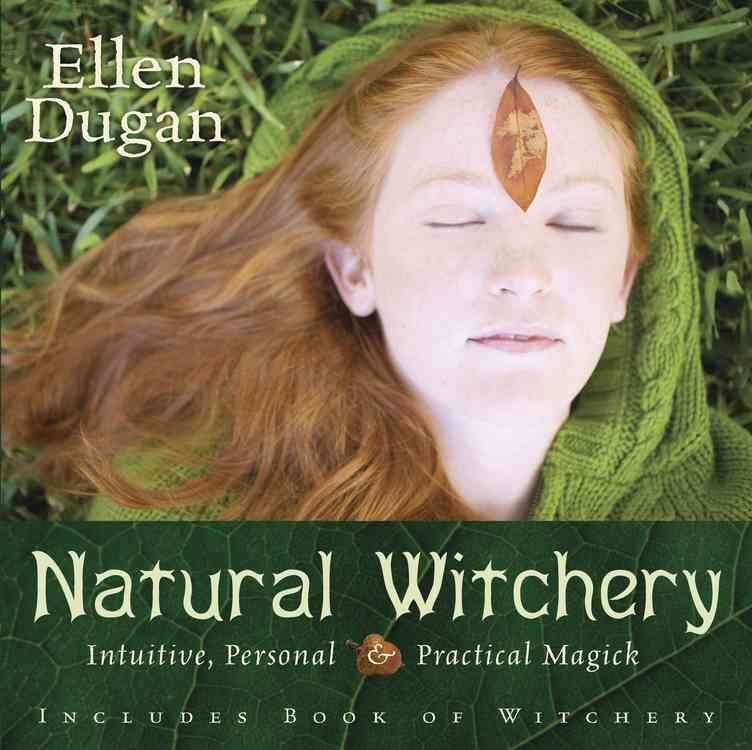
Would I still recommend Scott’s books to those who are interested in and just starting out on their path of Wicca? Most definitely. I would also recommend Marion Green’s A Witch Alone, Rae Beth’s Hedgewitch, Dorothy Morrison’s The Craft, Silver RavenWolf’s To Ride a Silver Broomstick, Starhawk’s The Spiral Dance and many other books of that generation. I know, I can hear many of you sighing from here. I would also suggest Thorn Mooney’s Traditional Wicca as well as The Witch’s Path, Jason Mankey’s Transformative Witchcraft, Danu Forest’s The Magical Year and anything Ellen Dugan has written, such as Seasons of Witchery and The Natural Witch (alongside ALL of her fiction work, especially the Legacy of Magick series).

Scott Cunningham’s legacy is one that still lives on today. And long may it continue.

Major milestone: huge love and thank you!!!

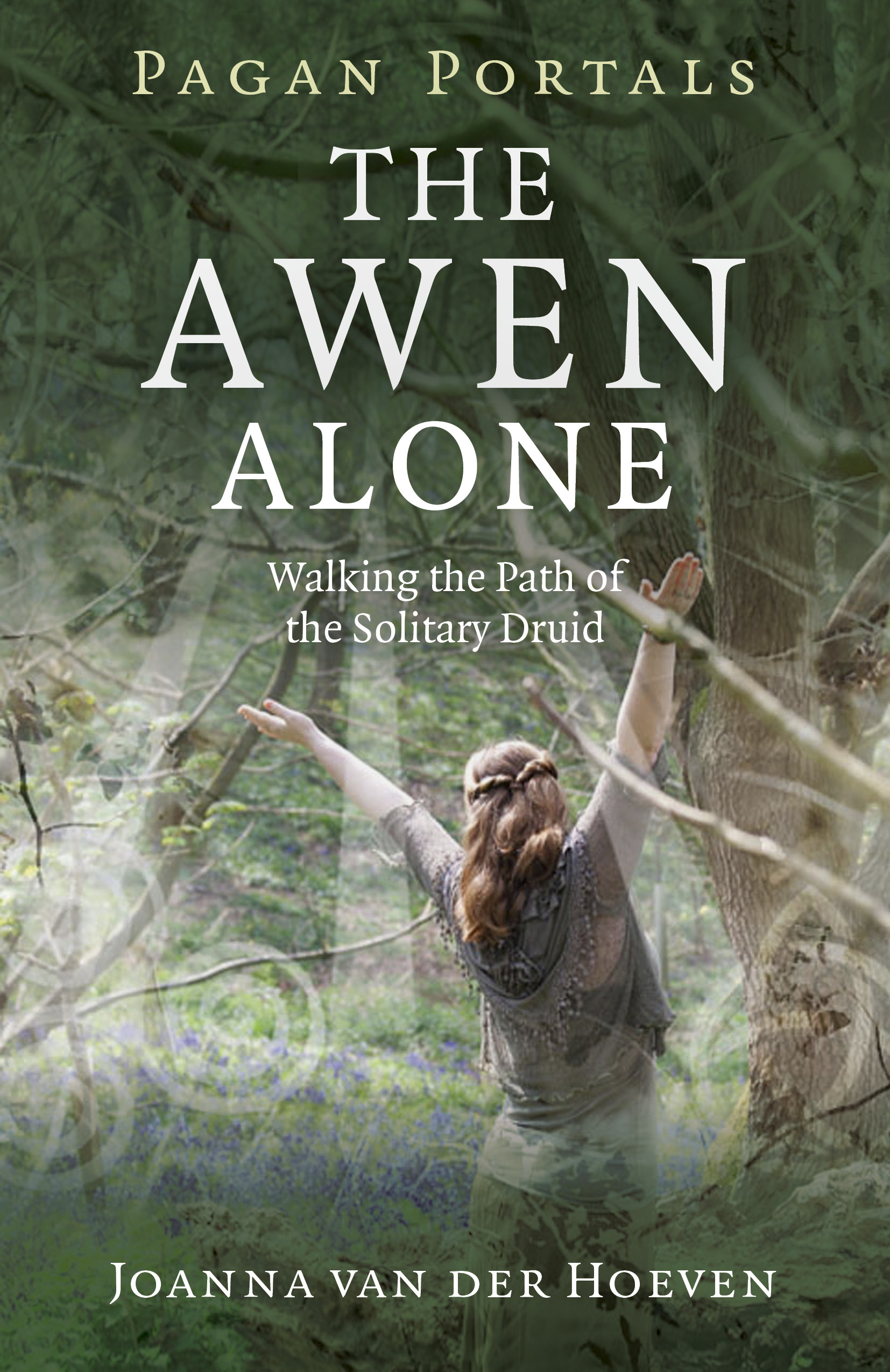
Well, May’s sales figures have come in from my publishers, Moon Books, and we have reached a new milestone – over 10,000 copies of my Pagan Portals books sold! (And The Awen Alone: Walking the Path of the Solitary Druid is still an Amazon No. 1 Bestseller!) I just wanted to thank everyone for their support in my writing, for your lovely emails, your encouraging words, and for being so awesome. May we be the awen!!!


Excerpt from IPagan Druidry

I’ve written an article for a collaborative work with other Moon Books authors which is now in production and will be out in the next few months, working title: IPagan Druidry. The idea of iPagan has now evolved to produce both print and ebooks and is hoped to be expanded into a series featuring volumes on Druidry, Shamanism, Witchcraft and Contemporary Issues at discount prices so that they are readily available to all. Here’s a little taster from my essay, The Promise

Is my Lady Brighid real? I still don’t know. But I quest a relationship with her in order to understand more, perhaps not in the hopes of having a definitive yes or no answer, but because the journey is one worth taking. Does Brighid think I am real? What is the need behind the question, what is the desire to learn the answer? What are the forces that push and pull us, in our minds, our lives? Are there great directors and orchestrators of movement? What is the meaning of our lives, of life itself? Are we equipped, mentally and physically, to accept a definitive yes or no answer to any of the above?

What is the nature of belief? The root of the word, belief, stems from the late 12c., bileave, which replaced the Old English geleafa meaning “belief or faith,” which itself originated from the West Germanic ga-laubon “to hold dear, esteem, trust”.  In this previous sense, believing in something, whether it is a god or a sub-atomic particle has nothing to do with the nature of reality and everything to do with a notion of trust.  To whom or what are we going to give our trust? Do we need to place our trust in something in order to have a relationship with it? What are the bounds that we can work with when it comes to trust and relationship? Should we still investigate these past concepts alongside our modern notions in order to gain a wider perspective, or are they simply muddying the waters of clarity?

If we are to truly have a grand adventure in this present moment and in this lifetime then we are going to come across some serious questions that explore the boundaries of reality and nature itself. In our paths as Druids, these questions form a large part of our understanding, and our understanding of just how little we know. Continuing the quest, putting one foot in front of the other, exploring new mindsets keeps us in the flow that is nature.  When we are stuck, when we are mired in a concept or belief, we can become stagnant, like water that cannot flow freely.  We may, like water, bump against rocks in our journey down to the sea, cascading down great waterfalls of the unknown, slamming against canyon walls of ignorance and dogma, or floating gently and serenely on a tide of peace for however long or short a time. All that we can truly know is that everything is changing from one moment to the next, ourselves with it, and acceptance of a plurality in our worldview is the way to evolve and adapt, to work better with the world and live our lives utterly dedicated to our quest and our Druidry. It is questioning, and questing the awen. When we live our lives in this manner, things will never be dull.

As David Bowie once said, “I don’t know where I am going from here, but I promise it won’t be boring”.

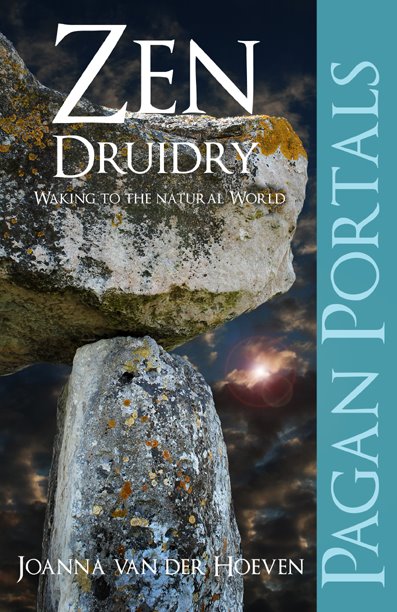
Zen Druidry

My first book with Moon Books in the Pagan Portals series, this little introductory book shows how to blend Zen Buddhism with Druidry to create a life that is awake and aware to the natural world around us, fully immersed  and living life in accordance with the flow.

The Awen Alone Book Trailer

The Awen Alone: Walking the Path of the Solitary Druid is out now in all good bookstores. Kindle version available as well. Part of the Pagan Portals introductory series from Moon Books.

Kindle version of The Awen Alone: Walking the Path of the Solitary Druid is now available!

The Awen Alone Joanna van der Hoeven


The Kindle version of The Awen Alone is now available! Download your own copy for only £1.85.  Through the magic that is Druidry, build deep and abiding relationships with the natural world and walk a path of truth, honour, service and commitment.

The Awen Alone: Walking the Path of the Solitary Druid

Exciting news – you can now pre-order the Kindle version of my third book, The Awen Alone: Walking the Path of the Solitary Druid for only £1.85!

Click HERE for more details

cover low res

We’re back in stock!

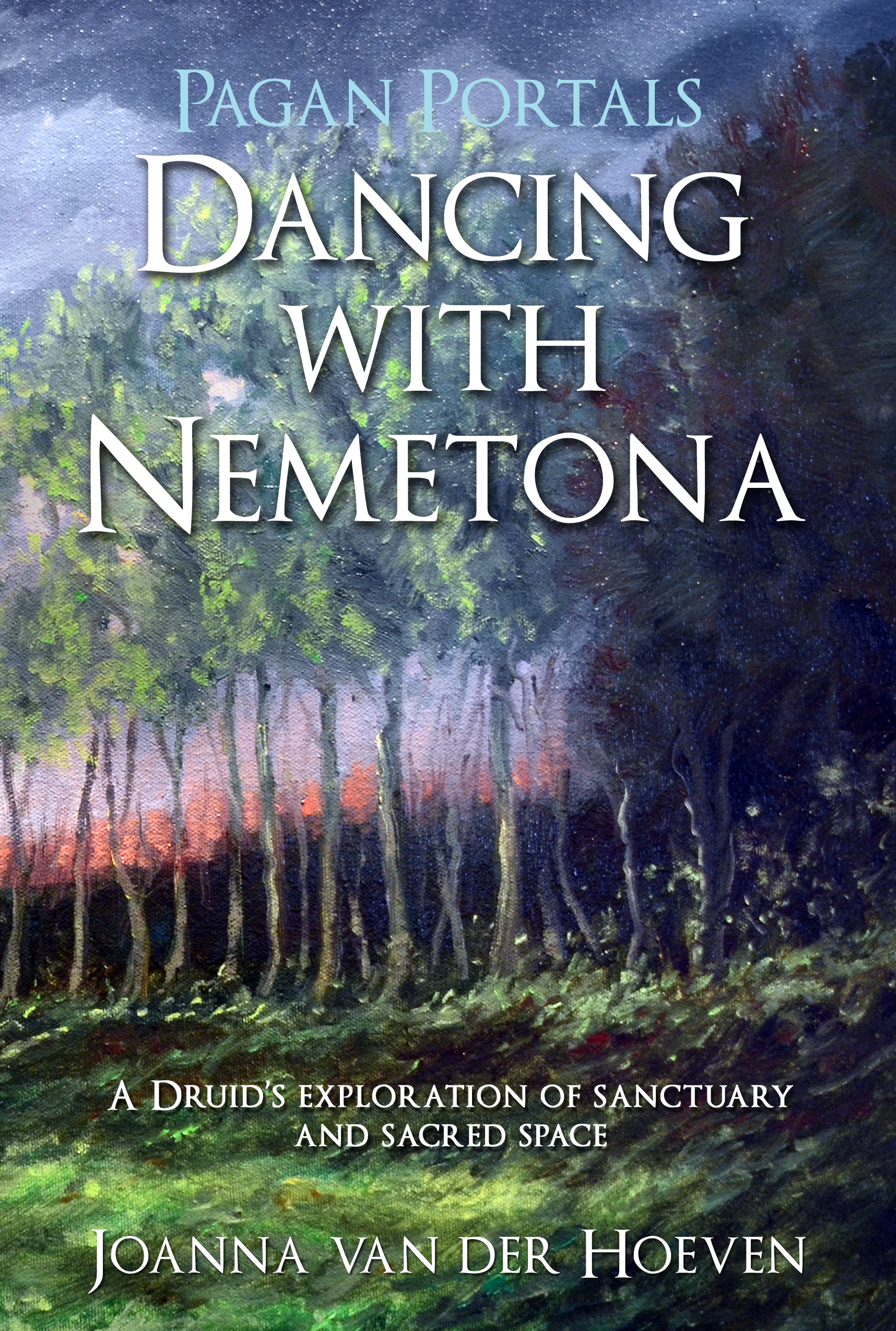
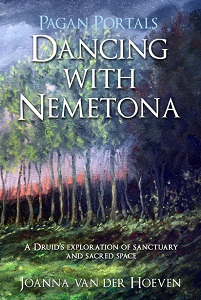
We’re back in stock at Amazon UK with my latest book, Dancing With Nemetona: A Druid’s Exploration of Sanctuary and Sacred Space – but only 13 left already. First batch sold out in two days, get yours quick! More on the way, but it could take up to two weeks.  x

dwn small