What Is Hedge Druidry?

There seems to be some confusion over just what Hedge Druidry is, even in the Druid community. I should hope that my writing will clear up some of this confusion and misperception, and for a full account there is always the work that I am most proud of, which is The Book of Hedge Druidry: A Complete Guide for the Solitary Seeker. However, here in blog post I will address some of the misconceptions, and share my love, knowledge and experience of the tradition.

Let’s begin with one of the latest misconceptions that I have come across. I have read in a recently released book on Druidry that Hedge Druids are those “who believe that each Druid can make it up as they go along, collecting bits of lore and ways of worshipping from disparate sources, Druid or not, both ancient and recently invented.” The tone of this seems to be a bit condescending and condemning, and perhaps comes from an uninformed point of view regarding Hedge Druidry as a specific tradition.

Hedge Druidry is deeply connected to the culture, language and study of ancient and modern Druidry. Without that, it wouldn’t be Druidry. Only by understanding the history and context of Druidry, both ancient and modern, can we create an inspirational tradition today that is rooted in the past, but not chained to it. For Druidry does evolve, in order to be relevant to today’s world. But the above statement isn’t entirely untrue either, though probably not in the light that it was presented.

Do we make it up as we go along? Well I much prefer spontaneous ritual, that’s for certain. My words in ritual are never written down. I have an idea of what I am going to say, along with the ritual actions and intention based upon my decades of research into Druidry and the many, many rituals that I have performed over the years. I might write down my ritual beforehand, especially if I am sharing it with others, with a set ritual format to follow, but the words, the feelings and motions are totally spontaneous, deeply in the moment and connected to the spirits of time and place. My rituals are based on a knowledge and love of Celtic lore and my rituals, offerings, and prayers are all rooted in that soil. I have studied Druid ritual in many, many forms and, as no one single tradition of Druidry has survived since ancient times, we are all just trying to create rituals that are sound and which are inspiring, which connect us to the time, place, ancestors and deities based on what we know from history and what is meaningful today. Druidry has no liturgy, but many of my own rituals and those of other Hedge Druids follow a stylised format entrenched in Celtic lore and deeply connected to the land. It gives us an outline to follow, to which our spontaneous words spoken in the moment to those who are with us, both human and other-than-human, can witness.

Do we collect bits of lore and ways of worshipping from disparate sources, Druid or not, both ancient and recently invented? Of course we do. So do all Druids, whether they are Celtic Reconstructionist or from any other branch on the Druidic tree. We have ancient Classical Greek accounts, Roman accounts, and Irish and Welsh records written by Christian monks. We also pull from modern archaeology and, for some, the Romantic and other Revival periods in history, art and literature. We also look through the lens of comparative religion, in order to better understand and make links to the Druid tradition where there might be gaps in the knowledge, looking at shared proto-Indo European roots such as with Hinduism.

As well, there is the importance of the hedge in Hedge Druidry, which is often forgotten, not mentioned or not even known to some in the Druid community.

So just what is Hedge Druidry then? Well, here’s an excerpt from the beginning of my book, The Book of Hedge Druidry:

The Hedge Druid is a more recent term that applies to someone who walks the Druid path for the most part alone, using their wit and intelligence, the wisdom gained from long hours of research and practical experience in order to create their own tradition that is right for them and their environment. The term “hedge” when applied to Druidry stems from the 19th century term, “hedge priest”, which denoted a priest of the Christian faith who did not follow a particular or established tradition, had no church per se and who preached “from the hedgerow”. The term was first applied to Witchcraft in modern Paganism, and popularised by the author Rae Beth. The term then spread to Druidry, and became synonymous with solitary practitioners, who were not part of any Order or Grove or other established sect. Not all solitary practitioners of Druidry would call themselves Hedge Druids, however it is a term that is growing in popularity. However, in this work I shall show how Hedge Druidry goes beyond the notion of a solitary practitioner, into something that is deeper and more connected to the natural world.

The Hedge Druid is also one who rides the hedge, who travels between the worlds, who works with boundaries and the liminal places where the edges blend and meet. The term “hedge-riding” is a practice found in the Pagan community, mostly in Witchcraft traditions. It stems from the German word hagazissa which means “hedge sitter”. The Saxon term is “haegtessa” and both are where we get our word “hag”. Someone who rides the hedge can straddle the worlds, this world and the Otherworld, to bring back wisdom and information to use in our world, the Middleworld. We will learn more about the importance of the hedge and also hedge riding in later chapters. Suffice it to say that working with the boundaries of the civilised world and that which lies beyond the hedgerow is the world of the Hedge Druid, connecting and weaving together those threads to shape the world and find balance and harmony with the whole. It is the known world and the wilderness beyond that shapes and informs our earth-based tradition.

For me, Druidry is mostly a solitary path, though I do belong to some Druid Orders and networks, and celebrate the seasons with a few friends.  But the everyday Druidry, the currents of intention that flow through me and my home and through the landscape where I live is my main focus.  It is a mostly solitary pursuit. Like learning, I always preferred to do it on my own, rather than working with a group, for I found that my concentration was higher, and I could have a deeper level of experience than I could with the influence of others upon my work. The day to day living of my Druid path is what is most important, punctuated by the celebration of the seasons and festivals with others.

Of course, we are never truly solitary creatures, but in this sense I am using the word “solitary” with regards to other humans.  I am never truly solitary, for I am always surrounded by nature and all its creatures every single second of my life.  I am always a part of an inter-connected web of existence. Living this connection, weaving the threads of my life to that of my environment and all that exists within it, means that there is no separation, no isolation. Yet, when asked to describe my path, I use the word solitary or Hedge Druid in the sense that I prefer to find such connection on my own, without other humans around. Why this should be so is perhaps due to my nature: naturally shy, and sensitive to noise, light, barometric pressure and other phenomena, it is just easier to be “alone” most of the time.

It is similar to the path of the mystic, or a monastic. The path of the mystic is much the same; a solitary path where personal connection to the divine is the central focus.  Some would say that the mystic path is the search for the nature of reality. For me, Druidry is the search for reality within nature, and so the two can walk hand in hand down this forest path. There are many elements of mysticism in my everyday life, where the songs of the land and the power of the gods flow through me, the knowledge from the ancestors deep within my blood and deep within the land upon which I live, rooted in its soil and sharing its stories on the breeze. To hold that connection, day in and day out, to live life fully within the threads of that tapestry is what I aspire to do, each and every moment.  Sometimes a thread is dropped, and it requires a deep mindfulness to restore it, but practice helps when we search for those connecting threads, becoming easier with time and patience both with the world and with your own self.

The monastic retreats from the world to connect with the essence of the divine, however you may describe it.   There is a deliberate intention to be separate from the so-called “mundane” world, or secular culture. However, within Druidry we realise that there is no such thing as mundane, and the duality between the physical and the spiritual is something that is anathema to the tradition. Learning how to be in the world is of great value, even as great value is found in being alone. For some, I’m sure a monastic Druid tradition would be a most agreeable way to live, but for most they prefer to work in the world rather than separate themselves from it, because they understand that separation is merely an illusion.  Most non-gregarious Druids would prefer the path of the mystic, rather than the monastic, for that very reason. The mystic seeks integration, the monastic separation.

Yet both have many other similarities. Both seek to release the vice-like grip we have on our sense of self, the ego that we try to protect at all costs. The dissolution of the ego can be seen as at the heart of many Eastern traditions. Druidry teaches us integration, our ego perhaps not dissolving but blending in with that of our own environment. We don’t think less of ourselves, but rather think of ourselves less. The animism that is a large part of Druidry for many helps us to see the sacredness of all existence, and in doing so we are not seeking annihilation, but integration. We can perhaps dissolve the notions and out-dated perceptions that we have, both about the world and about ourselves, leaving the self to find its own edges and then blending in to the world around us, truly becoming part of an ecosystem where selflessness is not altruistic, but necessary for the survival of the system.

The flowing inspiration (otherwise known as the awen) where soul touches soul and the edges melt away into an integrated way of being has always been at the heart of Druidry.  The three drops of inspiration or wisdom from the goddess Ceridwen’s cauldron contain that connection; they contain the awen that, with enough practice, is accessible to all. We have to spend time brewing our own cauldron of inspiration, filling it with both knowledge and experience before we can taste the delicious awen upon our lips. Some prefer to do this with others; some prefer to do so alone.

It is easier to quiet the noise of humanity, and of our own minds, when we are alone without distraction. Notice I said “easier” and not “easy”, because again it takes practice. But time spent alone, daily connecting and reweaving the threads that we have dropped can help us create a wonderful, rich tapestry that inspires us to continue in our journey through life, whatever may happen along the way. Though the solitary path might not be for everyone, having these moments of solitude can be a great tool for deep learning, working on your own as well as working within a group, Grove or Order. Sometimes we need to remove ourselves from the world in order to better understand it, and then come back into the fold with a new awareness and integration filled with awen, filled with inspiration.

The Hedge Druid is not afraid to be alone, nor with others, but seeks deep and utter integration in the world. Being a Hedge Druid requires determination, in seeking out the ancient and modern lore, and finding what aspects resonate within our soul. Not everything ancient is valid today, and not all modern aspects have integrity. We need to take a step back from declaring authenticity when there is doubt, and instead search for validity in our spiritual path. The Hedge Druid learns to walk her path with integrity, with solid research and experiential wisdom. She does the work, in the physical as well as the academic. Our learning is our own personal responsibility.

I hope that this blog post clears up some of the confusion of just what Hedge Druidry is, compared to other traditions within the Druidic diaspora. It is a deeply transformational way of being in the world, that appeals to those who wish to be connected to the land, the ancestors and the ancient Celtic heritage, while also at the same time work with the allies and guides of the Otherworld, or the three realms of land, sea and sky through hedge riding experiences. A Hedge Druid is deeply connected to the concept of the World Tree, the importance and significance of the bilé, to inform their world and how they work within it. And, as are all Druids, we are questing the awen: that sense of connection, of deeply integrated relationship with the land and with each other.

May we be the awen.

July Musings

The hot summer sun beats down, and the humid air lies heavy all around. To go into the forest during the day would be to invite all the biting insects to a feast, and to sit indoor feels almost like sacrilege on these summer days. But it is so hot. The kind of heat where just moving makes you break out in a sweat. Sitting still seems to be the best thing to do. The cat knows and understands this, and so I take my cue from her wisdom of being.


Even the birds have stilled their song in the midday heat. Earlier, the cardinal sang his heart out to his love, who is always nearby. The crows still caw occasionally, but apart from that, all is still except for the long, drawn out trill of the cicadas cooling off. The mosquitoes are all hiding in the woods from the heat, and the black flies have mostly died off. It’s the heat of an August day, in the middle of July, and we have been in this heat wave for two weeks now. Everyone is tired.


Still, my love for nature calls to me. I seek out the shade, and listen and watch the life that exists all around me. It’s in my nature, and was a big part of my Druid training. Be still. Watch. Listen. Learn.


When we still the voices in our minds, those stories of the humans that are part of our lives, we are then open to receive the stories of the other than human world. Whether we are in a city or on a remote hillside overlooking a vast plain of grasses shimmering in the breeze, there are stories all around us. In the flora and fauna, we learn of the countless ecosystems, micro and macro, and how we fit into them as living beings. And hopefully how to do so with love and respect.


The cycle of the seasons is shifting, from the height of midsummer and the ectastic, dancing energy of the tide of highest light, to the slower, more thoughtful tread of the harvest. The wheat is ripening in the fields, the seeds hanging in the trees and the late summer flowers are blooming. The greening is no longer vibrant, but heavy with the responsibility of continuing the legacy of growth, death and rebirth.


What lessons can I take from this oppressive heat, this heavy time, this long outbreath after the days of midsummer? Lammas or Lughnasadh is fast approaching: the first harvest. But we are still in an in-between state; the calm before the storm. It feels like a time to rest, recoup and prepare for the heavy labour that lies ahead when we collect in our dreams of the winter and spring, and which we have brought out into the world and into the light of summer. It’s that morning cup of coffee before the kids awake, or that few minutes in the bathroom of the office where you just need to be alone and regroup. It’s a stroll along a lakefront, the heavy stormclouds gathering overhead.


And so I rest, here with my family, as best I can in the 30+ degree celsius heat. I have just under two weeks remaining to gather up my strength again and reap the harvest that I had planned and worked for all this year. The books are coming along nicely, and the fiction has been especially rewarding. Finalsing that text in August and September will be a joy, and in readiness possibly for a Samhain release.


The breeze blows softly through the leaves of the oak tree my grandfather planted in the backyard. Now huge, its overhang shades the house from the relentless southerly sunshine, as well as standing as a proud reminder of our heritage and our life here in this part of Canada. Many other trees that I grew up with have long since gone, having lived out their life span or destroyed by storms or harsh winters. But the tall oak tree still stands, its large green leaves and developing acorns towering over this end of the village, and looking out towards the great expanse of the valley that is hidden from us humans by a large cedar hedge. This oak tree is part of both worlds: that of the human family that has lived under its boughs for over 50 years, and also that of the surrounding landscape, with the forest and valley, the hills and clouds, the rain and sunshine, sleet and snow that has blessed this landscape since it was formed.


Settling into my roots, deep like the oak tree, I can find the sustenance I need to carry me through.

A Devotional Practice

Having a devotional practice can be just what you need to keep on track each and every day on your own personal path. In my own Druidry practice, I have a daily devotional set up to honour the goddess Brighid. Though most devotional practices are centred around deity, this is not absolutely necessary, and indeed one can set up a devotional practice around the spirits of place, for example. If working with deity is not your thing, then this might be a good alternative. However, for the most part, devotional work means working with deity.

Every morning I light a candle and say prayers, followed by a short meditation on a different aspect of the season that I currently find myself in. So today, for example, I meditated for a couple of minutes on “the cauldron”, whereas yesterday is was “winter”. Later on in the week it will be community, silence and other concepts that for me relate to the winter season.

The prayers are fairly short, and written by myself. They might be inspired by other prayers, such as those found in the Carmina Gadelica. I begin my opening my soul to Brighid, and then seeking an aspect of the soul, or of personal growth (or both) that is repeated throughout the season (winter being wisdom). Previously last season was about cleansing, preparation for winter’s reflection and working with emotions.

I also include a prayer for others as well, for the wider world in general. This season it is about those who suffer under the duress of winter, and also helping people to find peace within the stillness and silence that can be found in this season, if we know where to look. It is about connecting to what is happening in the natural world, and hoping to shift the threads of the warp and weft of life into something that runs more smoothly, more naturally, with the rhythms of nature in mind and the benefit of all held in the heart.

All in all, my morning devotional takes around five minutes, and the candle is left to burn until it burns out. (It is an ethically sourced soy tealight candle, placed in an enclosed lantern). I try to do another meditation session for a longer time in the afternoon, if my schedule permits. In the evening, I say devotional prayers again, this time as the sun sets. These prayers help me to wind down, to think about the day and where I am going, as well as for a final blessing on hearth and home, friends and family, and the world at large. It allows space to simply be, to sit in silence, to be with Brighid and to come home to myself.

I had a good time creating my own personal devotional, and it is something that really keeps my soul connected to Brighid throughout the day. If you are interested in creating your own devotional, I can highly recommend it. If you feel you need some inspiration to get started, try by Caitlín Matthews’ Celtic Devotional.

If you find that you aren’t as connected as you would like throughout your everyday life, then having your own devotional practice may be just what you need.

Blessings!

New Video for Beltane!

The next installment of the Druid Festival series is now available 🙂 I hope you like it!

New video now up!

Here’s the next installment of my Druid Festival Series of videos on my YouTube channel 🙂

New Video Now Up in the Druid Festival Series!

Here’s my new video about Imbolc, part of the Druid Festival Series on my YouTube channel. Hope you like it! x

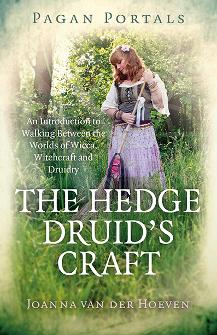
Audiobook of The Hedge Druid’s Craft

It’s finally complete: the entire audiobook of The Hedge Druid’s Craft. Thank you so much to my Bandcamp followers and subscribers for sticking with me throughout this one, as I had a couple months off due to surgery. I hope you enjoy this audiobook. Narrating is hard work, as is editing, maintaining the website, etc. But I’m proud that I’ve been able to do it, and of the finished work.

Now, to write another book!

New Video Series!

I’ve now got a new Druidry video series started up on my YouTube channel. I hope that you like it! We start with Samhain…

The Awen (Part Two)

This is a continuation from my previous post on the awen, which you can read HERE.

So where does the flowing inspiration of modern Druidry come from then? And what is the difference between awen and the energy that is in all life?

In Welsh, we can trace it back to the 19th century, where aw means flowing or fluidity, and wen is spirit, or a being. We can more easily trace the concept and word back to medieval texts retelling the tale of Ceridwen and Taliesin.

The goddess Ceridwen was brewing a special potion for her son, Afagddu, tended by Gwion Bach. Some of the brew bubbled over and three drops scalded Gwion as he stirred the pot, and he put his thumb into his mouth to ease the soreness, taking in the magic of the brew meant for Afagddu. Ceridwen was enraged, and chased him, eventually eating him and then giving birth to him again. After she gives birth to him, she sets him on a boat and he was discovered alive and well later, and renamed Taliesin for his radiant brow. He becomes the most famous Bard of Britain.

The awen can be seen as being achieved through a deep connection to every aspect of the land, in whatever shape or form.  We can undergo a kind of initiation into the awen much as Gwion Bach did, through the goddess Ceridwen and her special brew. We can drink from the cauldron of inspiration, but with that comes great trials and tribulations that go hand in hand with awareness and enlightenment.

The awen is also related to water and rivers, and not just the liquid brewed in Ceridwen’s cauldron. In the medieval poem “Hostile Confederacy” from the Book of Taliesin, it states:

“The Awen I sing,

From the deep I bring it,

A river while it flows,

I know its extent;

I know when it disappears;

I know when it fills;

I know when it overflows;

I know when it shrinks;

I know what base

There is beneath the sea. [1]

The awen relates to water on so many levels. The flowing spirit of water and the flowing spirit of awen share many similarities. Both are fluid, able to be contained and yet have their own freedom in their inherent sense of being. They follow their own currents, and can be beneficial when used with respect. When we follow the currents of life, the inter-connectedness of all things, we share that flow of awen and then come to know the fathomless depths that it can bring.

We also have the shamanic diviners in the Welsh tradition known as Awenyddion.  There is also awen involved in divination and the quest for relationship with the divine.  The awen is a vast subject that requires much study, but more to the point is requires experience. We can research the similarities between awen and the Hindu aspects of shakti, for example, or the Dao in Chinese philosophy. But we must feel the awen with every atom of our being in order the truly understand it.

But what is the difference between awen and the energy of life, or the life force? I would say that awen is the thread that connects us to that life force. When we connect in good relationship to the world around us, those threads shimmer with awen, with inspiration. We know that we are a part of the web, wholly and utterly connected. When we feel that connection with other beings, soul to soul, and our sense of self lessens, we are inspired by that connection. We then think of ourselves less, and our perception opens out to a wider perspective on the world, one that is more inclusive rather than just our own self-centred point of view. We become a thread in the web.

Awen helps us to see beyond ourselves, and perhaps paradoxically to allow us to see ourselves in everything. The poet Amergin described this beautifully what is now known as the “Song of Amergin”.  When we see that we are a part of a whole, then we are inspired. When we lessen the sense of self, we are able to perceive so much more. When we have expanded our worlds to include everything within it, we become the awen.

I am the wind on the sea;

I am the wave of the sea;

I am the bull of seven battles;

I am the eagle on the rock

I am a flash from the sun;

I am the most beautiful of plants;

I am a strong wild boar;

I am a salmon in the water;

I am a lake in the plain;

I am the word of knowledge;

I am the head of the spear in battle;

I am the god that puts fire in the head;

Who spreads light in the gathering on the hills?

Who can tell the ages of the moon?

Who can tell the place where the sun rests?”[2]

Many Druid rituals begin or end with singing or chanting the awen. When doing so, the word is stretched to three syllables, sounding like ah-oo-wen.  It is a lovely sound, which opens up the heart and soul. Sung/chanted together, or in rounds, it simply flows, as its namesake determines.  Our hearts can open if we let them when chanting or singing the awen.

Yet I am sure that the awen is different for each and every Druid.  The connection, and the resulting expression of that connection, the Druid’s own creativity, can be so vast and diverse.  It is what is so delicious about it; we inhale the awen and exhale our own creativity in song, in dance, in books, in protest marches. The possibilities are endless, as is the awen itself.

We are never born, and we can never die: we are simply manifest for a while in one form, and then we manifest again in another when the conditions are right. For me, this represents reincarnation, the nitty gritty basics of it and the science behind reincarnation. The threads that bind this together are the awen.

[1] Mary Jones, “The Hostile Confederacy” from the Book of Taliesin, The Celtic Literature Collective, accessed January 12, 2018. http://www.maryjones.us/ctexts/t07.html

[2] Lady Gregory, The Essential Lady Gregory Collection, Google Books, accessed January 13, 2018.  https://books.google.co.uk/books?id=fx0tOGYDZXQC&dq

(This blog post is an extract from my book, The Book of Hedge Druidry:  A Complete Guide for the Solitary Seeker.)

The Awen (Part One)

The Awen

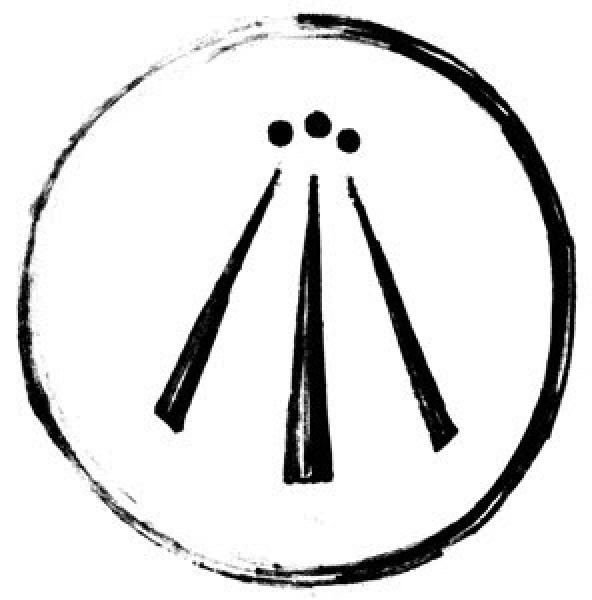
awenThe awen symbol is based on an original design by the 18th-19th century Druid revivalist, Iolo Morganwg. It consists of three lines falling to the right, centre and left. Modern Druidry incorporates the original source point of three dots, which can either be seen as points of light or drops from the cauldron of the goddess Ceridwen. The awen symbol represents, among other things, the triple nature of the Druid path, incorporating the paths of Bard, Ovate and Druid. It is not an ancient symbol, but a modern Druid symbol, used widely by Druids the world over, regardless of their opinion on Iolo and his work.

The first recorded reference to Awen occurs in Nennius’ Historia Brittonum, a Latin text of circa 796 CE.  “Talhearn Tad Awen won renown in poetry” is where we first see the word, and it tells us that Talhearn is the ‘father of Awen” in this instance. Sadly, this source tells us nothing more about Talhearn as being the “father of awen”, but perhaps later research may discover more clues about this reference.

A common translation of the Welsh word awen is “flowing inspiration” or “flowing poetry/poetic insight”. Awake to our own energy, and stretching out towards the energy of nature around us, we begin to see just what is the awen.  It is an opening of one’s self, of one’s spirit or soul, in order to truly and very deeply see and connect to all life around us.  When we are open, we can receive that divine gift, the inspiration that flows, whether it is from deity, nature, or whatever it is that you choose to focus on.

For awen to exist, there must be relationship.  We cannot be inspired unless we are open, and we cannot be open unless we have established a relationship, whether that is with the thunder, the blackbird or a god.  It is cyclical in nature; we open and give of ourselves and in doing so we receive, and vice versa.  Letting go, releasing into that flow of awen allows it to flow ever more freely, and we find ourselves inspired not only in fits and bursts of enlightenment or inspiration, but all the time, carrying that essence of connection and wonder with us at all times.  There is, of course, a line to be drawn, for we can’t be off our heads in ecstatic relationship with everything all the time. As with all language, a literal translation can be far too limiting.  It’s good to have a context and some sort of description to relate the concept, but when confined to literalism we get stuck and are unable to see the bigger picture. Awen does mean flowing inspiration, but what is inspiration?

A really good idea, a bolt from the blue is one interpretation. However, there are many others.  Inspiration is not just something that happens to us. It is something that we can cultivate, in true relationship. We are not subject to the whims of inspiration, but rather can access that inspiration on a daily basis through deep relationship. Indeed, awen is all about relationship, more than it being “a really good idea”. When we literally translate awen into inspiration, we can lose that context of relationship. With good relationship, we will have good ideas.

When soul touches soul, there is an energy; a source of inspiration.  When we are aware of our soul interacting with other souls, we can harness that inspiration and see it in everything that we do. It doesn’t just happen every now and then, like a bolt out of the blue, but rather is in everything that we do. It requires a willingness for deep relationship, and a desire to be mindful in all our relationships.

This may sound a lot like Eastern philosophy; being very mindful. Mindfulness has become a large part of many Eastern philosophies, but I am sure that it has been around as long as human self-awareness has been around. Indeed, it may have been a large part of ancient Druidry, now lost to the mists of time. Taking inspiration from Eastern traditions with regards to our way of thinking is not much different to reading the works of Nietzsche or Plato. There is no monopoly on wisdom.

Mindfulness relates to awen in that when we are aware of our relationship to the world, when we see how we fit in the world then we can work in harmony with the world. We become an integral and integrated part of an ecosystem, where we know that everything that we do matters to the system in its entirety. The discipline gained from such mindfulness as practiced in the Eastern traditions and philosophies can be a great teacher in expanding our minds and helping us to learn more about ourselves. That also goes for other religions and philosophies as well. I’m sure the ancient Druids, just as much as Modern Druids today, loved reading about world religions and discussing philosophy.

There is a lot of talk about cultural misappropriation, however, in modern Paganism and it’s something that needs to be carefully considered. We do have to be aware of when we are taking something from another culture without its proper context and permission. Nevertheless, with religions or traditions such as Buddhism, for example, the Buddha said that enlightenment was for anyone to achieve, available to all, regardless of where they came from, whatever their background.  It’s why we see so many different forms of Buddha being represented in sculpture. We have fat Buddhas from China, giant slim standing Buddhas in India, reclining Buddhas in Burma, sitting Buddhas carved straight out of the rock temples in Sri Lanka, elegant bronze-plated Buddhas in Japan and so on. In each country the Buddha looks different, as Buddha is within each and every person as well as having been a person in his own right. There is even a female Buddha known as Tara in Vajrayana Buddhism.

You will find that Druidry has much in common with many other Earth-based religions the world over, as well as many philosophies, both ancient and modern. We can be inspired by these and let them help us to change our perception, our way of seeing the world, from a self-centred point of view to a more holistic worldview, from a less human-centred perspective to one that is more integrated. In that, we are living the awen.

Awen is that spark set off by interaction, by integration.  We do not exist in a bubble. We are surrounded by the world at all times, by the seen and the unseen.  When we live integrated, we see the meaning that each relationship has, and that inspires us to live our lives accordingly. That inspiration is the heart and soul of Druidry.

Inspiration: to inspire, from the Latin inspirare, the act of breathing.

Indeed, it has many connotations to the breath and breathing. Awen can connect us to the world through the very act of breathing. All living things breathe in some form on this planet. The human species shares this breath, breathing in the oxygen created on this planet and exhaling it into the twilight. The air that we breathe has been recycled by plants and creatures for billions of years. The breath is the gateway to the ancestors, and to a deep understanding of the nature of awen.  Awen is also shared inspiration, for we share this planet with everything else on it. Everything that we do has an impact, every breath we take, every action that we make. Breath links us to everything else.

When we remember that deep connection to everything else, we cannot help but be inspired. And we hope to inspire in return, much as our own exhalation is valuable to trees and plants who take in the carbon dioxide, turning it to oxygen for our own breath. Inspiration and expiration, inhalation and exhalation are all words for the act of breathing. Remembering the shared breath of the world, we come home to ourselves and rediscover the wonder and awe of existence. Then, we are truly inspired.

More about the awen in Part Two, coming up…

(This blog post is an extract from my book, The Book of Hedge Druidry:  A Complete Guide for the Solitary Seeker.)