
This article is in response to an article in my local village newsletter, declaring the so-called “evils” of Hallowe’en. Hallowe’en is not evil and is, in fact, a very ancient British tradition that spread to North America.
Hallowe’en stems from an ancient British tradition of the Celtic peoples. It was, and still is known as the festival of Calan Gaeaf (Welsh) or Samhain (Irish) which begins at sunset on the 31st October and runs to sunset on the1st November accordingly. The Celtic year was divided into two halves, the light half and the dark half. The light half began at the beginning of May, which marked the start of summer. The dark half began at Samhain (Irish) or Calan Gaeaf (Welsh) which marked the start of winter. The word Samhain is thought to be derived from “summer’s end”, being a linguistic inversion of sam-fuin. Samhain is a time that lies between times, and is a time that is not a time. It is the end of summer, and marks the time just before we enter the dark half of the year, often referred to as the Celtic New Year. It is a liminal time, and begins at dusk on 31st October on the calendrical year. (All Celtic holidays begin at dusk, the day before the calendrical date.) Some Druids follow a more agricultural or seasonal calendar, and celebrate Samhain when the first frosts appear.
Samhain is known popularly today as Hallowe’en. This stems from the Christian Hallowmass. What is interesting to note is that the Feast of All Saints, which follows the day after Hallowmass used to take place in May. It was moved in 834 to the 1st November, presumably to compete with the more Pagan traditions in an attempt to move the common folk away from such beliefs and practices.
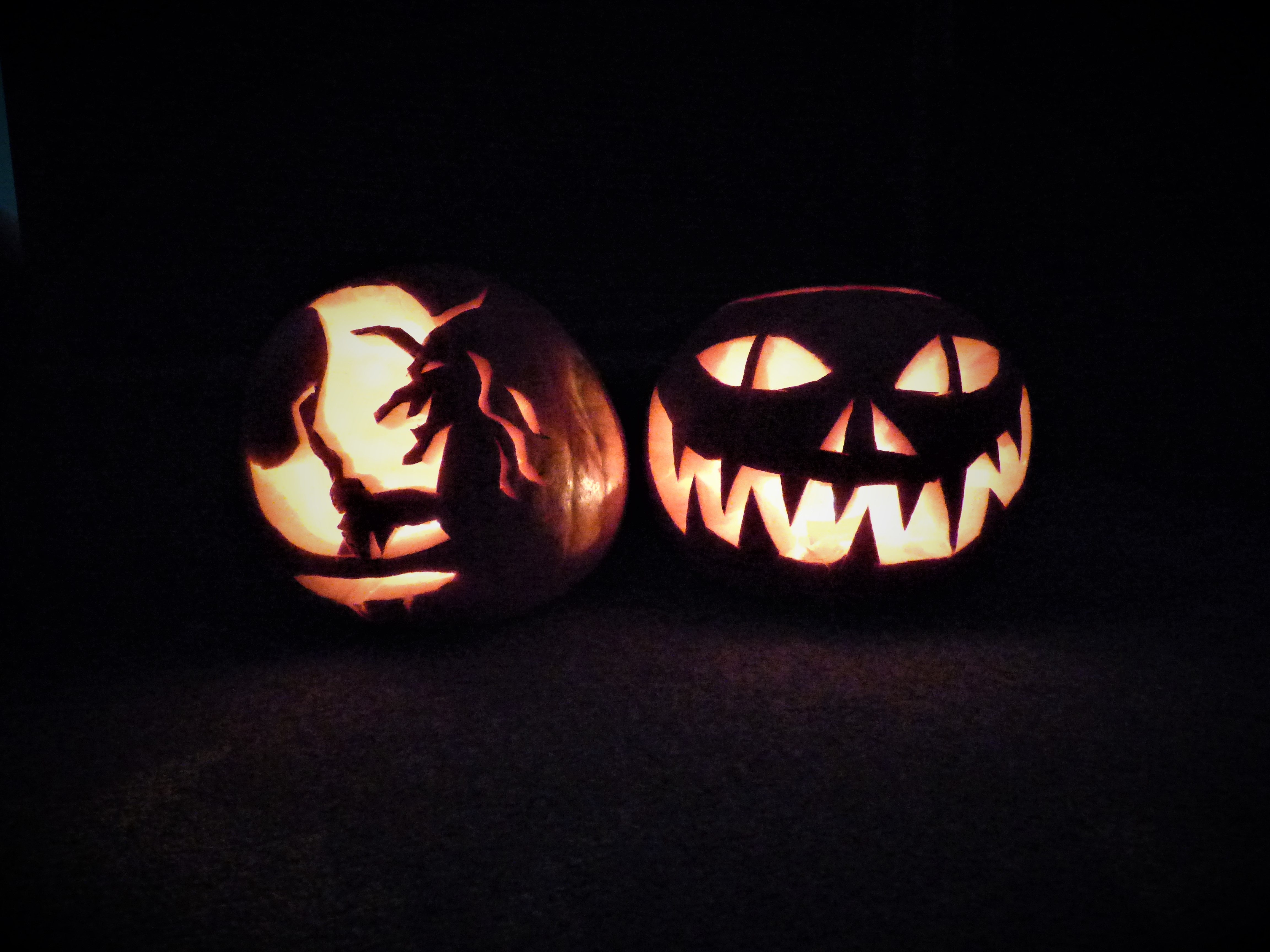
Samhain is a time to remember the dead, and to welcome them. The dead are never far from us, and the Celtic worldview comprised a sort of ancestor veneration found the world over in Pagan traditions. Deceased relatives could come and visit the home, and so door were often left unlocked so that they could enter. Some use the tradition of a “Dumb Supper”, where food and places are laid out alongside the family’s fare for the dead, and the meal is eaten in silence. These plates were then taken outside as offerings to the spirits and the Fair Folk. Hollowing out turnips or sugar beets, and later pumpkins (which were/are much easier to carve) and placing a candle inside could provide a lantern by which the dead could find their way. Candles may have been left in windows as well, to help guide the way. Apples as well have a place at this festival, for one of the traditions was for a maiden to peel an apple and throw the peel over her shoulder: the letter that it formed was the initial of the name of the man she would marry. The custom of bobbing for apples is also thought to derive from Samhain traditions, with the lucky (and wet!) winners receiving fortune for the rest of the year. Brushing your hair and eating an apple while looking in a mirror at Samhain was said to reveal in the reflection the face of your true love. Modern-day trick or treating is said to come from the ancient buachaillí tui, disguised people who characterised the dead and lead a white mare (hobby horse) called Láir Bhán. This horse was symbolic of the goddess of the land.
At Samhain, when we arrive at summer’s end, is a liminal time. The veils between this world and the Otherworld are thin, and so we see the custom of dressing up or guising to protect the living from the “unhappy dead”. It could also be seen as an acknowledgement of the dead returning, and as a sort of celebration of the fact.
Samhain was celebrated by the Druids in Ireland high on the hilltops with fire, from an ancient ritual on Tlachtga or the Hill or Ward in Meath. Tlachtga was sacred to the Druids, whereas Tara was the place of the High King. Tlachta could be viewed from Tara, and a fire on Tara may have been lit in response, allowing the Druid’s to light their fire first, in their role as advisors. The Feast of Tara took place three days before and three days after Samhain. There is an alignment of the sun and moonrise from at Samhain from Tlachtga to a standing stone in Slieve na Caileach and also Lambay Island. Tara has an alignment from the Samhain sunrise to “Lugh’s Seat” at the “Pillars of Samhain” and a cairn dedicated to the goddess, Mór-Ríoghan above the Keash caves in County Sligo. In Irish tradition many ancient hills and fairyforts were connected by paths which the Sidhe were said to travel. At Samhain, the Celts would be taking their cattle down from the high grounds to their winter lodgings, and so would the Fairy Folk. It was wise to avoid the fairy paths or alignments on this day/night for this very reason.
At Glastonbury in Somerset, England, the Wild Hunt is said to ride out of the hill of Glastonbury Tor, with Gwyn ap Nudd, the Lord of Annwn at its head. He collects the souls of those who have died over the past year, and acts in the role of psychopomp, leading the souls to their rightful place in the Otherworld or afterlife. Fire rituals may well have been a part of ancient ceremony on the Tor, being a hill that could be seen for many miles in the surrounding flat countryside. Recently, a Samhain fire festival honouring The Wild Hunt now takes place at Glastonbury Tor every year, and is hugely popular, with modern-day Druids officiating the ceremonies.
In County Derry in Ireland, they celebrate the Spirit of Samhain, or Spiorad na Samhna. It is a hugely popular event, with over 30,000 people coming to participate and enjoy the festivities today, with a parade and fireworks, acrobats, fire-breathers, stories, song and more. This is echoed in Edinburgh, Scotland, where the Beltane Fire Society also holds a Samhuinn event every year. This began in 1995 and has grown ever since, with street performance and theatre in the heart of the city. A large, dramatic ritual ceremony is created and re-enacted each year by different groups which include dancers, drummers, actors and more.
So as you can see, Hallowe’en is not evil. It is an ancient tradition which people across Britain are still practicing today. It is a celebration and veneration of our ancestors, much as others festivals across the world do at this time of year, such as Dios de los Meurtos, or the Day of the Dead in Mexico. Simply because something is not Christian, doesn’t make it evil.
Resources:
Baker, Des “Spiora na Samhna”, Underground Short Film Festival, 2015
Butler, Dr Jenny ” The Festival of Samhain & Halloween in Ireland “, Crypt Interview
Eastwood, Luke “Tlachtga and the Ancient Roots of Hallowe’en/Samhain”, Order of Bards, Ovates and Druids
Hutton, R. (2011) Blood and Mistletoe: The History of the Druids in Britain: Yale University Press
Restall Orr, (2016) E. This Ancient Heart 2016 Moon Books
Restall Orr, E. (2004) Living Druidry: Magical Spirituality for the Wild Soul: London: Piatkus Books Ltd
Talboys, G. (2002) Way of the Druid: Rebirth of an Ancient Religion: O Books
Telyndru, J. (2005) Avalon Within: A Sacred Journey of Myth, Mystery and Inner Wisdom
van der Hoeven, J. (2014) The Awen Alone: Walking the Path of the Solitary Druid: Moon Books
van der Hoeven, J. (2021) The Book of Hedge Druidry: A Complete Guide for the Solitary Seeker: Llewellyn Worldwide
 Magic lies thick in the air all around at this time of year. The scent of woodsmoke and fallen leaves tingles our noses, and we just know that a shift is happening. A big shift. Not the gentle flowing of early summer to midsummer and then to Lammas; no, this is something quite different. While the sun may still be warm, the nights have turned colder and longer, and it’s very noticeable. Each evening, the sun sets further south along the horizon, seeming to run towards that direction with abandon, leaving the lazy, hazy summer nights and bunking down quickly to escape the frosts. The moon now takes over, shining brightly for many more hours in the night sky. The focus has changed, and a new time is upon us.
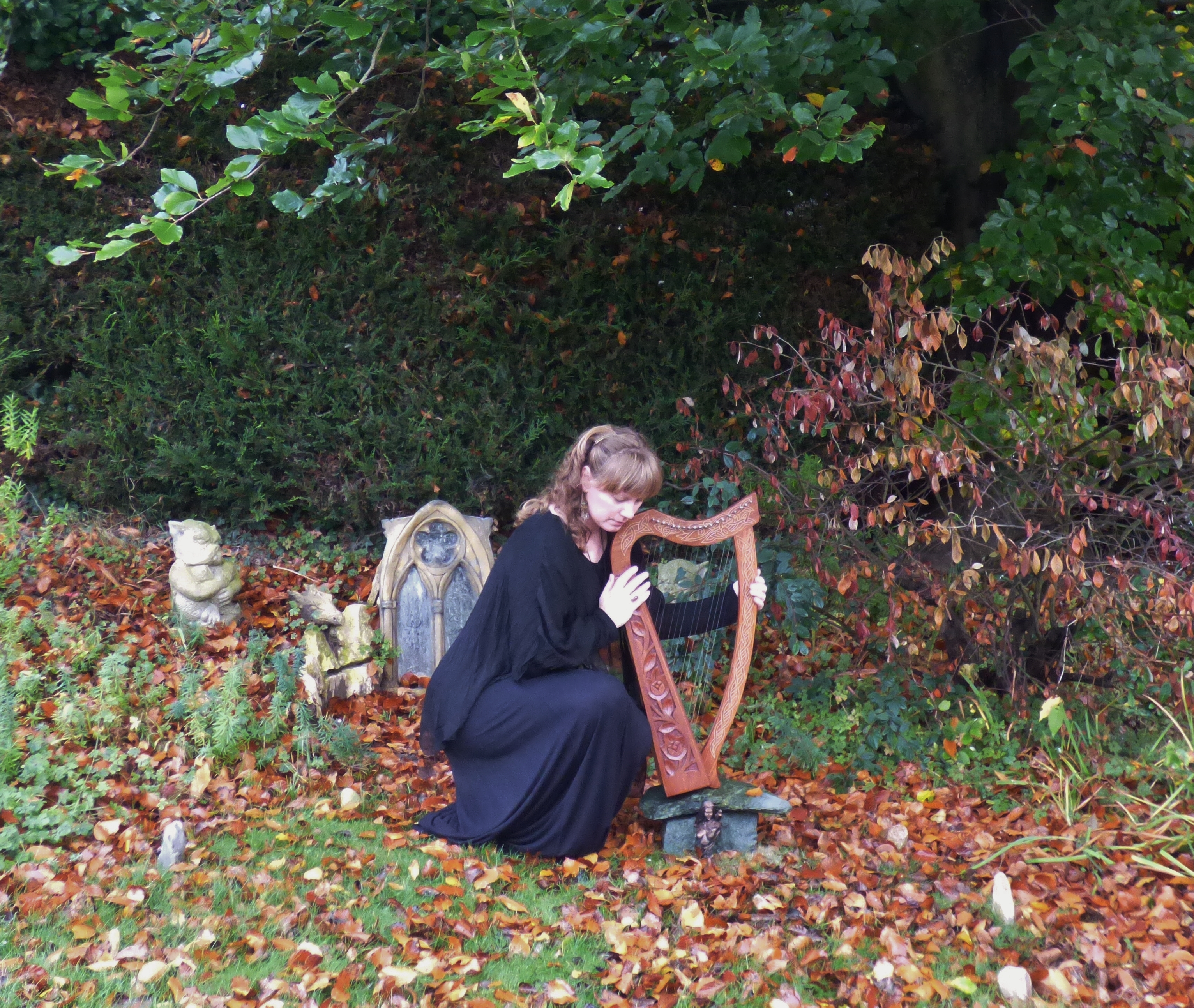 Why do I love this time of year? For many, it’s difficult, saying goodbye to the summer months and embracing winter. But this embracing is, indeed, what I adore. Just as I love seeing the first leaves peeping out among the spring blossom, heralding Beltane and the summer months, so too do I take great joy in the winding down of things, of welcoming the coming winter and all the wisdom that it has to bring. Sure, like many, after a few months it becomes more difficult, dealing with the long dark nights and sometimes dreary days. But it is in winter that we know what we are made of, and provides the perfect time to delve within, to find that authentic self and nurture it to bring it forth into the daylight once again.
 Then there are the childhood memories, of Hallowe’en back in Canada, of that special night of all nights. It was the highlight of the year for me, even overshadowing Christmas. For on this night, every child could be what they wanted to be, and had the shadowy streets under the moonlight all to themselves, satisfying their sweet tooths and daring each other to go up to that scary old house. It was a time of magic, of fantasy, where anything was possible. And it still is.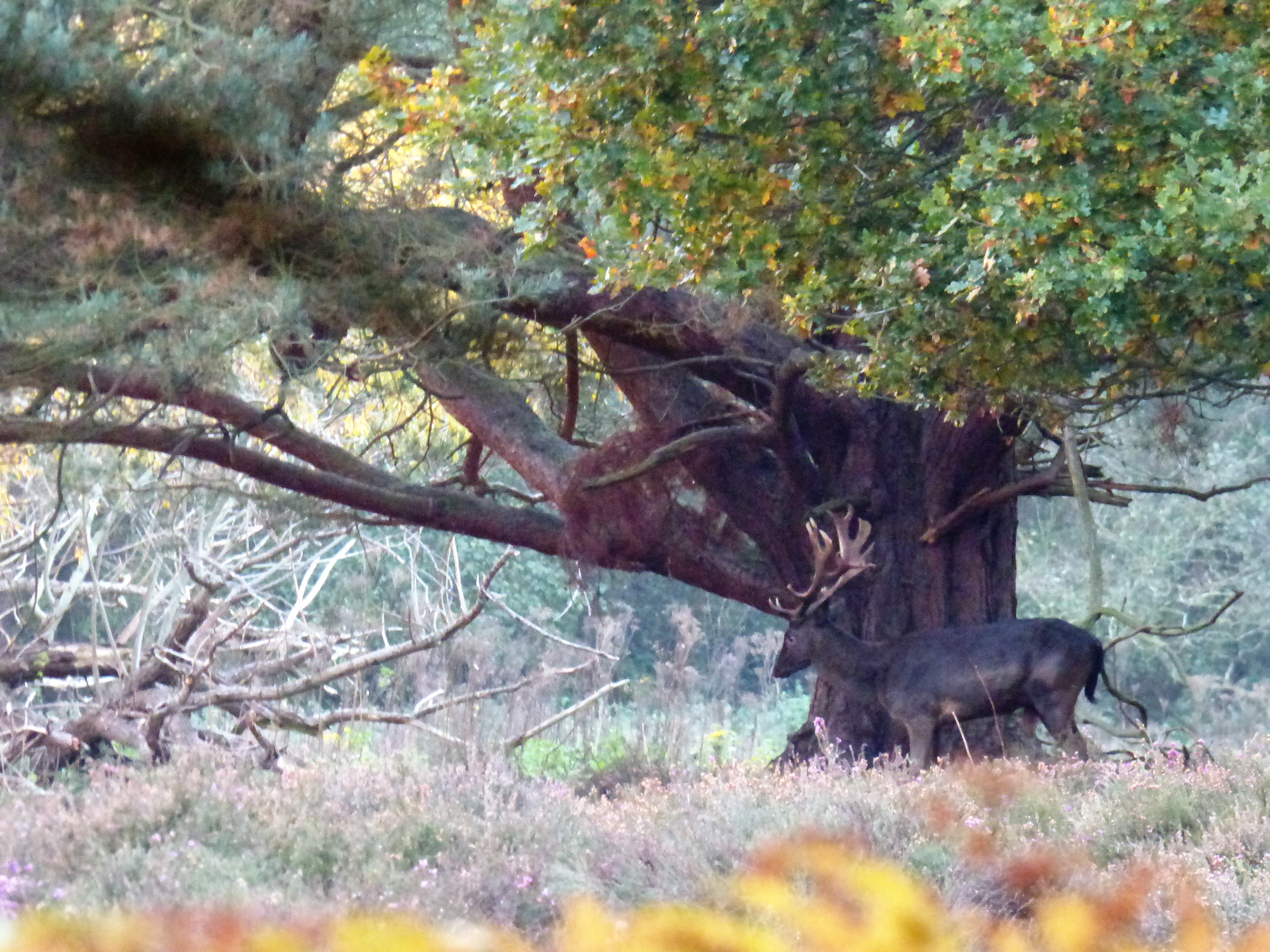
 Shine, in the coming darkness. Let the spark of awen light the flame within your soul. Guard that flame, the truth against the world. Let it be your guide, let it be your light, to shine out into the world.
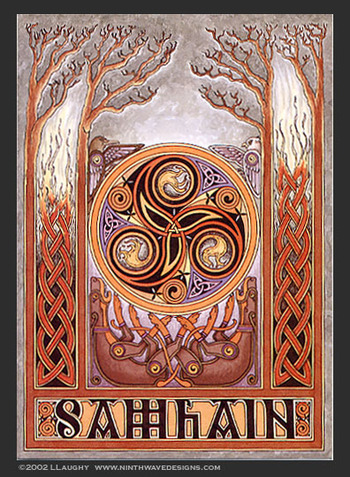 Calan Gaeaf (Welsh) or Samhain (Irish) begins at sunset of 31st October and runs to to sunset 1st November according to most Western Pagan traditions. If working by the moon, it is the first full moon when the sun is in Scorpio. If working by the natural landscape, it is when the first frosts bite. Samhain was termed the Celtic New Year, as it marked the ending of one cycle and the beginning of another. The Celts reckoned their days from sunset to sunset, and so the start of the year would begin in the dark time at the beginning of winter. Samhain marked the first day of Winter.
 Down the Forest Path