
I thought I’d share with you some of my favourite eco-friendly products that I use on a regular basis. I have been buying these kinds of products for years now, and through lots of trial and error, have found which ones really do work, and which ones don’t (at least for me). So, here are my shining stars in the sustainable living category for your bathroom cabinet! Note: I have not been paid to endorse these products by any means, this is a genuine post in which I just want to share some little gems!)

First off, I have got to mention Balmond’s Rosehip Scar Oil. I got this when I was ready to start treating my scar after the hysterectomy last summer. I was advised by the nurse who took out my clips after the surgery to use a specific oil on the scar to treat it, but when I looked up the ingredients it was a petroleum-based product, which is not something I wanted to put on my skin. So, I searched around and found Balmond’s scar oil, and wow – did it deliver! This oil contains rosehips, lavender and palmarosa, which gives it a lovely scent. It is all natural, gentle and works not only to treat scars, but as a facial moisturiser, for stretchmarks, uneven skin tone or fragile skin. It is rich in vitamin A, C, E and essential fatty acids. The main oils are grapeseed oil, rosehip oil, sunflower oil, calendula oil, chamomile oil, and lavender and palmarosa oil. Some, but not all of the ingredients, are organic.
I used this oil on my scar (and still do) and it has faded much quicker than if I hadn’t treated it. My brother-in-law had abdominal surgery last year as well, and we have compared scars. This oil has really helped in healing the skin, as well as keeping the rest of my tummy lovely and soft. I thought, this works so well on the skin for my belly, let’s try using it on my face. I have always avoided oils on my face, because it tends to clog my pores. Not this one. A few drops is enough to do your whole face at night (don’t use during the day, as the oils can increase your skin’s sensitivity to the sun) and when you wake up in the morning, your skin will look refreshed and lovely (at least, mine did). I can’t recommend this oil enough. I use it on my hands at night as well. It seems expensive, at around £18 a bottle, but the bottle lasts 4 – 6 months, depending on how much skin you want to treat with it. I thought it was extremely good value for money, and I’ll continue to use this oil long after my scar has been fully healed. It comes in a glass bottle, with a glass dropper. Sadly the top of the dropper is plastic, but I’m willing to make that concession.
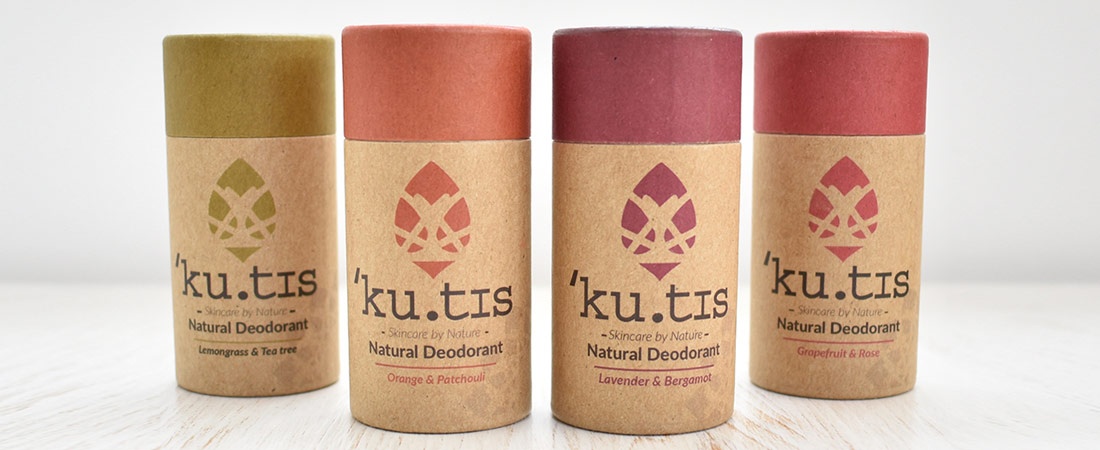
The next stellar product is Kutis natural deodorant. I have spent YEARS searching for a natural deodorant that actually works, and the best that I found for a long time was the solid deodorant from Lush. This still left me a bit swiffy on the hottest summer days, or after a workout, and so I still shopped around. I found Kutis two years ago, and I’ve never looked back. This deodorant really lasts, through two of the hottest summers I have ever known, through kickboxing workouts and belly dance performances – you name it, this product delivers. It has several lovely scent combinations, and my favourites are the citrus ones and the lavender and geranium. The main ingredient is arrowroot powder, coconut oil and sodium bicarbonate. This product contains lot of ingredients that are organic as well, but not all. It comes in a cardboard tube, which is fully home compostable.
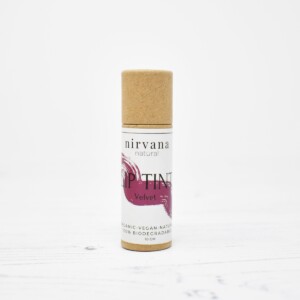
I love my lip balms, especially tinted lip balms. I found Nirvana last year. The lip tint, not the spiritual state. This is an organic, vegan lip tint in a home compostable cardboard tube. I’m not sure about the label being compostable however; I may have to write to them to ask. This lip tint comes in several different colours, but I used the Velvet one all last year. I also used it as a cheek tint too, and it was pretty good, though sometimes it can get a bit oily on very hot days.
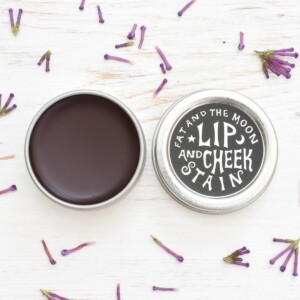
Another lip and cheek tint I found recently is Fat and the Moon. They call their product a lip and cheek stain, but it doesn’t stain at all – it is, in fact, a tint. I would have preferred a stain, for its lasting power, but this doesn’t have it, sadly. It is, however, a lovely tint, but you will have to keep re-applying it, not only to your lips but I also needed a refresher for the cheeks halfway through the day. It gives a lovely natural colour and contains all organic ingredients, though it is not vegan as its base is beeswax. I used to use Burt’s Bees All Aglow for a lip and cheek tint, but the plastic packaging put me off. As soon as Burt gets their act together on the packaging, I’ll be looking into them again.

Finally, let’s talk hair. I have spent YEARS looking for a natural, solid shampoo and conditioner that was SLS free. Everything that I tried (apart from Lush) left my hair a sticky awful mess. Lush works, but contains SLS. Then, at the beginning of this year, I found Ethique, who now distribute from the UK (they are an Australian company). I bought their hair sampler package and their facial sampler. Everything in them was lovely, but I highly recommend their St Clements shampoo for oily hair (mine’s not that oily, but it gives it a good clean) followed by Wonderbar conditioner (again for oily hair, but it works great on my “normal” hair. The full size bars last a long time, and the conditioner bar is a lot smaller than the shampoo bar. Don’t let that fool you. I’m almost finished the shampoo bar, but still have half of the conditioner left! The conditioner works best if you work it through the hair from root to tip, and then brush it all the way through. You also use less conditioner by doing so. The products from Ethique are not cheap – in fact, they’re a bit eye-watering in price, but they are the only ones that I have used that actually work, are eco-friendly, compostable packaging and really good quality.
Do you have a favourite beauty/bathroom product? Let us know in the comments, please!

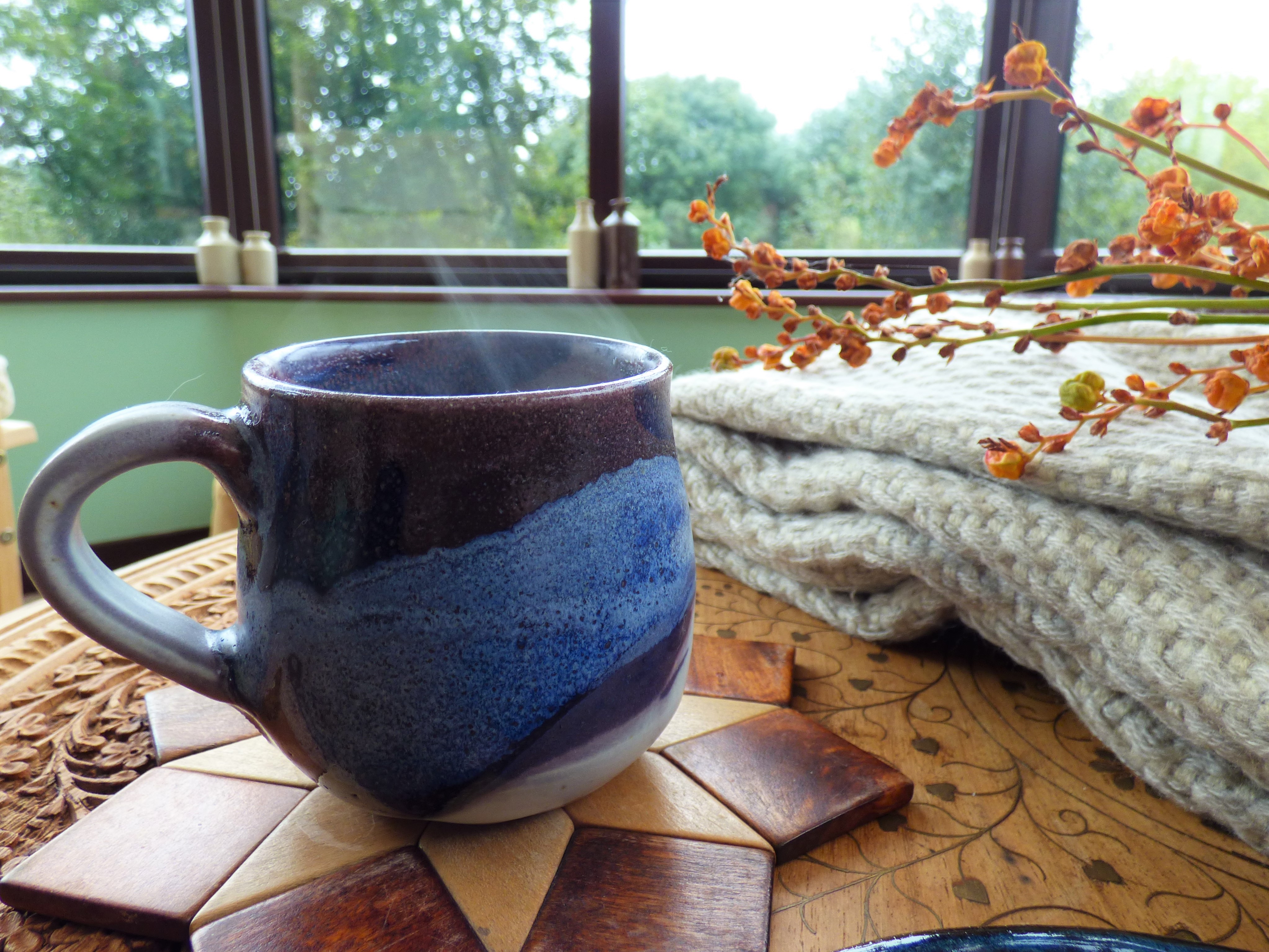 While you can hygge by yourself, and this is my favourite hygge, there is a lot to be said for social hygge. Indeed, for many who do not have solitary, feline souls, the social aspect of hygge is hygge. Getting together with friends around the dining table, having coffee and cake, talking and reminiscing is what it’s all about. But in these strange times, getting together with friends is a real challenge, and for some, not an option.
 I thought I was doing okay without the social interaction. I have my husband and my cats, and Skype my family once a week, and talk to my mother on the phone as well. We’ve re-started our Saturday roleplaying sessions online (Cthulhu on the Roll 20 platform) and I call my friends weekly just to have a chat. While I was recovering from surgery, a couple of friends came by to drop off care packages and we had a small chat (me at the door, they in the driveway). I thought it wasn’t too bad, as I’m such a solitary creature anyway. But something last week made me realise just how much social interaction is an important part of my life and hygge.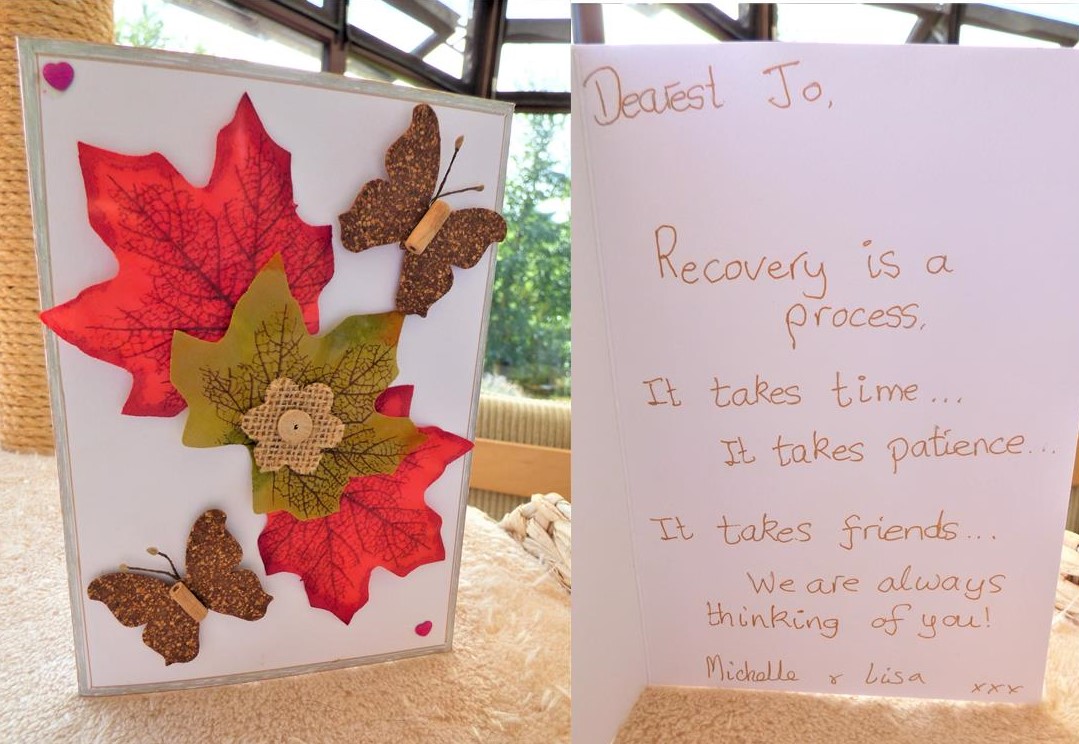
 Who knows how much longer it will be before we are able to have that easy interaction again? I haven’t seen my family in Canada for over a year, and I don’t know when I’ll be able to return. That really hurts deep down. My parents’ 50th wedding anniversary had to be cancelled, and who knows if I’ll be able to make it in 2021 when they’ve rescheduled. It’s not until a vaccine has been tried and tested that I can travel safely and visit my friends and family, and that is a hard thing to bear when you haven’t had a hug from your mom for a long, long time.
 So I’m practicing careful hygge right now, socially-distanced hygge in the garden with a select few folk. Small steps while we navigate our way through this pandemic, and keep everyone safe. And while there is still anxiety about any social interaction, I can counter-balance that with some solitary hygge: time spent in silence and stillness, watching the sunset, or having a cup of tea and listening to some piano music. Cooking a birthday cake to celebrate 46 turns around the sun, and eating it with great pleasure with my husband and a glass of champagne. Holding hope in my heart that I will be able to see my family soon, and know that their love and the hygge that awaits at my mother’s kitchen table can exist in my mind and in my heart until I can experience the real thing.
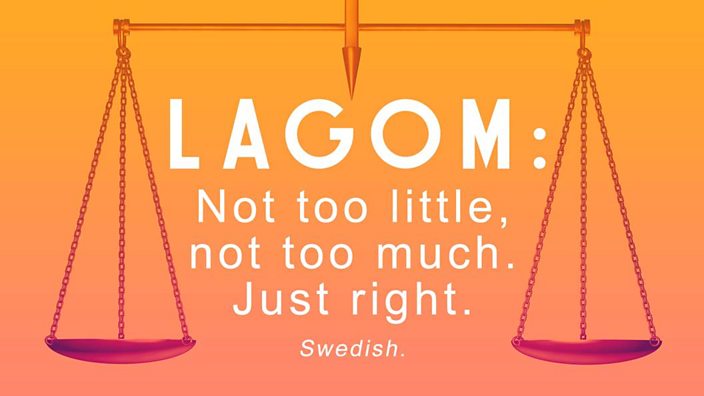 So, furthering my adventures with the Swedish concept of lagom (not too much, not too little, just the right amount) I’m seeing the complete opposite happening all around me here in Suffolk and, I’m sure, many others in the UK and other parts of the world are as well. Whether or not one is accustomed to the concept, everyone knows about basic human decency, but many are still choosing to opt out.
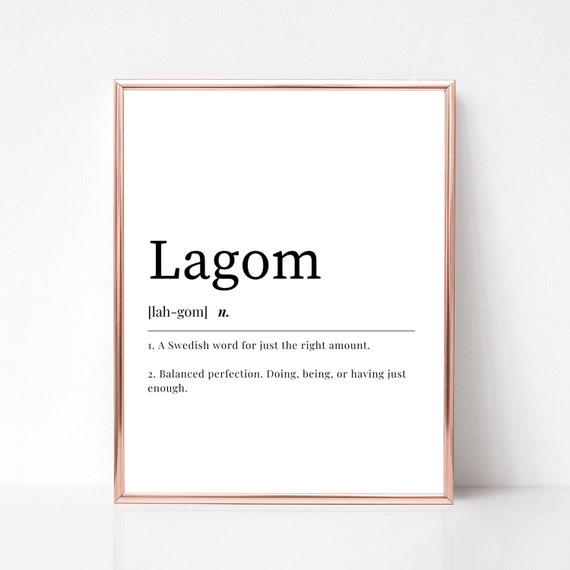 The most noticeable area where the lagom balance is out of whack is, of course, the supermarkets during this pandemic. It took us two weeks to be able to find toilet paper, and I think we just got lucky last week. Before the pandemic began, my husband began noticing people in the supermarket stocking up on the stuff – several giant packs of it in their shopping trolleys. He joked that maybe they know something we don’t. He was right. They knew how to be selfish, how to take more than their share. This is the antithesis to lagom.
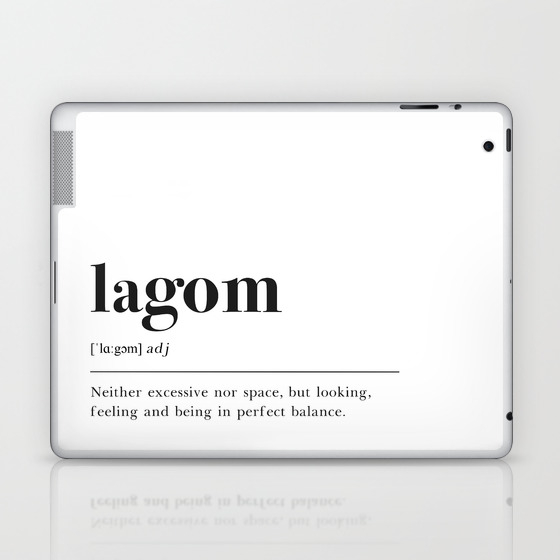 Lagom is all about balance. It’s not altruistic – you don’t have to give up stuff and suffer because of it. You take your fair share, and you leave a fair share for others. Simple. No one is left out. It’s about community. The word stems from the Viking phrase lagom et, which means taking a sip from the communal drinking horn, but ensuring that there is enough to go around the group. How quickly this concept of sharing, of personal responsibility, compassionate caring and just general decency has been forgotten in the face of this global pandemic.
 It’s not just in the supermarkets that we’re seeing people go overboard. Here on the Suffolk coast, many of the richer folks have decided to leave their London homes and head out to their second homes on the coast. Are they practicing social distancing? Are they heck. Cafes, supermarkets, boardwalks and shops are heaving in coastal towns and villages during what would normally be a very quiet time. This poses a real threat, especially to the elderly, who live in these areas, and who a) need the food from their local stores, and b) shouldn’t be exposed to people needlessly. Again, it’s pure selfishness.
 I had thought that my lagom blog posts would be fun, an experiment in the little things of life, like my wardrobe, my home, my relationships. But it turns out that the real test has hit us all very hard on the head, and we’re failing badly. It’s clearly pointing out to me how much we need lagom in our society. It’s the defense against capitalistic over-consumption. It’s the defense against the deterioration of community. It’s the defense against the death of everything we know and love. Seriously.
 Shine, in the coming darkness. Let the spark of awen light the flame within your soul. Guard that flame, the truth against the world. Let it be your guide, let it be your light, to shine out into the world.
 Down the Forest Path