Feel the magic…

The Spooky Season and the Weirdos (and the Exhaustion of it All)

It’s at this time of the year when we Witches, Druids, Heathens and Pagans come to attention of many, especially in the media circles. Some are genuinely interested in our way of life, our beliefs and how we interact with the world. Most, however, just see us as a bunch of kooks to be brought out into the light of the jack-o-lanterns of Hallowe’en.

I have wondered lately how long this perception of us as crazy, misguided, weird or strange will last. How is it that believing in deities that are associated with nature is considered bonkers, but a dead guy claiming to be the son of God being resurrected is totally sane? Other religions (because for me, Witchcraft is a religion as well as a Craft) are, for the most part, not treated in a similar manner. Hinduism, Buddhism, Jainism—most of “isms” apart from Paganism—are treated with more respect. The constant mockery of our own past and attempts to reconnect to it just doesn’t make any sense whatsoever to me.

Do some of us like to dress up in robes and carry out ritual observances? Sure, but so does the Catholic Bishop, the Buddhist monk and the Taoist priest. Is it because we Pagans are not considered ordained clergy in the same regard (even if some of us have gone through legal ordination where we live?) and are just “play-acting” at being something we are not? That doesn’t make sense given our huge cultural influence of Protestantism, where one does not have to be a priest in order to connect with deity (or ancestors, spirits of place, whatever one chooses to have a relationship with). One can deny it all they want, but threads of Protestantism are rife within Western culture, from the work ethic to the ideas of self-sufficiency, both in the mundane and in the spiritual sense.

I am so tired of being considered an “outsider” simply because I want to research and recreate a spiritual tradition based on my pre-Christian ancestors and cultural roots. In the grand scheme of things, Christianity is so young, and we as a society have barely even begun to be Christianised, let alone stop being Pagan. We anthropomorphize non-human beings and objects, we have folklore and superstitions that are embedded in every culture, and we have such a real, visceral need to connect to nature that nowadays, when we cannot, we are medically diagnosed as suffering from “nature deficit disorder”.

When will the time come when at a party or gathering if someone asks you about your personal life and you tell them that you are Witch, or a Druid, or a Heathen, you don’t get a strange look, a raised eyebrow, or an instant dismissal of some kind? That people won’t question your intelligence or your sanity because you choose to follow a spirituality that is earth-based, or that incorporates ancestral veneration, or that you have relationships with more than one deity? That won’t scoff when you say that you practice the magickal arts, even as they go to church and take part in the Eucharist where the wine becomes the blood of Christ through consubstantiation? When will all aspects of Paganism become “normal”?

Then again, do we want to be normal? Is there even such a thing? I certainly don’t think so. But it would be nice to not have to explain that we are not worshipping the Devil (unless you are, in which case, it should make for an interesting conversation to say the least, if the person you are talking to doesn’t go running and screaming for the hills), that we don’t dance naked around a fire (unless that’s your thing, but it’s usually too bloody cold or buggy here in the UK for that), or that you can turn people into toads (if only). That the jokes about all these things would be considered politically incorrect, and that we would no longer have to put up with this nonsense. That we wouldn’t be considered freaks, weirdos or nuts. That we just want to practice what our ancestors have done, and try to recreate some of the old ways as much as we possibly can so that we don’t forget our heritage. That we find new ways to practice and adapt the old ways in order to fit into a modern life.

There are some benefits to being an outsider. You can look at things more objectively, when you are not right in the thick of something that is considered culturally normal, even superior. That you are transgressive, in some way, which kind of makes you a little dangerous (and who doesn’t like that feeling every once in a while?). But it is also a constant battle of wills, to try and be seen and heard for what you are without the ridicule, mockery, disbelief and sometimes outright hatred. We think we have moved on from the witch hunts, but just how much have we progressed? And how far do we have to go?

The layers of Christianity and patriarchy that underly all of Western society certainly doesn’t help. But we are in 2025, for the goddess’ sake. In my lifetime alone, we have seen amazing advances in technology, society and psychology. But there is still so much more that needs to be done. And I often wonder if I will ever see a significant change in my lifetime. Will I ever be able to meet someone new, and not feel awkward about telling them about my spiritual life, if they should ask? Will it ever just be easy?

Maybe it’s just not supposed to be easy, at least not yet. There are still many mountains to climb, both literally and figuratively. Maybe we still need to the be the ones who wake others up to a world that lies beyond their own.

But dammit, some days it’s just friggin’ exhausting.

Happy Hallowe’en, Witches!

The Aesthetics of Our Traditions

It had been a busy couple of weeks. I finally finished the manuscript for the third book in my new fiction series, Witches of the New Forest. I also had another book published with Llewellyn Worldwide released on Saturday, which quickly hit the top of the charts in its category. I was absolutely thrilled, but I also needed some downtime.

I went to my special reading/relaxation room (our spare room is a devoted, sacred space) and rearranged my altar. I do so every few weeks, to match both my mood and my needs, and what I see reflected around me in nature. After I had settled down, I meditated for a while just to reset myself and find my centre. And then I opened my eyes.

I was instantly struck by the beauty and wonder of my spiritual path, of my religion. There on my altar, the candles flickering, the statues of my deities gathered round, the plants, stones, and tools of my Craft were laid out before me. The aesthetics of its hit me like a ton of bricks. And it was then that I realized the huge importance of aesthetics in both Witchcraft and Druidry, and how it shouldn’t be dismissed so easily.

Because too often we can dismiss these things as superficiality. “It’s all just surface, and the real stuff, the real work is what matters most.” But right then and there, I got it.

I got it.

It was what drew me to Witchcraft and Druidry in the first place. The tools, the beauty of the natural world, the images of deity, the rocks, stones, and crystals collected on my journeys, the sight of a plant sprouting new leaves, the flicker of a candle flame, the scent of the oil burner, the music gently playing in the background: I understood the importance of these things on a visceral level.

Because we need beauty in our lives. We need joy, and wonder, and creativity. We need that which makes our hearts sing, in order to continue this journey through life.

Many of us in the Western world are still under the influence of Protestant Christianity. Buddhists have their temples and incense, Roman Catholics have their mass and cathedrals, First Nations peoples have their art and their ceremonies. But the austerity found in many sects of Protestantism has been passed down through generation upon generation here in Britian and also throughout North America. The churches are stripped down to bare essentials, the incense is gone, the choirs are absent. The beauty of the rituals is harder to see with the naked eye, and stripping away all of that, I believe, has led us towards a reunification and a deep longing to reconnect with beauty and aesthetics. Much as I adore the beauty and simplicity of the functional Shaker style, my heart still years for more. More ceremony, more ritual, more pageantry.

We can get just as much out of these things as we can in one to one communication with our deities, the spirits, the land, or whatever it is that we work with and have deep relationship. While my own tradition still favours simplicity in all things, I can still appreciate the robed rituals, the poetic words chanted under the full moon, the drift of the incense smoke on the wind. These are the things that first caught my eye when I was seeking a religious and spiritual path that resonated with my soul. These are the things that still draw me back, time and again.

We are visual creatures; we cannot deny that. We see in colour. We need to indulge in that sense sometimes, to make our hearts sing once again. We need to feel the rich textures, to taste the indulgent flavours, to hear the sweet music, to smell the scents that fill us with passion.

There is nothing wrong with enjoying a ritual simply because it was visually stunning. What our eyes see, also goes to our hearts. Those memories will carry us through hard times. They will bring us back when we’ve lost our way. They will connect us to like-minded people. The aesthetics of our Craft and our tradition are not just surface value: they are essential.

Does that mean that every ritual has to be filled with these things? Of course not. We do what we can, when we can, and however we can. But in our hearts, we carry the feeling of those beautiful rituals into every other ritual that we do, that sense of wonderment and enchantment when we were truly moved in a previous experience. Although not every ritual will have that same result, we still have that within us, and can still seek it out, in both ritual and in our lives.

It’s not shallow to love the aesthetics of our tradition. It’s a part of our heritage, and instead, we should celebrate it, in all its various forms.

She Sings to Vultures

It’s another hot but dry day, without humidity for the first time in weeks. I am so grateful for the respite from the oppressive, thick air that makes it hard to breathe. And so I am outside, having wandered the hills and down the forest ridge to the middle of the valley below. The wildflowers are blooming all around me, the bees buzzing and the brilliant blue sky stretching out all around me.

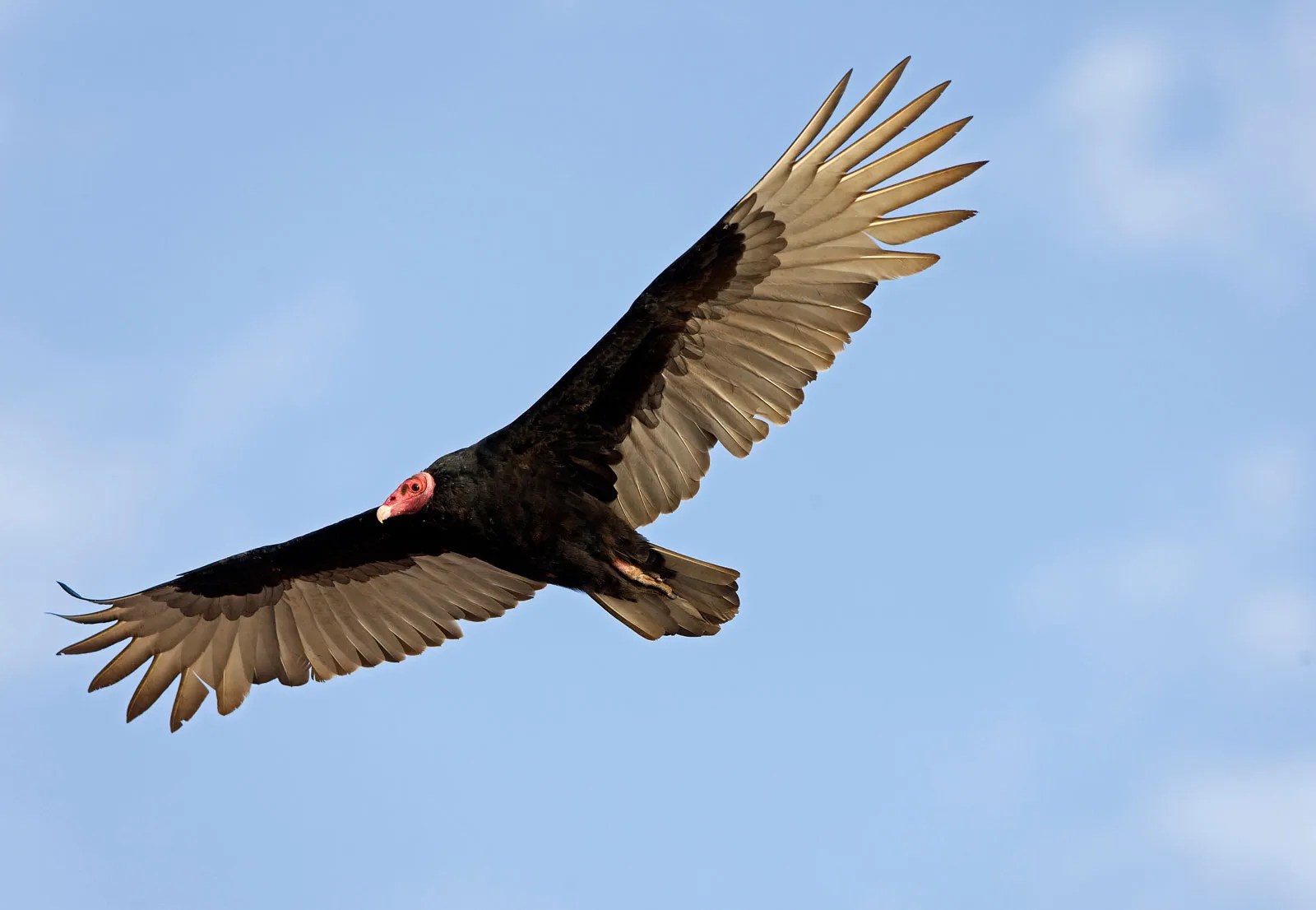
I notice a bird, circling over the edge of the valley. I study its flight, and see that it is a turkey vulture. These birds have been moving northwards into Canada for the last 50 years, as the climate changes and the mass use of pesticides has been banned. Their silent, lazy, teetering circles on the thermals and the breeze are now a common sight in the area. But for many they are still an enigma, a threat, or even mistaken for eagles.

I have always welcomed these birds, though they are feared and mistrusted by others. I spent a long time in that valley, watching the flight of the bird, thinking about how it teaches us of the things that we would rather ignore in our lives. As carrion feeders, they teach us first and foremost about death.

In Canada, there aren’t any First Nations stories about these birds, as they are a recent addition to our landscape. There are a few from further south in the US, both positive and negative. But anyone with a little time can do some research to find out how they fit into the landscape, and how they can teach us their knowledge and wisdom of being.

They aren’t pretty birds, though in flight they are certainly imposing, and even majestic, with their long wingspans. They eat the flesh of animals that have died, and so are like nature’s clean-up crew, saving the spread of bacteria and disease by disposing of rotting corpses. The acid in their stomachs is strong enough to kill harmful bacteria, and so they are very much an important part of the ecosystem by taking care of things that would be harmful to other living creatures, ourselves included.

Their bald, red heads can look menacing, but are well-adapted to eating rotting corpses. Feathers would get in the way and be difficult to clean of harmful bacteria, and so their featherless heads make it much easier to get in and eat the flesh and then be cleaned afterwards, in rivers, lakes or streams as they drink, or in the rain. They defecate on their legs, which for many people is quite disgusting, however they are not the only birds who do so. The reason that vultures specifically defecate on their legs (bird poo and pee comes out together from one orifice, by the way, which saves water loss) is so that they can kill bacteria on their legs with ammonia after feeding on corpses and walking over them.

Their sense of smell is what alerts them to food. They have the largest olfactory system of any bird. They can smell carrion from over a mile away! Very handy to mother nature’s clean-up crew. They can also spot carcasses from up to a mile away, though they have trouble seeing in the dark and so are daytime flyers. Incredible birds.

And yet they are feared, or mistrusted, or reviled. I stand in the middle of the valley, watching the vulture’s flight. A chant bubbles up in my mind, one that I had created early this year. The tune seemed to reflect the soaring freedom of the bird’s flight, and my happiness at its existence. I sang, watching the circles it made in the sky, willing the bird to hear my voice and my songs of praise.

And it came nearer. Immediately responding, it heard me and came, following the notes of my song. I felt that it could feel the love that I had for it, the wonder and joy of its existence and the freedom of its flight. I poured my emotion into my song, letting it know of my joy in its flight. Closer and closer it came, lower and lower, listening to me and drinking in my love. Over my head it came low, and circled beneath the sun, in a dance of light and darkness that reflected its very being. I raised a hand to my eyes, sheltering them from the light of the sun to watch the bird glide in the white brightness of the sky right overhead. The long, dark wingspan stretched over me, and my heart touched that bird with joy and love and peace, and that emotion was returned to me from this incredible bird.

It made one final low circle around me as I stopped my song. It then bid me farewell, and thanked me for the song as it moved over to the other side of the valley, find new thermals and a new vista. The experience of the vulture is something that I will cherish and carry me throughout my lifetime.

As the bird flew off, I spoke these words from my heart:

Your flight is my inspiration

And the knowledge that upon my death,

You will take care of my body

Is my sanctuary

For in death there is life,

In life there is death

So has it always been

So shall it always be

I will always sing to the vultures.

July Musings

The hot summer sun beats down, and the humid air lies heavy all around. To go into the forest during the day would be to invite all the biting insects to a feast, and to sit indoor feels almost like sacrilege on these summer days. But it is so hot. The kind of heat where just moving makes you break out in a sweat. Sitting still seems to be the best thing to do. The cat knows and understands this, and so I take my cue from her wisdom of being.


Even the birds have stilled their song in the midday heat. Earlier, the cardinal sang his heart out to his love, who is always nearby. The crows still caw occasionally, but apart from that, all is still except for the long, drawn out trill of the cicadas cooling off. The mosquitoes are all hiding in the woods from the heat, and the black flies have mostly died off. It’s the heat of an August day, in the middle of July, and we have been in this heat wave for two weeks now. Everyone is tired.


Still, my love for nature calls to me. I seek out the shade, and listen and watch the life that exists all around me. It’s in my nature, and was a big part of my Druid training. Be still. Watch. Listen. Learn.


When we still the voices in our minds, those stories of the humans that are part of our lives, we are then open to receive the stories of the other than human world. Whether we are in a city or on a remote hillside overlooking a vast plain of grasses shimmering in the breeze, there are stories all around us. In the flora and fauna, we learn of the countless ecosystems, micro and macro, and how we fit into them as living beings. And hopefully how to do so with love and respect.


The cycle of the seasons is shifting, from the height of midsummer and the ectastic, dancing energy of the tide of highest light, to the slower, more thoughtful tread of the harvest. The wheat is ripening in the fields, the seeds hanging in the trees and the late summer flowers are blooming. The greening is no longer vibrant, but heavy with the responsibility of continuing the legacy of growth, death and rebirth.


What lessons can I take from this oppressive heat, this heavy time, this long outbreath after the days of midsummer? Lammas or Lughnasadh is fast approaching: the first harvest. But we are still in an in-between state; the calm before the storm. It feels like a time to rest, recoup and prepare for the heavy labour that lies ahead when we collect in our dreams of the winter and spring, and which we have brought out into the world and into the light of summer. It’s that morning cup of coffee before the kids awake, or that few minutes in the bathroom of the office where you just need to be alone and regroup. It’s a stroll along a lakefront, the heavy stormclouds gathering overhead.


And so I rest, here with my family, as best I can in the 30+ degree celsius heat. I have just under two weeks remaining to gather up my strength again and reap the harvest that I had planned and worked for all this year. The books are coming along nicely, and the fiction has been especially rewarding. Finalsing that text in August and September will be a joy, and in readiness possibly for a Samhain release.


The breeze blows softly through the leaves of the oak tree my grandfather planted in the backyard. Now huge, its overhang shades the house from the relentless southerly sunshine, as well as standing as a proud reminder of our heritage and our life here in this part of Canada. Many other trees that I grew up with have long since gone, having lived out their life span or destroyed by storms or harsh winters. But the tall oak tree still stands, its large green leaves and developing acorns towering over this end of the village, and looking out towards the great expanse of the valley that is hidden from us humans by a large cedar hedge. This oak tree is part of both worlds: that of the human family that has lived under its boughs for over 50 years, and also that of the surrounding landscape, with the forest and valley, the hills and clouds, the rain and sunshine, sleet and snow that has blessed this landscape since it was formed.


Settling into my roots, deep like the oak tree, I can find the sustenance I need to carry me through.

New Video: The Tapestry of Life

After my hard drive crashed (and is not repairable) I finally got out again and did some filming this week. I hope you like it!

Freya: A Goddess of Love or Not?

I can’t begin to tell you how many times I have heard that Freya is a goddess of love. Usually, it just ends there. But in my years of working with her, I’ve come to understand so much more about this wonderful goddess, and how she has often been reduced to a misogynistic soundbite. Well, no more.

So, where in the lore does it say that Freya is a goddess of love? Well, in just one small reference, actually. In Gylfaginning, it is said that “She loves poetry, she is good to invoke about love.” [1] That’s pretty much it when it comes to the mention of love.

Freya is a goddess of sexuality, and in relation, fertility and sensuality. Her brother, Freyr, is more about fertility than Freya, in my opinion. Freya is about the sensuous nature of life, of how to live it pleasurably and to its fullest. She does not really concern herself with fertility, per se, though she is sometimes invoked in birthing, which may be due to her role as a lady of life. Her two daughters are called Hnoss (Jewel) and Gersimi (gem). Are these actual daughters or just a kenning for some of the things she loves the most?

Freya’s power is in her own sovereignty. She chooses how to live her life, and will not let anyone tell her otherwise. She takes on lovers as she wills, but then, so do other goddesses and gods in Norse mythology. It’s not uncommon, really. Loki derides many goddesses and tries to tarnish them with the brush of harlot in Lokasenna. Is this simply a Christian gloss created by those who were writing down these myths? This piece of the lore derides pretty much all of the pagan and magical practices of the gods, and makes it a very suspect piece in my view.

Some will say that Freya’s everlasting search for Óðr demonstrates an aspect of her as a goddess of love. But let’s take a closer look at what the word Óðr means. As a noun, it means “agitation, skill in poetry, poetry, intellect”. [2] As an adjective,, it means “furious, mad, terrible and even mentally disordered”[3]. Many believe that Freya and the god Óðin have a relationship, and that is it he that she longs for. But is this just looking at the surface, and not delving any deeper into who Freya actually is and what she represents?

Freya was the one who taught the art of seiðr to the gods. She was the original witch. In the magic of seiðr, we often come across a trance practice of walking between the worlds or calling in the spirits. This work can fall into the category of an ecstatic practice, and therefore could it not be that Freya is seeking the ecstasy that comes with magic, poetry, divination, sexual activity and more? What she longs for is to break free from the bonds of “normality” and shows us just how to do so, to reclaim our own power.

Freya is known by many names, including Mardöll (shining of the sea), Hörn (flax), Gefn (the giving), Sýr (the sow, or to shield/protect) and Vanadis (the woman of the Vanir) among others. She is thought to be the witch, Gullveig, whom the Aesir lusted after so much that it began a war. She is also thought to be Mengelöd, a healing goddess atop Lyfjaberg. She is also known as Val-Freya, the chooser of the dead. For when the valiant warriors die, Freya gets first choice of them to come and live with her in her great hall, Sessrumnir, in Folkvang. Odin gets the leftovers. That’s something the television shows and movies neglect to mention.

A teacher of mine told me that Freya is not a goddess of love, per se, but rather a goddess that loves life.[4] She is life itself. So why has she been reduced to a mere soundbite as a goddess of love, time and time again?

Well, Freya is not the first powerful woman to be belittled and demeaned in such a way. It is rife in our culture and society. At the time of writing this article, the misogyny of the British Parliament is coming into light, with over 50 cases of sexual misconduct by Members of Parliament currently being investigated.[5] Our own Prime Minister as the then editor of The Spectator in 2001 printed a cover page article written by now Cabinet minister Michael Gove that deplores men doing “women’s work” such as changing nappies and housework while the woman maintains the position of wage earner.[6] The article was titled: “”The male eunuch – what the wimpy British can learn from the chauvinism of the French”. In the US, the Supreme Court plans to overturn a case which gives women autonomy over their own bodies with regards to Pro-Choice rights.[7] The patriarchy and the misogyny are not just something of the past, but are here and now affecting women all over the world.

We know that the Prose Edda was written by Snorri Sturluson, an historian, poet and politician. The old ways had passed on two hundred years earlier, and Iceland was firmly in the Christian camp. The Poetic Edda may have been written earlier, but both have roots in an oral tradition of poetry that was passed down from generation to generation. And we know how stories can change when a different storyteller is telling the tale. The sovereign goddesses of the Viking Age and earlier are now labelled as “witches” and “harlots”.  This label has carried on for centuries. Look at Hilary Clinton, labelled “The Wicked Witch of the Left”, or Anne Boleyn even[8]. Women in politics, whether it is with Republicans or Kings, face such slander when they rise to positions of power. It doesn’t just stop at the Middle Ages, oh no. It has carried through to the present day. Women have been objectified for so long, that it is entrenched in the social fabric of the present day. We have MPs watching porn in the Commons.[9] The whore or witch label is still firmly entrenched upon women in order to keep them from their own power. And so it is with Freya. Or at least, it is still being attempted.

But we know differently. We can see beneath the slurs and slanders and the Christian patriarchal gloss that covers her stories. We know that she is an independent and sovereign entity unto herself. She is beholden to no one. She does as she pleases. And she is there for us. The lore tells us that Freya is the closest to humanity – she reaches out to us when we call for her. She is there for us. And just as we need to reinstate the divine feminine in our own societies as we see women’s rights and sovereignty being stripped away in ever-increasing numbers despite progressive movements, we need to take back the stories and the memories of Freya, The Lady. We need to reclaim her as something more than a goddess of love.

Freya is life, the pleasure of it and the quest for sovereignty of the self. Let’s change our current narrative so that it can truly reflect the nature of this great goddess. And in doing so, we might just change the world too.


[1] Gylfaginning 24

[2] Näsström, B. Freya: The Great Goddess of the North, Clock and Rose (2003) p. 63

[3] Ibid

[4] Zindra Andersson.  Courses now held in Sweden and Germany: https://www.hexenkram.at/en/article/der-pfad-der-vlva-jahresausbildung-mit-zindra-andersson-2022-23/812a89fa-51f9-4d19-bacd-9e0974c1d578

[5] https://www.thetimes.co.uk/article/56-mps-face-sexual-misconduct-claims-znv2m9x8s

[6] https://www.independent.co.uk/news/uk/politics/boris-johnson-michael-gove-sexist-article-male-chauvinism-b2070874.html

[7] https://www.independent.co.uk/news/world/americas/us-politics/roe-v-wade-protest-latest-abortion-overturned-b2071255.html

[8] https://www.theguardian.com/books/2018/apr/07/cursed-from-circe-to-clinton-why-women-are-cast-as-witches

[9] https://www.theguardian.com/politics/live/2022/apr/30/calls-for-neil-parish-to-resign-after-being-named-as-mp-who-watched-porn-in-commons-uk-politics-live

A new perspective

P1070241 (2)What gets you through the hardest times in life?

The last two weeks have not been easy. The death of a beloved member of the family, combined with a breast cancer scare has led me to a new perspective on life, one that is filled with content and gratitude, even in the deepest moments of grief and fear.

I’ve always been grateful for my many blessings. But it’s really only upon reviewing each and every one, in a quiet and dark space, that you realise just how much you have, and how wonderful life is, even if you should die tomorrow. As I sat before my altar, the candles flickering and the incense curling around flames, I spent over twenty minutes going over all the amazing things that had happened in my life, all the experiences and people, the wonderful moments that make life worthwhile. Not knowing what the hospital appointment in two days’ time would bring, and stricken with grief over the death of a loved one the day before, still all these beautiful revelations filled my soul as the rain pattered against the windows in the darkness outside.

Some of these were:

I have walked with the reindeer herds in the Scottish Cairngorms.

I have watched the sun rise over the North Sea in ritual with friends.

I have watched the sun set over the Pacific Ocean while the wind sighed amongst the pines.

I have skied in -29 degree weather, with icicles on my eyelashes.

I have been canoeing in Sweden with my husband, with only our provisions for the week, a tent, the canoe and an arranged rendezvous point and time a week in advance.  I have seen the burial mounds and carved stones and watched Freya’s falcon soar over the water and mountains.

I have felt the burning fire of Brighid in my heart, in my head and in my belly.

I have faced a blizzard in Trollheim, Norway, and been forced by the wights and jotun to turn back to safety.

I have known the comfort of a safe home, loving parents, patient husband and a good family.

I have loved and been loved by many cats, and given them good homes.

I have climbed the mountains of the Lake District, and watched the crows dive and dance on the thermals as the water glimmered below.

I have walked back in time in the stone circle of Avebury.

I have walked the woods of my childhood home, and know the paths and where they go, the eyes of the seen and unseen upon me.

I have swum in lakes that are filled-up volcanoes, and in rivers that tumble between the ancient granite mountains of the Laurentians.

For all these things and more, I am utterly grateful, amazed, filled with awe and wonder. If I should die tomorrow, at least I have done and known these things, and I am content.

My perspective has not changed, even with the all-clear from my hospital appointment on Monday (it was a cyst). In this time of deepest darkness, I can review what I have experienced, what I have known, and be glad for it. It makes all the small things pale in comparison, all the niggles and troubles that I may have had, with people and life in general. All these things really don’t matter at all. What matters are the things that bring on the contentment, the sense of fulfilment.  All else is just the dross which can cloud judgement and perspective. No longer will I sweat the small stuff.

As we head into the darkest depths of the Winter Solstice, I wish you all very many blessings. Thank you so much for your support over the years, and I look forward to sharing, discussing and reviewing more of life’s wonderful moments with you. Please feel free to comment below, on what helps you get through the darkest times, and peace be with you all.

Voluntary Simplicity

the-essence-of-voluntary-simplicity-is-living-in-a-way-what-is-outwardly-simple-and-inwardly-rich-quote-12017 is going to be the year where hopefully the words “voluntary simplicity” will be embraced by a wider range of people. I know that I have been incorporating voluntary simplicity in my own life for many years now, and that there is still many more ways in which I can follow a simpler, more efficient and ecologically sustainable way of being in the world. To do so, I am constantly informing myself, being conscious and mindful, trying to look at the bigger picture and taking personal responsibility for the world that I am leaving to our ancestors of the future. Now more than ever, we are at the crucial tipping point where we have to look beyond our own self-interest and look to the whole, to be more holistic in everything that we do.

I have incorporated Zen and Buddhism into my life for many years. For me, this brings a wisdom from both Eastern and Western philosophies that can blend together to form a holistic worldview and way of life. I feel that East and West need each other in order to understand the whole. Only when we understand the material as well as the spiritual can we bring them together to live fully in the here and now.

It’s important that simplicity, in terms of reducing consumerism, resources and living a better, cleaner more sustainable life, is voluntarily chosen. When it is not, we come across such suffering as poverty. Many people in the world do not have a choice to reduce, reuse, to choose. Here in the West, many of us can make choices, however small, in our daily lives that strive towards a more sustainable future for everyone. Where we can, we should voluntarily make that choice, in order to preserve a future for humanity. In doing so, we will also achieve a higher quality of life, and be able to truly flourish as a species. We are at that balance point, if we haven’t already gone too far, to either evolve into a higher consciousness and have that reflected in our actions, to come together as we realise that there is more to bind us together than tear us apart, or we can fall into divisiveness, fighting each other over the few differences and destroying not only ourselves, but a large portion of life on this planet in our downfall.

But what is simplicity? It is living in harmony with the world. Druidry is all about relationship, and this is also at the heart of simplicity. It is egalitarian. It sees through the illusions created by modern-day culture and society, the need to consume, the distractions of the media. It is about seeing what is really important in life: your family, your friends, your local environment. It is about living sustainably, so that our children and their children, as well as all the planet’s children, both human and non-human, have a good quality of life. It is about learning what is enough, rather than striving for more.

It is important to understand that simplicity is something that is for many of us a voluntary lifestyle. As stated above, many people lead lives in poverty and suffering because they do not have enough. We who do should learn just what is enough, and work towards achieving that understanding by informing and educating ourselves of our wants versus our needs. We must do this willingly, with an open heart. In doing so, we are also leading lives filled with compassion for all beings. It is not sacrifice, for we are only giving up the things that are unnecessary. Sacrifice is giving up the essentials. Many of thing things we consume or the activities we undertake are unnecessary. Many of them are distractions. Many of them only cause us to distance ourselves further from reality, each other and our place in the ecosystem. We are sacrificing ourselves by not following a simpler way of life.

We have to regard simplicity as a creative way of being in the world. Consumerism is not very creative. If we learn to live a simpler life, we rid ourselves of many distractions, thus enabling our own innate creativity to flourish. No longer are we kept under the pacifying drugs such a television, the media, advertising, and so on. We will embrace all that life has to offer, savouring each and every moment, willingly.

Gandhi said that we “choose to live simply so that others may simply live”. This is where we find compassion in a simpler life. This is where we see that we are a single thread among many in the tapestry or web of life. As human beings, homo sapien sapiens, the “beings who are aware that we are aware”, we understand the concept of a greater good for our species, and for the world as whole. Let’s use that knowledge wisely. Let’s create a world that we actually want to live in.

The concept of voluntary simplicity was begun by Richard Gregg, who was a student of Gandhi’s teachings. In 1936, he wrote about voluntary simplicity, stating that the purpose of life was to create a life of purpose. Let these words inspire you in your path towards voluntary simplicity. They can be a guiding beacon of light in a world of many illusory struggles and distractions. Create a life of purpose and meaning for yourself, using voluntary simplicity. It is the best way forward not only for your own life, but for the planet as a whole. Be creative. Druidry has a large focus on awen, on inspiration. Let us use that inspiration to live simpler lives filled with our creative potential to create a truly harmonious and sustainable way of life.

Mindfulness is a huge buzz word these past few years, and is a great tool in voluntary simplicity. We are living with intention, choosing our own path. We are conscious. We are aware that we are aware. Living an intentional life, as opposed to a reactive life, is one where we find a life of purpose. It really is that simple, yet is a challenging way to live. Being deliberate in everything requires us to evaluate and asses everything that we do, all our relationships: with other people, people we like and people we don’t like, with ourselves, with human and non-human animals, with the plant and mineral kingdoms. Like practicing Tai Chi, everything we do becomes a deliberate action, wholly understood and executed in a mindful manner, thus creating a beautiful flow.

Right now, we live in a world of crisis. Soon, the oil will become much more expensive, sea levels will rise, air quality will fall and the divide between those that have and those that have not will reach unprecedented proportions. We are currently living lives that sacrifice ourselves, each other and the planet. It can be utterly depressing when we view the world as such. Towards the end of 2016, an unusual pall of heaviness and depression hit me, as the weight of the suffering in the world fell all around me. I saw no hope for the future. However, voluntary simplicity has encouraged me that all is not lost. At this crisis point, we just might find profound opportunities to be creative, to be nourishing, to really change the way that we have been going the last few hundred years. This could be the unprecedented change necessary for our own survival. As the make or break point, this is where we could truly flourish as a species, to understand what has gone wrong, and to make amends right here, right now.

This requires personal responsibility. We cannot wait for governments to legislate for us. We cannot say that we will not undertake a simpler way of life until everyone else does. If we wait until everyone else decides to do this, or for it to be legislated, we could well be beyond the point of no return, where any action we undertake will already be too late. We must do this right now in our own lives, and let our lives be the example. We will not suffer because we are doing this, while others still live lives of disposable consumerism. We will not fall behind in the rat race. We will be living more intentionally, walking with a lighter footstep upon the planet, and knowing what really matters. Those who are not awakening to the benefit of voluntary simplicity are the ones who will suffer. Responsibility and duty have become dirty words in our society, and we must reclaim them for the very powerful values that they posses. We can change the world through everyday small actions. Like drops in a bucket, when we do so, even at tiny levels, it all adds up. We may not see the results straight away on a global scale, but we will see them in our own lives. We cannot wait any longer. We must take action now, in any way we can. No one will do this for us.

It’s also important to lay aside blame for the moment. If we participate in the world of consumerism, then we have only ourselves to blame. If we step outside of those bounds as much as possible, we will begin to understand the reasons why people do the things that they do, and in that understanding compassion will arise. For example, I know people whose kitchen cupboards are filled to overflowing. They don’t know what is in the back of those cupboards. There is food going to waste. But I also understand that there were many years where food was hard to come by for them, where every cent went to putting food on the table for their children. Full cupboards mean security. Though they might not be aware of this, I can certainly understand the behaviour, even if I don’t personally agree with it. I don’t blame them for creating the world that I live in, because I can change my own world in small and in large ways. If I lay all the blame for the world we live in on those who don’t share my own values, I can fall into an apathy and sense of separation from the rest of my fellow human beings that has absolutely no purpose or benefit in saving this planet or creating a new sustainable way of living. Instead, I will only live with anger and contempt, instead of working with compassion and integrity.

Every decision matters. The food we eat, the clothes we wear, the jobs we undertake and more. We are not powerless. We must remember this. It is essential to living a more simple way of life. We cannot change society until we change ourselves. Our biggest and often most important vote that we have in our consumerist society is how we spend our money. Tell the companies that you don’t want their latest product induced by media to increase low self-esteem by not participating in what they are trying to create. Instead, live a life of meaning, of intentional and mindful experience. The quality of life will increase, as opposed to the quantity of material goods. You will find creative ways of living. It is possible.

When we discover the things that really matter in life, life really matters. This is my understanding of voluntary simplicity.


Remembering your story

I’ve just had a lovely two week vacation, not only from work but also from my computer. It’s essential, in my opinion, to detach one’s self from the constant noise and hub of media and communication, for however long a period, whether it’s a day or two weeks, a month or altogether. I’ve known people who have given up Facebook altogether, and been much happier for it. I can honestly say that I didn’t miss it at all on my two week vacation (no social media, no emails or online communication), and I actually dreaded going back on there today to check for messages. I know that I will be spending a lot less time on there from now on, as the pull and tug of getting into other people’s stories just isn’t all that appealing anymore. Heck, if I could give it up completely I would, but that would be marketing suicide for a mostly self-promoted, self-employed author.

Having two weeks to myself, spending time with myself and my family, has enabled me to see more clearly the stories that really matter to me. While most of social media is filled with noise, things that don’t really matter (alongside really great cat videos), it also has its benefits, such as putting us in touch with high school friends, keeping us up to date on our nephews’ first day at school, and so on. I do Facebook and Twitter, because I like to keep in touch with my family and friends that I physically can’t see, being 3,000 miles away across the Atlantic, as well as feeling obligated for business reasons. But the amount of noise on there is staggering.

We can get so lost in other people’s stories, in the noise that social media produces. Stories that are inconsequential to ours. Stories that have no relevance at all to our daily lives. Stories that have no meaning full stop. We fill our mind with them, drowning out the sound of our story, of our own life, or vainly trying to compare ours to this fictional recreation that social media has produced, which is entirely inaccurate to say the least. I am not my Facebook profile or pages, not by a long shot. Neither are my friends or family. It is a narrow window into one’s life, should one be honest about it, but only provides a miniscule view of the reality that is the whole.

My story is important, if only to myself. But I have to listen to it, in order to be able to change the story, should I so choose. While there are many external factors that help to decide how this story ends, there are also a lot that are completely within my control, if I am able to hear them. I feel an even deeper connection with myself than I had before, because I stopped filling my brain every morning with pictures of what other people had for breakfast, who’s pissed off for whatever reason, etc. I stopped the constant influx of other people’s stories. I feel more me.

I don’t have a smartphone that enable me to check emails and social media wherever I am. I have a mobile phone that lives in my car should I break down. I do all my emails and social media early in the morning, to get it out of the way so that I can get on with my work and my day. I honestly can’t imagine constantly checking on a smartphone for emails and Facebook; that thought is just too horrific for someone as unsocially mediated as myself. What little time I did spend on there, I now realised was for the most part a waste of time. And I haven’t got time to waste. There are weeds to be pulled in the garden, walks to be taken, words to be written, cats to be played with, friends to visit, life to live.

Don’t be lured into the dulling effects of social media. Don’t be pulled into other people’s stories so that your own is neglected. Stay in touch, but don’t be a slave to social media or online communication. Your life is yours to live, so truly live it, don’t let it pass you by in a blur of emails or status updates. And above all, remember and rediscover your story.