
 Bullying in any shape or form, whether in person or online, is a very difficult thing to deal with. I’ve had my fair share of it, with trolling on my social media sites and the occasional personal attack/character defamation (mostly from people whom I’ve never even met). This has again happened to me very recently, and thankfully it’s only the second personal attack that I’m aware of using myself as the subject. It’s a slog to get through it all, and can make you despair at the human race entirely, but I’ve come up with some ways to deal with bullying, which may help you if you ever find yourself in such a situation. If you are in physical danger, please contact the authorities at once. Here are 10 ways you can work through this situation, should you find yourself being bullied in any shape or form.
- Don’t take it personally. Though you may be the subject, actually, it’s not about you at all. It’s about them, and their own insecurities, fears and suffering. When you can see that, you can also develop compassion for them. They are not faceless entities, even though they may have piled on you as such. These are real, living human beings, who are someone’s son, daughter, lover, mother, father, brother, sister. They have their own difficulties, their own lives, their own past experiences and suffering. They have some very large misperceptions about you, and that’s all. You are not the cause, but the subject of their misperception and subsequent projections and personal suffering.
- Don’t lash out emotionally. Disengage. Hurting someone who has hurt you only prolongs and increases the suffering in the world. Define your boundaries, so that you do not hopefully have to undergo something like this from the person again. If this means blocking someone on social media or email, or avoiding them in public, then do so. If the circles you work or live in don’t allow for a full disengagement, then do what you can to not allow their misperception into your physical space or your mind.
- Talk to and find a support network, whether that is your family and/or friends. Don’t encourage people to take sides, and turn it into a “flame war”. Simply find support from them, allow them to remind you of who you are in their eyes, what they mean to you and the difference that you make in their lives. We can often forget this when we are going through bullying, and can easily get sunk into a pit of suffering and wondering, “why me”. Allow these people who are a real part of your life to rekindle your sense of self, and your life’s meaning for them. Then find out what your life’s meaning is for yourself.
- Work with gratitude. After you have disengaged and hopefully have found some support, take a moment to remember all the good things in your life. These will usually far outweigh the bad things that are currently happening, which can seem overwhelming at the time (thanks Kris for this one). Take some time to yourself, make a cup of tea, and sit down in a comfortable, cosy room, taking time to remember everything that you can be grateful for: a loving family, good friends, a roof over your head, your snuggly cat, the beautiful sunshine, the nourishing rain, your heroes and heroines, the delicious cup of tea. You can even make a collage with photos of all these things and hang it in a prominent area of your home, to provide you with a visual reminder each and every day.
- Talk to respected people in your community. Chances are they’ve gone through something similar. If you poke your head above the parapet, expect to be shot at. So, they may have some good advice to give you on getting through, as they’ve been through it themselves. You don’t even need to give them the full details, just ask for their advice on bullying in general, and how to overcome the horrible feelings that it invokes.
- Have compassion for yourself, as well as for everyone involved. Acknowledge your feelings, your sadness, your anger, your despair. Don’t try to push them aside, for they will most likely come back in some shape or form that is totally inappropriate. Sit with your feelings, allow them to move through you, and then you can let them go. Water needs to flow in order to not become stagnant. So too does energy, in my opinion, and energy needs to flow. Emotions are a form of energy, and so let them flow, in a safe and responsible way. Be emotionally responsible for your own feelings, and know what belongs to you, and what does not. When you can let go of what does not belong to you, you are well on the way to your own personal sovereignty.
- Everything is impermanent. This is pretty much the first and foremost Buddhist teaching. What you are currently going through may seem like hell, but in a few days, weeks or months, where will this all be? If it helps, remember past difficult times, and how you survived those (without engaging in the suffering from these past experiences – look at it like a scientist would look at data, and make a conclusion based on that). Look to your family tree, and find out how your ancestors struggled, and made it through. Again, your friends may help in this regard as well. Next year, where will all this be? Where will this episode be? Most likely far, far away, remembered as an experience from which you learned how to become more resilient and compassionate.
- You are not better than them. Often, the advice given to you can be “you’re so much better than them”. While you may not cause suffering the way that they do, you are not better than anyone else on this planet. As soon as you think this, you have elevated yourself above someone else, which means that you have de-humanised them or turned them into a faceless “other”. We are all in this together. Do not let ego interfere in the process. Remember who you are, without any ego inflation tactics, which are only temporary, and which in the long-run can lead to very poor behaviour on your part.
- Integration. This is at the heart of all the Druid teachings for me. Remembering that we are all part of an ecosystem, and that everyone has a role to play. This correlates to the point above. Everyone has something to contribute, and from everyone a lesson can be learned to help us become better in ourselves. Not better than any other person, but better in ourselves so that can positively contribute and make this a truly flourishing, functional ecosystem.
- Endurance. Treat it like an athlete treats endurance training. See it as good practice for holding on to your principles. See it as an excellent workout for the mind and the soul. But remember to take breathers when you choose not to engage or think about it. Do not think ‘this is ill fortune’, but ‘to bear this worthily is good fortune’. (Thanks to Katie, and her Stoic studies for this one!)
I hope that this helps, if ever you find yourself in such a situation. If you do, remember that many people have experiences this, and that you are not alone. Get outside, look at the birds flying overhead, the bees in the garden, and notice nature all around you. You are never alone. You are part of something truly beautiful, so do try to focus on that. And have a big, virtual hug from me.
 Lately I’ve been thinking about this concept, as I am doing a lot of reading and researching at the moment, and keep coming across this concept is a lot of Wicca/Witchcraft books. While I know that there are many traditions in Witchcraft that do not follow this concept, some do, as well as most (if not all) Wiccans, and it’s got the brain going, considering this concept more deeply and not just taking it for granted.
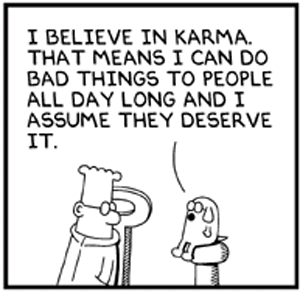 I feel that this is a very odd Western misinterpretation of karma, for starters. As well, I know of plenty of instances and people who do good things, who go through the ringer, and plenty of people who do bad things, and don’t seem to suffer any consequences. (Trump, anyone?) Karma is not a system of reward and punishment. As well, the Hermetic principle of like attracting like can work in this instance, but not in the way that most people would believe. It’s not that simplistic. Note that I use the word simplistic, rather than simple, because there is a huge difference, at least in my opinion. Let me explain.
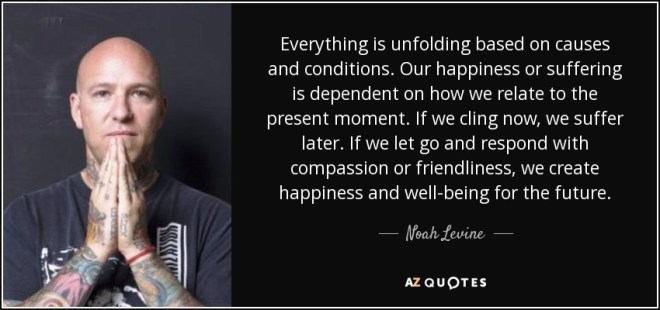 So, looking more deeply at The Threefold Law, if we do something bad, like cursing someone, then it could be said that on a certain level it comes back to us threefold, but not in the sense that seems to be very popular, ie. do good and good things happen, and vice versa. But if our actions are not honourable, and if we do things to harm other people, we are in turn harming ourselves, our environment, our gods: everything. Harming others causing suffering, both externally and also within in a threefold pattern: we harm our physical, mental and spiritual wellbeing. We’ve lost that connection to everything else, that sense of integrity and integration.
 You may have heard of the backlash that Lush are currently suffering due to their most recent campaign, which highlights the invasion of privacy from a police squad set up by the government to spy on British activists. On Friday I read an article in the Guardian of how many on social media are taking to giving the company a one-star rating as a result. Lush are being heavily accused of being “anti-police”, which is absolutely ridiculous to anyone who actually reads the campaign article. LUSH UK are not anti-police. They are simply defending basic human rights. (Read the essay, “
 What gets you through the hardest times in life?
 To find out more about meditation, stillness and finding peace, try my little e-book,
  This is awfully hard to do. Acceptance of the fact that some people are jerks, and that there is nothing we can do about it is tough. We’re so often coming across slogans and maxims such as “you can change the world” but really, all we can do is influence our own lives, work on our own behaviour, and if we’re lucky, some of that will ripple outwards into our community and into the wider stream of being. We can inspire others. But we can’t change other people, much as we would like.
 2017 is going to be the year where hopefully the words “voluntary simplicity” will be embraced by a wider range of people. I know that I have been incorporating voluntary simplicity in my own life for many years now, and that there is still many more ways in which I can follow a simpler, more efficient and ecologically sustainable way of being in the world. To do so, I am constantly informing myself, being conscious and mindful, trying to look at the bigger picture and taking personal responsibility for the world that I am leaving to our ancestors of the future. Now more than ever, we are at the crucial tipping point where we have to look beyond our own self-interest and look to the whole, to be more holistic in everything that we do.
 Down the Forest Path