Druid Ritual

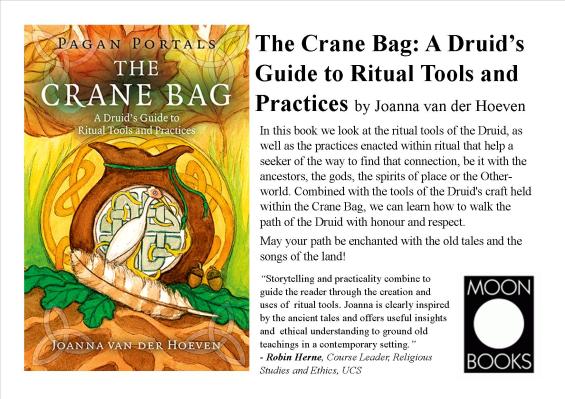
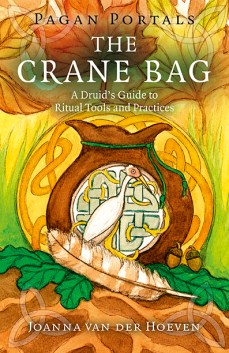
Crane Bag Advert 1It’s all 5 star reviews so far! Here’s an excerpt from my latest book, The Crane Bag: A Druid’s Guide to Ritual Tools and Practices which you can purchase from Amazon, Moon Books, Barnes and Noble and all good book retailers!

What is The Crane Bag?

The Crane Bag: A Druid’s Guide to Ritual Tools and Practices is a book in the Pagan Portals series that describes the ritual tools and practices found in the Druid tradition. As part of the Pagan Portals series, it is intended as a brief introduction to the subject, allowing the reader to further develop their own path in their own time and in their own fashion.

“The Crane Bag” is a wonderful theme in Celtic mythology, found mostly in the tales of the poet-warrior Fionn Mac Cumhail, who inherited the crane bag from his father. This bag held the special treasures of the land and was made from the skin of a crane who was, in actuality, a woman enchanted into crane form. We can view the myths that surround the crane bag as those of the gifts of sovereignty, bestowed by the goddess upon worthy heroes as is typical of Celtic mythology. The Goddess held great abundance and gifts within her womb, and only those who passed the test and were deemed fit were able to be gifted with this most precious treasure.  As the bestower of sovereignty, the Goddess fades and emerges time and again within the old stories, as does the crane bag, appearing and disappearing from myth when there is need.  The sea god, Manannan, is the original owner of the crane bag and through his love for the goddess gives and takes it back throughout the telling of the tales.

Within the mythology of the crane bag, those who follow the Celtic Druid tradition can come to know a very beneficial tool in their learning, the gifts of which are endless.  Within the crane bag are not only the tools of the Druid, but also a symbolism of the gift of the goddess, of sovereignty.  With the proper use, it can further the Druid in working with the tides of nature, finding their proper place in the grand scheme of things, living in balance, harmony and peace. In ritual use, these tools can guide the Druid to deeper levels of meaning and understanding within the tradition, helping the Druid on her journey throughout life towards integration in a holistic way of being in the world. We are able to find a deep connection, be it with the ancestors, the gods, the spirits of place or the Otherworld. Combined with the tools of the Druid’s craft held within the crane bag, we can learn how to walk the path of the Druid with honour and respect.

What is Ritual?

Ritual consists of a prescribed set of words and actions within a particular context used to bring about a desired outcome. Druid ritual uses words and actions within the context of an earth-based tradition to connect with the landscape, the gods, the ancestors and so on. For the Druid, connection, relationship and integration with the landscape are at the heart of all that she does, whether in ritual or not.  Ritual can be seen as a time set apart from daily life to reconnect the threads that bind us together with the land, with nature.  We take a step back from what is perceived as the mundane and acknowledge the sacred. Ultimately, the Druid strives to perceive the sacred in everything, and ritual helps the Druid to achieve that vision.

Our modern lives are so busy, with work, family, media, technology and more. Ritual helps us to step back from the busyness, into another way of being.  It is a change of consciousness, where we can shift our perception away from a singular view to a more plural view, integrating with the land around us, realising that we are a part of an ecosystem. Ritual is the act in the material world that connects us with a wider reality.  It is an experience, not just a thought.

Ritual is that which helps us ground and centre in the present moment. When we stop, when we take a break to perform a ritual, we become aware of who, where and what we are at a particular point in time. We are rooted in the here and now, awake and aware to all that is happening around us. When we are awake, we are able to find our place in harmony with nature, finding a deep peace both within and without. It gives us an intention, a focus with which to work in the Druid tradition, to reweave the threads of connection.

Ritual also helps us to find stability. When we create rituals to perform repeatedly, we bring that sacred perspective more and more into our everyday life. These rituals needn’t be identical each and every time; what is important is that the ritual is actually done.  It is the experience of ritual that helps us to self-locate. We cannot do that simply by thinking about it; we must act as well. When we have acted out our rituals with some regularity, we may find that our connection to the natural world deepens.  The ancient philosopher Lao Tzu once said:

Watch your thoughts, they become words;

watch your words, they become actions;

watch your actions, they become habits;

watch your habits, they become character;

watch your character, for it becomes your destiny.

We as humans are creatures of habit, and indeed these habits define us as people.  A repeated action or behaviour will certainly have an impact on who we are as an individual. By using ritual we can break off from bad habits and thought patterns, for example, and find the sacredness within and all around us. It requires practice, as in the Welsh saying at the beginning of this chapter. We cannot just think about ritual; we must do it.  If we take the time to reconnect with our place in the natural world, over and over again, then we will maintain that connection more and more throughout our lives until they are an example of pure integration and harmony.

Druid ritual is also a celebration.  The eight seasonal festivals of modern Druidry help us to remember what is going on in nature at the present moment. There are many books that cover the eight seasonal festivals, their origins, meanings and ways to celebrate, and so we will not cover that here (see bibliography and suggested reading for more). Rather, we will look at how Druid ritual is set up, from start to finish, using our tools from the crane bag to find our soul map in our own environment.

Ritual is also a tool for transformation. When we have worked with intention and grounded ourselves in the present moment, we cannot help but be transformed as our perception shifts from one perceived reality to another. Through the experience of ritual, we understand that our point of view is not the only one, and that perception shifts with intention. When we broaden our horizons, we cannot help but be transformed.

Re-enchanting the Soul

Work and familial obligations can sometimes weigh us down in a sea of mundane jobs, tasks, and commitments. With Druid ritual, we can re-enchant the soul to bring the magic back into our everyday lives, as we perceive the sacredness of all things. Then, we realise that there is no such thing as the mundane, only the sacred. The division between the two is realised as an illusion, and we are thus able to “travel between the worlds”.

The Druid is always questing for inspiration, or awen. Awen is a Welsh word, sometimes translated as “flowing spirit” or “flowing inspiration”.  Creativity is such a large part of the Druid path, where we are inspired and then inspire others in return. This exchange of inspiration is at the heart of all that we do, in deep relationship with the world around us. When we touch each other soul to soul, where we find intention blending together to work in harmony, then we are inspired. The Druid looks to the natural world around her to gain that inspiration.  She takes her cues from nature as to how to live in the present moment, utterly awake and aware. So inspired, she lives her life as best she can as part of that environment, in tune with all that shares the same space. By doing so, she also inspires others in return.

Simply by getting outside and into “nature”, our awareness shifts. Though nature is something that we are a part of all the time, we often see it as something “out there”, as external to ourselves. When we realise that we are a part of nature, we shift from a self-centred perspective to an integrated one, thereby opening our eyes to the beauty and wonder that lies all around us each and every day. Taking a walk helps us to see the beauty of an oak tree in full leaf, to feel the warm caress of the summer wind, to feel the blessing of the rain or the exhilaration of a snowstorm. We awaken our senses to the world around us simply by being out in it, in nature, away from central heating and electricity, away from cars, phones and computers. Though all these things can be of great benefit, when we re-attune our senses to our “natural” environment, we can also reawaken something that has long lain dormant within our souls. We can re-enchant our lives, re-wilding our souls.  We can return to the very roots of our being. We can find the child-like wonder while looking at an ants’ nest, or listening to the blackbird at dusk.  We no longer become bored or jaded, but rather totally awake to the world around us. Our lives are benefitted from this re-enchantment on every level. This is the awen.

This is also the importance of ritual. When we take the time to re-enchant our souls, we make our lives more magical, more meaningful and more present. We can step outside the realms of 9-5 living.  We enter into a state of intention and enchantment, inspired and inspiring others in return. In this, we find true relationship.

May your path be enchanted with the old tales and the songs of the land!

(Extract from The Crane Bag: A Druid’s Guide to Ritual Tools and Practices by Joanna van der Hoeven. www.joannavanderhoeven.com).
 

The birds have gone…

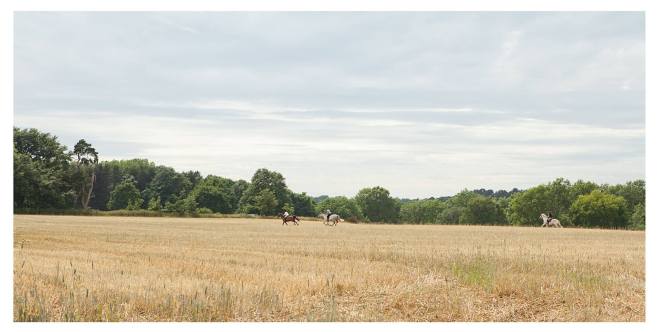
It is a melancholy time of year. Most of the fields are now lying still, shorn and with the stubbly remains jutting defiantly into the last of the summer sunshine. The house martins departed over the weekend; I had spent much of last week watching the elders teach the young ones how to glide and ride the air currents in preparation for their long trek to their winter homes. The sky is so silent and still without them, and there is a small space in my heart that is sad to have said goodbye to them. Good luck on your journey, little ones. May you be as safe as can be, and I hope to see you again next summer, when you herald in the start of the season of warmth and sunlight once again, alongside the calls of the cuckoo.

The full moon makes sleep difficult; dreams are seemingly random and exhausting, and will only have meaning when the actual events happen. My skills in divination and the sight are through dreams more than anything, but right now I’m so tired that I’ll be lucky to remember anything upon waking. It’s only in the actual doing or being somewhere that I’ll remember that I dreamt it, like on Saturday when I signed a new contract, and remembered writing an email with a query regarding it. In the dream, I had no idea who I was writing to or why; now it all makes perfect sense.

It is a time when we are seeing the fruits of our labour. But it is also a time when we cannot yet rest or lay down our tools, for there is still much to be done. There are many other harvests that await. I have had a good crop of raspberries this summer, and another one on the way. The first apple harvest was abundant, and the second looks to be even better from my three little trees. I have just released my seventh book, with another written and in production, and a whole new one to work on. Druid College’s next Year 1 session begins in October, but we have our first session of our Year 3 apprentices beforehand to journey with on pilgrimage to Glastonbury in September. There is still much to be done.

The leaves are beginning to change, and a soft sadness tinged with relief lies within my breast. It feels like I’ve cried a long time, and am releasing that juddery sigh that often follows a good sob. New things await, but the old ones are being put to bed first. Everything in its own time. Nature does not hurry, and yet everything gets done.

So this evening I will be honouring the full moon and the Lammastide, with ritual in the company of a couple of lovely ladies. As the combine harvesters grumble relentlessly in the background, we shall sing to the moon, and share in the bounty that we have received with the spirits of place, the ancestors and the gods. Bread that I will bake this afternoon will be our offering, as well as words and vows of the work to come.

The times of sadness and stillness are required, just as the times of light and laughter. For we cannot have one without the other. They are not opposites, but simply on different places in the spectrum of human emotion. We ride the currents in keeping with the tides and seasons, and work towards integration and harmony.

May we be the awen.

6

If you’ve enjoyed reading this blog post, or any others on this site, please consider contributing towards the future of Down the Forest Path with a £10 donation for a year’s support of the work. You can donate by clicking HERE.

The Crane Bag: Out Soon!

Only two more days until my next book, The Crane Bag: A Druid’s Guide to Ritual Tools and Practices is out in paperback and for Kindle. This is my fourth book in the Pagan Portals series, which offers an introduction on a specialised subject at a low price and which we think is good value for money. In this book we cover:

Front coverChapter 1 – What is the Crane Bag?

The Story of How the Crane Bag Came to Be

Crane Bag as Soul Map


Chapter Two – The Importance of Ritual

What is Ritual?

Re-enchanting the Soul


Chapter Three – The Druid’s Tools

The Silver Branch

Staff

The Cup/Bowl or Cauldron

The Drum

Sticks, Stones and other Fetishes

Sickle and/or Knife

Robes

Altars

Fire/Candles

Incense


Chapter Four – Druid Ritual Elements

Call for Peace

Casting the Circle/Creating Sacred Space – Preparing the Nemeton

Honouring the Spirits of Place

Honouring the Three Worlds

Honouring the Four Quarters

Honouring the Ancestors

Honouring the Deities

Ritual Action

Prayers and Magic

Offerings, Eisteddfod and Sacrifice

Feast

Closing


ChaptCB-Chapter5 (655x1024)er Five – Altered States

Meditation

Drumming

Chant and Song

Sensory Deprivation

Sacred Landscapes and Sitting Out


You can pre-order your copy now on Amazon by clicking here: The Crane Bag

Honouring the Storm

Right now, video is coming easier to me than words…

Blessings of the Summer Solstice!

Here’s a little video from my morning at the beach 🙂


Beltane Encounters with the Otherworld

The energy of the ritual still hung in the air, shimmering in the light of the Beltane full moon. I was alone in the garden, tidying up the lanterns and getting ready to put the fire to bed. As I walked down the garden steps, my offering of milk and honey in my hands, I made my way across the lawn to where the altar and offering place lay beneath the canopy of an old beech, its leaves just beginning to bud. I said a quick prayer as I entered that sacred space, with nine small stones delineating the boundary of this “faerie circle”, a minilithic stone circle that I built last year.

As I walked into the circle, I felt the air thick with the magic of the evening. I knew something was about to happen. I laid the food and drink upon the altar, and gave my thanks to the spirits of place, and to the Good Folk. No sooner had the words left my mouth, than a rustling in the hedge all around me began, as if some strange wind was shaking just the coniferous boundary of my garden, or a small army of badgers were all coming through the little holes in the hedge at the same time. My heart pounded in my chest as the moon shone through the branches of the beech above me. Frozen in place, excited and both frightened to see what happened next, I tried to see into the darkness of the hedge, shadowed from the moon’s light, but I could perceive nothing but the inky blackness.

The rustling all around me stopped, and I found I was able to move. I knew that something had come through the hole in the hedge, but I could not see it. Slowly I walked towards the firepit, hoping to see what had come through by the light of the fire. I cautiously approached the dying flames, and peered into the shadows about ten feet away. I could see very little, but I felt a presence, someone – male – standing by the birdfeeder and the hole in the hedge, standing shoulder-height to me, dressed in shades of brown. Suddenly, even as I looked and felt his presence, he moved without a sound like a dark shadow in the blink of an eye back into the hedge, and there from the depths of the green and black two eyes shone a whitish/green, reflecting the light of the fire. Whatever that being was, he had changed into the form of a badger in the blink of an eye, to watch me from the depths of the back hedgerow.

“Beltane blessings,” I murmured. Unsure of what to do next and still very much afraid and alone, I curtseyed and then covered the firepit with its iron mesh guard, walking back slowly towards the house. I had wanted to ask for his friendship, and for that of all the Good Folk, but my courage failed me on that night of the full moon, as the powers of Beltane and the Otherwold flowed through the land.

I only hope that he will return, and soon.

Druid College and Earth Day

Well, another brilliant weekend of Druid College has come and gone. We’re nearing the end of our Year 2 programme, and getting ready for the apprentices to declare their Chair, their work for Year 3. It’s an exciting time for me, to see what direction each person will take in their path to being a priest of nature, and to help guide them on their personal journey.

Some of the elements that we covered this weekend really stand out for me: crafting sacred ritual and exploring the ecstatic in ritual. As the Saturday of our weekend also coincided with Earth Day, we decided to create a ritual using the energy of the day, alongside the millions of other intentions the world over for peace, harmony and respect for this planet we call home. As Druidry is all about crafting sacred relationship, we used the time and tide as an opportunity to ride the waves of energy and, hopefully, the winds of change.

In the morning we got together and discussed the intention of the ritual, and how we could go about manifesting that intention. We hadn’t used ritual drama before, and so I suggested that Robin (our other course leader and a brilliant storyteller and actor) take on the role of someone who has lost their connection with nature, with the earth, with the fact that we are all related. In sacred space, we invited the personification of this energy, and Robin played the part to the hilt. It was difficult to hear the words he spoke (rather, yelled) in the peaceful setting of the woodland where we stood, the scent of bluebells surrounding us, the mallard ducks flying in and out of the pond next to us. Word of racism, environmental destruction, classism and more were flung into our space from the voice of a wounded individual who had lost that sense of connection, who represented everything that we work in our daily lives to heal. We had heard these words in the media, from people on the street, perhaps even from family members, words of the uselessness of nature except as a resource, words of nationalism and “foreigners”, words of the necessity of cheap manufactured goods despite the cost to human and non-human lives and more.

Then we created a container for that energy. Like an oil spill, we contained the negativity by creating a circle around the energy, holding it and stating that we will not allow it to infiltrate into our lives, and do everything we can to change and transform that energy. Circling Robin, we held hands and took in that energy.

We then needed to transform it, and so in a cauldron filled with water from the Red Spring in Glasbontury (Chalice Well) we spoke words of how we will transform that energy in our own lives.  Aware of what we can and cannot control, we decided how best we can transform and create a counter-balance to the destruction of the sacred and the values of sustainable relationship that we hold so dearly. We can change ourselves, first and foremost, and that energy will ripple outwards. And so, bringing our lips close to the cauldron we spoke, of loving friends and family despite their flaws, of working on how to heal ourselves, of how we can affect our local environment, community and more. Changing ourselves, we change the world.

We then used an elixir of vervain, created by the waters of the Red Spring and White Spring, blessed by the light of the full moon, and added three drops to the cauldron filled with holy water and our intention. Through the magic of herbs and intention, the water was blessed and transformed to heal and nourish all.

We then created a circle once more, holding hands and feeling the energy of community strong. We then opened our circle and allowed a space for Robin to join us, should he so wish. In his character, he was unsure of whether he wanted to join us or remain as he was, and so we simply stated that the circle was open to him when and if he was every ready to join. There was always room at the table.

A healing sound bath followed, where we each took up an instrument with beautiful vibrational energy, and the air was cleared with the soft sounds we created, mingling with the songs of the robins and blackbirds, the wind through the new leaves in the trees, the glow of the bluebells bright in their basking in the warm spring sunshine.

All in all, it was a wonderful ritual, created by the group and one in which everyone had a part to play, both in the ritual circle and afterwards in their own lives. A very transformational ritual, to say the least.

I want to take this opportunity to thank all involved in Druid College over the last two years, who have shared in this wonderful journey. I look forward to many more years to come.

New free dowload from my Bandcamp page!

CB-Chapter5 (655x1024)

Hiya! Just a quick note to let you all know that there is a new free download on my Bandcamp page. It’s an audio version of a  journeying/meditation from my upcoming book The Crane Bag: A Druid’s Guide to Ritual Tools and Practices. To receive or stream all material available, please subscribe! New material is added each month. I hope to make The Crane Bag an audiobook as well, as I have done for The Awen Alone: Walking the Path of the Solitary Druid (available for subscribers only).  May we be the awen!

Excerpt from “The Crane Bag: A Druid’s Guide to Ritual Tools and Practices”

Here is an excerpt from my upcoming book, The Crane Bag: A Druid’s Guide to Ritual Tools and Practices. You can pre-order it now from Amazon, and it will out in a few months. May we be the awen!

Journeying

Journeying is another form of meditation often used in Druidry, where the meditator goes on an inner journey. We might be seeking a deeper connection to our ancestors, or to the spirits of place, the gods, the sidhe and other denizens of this world and the Otherworld. There are many tales in Celtic mythology of a hero journeying, usually over water, to gain wisdom and insight into their lives (in Celtic Irish myth known as immrama). Today, we might be seeking allies from this world and the Otherworld to work with in the future. In the following journeying meditation, we will go to find a spirit ally, perhaps an ancestor of tradition, who may be able to guide us in our future work.

Sit in your meditative posture, and take three long, deep breaths to cleanse your mind and body. Allow your thoughts to quieten, and once you are ready begin the following visualisation.

You stand at the edge of a lake, the still water reflecting the sky above. Hanging on a small tree next to you, you see a silver branch, much like the one you own. You reach out and take the branch in your hands, shaking it three times. You then return the branch, and it slowly fades from view. Turning your gaze to the lake, you see a mist begin to form. The mist comes closer to where you are standing on the shoreline. Out of the mist, a small, flat-bottomed boat appears, paddled by two cloaked and hooded figures. Silently the boat approaches the shore, and stops with a soft bump upon the edge of the lake.

One of the figures turns and stands up, reaching out a hand to help you into the boat. You take the hand and step into the vessel, moving to the front where a small bench awaits you. The figures behind you silently push off from shore and paddle the boat into the awaiting mist.

You feel the mist all around you and its cool, soft, damp touch upon your skin. It surrounds you, and you are adrift in this strange sea, where the light has no source, the directions have no meaning. All you can feel is the boat steadily moving forward, through the mist.

Slowly, the mist begins to recede in front of you. The light changes, and you can see a form looming ahead. As the mists fully part, you see before you a beautiful island. Green hillsides dotted with sheep and cattle roam up the banks of a tall tor, a hill that rises out of the landscape. Around the base of the tor you see trees, marching down to the water’s edge. A little ways off to the right you see a small clearing, where a tiny village has been settled in the arms of the forest, the tor standing guard. The boat begins to move towards the village, and soon you see a small landing dock jutting out into the lake. As you approach the dock, a figure moves from the shoreline and onto the platform. Cloaked and hooded like those guiding your boat, the form moves to the end of the wooden dock and awaits you.

Your boat pulls up, and is neatly tied to the dock by your navigators. The figure on the dock extends a hand to you, and you are pulled up onto the platform above the water. You look into the figure’s face, and slowly the figure lifts its hands to the cowl of the robe and pulls down the hood. The figure smiles, a face that is neither old nor young, with eyes full of the ages of wisdom. “Welcome,” she/he says.

From there, you can make many journeys back to that land, to learn from this person. You can visit the village, climb the tor, wander the forests and dive into the lake. With this person as your guide, you can learn the wisdom that they have to offer. When you feel it is time to return back to your body and your time, simply thank your guide, place an offering perhaps at a sacred shrine or in a place of beauty and take the boat back to the shore from where you began the journey. As you step out of the boat, you see the silver branch again in the boughs, and you shake it three times to signal the end of your journey. Then slowly begin to focus once again on breathing in and out through your lungs, returning your mind to the here and now. Listen to the sounds around you, the smells. Wiggle your fingers and your toes, rolls your shoulders and when ready, slowly open your eyes, returning to the present moment.

Capturing the moments…

My friend Lisa, who is a wonderful photographer, captured some lovely moments this weekend during our morning-long ritual for Alban Eilir, the Spring Equinox. Thank you, Lisa – the photos are wonderful!