In this series of blog posts, I will be looking at the runes in the Anglo-Saxon tradition, known as the Anglo-Saxon or Old English Futhorc. As I have been studying various forms of Heathenry for quite a few years now, I have felt a calling to connect more fully with my ancestry and a real pull towards learning more and experiencing the ways of Anglo-Saxon, or English magical and religious traditions.
The runes have always appealed to me more than the Druidic ogham. I tried for years to get on with the ogham, but it never took. However, the runes come naturally to me, and seem a lot less abstract, for their shapes vary much more than the ogham, and settle much more easily in my mind. When I visited Sweden a couple of times, finding the runic standing stones just outside a village or on the side of a road in the middle of nowhere was fascinating. Though I couldn’t quite read it fully, when I ran my fingers down the markings the stories came alive within me. Similarly, I am surrounded by the heritage of my Anglo-Saxon ancestors, living as I do so very close to the Sutton Hoo ship burial site here in the East of England, and with the Saxon recreated village of West Stow nearby.
Runes are so much more than an alphabet, as they are also used in magical workings. Alphabets the world over have been used in this way, not merely to communicate information on a mundane level, but also to boost and support magical workings in various formats[1]. I have used runes for many, many years in my magical work, and it’s always been successful.
In Scandinavian texts, the runes are won by Odin, who hung himself on the world tree for nine days and nine nights in order to gain the insight and wisdom of their mystery. Indeed, the word rún in Old Norse means mystery or a magical symbol. In Old English, rún means a learning, a consultation or even a whisper or confidence.[2] Though the continental traditions viewed the connection of Odin and the runes as paramount, it seems less likely that the Anglo-Saxons associated their Woden with the script, as their runes developed much later, without the attached story concerning Woden.[3] This is interesting, because the translations of the eldest runic alphabet, the Elder Futhark, depend on the Old English Rune Poem, the Norwegian and Icelandic poems. The Elder Futhark stems from the Common Germanic language, whereas the Anglo-Saxon Futhorc contains the sounds we hear in the Old English language. So, we are using poems from similar languages in order to understand the eldest version of the runes, the Elder Futhark, because we have no original Germanic Rune Poem to help with translation.[4]
Were the stories made to fit with regards to Odin, or was the original story simply not remembered by the time the Anglo-Saxons developed them for their own use? Was the story left out by the Christian monks who recorded it? We may never know, so we look to the Norse, Icelandic and Old English poems to help understand and translate the eldest runic script. Those who work from an Anglo-Saxon context may or may not place an emphasis on working or connecting to Woden when working with the runes.
The Norse Elder Futhark consists of twenty-four runes. This is the most common form of runes you will see today, sold at many Pagan marketplaces, and with many books written about their meaning. The Icelandic Younger Futhark developed around CE 800, and has sixteen runes. The Anglo-Saxon runes date to CE 400, and so lie in the “middle” historically of the Germanic and Icelandic versions, containing 29 runes. Though the dating of the Old English runes land in a definitively Pagan era, it was only recorded for posterity in the tenth century by Christian monks, and so we have to bear a possible bias in mind in the translation and interpretation of the Old English Rune Poem, with information possibly left out for various reasons.[5]
It is called the Futhorc (or Futhark in Norse and Icelandic) because that is what the first runic letters spell out. Each rune has a verse attached to it, which describes or alludes to the mystery of the rune itself. My favourite translation is Stephen Pollington’s version, from The Rudiments of Runelore (Anglo-Saxon Books, 1995). I highly recommend picking up this work, as well as Suzanne Rance’s The English Runes, which uses Pollington’s translation. It’s also important to understand the context in which the runes were used, and better understand the mindset and pagan practices of the Anglo-Saxon. For this, I recommend Alaric Albertsson’s works Wyrdworking: The Path of a Saxon Sorcerer and Travels Through Middle Earth: The Path of a Saxon Pagan.
The Old English Rune Poem is a beautiful work, which sometimes speaks in riddles and is a joy to try and figure out on your own before looking up each definition and interpretation from learned sources. Much like the riddle game between Bilbo and Gollum in The Hobbit (and we all know Tolkein was a big fan of Old English culture and society, let alone the runes) it is fun to tease out just what is meant by a “gannet’s bath”, or which rune is referred to as “cold and slippery, glass clear and glistening like gems”. Simply leave out the name of the rune and read the poem, and it’s all a riddle.
The Old English Rune Poem is the eldest recorded rune poem, as the Norwegian Rune Poem dates to the 13th century, and the Icelandic Rune Poem two hundred years later. I have found very few copies of the Old English Rune Poem in actual runic script, however, here is one that may help you get an idea as to what it would have originally looked like, from the website All Things Linguistic.
Here is the Anglo-Saxon Rune Poem, or Old English Rune Poem, in full, translated online by Dr Aaron K Hostetter[6]:
The Rune Poem
Wealth is a comfort to every man,
although every man must share it out greatly
if he would obtain a portion of the Lord’s glory.
The ox is single-minded and over-horned,
most savage beast, fighting with his horns,
well-known moor-stepper. That is a proud creature.
Thorns are severely sharp. To any thane
seizing it is an evil, measurelessly cruel
to every man who comes to rest upon it.
The mouth is the beginning of all speech,
a support to wisdom and a comfort to the wise,
and a prosperity and trust to every earl.
Riding is a comfort to every warrior
in the hall, and very trying to those who sit upon
a powerful courser over the mile-paths.
A torch is known by every living being to be on fire,
white and bright, most often burning
where the nobles rest themselves within.
Gifts are an honor and praise of men,
a support and a distinction, and to every wretch
mercy and meat to those who are free from other possessions.
Joy is enjoyed by those who little know of woe,
pains and sorrow, and to those who have of themselves
profit and bliss and also many citadels.
Hail is the whitest of grains. It comes down from heaven’s breeze,
the wind’s showers rolls it down, and after it becomes water.
Need is a constraint on the breast, although it often comes to the sons of men
a help and a healing of every one, if they hearken to his demands before.
Ice is really cold, measurelessly slippery
glistening clear as glass, most like gemstones
a floor created by frost, and a fair face.
The new year is the hope of men, when God allows,
the Holy Heaven’s King, the earth to give
her bright fruits to rich and poor alike.
The yew is an unsmooth tree without,
hard, fixed to the earth, a warden of fires,
supported by its roots, a joy in the home.
Peorth is always a play and laughter
to the proud where warriors sit
in the beer-hall, happy together.
Elk-sedge keeps its home most often in the swamps,
it grows in the water, and grimly wounds,
it burns the blood of any man who grasps it.
The sun is ever a hope to seamen,
when they carry themselves over the fishes’ bath,
until their brine-horses bring them to shore.
Tir is a certain token, it keeps its troth well
with noble men. It is always on its journey
over the clouds of night, never wandering.
Birch lacks fruit, even though it bears
shoots without seed. It is lovely in its branches,
high in its crown and fairly adorned,
laden with leaves, pressing into the breeze.
Horses are for earls the joy of noblemen,
a steed proud in its hooves, where the heroes about him,
prosperous on horseback, weave their speech,
and ever a comfort to those on the move.
Man is in mirth, dear to his brother;
though every one must depart to another place,
because the Lord wishes, through his own doom,
that our wretched flesh be commended to the earth.
The waters seem to men to be broad,
if they should venture upon an unstable ship,
and the sea-waves terrify them so,
and the brine-horse cares not for his bridle.
Ing was first among the Eastern Danes
seen by men, until he soon afterwards
departed over the ways, a wagon running after him.
Thus bold men named this hero.
A homeland is very dear to every man,
if there he may enjoy in his household
what is right and fitting, very often with its fruits.
The day is the Lord’s message, dear to men,
the renowned light of the Measurer, a mirth and troth
to the prosperous and the wretched, useful to all.
The oak is fodder for flesh on earth
for the sons of men. It frequently ferries
over the gannet’s bath. The spear-waves test
whether the oak possesses reliability for noble men.
The ash is very tall, dear to men,
stout in its trunk, its hilt is rightfully fixed,
although it fights against many men.
A bow is for every noble and earl
a joy and an honor. It is fair on horseback,
support on a journey, some part of a warrior’s tackle.
The gar is a river-fish, and though he takes
his food on land, he owns a lovely home
surrounded by water, where he lives in joy.
The grave is terrible to every earl,
when the fixed flesh begins,
the corpse cooling, to choose the earth
paleness as its bedmate. Fruits fail,
joys depart, mankind ceases to be.
With each blog post, I shall write about the rune in turn, its connection and interpretation through the Old English Rune Poem, and my own understandings and working with this rune. I hope that you enjoy this blog series!
[1] Pollington, S. The Elder Gods: The Otherworld of Early England, Anglo-Saxon Books, 2011, p.422
[2] Rance, S. The English Runes: Secrets of Magic, Spells and Divination, Dragon House 2017, p. 8
[3] Pollington, S. The Elder Gods: The Otherworld of Early England, Anglo-Saxon Books, 2011, p.422
[4] Rance, S. The English Runes: Secrets of Magic, Spells and Divination, Dragon House 2017, p. 9
[5] Albertsson, A. Wyrdworking: The Path of a Saxon Sorcerer, Llewellyn, 2011
[6] Hostetter, A. The Rune Poem, from the Old English Poetry Project, https://oldenglishpoetry.camden.rutgers.edu/the-rune-poem/ (accessed 14 Aug 2020)


 Many within Western Paganism have heard of the Law of Attraction, especially if you have been working magic. However, I often see this oversimplified in books, stating that “if you put good energy out there, good energy will return” and vice versa. Not only is this trying to oversimplify the law of attraction, but it’s actually incorrect as well, in my opinion. I know plenty of good people who have bad things happen to them, and some bad people who have good things happen. I know, not all people are good or bad all the time, but it’s just a thing: we live in a shared reality, where we can’t control the actions or behaviour of others and so sometimes, no matter what energy we are putting “out there”, things will happen that will be contradictory to what we are attempting.
 We will be postponing our next Year 1 session in Essex, as we have something very exciting brewing in the cauldron of inspiration! Starting in January 2019, we will be preparing our new online correspondence course, a full Year 1 programme, which will consist of online meetings, pre-recorded video and audio lectures, booklets to download and more. We have had so many people get in touch wanting to know if we could offer a correspondence course, as they were physically unable to attend our in-house sessions. And so, we aim to provide this for 2020, alongside our next Year 1 in-house programme. Stay tuned for more updates and info!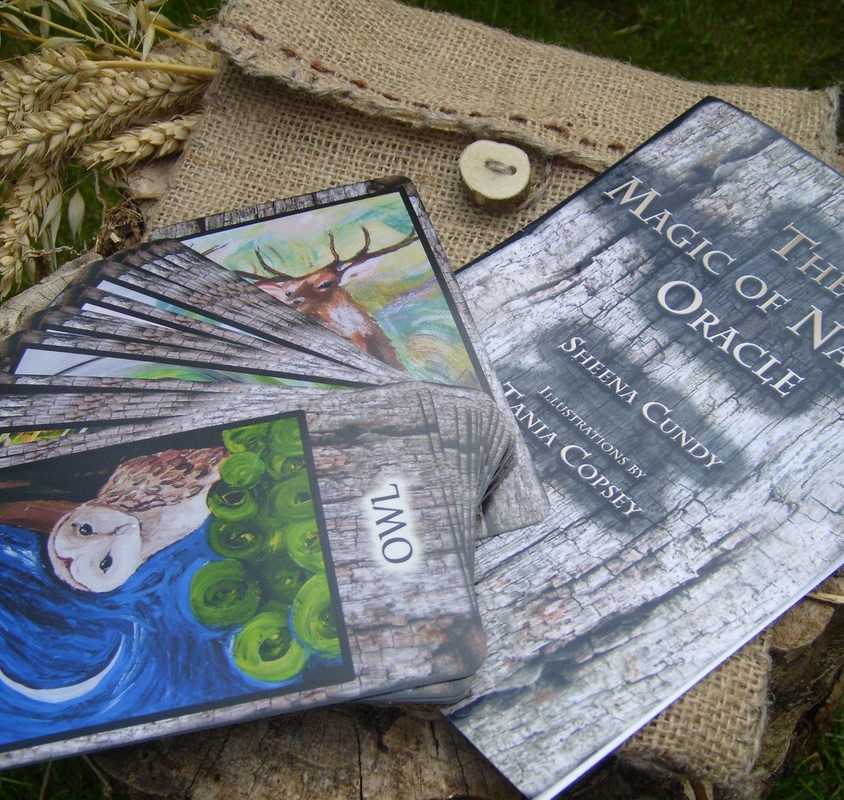
 Down the Forest Path