heathenry
The Runes: Feoh (Wealth)
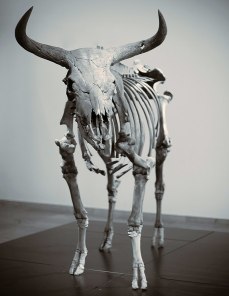
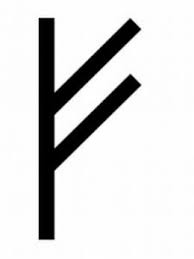
In this blog series, we will go through the runes as they are recorded in the Anglo-Saxon or Old English Rune Poem. The first rune in the Anglo-Saxon Futhorc is Feoh. Feoh translates as cattle, and in Anglo-Saxon culture cattle meant wealth, so this is the modern interpretation of the rune. It is the root of our word, “fee” with regards to money.[1] The segment of the Rune Poem reads thus:
Wealth (Feoh) is a comfort to any man
yet each person must share it out well
if he wants to win a good name before his lord.[2]
To pronounce the name of this rune, you’ll need to get a little continental in your throat. The first part is easy, fay. The second part uses a glottal stop at the end similar to the word loch pronounced with a Scottish accent, but much softer. Just slightly close off the back of your throat when you end saying och and you’ll have it. Fay-och. You can also bypass this, if it is troublesome, by pronouncing an “h” sound at the end. Fay-o-hhh, but this technically isn’t perfect.
Cattle, whether in the form of cows, sheep, goats, etc. were a major part of Anglo-Saxon economy. In a cash poor society, where few people had many gold or silver coins, your wealth was determined by how much you could sustain yourself and your community. If you had cattle, you had dairy and meat, as well as the offspring with which you could barter, trade or even sell for coin. Cattle is wealth that is moveable, as opposed to inherited wealth such as a building, home or farmland. Feoh’s meaning is deeper than simply wealth however, for it is wealth that has to be looked after, wealth that has to be managed. Cattle don’t just take care of themselves on the farm. Feoh is wealth that is earned from hard work. It is not a gift, like the rune gyfu which we will look at later in this series. Rance states that Feoh may have been the first rune in the Futhorc because of the importance between keeping cattle and agriculture, and the development of writing.[3]
Yet Feoh does not just mean wealth alone; wealth must move, it must be put for the benefit of everyone, and not hoarded solely for personal use. Wealth occurs when we have an excess of something, an abundance of a resource. If our needs are just being met, we are sustained and sustainable, but not wealthy. If we have an abundance, then sharing that excess helps everyone achieve a sustainable state. We see this happening in nature, where through underground networks of roots and funghi trees can help other trees to grow when they are placed in less favourable positions regarding sunlight or water. A community is stronger when wealth is shared, rather than the fewest having the most, (which sadly the latter is the norm for today’s society). The rune poem admonishes hoarding, and tells us that each person must share in their wealth if they want a good reputation in the eyes of others. In the class system that existed in Anglo-Saxon culture, a lord ruled over the land, and if he/she was a good lord, they demonstrated the Anglo-Saxon virtue of sharing with gifts, which then in turn help the barons and other nobles to be able to share their wealth with the common folk, who then shared their wealth in turn. It wasn’t a perfect system by any means, and we must remember that slavery was a thing back then, so it wasn’t all mead and roses. However, what we can take from Feoh today is that we must put back into whatever system we live in, or give back to our family, friends and community with the wealth or abundance that we have, in order for the ecosystem that we live in to thrive.
When meditating upon the shape of the rune, you can see both the meaning of cattle and the meaning of sharing wealth. The two upright branches can resemble cow or oxen horns in profile. It can also look like a person in profile, either giving or receiving something with arms outstretched. I have used the rune Feoh in trance posture, either sitting or standing with arms outstretched before me, palms facing each other. It provides a feeling of well-being, and brings energy to the head area especially, giving a sense of fullness and comfort, just like the Rune Poem states.
I’ve meditated upon the wealth in my life, while gazing or holding this rune in the palm of my hand. I look for ways to share that wealth, so that I am a contributing member of my community and ecosystem, rather than simply taking and consuming resources all the time. Feoh is giving with arms outstretched, and also learning to receive wealth with grace. All too often, we dismiss our many talents and what may come from them, and in doing so we do ourselves a disservice. The work that we do should provide benefit, and in that benefit we are hopefully able to share back.
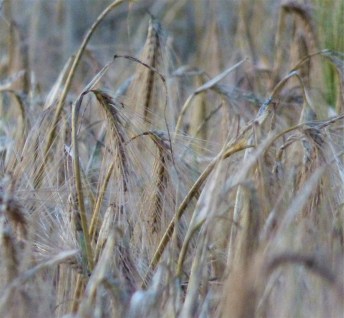
At the end of harvest, here in England we celebrate Harvest Home, which is today a church service usually followed by a supper. In ancient times, the last grain of wheat or barley left at the end of harvest was left out for Woden’s steed. In East Anglia, there is the tradition of leaving a small portion or corner of the field unharvested, for the land/nature spirits, or for the Devil himself as it is now known as The Devil’s Plantation. Where do you have abundance in your life, and where can you give back? Where is the line between holding a good relationship with your family/friends/community/ecosystem, and martyrdom? Do you give too much? Remember, there is nothing wrong with comfort, as long as there is reciprocity. Wealth also takes many forms, and does not just mean monetary wealth.
Feoh is useful in spellcrafting for monetary purposes, but remember: you have to work for your wealth. It will not just land in your lap. In divination, it can mean all of the above, with the importance of sharing something underlying the outcome.[4] It may ask that you reassess what is valuable in your life, or what skills you have in abundance. Chanting the rune while standing in the posture which emulates this rune can help you do discover more about the wealth in your life, and what you need to do to achieve it and subsequently share it so that everyone benefits. There is an element of reputation with regards to this rune, which is something that our Anglo-Saxon forebears held highly in esteem. No one would want to be seen as miserly. Remember, wealth is an abundance of a skill or resource, and so share wisely.
[1] Pollington, S. Rudiments of Runelore, Anglo-Saxon Books (2011), p.17
[2] Translation by Stephen Pollington, from Rudiments of Runelore, Anglo-Saxon Books (2011), p.45
[3] Rance, S. The English Runes, Secrets of Magic, Spells and Divination, Anglo Saxon Books (2017), p.19
[4] Albertsson, A. Wyrdworking: The Path of the Saxon Sorcerer, Llewellyn (2011), p.114
The Anglo-Saxon Runes: A new blog series
In this series of blog posts, I will be looking at the runes in the Anglo-Saxon tradition, known as the Anglo-Saxon or Old English Futhorc. As I have been studying various forms of Heathenry for quite a few years now, I have felt a calling to connect more fully with my ancestry and a real pull towards learning more and experiencing the ways of Anglo-Saxon, or English magical and religious traditions.
The runes have always appealed to me more than the Druidic ogham. I tried for years to get on with the ogham, but it never took. However, the runes come naturally to me, and seem a lot less abstract, for their shapes vary much more than the ogham, and settle much more easily in my mind. When I visited Sweden a couple of times, finding the runic standing stones just outside a village or on the side of a road in the middle of nowhere was fascinating. Though I couldn’t quite read it fully, when I ran my fingers down the markings the stories came alive within me. Similarly, I am surrounded by the heritage of my Anglo-Saxon ancestors, living as I do so very close to the Sutton Hoo ship burial site here in the East of England, and with the Saxon recreated village of West Stow nearby.
Runes are so much more than an alphabet, as they are also used in magical workings. Alphabets the world over have been used in this way, not merely to communicate information on a mundane level, but also to boost and support magical workings in various formats[1]. I have used runes for many, many years in my magical work, and it’s always been successful.
In Scandinavian texts, the runes are won by Odin, who hung himself on the world tree for nine days and nine nights in order to gain the insight and wisdom of their mystery. Indeed, the word rún in Old Norse means mystery or a magical symbol. In Old English, rún means a learning, a consultation or even a whisper or confidence.[2] Though the continental traditions viewed the connection of Odin and the runes as paramount, it seems less likely that the Anglo-Saxons associated their Woden with the script, as their runes developed much later, without the attached story concerning Woden.[3] This is interesting, because the translations of the eldest runic alphabet, the Elder Futhark, depend on the Old English Rune Poem, the Norwegian and Icelandic poems. The Elder Futhark stems from the Common Germanic language, whereas the Anglo-Saxon Futhorc contains the sounds we hear in the Old English language. So, we are using poems from similar languages in order to understand the eldest version of the runes, the Elder Futhark, because we have no original Germanic Rune Poem to help with translation.[4]
Were the stories made to fit with regards to Odin, or was the original story simply not remembered by the time the Anglo-Saxons developed them for their own use? Was the story left out by the Christian monks who recorded it? We may never know, so we look to the Norse, Icelandic and Old English poems to help understand and translate the eldest runic script. Those who work from an Anglo-Saxon context may or may not place an emphasis on working or connecting to Woden when working with the runes.
The Norse Elder Futhark consists of twenty-four runes. This is the most common form of runes you will see today, sold at many Pagan marketplaces, and with many books written about their meaning. The Icelandic Younger Futhark developed around CE 800, and has sixteen runes. The Anglo-Saxon runes date to CE 400, and so lie in the “middle” historically of the Germanic and Icelandic versions, containing 29 runes. Though the dating of the Old English runes land in a definitively Pagan era, it was only recorded for posterity in the tenth century by Christian monks, and so we have to bear a possible bias in mind in the translation and interpretation of the Old English Rune Poem, with information possibly left out for various reasons.[5]
It is called the Futhorc (or Futhark in Norse and Icelandic) because that is what the first runic letters spell out. Each rune has a verse attached to it, which describes or alludes to the mystery of the rune itself. My favourite translation is Stephen Pollington’s version, from The Rudiments of Runelore (Anglo-Saxon Books, 1995). I highly recommend picking up this work, as well as Suzanne Rance’s The English Runes, which uses Pollington’s translation. It’s also important to understand the context in which the runes were used, and better understand the mindset and pagan practices of the Anglo-Saxon. For this, I recommend Alaric Albertsson’s works Wyrdworking: The Path of a Saxon Sorcerer and Travels Through Middle Earth: The Path of a Saxon Pagan.
The Old English Rune Poem is a beautiful work, which sometimes speaks in riddles and is a joy to try and figure out on your own before looking up each definition and interpretation from learned sources. Much like the riddle game between Bilbo and Gollum in The Hobbit (and we all know Tolkein was a big fan of Old English culture and society, let alone the runes) it is fun to tease out just what is meant by a “gannet’s bath”, or which rune is referred to as “cold and slippery, glass clear and glistening like gems”. Simply leave out the name of the rune and read the poem, and it’s all a riddle.
The Old English Rune Poem is the eldest recorded rune poem, as the Norwegian Rune Poem dates to the 13th century, and the Icelandic Rune Poem two hundred years later. I have found very few copies of the Old English Rune Poem in actual runic script, however, here is one that may help you get an idea as to what it would have originally looked like, from the website All Things Linguistic.
Here is the Anglo-Saxon Rune Poem, or Old English Rune Poem, in full, translated online by Dr Aaron K Hostetter[6]:
The Rune Poem
Wealth is a comfort to every man,
although every man must share it out greatly
if he would obtain a portion of the Lord’s glory.
The ox is single-minded and over-horned,
most savage beast, fighting with his horns,
well-known moor-stepper. That is a proud creature.
Thorns are severely sharp. To any thane
seizing it is an evil, measurelessly cruel
to every man who comes to rest upon it.
The mouth is the beginning of all speech,
a support to wisdom and a comfort to the wise,
and a prosperity and trust to every earl.
Riding is a comfort to every warrior
in the hall, and very trying to those who sit upon
a powerful courser over the mile-paths.
A torch is known by every living being to be on fire,
white and bright, most often burning
where the nobles rest themselves within.
Gifts are an honor and praise of men,
a support and a distinction, and to every wretch
mercy and meat to those who are free from other possessions.
Joy is enjoyed by those who little know of woe,
pains and sorrow, and to those who have of themselves
profit and bliss and also many citadels.
Hail is the whitest of grains. It comes down from heaven’s breeze,
the wind’s showers rolls it down, and after it becomes water.
Need is a constraint on the breast, although it often comes to the sons of men
a help and a healing of every one, if they hearken to his demands before.
Ice is really cold, measurelessly slippery
glistening clear as glass, most like gemstones
a floor created by frost, and a fair face.
The new year is the hope of men, when God allows,
the Holy Heaven’s King, the earth to give
her bright fruits to rich and poor alike.
The yew is an unsmooth tree without,
hard, fixed to the earth, a warden of fires,
supported by its roots, a joy in the home.
Peorth is always a play and laughter
to the proud where warriors sit
in the beer-hall, happy together.
Elk-sedge keeps its home most often in the swamps,
it grows in the water, and grimly wounds,
it burns the blood of any man who grasps it.
The sun is ever a hope to seamen,
when they carry themselves over the fishes’ bath,
until their brine-horses bring them to shore.
Tir is a certain token, it keeps its troth well
with noble men. It is always on its journey
over the clouds of night, never wandering.
Birch lacks fruit, even though it bears
shoots without seed. It is lovely in its branches,
high in its crown and fairly adorned,
laden with leaves, pressing into the breeze.
Horses are for earls the joy of noblemen,
a steed proud in its hooves, where the heroes about him,
prosperous on horseback, weave their speech,
and ever a comfort to those on the move.
Man is in mirth, dear to his brother;
though every one must depart to another place,
because the Lord wishes, through his own doom,
that our wretched flesh be commended to the earth.
The waters seem to men to be broad,
if they should venture upon an unstable ship,
and the sea-waves terrify them so,
and the brine-horse cares not for his bridle.
Ing was first among the Eastern Danes
seen by men, until he soon afterwards
departed over the ways, a wagon running after him.
Thus bold men named this hero.
A homeland is very dear to every man,
if there he may enjoy in his household
what is right and fitting, very often with its fruits.
The day is the Lord’s message, dear to men,
the renowned light of the Measurer, a mirth and troth
to the prosperous and the wretched, useful to all.
The oak is fodder for flesh on earth
for the sons of men. It frequently ferries
over the gannet’s bath. The spear-waves test
whether the oak possesses reliability for noble men.
The ash is very tall, dear to men,
stout in its trunk, its hilt is rightfully fixed,
although it fights against many men.
A bow is for every noble and earl
a joy and an honor. It is fair on horseback,
support on a journey, some part of a warrior’s tackle.
The gar is a river-fish, and though he takes
his food on land, he owns a lovely home
surrounded by water, where he lives in joy.
The grave is terrible to every earl,
when the fixed flesh begins,
the corpse cooling, to choose the earth
paleness as its bedmate. Fruits fail,
joys depart, mankind ceases to be.
With each blog post, I shall write about the rune in turn, its connection and interpretation through the Old English Rune Poem, and my own understandings and working with this rune. I hope that you enjoy this blog series!
[1] Pollington, S. The Elder Gods: The Otherworld of Early England, Anglo-Saxon Books, 2011, p.422
[2] Rance, S. The English Runes: Secrets of Magic, Spells and Divination, Dragon House 2017, p. 8
[3] Pollington, S. The Elder Gods: The Otherworld of Early England, Anglo-Saxon Books, 2011, p.422
[4] Rance, S. The English Runes: Secrets of Magic, Spells and Divination, Dragon House 2017, p. 9
[5] Albertsson, A. Wyrdworking: The Path of a Saxon Sorcerer, Llewellyn, 2011
[6] Hostetter, A. The Rune Poem, from the Old English Poetry Project, https://oldenglishpoetry.camden.rutgers.edu/the-rune-poem/ (accessed 14 Aug 2020)
The Importance of Lammas/Lughnasadh
I recently read something in a new Wiccan book release that made me sad and a little frustrated. In this work, the author stated that Lammas/Lughnasadh celebrations on the Wheel of the Year in Modern Paganism can feel like an outlier, a festival that for many people is hard to connect to, understand or celebrate. If you do not live in a rural area, why celebrate this festival at all? As such an important festival to our ancestors, we have to realise the importance of this festival not only in this context, but also in the modern day.
Historically, Lammas/Lughnasadh is the celebration of the first harvest, or games/festivals occurring just before the first harvest. It was an opportunity for people in a rural setting to meet others from the surrounding countryside, often from many miles away, in order to make trade deals, marriages and also enjoy games of competition. When your world is quite small as you live and breathe your farm/village life, the chance to get out and meet others is so very important, as I’m sure we all have experienced during the various lockdowns since the COVID pandemic. Imagine if that was your world all year round, and this was your only chance to see people outside of your village.
As well, the taking in of the first crops is something that should be celebrated in any nature-based tradition. Whether you live in an urban setting or not, what happens to the harvest in or near where you live, or in your own country on a wider scale does affect you, even if you are in the heart of a downtown metropolis. If the wheat harvest is bad, you will find bread and other wheat-based products go up. Same for any crop, whether that is apples, onions, potatoes, carrots – you get the idea. Not only does this affect you financially, but it can also affect you physically. If you are not supporting organic and locally produced crops as much as is possible within your capability, then you are effectively saying that nature doesn’t matter, and how we get our food is more important than the overall effect on the environment itself. This sort of thinking has led to genetically modified food, the long-term consumption of which we will only begin to notice in the coming years. The vast industry of monoculture crops requires much more pesticides and fungicides than a diverse or organic crop, as permaculture has shown us time and again. There is strength in diversity, and great weakness in monocultures. This applies not only to agriculture, but to all culture.
Everything is connected. Everything is related. To think that you are separate from something is mere illusion. Just because you might not live in a rural setting, doesn’t mean that what happens there has no effect on your life. The air we breathe, the water we drink, the food we eat and how we treat our environment all affects us every second of every day.
Let’s remember this when it comes to Lammas/Lughnasadh; let us remember the interconnectedness of all things, and the sacredness of all things. Let us remember how important this time was for our ancestors, and how important it is still, today, wherever we live. It’s not an abstract concept, especially if we follow a nature-based tradition. It is a real, living, breathing, contributing part of our world, and should be one of the most important festivals in the Wheel of the Year.
To find out more about Lammas/Lughnasadh, I have written about it and the other festivals celebrated in Druidry and much of Modern Paganism in my book, The Book of Hedge Druidry: A Complete Guide for the Solitary Practitioner.
Reflections on 2019
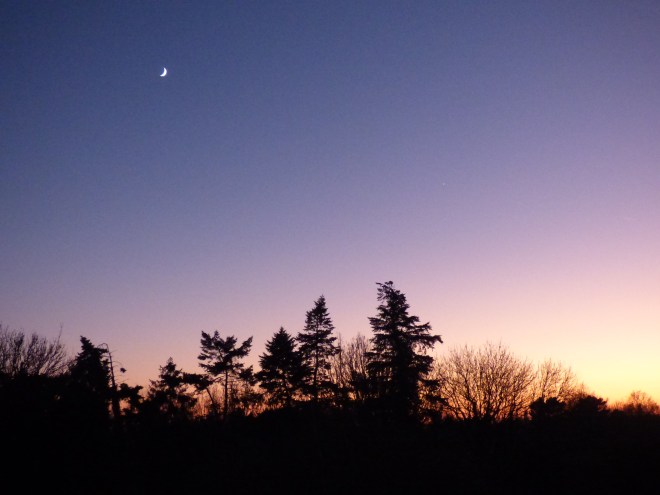
I type this as the sun sets on one of the last days of the year. The mist is rolling in, the sky changing from blue to yellow to pink. The pine trees stand tall, silhouetted against the fading light. A flock of pigeons fly across the thin crescent of the new moon. A hush is descending on the little village, and the candles are lit in my home.
Looking out the window at the hazy purple trees in the distance, their bare branches still in the evening light, I reflect upon the year that has just gone. My dreams have been strange of late, perhaps due to illness, perhaps due to the mental ruminations that winter and the closing of the year bring. I’m tired, physically and mentally. I’m just getting over a nasty cold, and my husband is currently fighting it. The cats are doing well. The family back in Canada are doing well, apart from one tiding of bad news and ill health. But we are strong, we will meet all challenges head-on, staying positive whilst being realistic. I thank my family heartily for teaching me these lessons. I am too easily blown by the wind, feeling it all. Their Dutch practicality is my steady anchor when the storms of emotion hit hard.
So too is this beautiful land where I live, and I give thanks to the trees and the sky, the sea and the heath, the deer and the owls that keep me company day and night. Even as I long for my familial home on a daily basis, this beauty right here, before my eyes in this very moment is what is real. This is what I must engage with, this is what I must feel; otherwise, I am simply a ghost in this landscape.
I am making friends with the muntjac deer who visit me every evening, expecting their peanuts. There are two males, Douglas and the smaller one, Jeffrey. Sometimes Doug’s partner comes with her two children, one a year old faun and one born late this summer. I do not yet know their names. Occasionally, Freya the fallow deer visits, her long legs moving her gracefully across the lawn, her carriage always like a queen. The wren sometimes sits on the picnic table when I am washing the dishes, giving me a wonderful look at his tiny body, so round and soft.
So what has this year brought? It’s been quite a calm and steady year. The first half was filled with the final work and then anticipation over the release of my new book, The Book of Hedge Druidry. Summer and early autumn was filled with promotional work, and hearing the reviews that were coming in. The Book of Hedge Druidry went to No. 1 in its category on Amazon many times over the last six months, for which I was overjoyed. I give my thanks to everyone who has taken the time to write to me personally, or leave a review. So many lovely, wonderful people from across the world have reached out, and it’s so nice to know that there is resonance with the words after you release them out into the world.
A crow flies across the deepening sky, followed by two airplanes high above, their contrails glowing pink before quickly disappearing in the high pressure. So many planes tonight, flying across the southern sky. More and more carbon, going into the air, with cheaper and cheaper flights. I worry for the future, I really do. Taking a deep breath, I ground and remind myself that I am doing all that I can, and to be here in the moment. I know that next summer I will be on a plane myself, for a very special family occasion. I cannot judge without being judgemental.
What other things have happened this year? Well, in late autumn, a creative burst came through in a completely different media than usual. Photography and video has inspired me these last few months, and it’s nice to take a break from the written word. Expressing myself in different mediums has widened my horizons, and made me realise that I am more than just Jo, the Druid.
Six airplanes in my small field of vision, as I look out across the back garden.
Douglas and Jeffrey have arrived, and are eating peanuts.
My cats are sleeping at my feet, happy and content.
My husband is downstairs, watching the hilarious soapbox races on the television.
It is safe to say that my world has grounded itself in reality of late. The dreaming druid is still there, but she is sitting side by side with many others. She is sharing a table with many aspects of my soul, and there is food enough for all to share. The call of my ancestors is still strong, and my heart hearkens to a heathen past while my head remains firmly in the present.
Other things that have happened: I’ve revamped my website and this blog, and opened up an Instagram account. My Youtube channel is going strong. I also have a Patreon page, where people can support me in the work that I do, for whichever medium I creatively express myself in, day in and day out. I am so grateful that I have the opportunity to do so, because for so long my life was filled with simply trying to survive. There were so many ideas in my head that had to be held back because I needed to make a living first and foremost. These last five years have really shifted that way of being, and I am eternally grateful. It feels like I’m opening up, that more and more creativity is coming, in various forms. I have music planned, and art. In the new year, there will be a place on my website where you can order prints of my photography. There is much to come, by the grace of the gods and my own will.
The room is darkening considerably, and I will have to stop writing soon, for the glare will become too strong for my eyes in the candlelit room. I shall take a moment to sit with the candles, and meditate upon what has gone, what currently is, and what may come. I shall be grateful for every moment, every taste that life has to offer, in every spectrum. There may be trouble ahead, there may be smooth sailing. We cannot know for certain, but we can steer the course of lives as best we can. As the peachy sky fades into grey, then indigo and then black, I know that the stars will shine tonight, at least for a little while. And after that? Who can say? I only know that I am thankful for my many blessings.
To everyone who has followed this blog over the year, and some over many years, to everyone who has yet to come into my life, to everyone who has supported me and my work, I give you my heartfelt thanks. I could not have done it without you. There is a relationship right here, though it is often silent, and hidden. But it is here, between you and I, right here in this moment as you read these words. And I honour you for this moment, this shared moment.
May the coming year bring you peace and happiness in the best of times, and strength and courage in the worst. May we all stand shoulder to shoulder, to work with each other to make this world a better place. May we all walk in beauty.
Love, Jo. x

My Winter Holidays
Here’s what I’ve been up to this very busy week!
Thank you to friends and family for some wonderful winter holiday memories 🙂
Wishing you all the best this holiday season!
Happy Winter Solstice!
This morning my Facebook feed was filled with lots of lovely people wishing everyone a happy winter solstice. So nice! And yet, there were just as many people correcting them, stating the the actual astronomical time is tomorrow, etc, etc. Let’s all just relax a little bit, and celebrate whenever we can, wherever we can, and however we can without the need to tell people that they’re doing it wrong.
So happy Winter Solstice for today, tomorrow and Monday!
A Day in the Life…
Hi everyone! I hope you like this video, and I’ve got more coming up in the next few weeks. I plan to have a Heathenry/Northern Tradition video soon, as I’ve had enquiries for more information on that subject. Thank you all so much for your support, and please do check out my Patreon page!
Huge love.
J. x
Winter’s Reflection
This time of year always makes me think of my family: my relatives, my extended family, and my ancestors. It’s a difficult time of year to be separate from them, as during this season it is all about being with family. As I won’t be going back to Canada for the holidays this year (I was back in the summer, and will be going back next summer for a big wedding anniversary) this winter will be a hard one, mentally and emotionally. Thank goodness for the blessings of Skype!
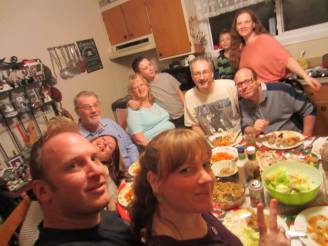
So how do I cope? Well, first and foremost, if I can’t be with my blood family, I’ll be with my chosen family: my friends. We’re organising a Yule ritual and feast, and it will be good to be with others, laughing and sharing food and drink, a warm fire and toasting the past year, and looking forward to the coming year.
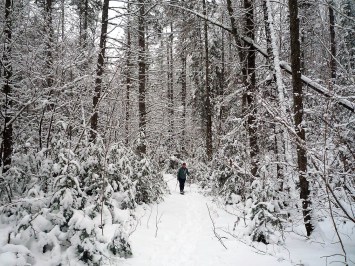
As always at this time of year, my spiritual path shifts to honour my ancestors. My practice takes on more of a Heathen focus, working with the old ways of Germanic customs, deities, ethics and lore. If I can’t be out walking the snow-covered hills and deep, silent forests of my native Canada, then I will work with the ancestors and spirits of place here in England that still remember and resonate with a similar landscape from their past, and also a similar ideal. It runs through my veins, the yearning to be with family, to deepen those bonds with gifts and storytelling, to be out in the winter air and honouring the world around me.
I feel a close connection to Frigge, the Allmother, especially during the winter months. She is the lady of right order, a lady of sovereignty, she who sees the wyrd of all. She is a great weaver, and she knows the bonds of friendship and family are the strongest ones we can have in our lives. I say a daily prayer to her every morning, and light a candle in her name.
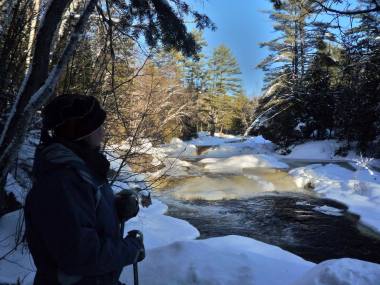
There is also a special place in my heart for Ullr, who is mostly associated with hunting but, as with all the northern traditions’ deities, they cannot be pigeon-holed into a specific “god of such and such” for their functions, their talents, their skills and their passions often overlap, just as ours do here in Midgarth. I also honour the Etin-bride Skadhi, she of the snowshoes, an independent and strong warrior woman who is not afraid to ask for what she wants in life. If I can’t be out on my cross-country skis back in Canada, then I can still feel the presence of the gods in the awesome winter skies of East Anglia, with frost on the ground and the deer in their large winter herds before me on the heath.
I honour Freya (who may or may not be separate from Frigga – the debate still rages) as a lady of seidr, the magic and trancework of the northern peoples. With my staff I sit, indoors or out, and connect to my guides, singing the songs that take me between the worlds.
I also have a great love and respect for Tyr, who befriended Fenris the Wolf who will slay many at the end of days, at Ragnarok. When Fenris came to live with the gods, Tyr was kind enough to take care of him, to feed him and keep him company. When the gods decided that Fenris should be bound, in an attempt to stop the aforementioned fate from coming to pass, the wolf knew something was up, and demanded that someone’s hand be put in his mouth while the magical fetter was being laid upon him. No god or goddess was willing to do so, apart from Tyr, who knew his duty, both to the wolf and the gods and goddesses of Asgard. And so he lost his hand when Fenris bit down after realising he had been tricked. Tyr knows the price to be paid, as well as duty and the kindness that is compassion.
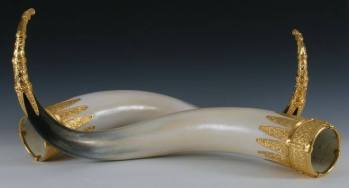
I work with the runes, and am studying them in more depth this year. I’m also going to be part of a study group with a kindred that lives a few rivers down the coast, who have kindly invited me to several blots over this past year (rituals where blessings are offered and given). There is the special sumble (ritual where words are spoken over the ritual cup/horn, to fall into the well of wyrd) near the winter solstice, and of course, the entire festival of Yule which I will celebrate, spanning the 12 days of Christmas in the modern calendar.
All in all, this winter will be a quiet one, where I turn to my ancestors and work with my heritage, learning new things and becoming a student once again. I’m very much looking forward to it, and to the new discoveries along the way. May the blessings of winter’s might and reflection be with you all!
Review of my 2018
What a year it has been! Despite all the depressing and, quite frankly, rage inspiring bollocks from politics around the world, and the growing problem of plastic and climate change around the world, etc., etc., here in this little part of the world, at my home on the edge of the heath near the North Sea, it’s not been a bad year.
I finished the Big Book of Druidry (as I like to call it) and it was a labour of love. So much work went into that volume, and I hope that it reaches people like The Awen Alone did. I received so many emails from people about The Awen Alone this year, so many wonderful and life-changing stories, and I am so grateful that people took time out of their busy lives to write and share their story.
I also started on another book, veering away from Druidry and into the realms of the Hedge Witch. Stay tuned!
All this writing, combined with an incredible heat wave over this summer, meant that I was much more sedentary that usual, which has resulted in a sluggish body and a few extra pounds that I can feel in my joints. So, this last month I’ve already started to be more active, doing yoga and going for 5k walks as often as I can, and already I can feel my strength returning. I will be teaching intermediate belly dance classes beginning the second week of Jan, so this will also add to my physical activity. I resolve to keep this up over the next year, to be a healthy and as active as I can be, and to enjoy the beauty of nature right outside my doorstep no matter what is on my plate, or whatever the weather.
While writing the new book I’ve felt a shift in my own practice as well. I feel a returning to the path of the witch, where it all started for me 25 years ago at Melange Magique when I was a 19-year old investigating the book shelves of that wonderful shop, in between fussing the cats that freely roamed the aisles and lay upon the counters. With a lot more experience and knowledge behind me, it has given it an entirely new flavour. I have always been a witch, but I had to study to become a Druid. This is the basis for the current work I am writing, which I hope to finish next year.
It’s also led me down side paths that again were explored many years ago, but never fully completed. I’ve felt a call to honour the Germanic and Scandinavian deities that are a part of my heritage, and so my research and practice into the culture, folklore, mythology and more has been re-awakened. While looking at some witchcraft practices for East Anglia to use as examples in my new work, I realised just how similar some of these were to those of north and western Europe, such as the practice of a high seat in seidr. In fact, the art of seidr has intrigued me greatly, and I feel that this will complement my own practice of hedge witchcraft nicely.
Druid College continues to be successful, and due to a high demand for online courses, next year we are putting Year 1 on hold in order to create an online course. This will consist of video and audio material, a downloadable book and online meetings with others on the course. We hope to have this available by 2020, fingers crossed! Our current Year 2 students are doing so very well, and it is indeed a great pleasure to be working alongside such people. After each weekend session, as soon as I get in the car with Robin, we both say how wonderful the people are that have chosen to work with us, and how blessed we are by those that have chosen to join. They bring so much, and I am eternally grateful that these first four years have been as good as they are, which is to say, brilliant!
There have been a few bumps in the road this year, which have given me lessons of experience to work from in the rest of my life. Having to say goodbye to my 16-year old cat last December was so very hard, to make the decision to end her life rather than have her suffer days or weeks of pain as her chest was filled with water due to congestive heart failure and she had trouble breathing, eating, walking, movement of any sort. That was the first time I had to make that kind of decision, and although I doubt it will be any easier should there be a next time, and it took a long time for me to get over it even though my baby girl passed quickly and painlessly, I know it was the right thing to do in that situation. I suffered all winter long from having to make that decision, and my new boy Barnabus was a ray of light during that troubled time.
As well, I had a difficult experience of another sort, when a peer decided to attack me on social media after I had contacted her to request permission to use two verses of an Irish poem she translated. To this day I still have no idea what set her off, but the vitriol of the attack was shocking, and the attempt to destroy me and everything I do quite mind-boggling. It brought back old pains of bullying when I was a child, and affected me on a physical level as well as mental. I realised this when I was walking down my street to the village shop, and in the middle of the street my heart started pounding and I felt very unsafe, like bullies were just waiting around the corner. I had to remind myself that I was 43 years old and no longer a young teenager, and no one was going to physically hurt me. It opened my eyes to the old scars that never truly heal, and I have learned how to better deal with such experiences. Namely, don’t read posts like that on social media, don’t get involved and don’t read all the uninformed comments either! Let the haters hate, there’s not much I can do about their behaviour anyway. As long as I am physically safe, and emotionally okay with a good support network of family and friends, that is what really matters, not what strange people say. I’m still working on compassion for people like that though. It’s not easy.
Back to the creative front, I hope to add more to my Bandcamp page over the next year. I started an album called Seidr, which will contain the songs and chants that come to me in my work over the next year. Perhaps there will even be a blog post or two about the practice of seidr, but in the meantime there is an excellent video by Professor Jackson Crawford on the subject. (I have a total nerd crush on this guy!) There are also some good books, such as The Nine World of Seid-Magic by Jenny Blain, and The Norse Shaman by Evelyn Rysdyck. I also hope to record more podcasts for the page and its subscribers, as well as record the audio book for The Hedge Druid’s Craft. The Awen Alone and The Crane Bag are already on there as audiobooks, so do take a look if you’re interested. All of these will be/are available to subscribers, as well as any new material in the coming year, so you really do get your money’s worth!
So, for this winter I shall be investing heavily in hygge, being more physically active, exploring new paths and learning from past experiences. I hope that 2019 will be a good year for you all, and see you all in the New Year!
Love,
Jo. x