
Right now the politics in the UK has created a huge divide between the nation. I imagine it’s similar in the US, and in other countries throughout the world where the left is clashing with the right. It’s probably not helped by social media, where everyone is shouting their opinion and condemning anyone who doesn’t agree with it. When Hilary Clinton called all the Trump voters “deplorables” towards the end of her campaign, and when the lefties here in the UK are calling everyone on the right “Nazis”, we have reached an either/or situation. We all know that things are not so cut and drawn, that because someone disagrees with you means that they are pure evil. No, we must be more mature about how we react to those who disagree with us, and instead of trying to destroy them, listen to them.
It’s an exercise in learning how to judge correctly. It’s learning the difference between judging someone’s actions rather than judging someone’s person. If we can’t differentiate the two, we will never have proper discourse, and we will never find a peaceable place where real change and transformation can happen. We’ll simply be shouting at each other all the time, labelling each other in neat little erroneous boxes that simply support our misguided arguments. We’ll never be able to bridge that division in order to do what needs to be done. When it comes to politics and parliament, we see this example clearly. If it’s all about party politics, nothing is achieved and it’s simply a shouting match. When we are able to talk to each other and really make an effort to hear and understand each other, then we are working for the best interests of all, which is why (hopefully) one got into politics in the first place. But egos and power struggles keep getting in the way, and we can see the real mess that this creates first hand.
So, who are we to judge? Well, as humans we need to judge situations in order to respond correctly. However, we now live in a culture where reaction, rather than responding, is the norm. Reacting to something isn’t thoughtful, it isn’t mindful. It can have all sorts of associations such as past hurt and trauma rising to the surface that has nothing to do with the present situation. When we respond, we first have to listen. We have to put aside our ego for a moment, in order to truly hear the other side. We can then influence the pattern that we wish to create on our lives with more intention, weaving in that which is beneficial, rather than that which is destructive or which has no bearing on the present.
Each side in a difference of opinion thinks that they hold the truth. But what we are really holding are perspectives, a slice of the pie and not the whole thing itself. We are not omniscient; we can’t really know all the facts. We can research and learn all that we can about a situation in order to respond with awareness, sure. But we have to allow that margin of unknowing, the fact that we do see things from our own perspective, coloured by our past, our society, our intellect, our privilege and more. And in some situations, we have to allow our emotion to help us bridge the gap between what is right and what is right for us.
What do I mean by this? I mean that we cannot simply judge a situation based on the facts. Because, for starters, we will never have all the facts. We will have the facts that are presented at the time, and as we all know, new facts are discovered all the time. So we have to rely on empathy, on our gut instinct sometimes in order to judge a situation correctly. But this is tricky business, because we’ve been taught that our rational minds are all that matter. What really matters is the truth of a situation, and we can only know a portion of that truth. When we open our hearts to others in empathy, we will then see another slice of that pie, another slice of the truth and then our perspective shifts. We cannot do that without trying in some way to relate to the other person, instead of de-humanising them.
In the last few weeks, I’ve discovered that Twitter is the perfect litmus test for this experiment. When someone whom you’ve enjoyed, perhaps on a television show or in a certain community suddenly spouts political rhetoric that you utterly disagree with, what do you do? Do you instantly unfollow them? Disregard them based on that one opinion? Do you judge them as a person based on their political preference? How does this judgement of them affect the situation as a whole?
One thing I’ve learned is that when we judge others, we don’t define them. When we judge others, we define ourselves.


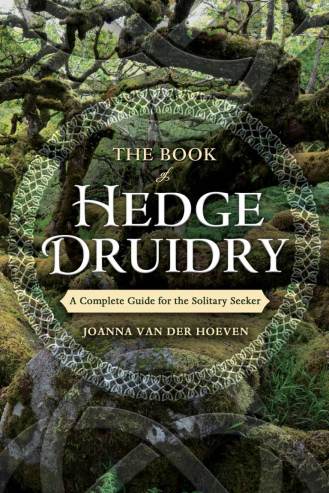 This ritual is not for the faint-hearted. For at Beltane, the portals between this world and the Otherworld are wide open, and the Fair Folk are out in abundance. Here we will go out into a wild place and seek out a companion or guide of the Fair Folk: one that can offer advice, wisdom and intelligence on the locality of place, what is needed and what can be offered in return. Meeting one of the Fair Folk can be thrilling, but can also be a little scary. They are like and yet not like us, as described in the previous chapter on the Fair Folk in Part One of this book. They have different agendas, and may or may not appear in human form. Yet Beltane is the traditional time for encountering the Fair Folk, as is Samhain. So here, with caution, we will attempt to meet one of them, to gain some insight into the work that we can offer to the Fair Folk as well as the spirits of place, and what they may ask of us (and what we may receive in return).
 Many within Western Paganism have heard of the Law of Attraction, especially if you have been working magic. However, I often see this oversimplified in books, stating that “if you put good energy out there, good energy will return” and vice versa. Not only is this trying to oversimplify the law of attraction, but it’s actually incorrect as well, in my opinion. I know plenty of good people who have bad things happen to them, and some bad people who have good things happen. I know, not all people are good or bad all the time, but it’s just a thing: we live in a shared reality, where we can’t control the actions or behaviour of others and so sometimes, no matter what energy we are putting “out there”, things will happen that will be contradictory to what we are attempting.
 Down the Forest Path