Here’s a montage of some of our holiday season performances over the years, including my most recent performance at the Winter Shimmyland Charity Hafla 🙂 Blessings!

Here’s a montage of some of our holiday season performances over the years, including my most recent performance at the Winter Shimmyland Charity Hafla 🙂 Blessings!
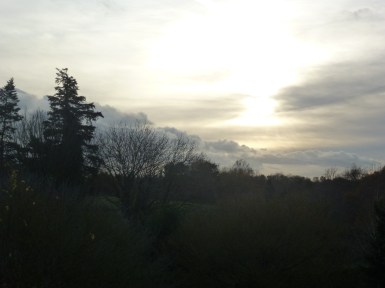 The Wild Hunt has been riding most evenings here around my home by the North Sea. The wind whips around the house and the rain pelts against the window panes. One night it comes from the north, the next from the south, then the east followed by the west. Each wind brings different scents and different temperatures but all are certainly wild at this time of year. You don’t want to go out in it, that’s for sure.
It’s at this time of year that I feel closest to my ancestors, my blood ancestors from Western Europe and Scandinavia. Their voices and stories are whispered in the dark mornings and early evenings, sometimes howled down my chimney in the evenings and every morning as I sit by my hearth altar, lighting a candle and praying to the gods, the land spirits and the ancestors. They call me to honour them, to know them once again, to say their names. And so each year I do, though this year feels different.
 This winter I feel called to explore the spiritual traditions of my ancestors in greater depth. Though I’ve lived here in Britain for twenty years, all of my blood relatives come from Western Europe and Scandinavia. DNA testing has revealed some fascinating stories, and the picture is growing of my blood ancestors, changing as more information and DNA is submitted. I’m finding family from all walks of life, from all over Europe, gradually adding to my own family tree as records become electronically available and I am able to fill in the gaps where personal records have gone missing. It’s been a great exploration this year and looks to continue for many years to come.
So for these winter months I shall be exploring fully the pre-Christian religious and spiritual traditions of my ancestors. These are Germanic, Danish, Frisian, Belgian, Norwegian and more, which fall under the modern category of “Heathenry”. I’ve studied Heathenry for many years, but never developed a full practice; it’s always been more of an academic exercise. And so, this winter I shall bring it to life within my life, honouring the land wights and house wights, the ancestors, the gods and the goddesses. I’ve always had a special place in my heart for the goddess Frigge, the lady of right order, whose nature I feel is close to my own. As well, Skadhi and Ullr I have honoured many times while out snowshoeing and skiing in Canada and Norway. Tyr’s justice and compassion hold great meaning for me, and Freya’s seidr magic speaks of mystery, beckoning me further. It is with these gods that I shall be working over the winter, as well as the tomte and nisse of the household, and the land wights of the heathland and forest where I live. (I have already, obviously, done so in a Druid sense, so I will see if this changes slightly).
Already, I have found many similarities between Druidry and Heathenry. They almost seem to be talking and doing the same thing, just in different languages. The groves they worshipped in, the poetry and art, the warrior and the wise cunning folk, all of these seem to have resonance with each other, but expressed slightly differently. As well, much of the magical lore and tradition found in East Anglia I have found stems from Northern European magic, such as seidr.
It will be exciting to explore these traditions and heritage in practice. It will be interesting to connect to my blood ancestors more fully, exploring and expanding upon my family tree and widening my practice even more. And so, here on the coast of the North Sea, I will call to my ancestors, to the gods and goddesses of the North, to the land wights and house wights and see who answers.
I wish you all a very blessed Yuletide! May the longest night bring you peace, may you find strength and courage in the darkness, and hope in the growing light of the sun.
Continuing on from my previous blog post regarding boundaries, let’s explore a bit further about different kinds of boundaries. I think that this is a very useful practice in modern society, especially if we want to continue to have healthy and open dialogue, to be able to practice freedom of speech and to be able to see from a broader perspective than our own perhaps limited point of view. When we stop listening, we stop understanding.
This was really brought to light recently for me when I heard of the de-platforming of two speakers/presenters/vendors at the upcoming Pantheacon. I was flabbergasted by the reaction of the organisation, decided to research the background of the situation that would lead to such a decision. There wasn’t much to go on, sadly: it was simply a matter of opinion, and an uninformed one for the most part. I really hope that the organisation’s statement doesn’t damage the work of these presenters, because that is just unacceptable. They have, at least, removed the wording that these presenters are “dangerous” from their webpage, which was still up last week. I guess they saw some looming libel laws and changed tack.
At any rate, the real issue is boundaries, and how we can feel safe and free to express ourselves, without damaging others in the process. Indeed, I thought long and hard about even mentioning the above as an example, not wanting to deal with a whole bunch of backlash from the flame war that has erupted on the internet regarding this issue. But then I realised that this kind of thinking isn’t helping anyone, and no one should be afraid to debate an issue with all due respect. We seem to be living in a culture where it is getting more and more difficult to criticise, respectfully and honestly. In a recent Guardian article, this was highlighted by people sabotaging real debate when they mis-label hate speech/hateful conduct. I felt that the real crux of the article was summed up in one sentence: “There would seem to be little one could say on most difficult issues that could not also be construed as hatred.” I think of Jeremy Corbyn and the antisemetism rhetoric and terrorist supporting rhetoric that was hurled at him from the opposing party and taken over by the Tory-owned and operated media. I am now seeing it more recently reflected by the de-platforming of speakers this year at one of the largest Pagan conferences in the world. It seems that it is becoming a weapon to be used against people who are not really the enemy, but who want genuine debate and conversation in order to better understand the situation in general, or who are simply doing their own thing and some people disagree with it.
Are we no longer able to criticise and debate the real, deep issues that affect us as human beings? Why do we feel threatened by this debate? We all understand the power of words, but it is only through words that we can resolve conflict. Perhaps this is due to a backlash from social media, where people have expressed their opinions in less than honourable ways, and people’s defences are up. Hate speech is very real online. Yet I still think that we should be able to criticise ideas and debate issues, no matter how difficult they are, without being labelled as dangerous or worse.
This leads me to emotional boundaries. I’ve spoken about how we all need to understand emotional responsibility, and the importance of compassion in our relationships. Some subjects we are extremely passionate about, because they affect us directly. We can be hugely passionate about an issue, and yet still engage in debate without criminalising the opposing view. In the original blog post that inspired this series regarding boundaries, it was noted what healthy boundaries were, and what they were not.
“According to the book Boundaries and Relationships by Charles Whitfield, M.D:
Healthy boundaries are NOT:
Set for us by others
Hurtful or harmful
Controlling or manipulative
Invasive or dominating
Rigid and immovable
Healthy boundaries ARE:
present
appropriate
clear
firm
protective
flexible
receptive
determined by US”
With emotional boundaries, the responsibility for working with others is entirely up to us. Yes, some people transgress the law in doing so, with real hate speech and violent verbal abuse, both online and in person. That is why these things are illegal and need to be dealt with accordingly. However, having others determine what our personal boundaries should be is where the issue really lies. After having done my research on the Pantheacon issue, I knew that I did not want Pantheacon’s opinion any longer, especially as I feel that their mission statement of “setting aside differences of opinion” is in direct conflict with the decision that they took. I don’t think that Witchdoctor Utu’s reason for de-platforming is a valid one (Pantheacon have not provided a reason on their website as of the date of this blog post’s publishing, but if you go to his Facebook page you can get his side of the story: namely, they believed that due to the fact he honoured black ancestors in his tradition, he was guilty of cultural appropriation.) I also don’t think that Max should have been de-platformed and labelled as a trans-exclusionary advocate, and indeed a great opportunity for discussion was missed regarding issues relevant to and debates around trans-gendered people, boundaries and more. (You can see her side of the story on her Facebook page.) It seems that silencing people who you think are wrong is becoming more and more socially acceptable. This is a great tragedy with regards to understanding and compassion.
When we engage in discussion, let’s do so with our passion as inspiration for our words, but also with our heads firmly engaged in honourable debate. There is no need to de-humanise the other, to even make them The Other, the opposition, the enemy. Maybe it’s all my Buddhist practice speaking, but I truly feel that this is an issue that really needs to be looked at in today’s society. We don’t need to destroy someone whose opinion is different from ours. We should be able to express our opinion and, in doing so, may have to listen to the opinion of others whom we disagree with, maybe even loathe. By maintaining good emotional boundaries, we should be able to do so and really be able to engage without de-humanising the other side. It’s up to each and every one of us to engage with others honourably, and with respect. We are all human, we are all thinking and feeling creatures.
Let’s fully engage with emotional responsibility.

 We will be postponing our next Year 1 session in Essex, as we have something very exciting brewing in the cauldron of inspiration! Starting in January 2019, we will be preparing our new online correspondence course, a full Year 1 programme, which will consist of online meetings, pre-recorded video and audio lectures, booklets to download and more. We have had so many people get in touch wanting to know if we could offer a correspondence course, as they were physically unable to attend our in-house sessions. And so, we aim to provide this for 2020, alongside our next Year 1 in-house programme. Stay tuned for more updates and info!
The deer rut is in full swing here where I live, and out on the heath the stags are calling, fighting and just generally being splendid. Here are some shots that I got this week – sadly, I couldn’t take any photos of the clashes, as it was too dark with evening coming swiftly on!


 Shine, in the coming darkness. Let the spark of awen light the flame within your soul. Guard that flame, the truth against the world. Let it be your guide, let it be your light, to shine out into the world.
There will be challenges. There will be challenges against you, against the world. The flame of others may not shine so bright, for they have not discovered the beauty and promise that they hold. The flame within their own hearts has not been set alight, or has been dimmed by pain, by the past, by worries of the future. Seek to light the flame in others, even as you hold fast to your own inner flame. Support and nurture the spark within, to allow truth into the world.
Only you can allow others to dim your light, to weaken your flame. And they may try, especially when you shine so bright. For we live in a world where competition and dissatisfaction is rife, where if someone else is succeeding, it is perceived as personal failure in our own lives. Drop this illusion, and fan the flames within and without. If one succeeds, we all succeed. Two flames burn brighter than one, and blowing out someone else’s flame does not make yours burn brighter. When you burn bright, and others seek to dim your flame with their own pain, their own wounds, then burn all that much brighter, to guide the way in the dimly lit corridors of the mind, and the heartache of the soul. Know that in the action of dimming another’s flame, there lies a wounded heart, and often a frightened soul. Keep clear in your boundaries, but also be compassionate in your words and deeds.
Shine on. Nothing can take that away from you but your own self.
May we be the awen.
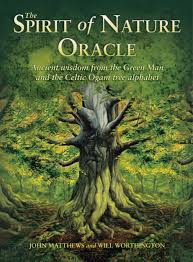 The Spirit of Nature Oracle cards by John Matthews and Will Worthington have been re-released by Eddison Books, much to my delight. This deck of 25 cards brings together the wisdom of the Druid Ogam, and the history and magical influence the Green Man has over humanity’s lives still, even in our modern day and age.
The Ogam is a Celtic “alphabet”, a series of lines drawn over a vertical axis that have many various meanings, depending upon the type of Ogam being used. There were over 250 types of Ogam, such as the famous Tree Ogam, Pool Ogam, King Ogam, Bird Ogam, Dog Ogam, even a Food Ogam! These provided the mnemonics necessary to retain and also express a vast wealth of information in as small a form as possible, not unlike poetry and its distillation of meaning to some carefully chosen words. The Green Man is a figure from out of the mists of time, one that has watched over humanity since its inception and throughout its evolution. Trees have been a very important part of humanity’s existence and success, for within their shaded boughs we found safety and security, as well as food and healing.
Bringing the Ogam and the Green Man together is a wonderful way to provide a holistic tree-based divination system. In our modern society, we are a very visual bunch, and so I believe the popularity of oracle cards has gained because of this in our lives. Our memories are filled with such an abundance of other “stuff” than our ancient ancestors held, and so the training to interpret the various meanings of each Ogam would take more time than most have in order to be successful. By bringing the format into something very visual, we can meditate upon the image and see the meanings held there, both historically and in our own personal gnosis, brought to life in an easy form and media that anyone can use.
We have the brilliant artwork by Will Worthington, who used ancient, traditional methods such as painting with egg tempura-based paints upon wooden panels. Matthews’ knowledge and wisdom shines through the text, providing historical background to the Ogam and the Green Man, both simply and eloquently, as anyone who is familiar with his works can attest to (and I’m a big fan). The divinatory meanings are clear and inspired, and yet personal gnosis is recommended first and foremost by Matthews when drawing a card, for to gaze upon the card before outside influence can reveal some truths about the self that others’ interpretations could not touch upon.
There are some suggestions for drawing the cards, based on one, three or five-card spreads. Using the Tree of Life spread, by placing three cards in reference to the Lower, Middle and Upperworld is truly inspired. It’s an approachable deck, for anyone to use, regardless of religious or spiritual background or preference. The cards can simply be used to meditate upon the season and the cycle that we are currently in, as well as being used for divinatory purposes. I would highly recommend using them both ways!
I am so very pleased that this deck has been re-released, and in such a beautiful format. It comes in a sturdy box, to protect both book and cards from being banged around and makes it useful when travelling. My only criticism would be that it would have been nice for the book to have been in colour as well, to match the cards, but being an author myself I am fully aware of the limitations both in print and in financial terms that this would be subject to, and so would say that the beauty of the cards themselves more than makes up for it. The book is great reference and resource material, and the cards are wonderful pieces of artwork. I highly recommend this deck to anyone who loves trees, nature, Celtic lore and spirituality or who just loves and collects oracle cards!
For the next few blog posts, I’ll be mulling over different kinds of boundaries, namely meant, emotional and spiritual. This was inspired by a blog post that I read today, and I felt compelled to write down my thoughts in order to clarify them to myself, and hopefully be of some use to all you lovely folk too!
In the article, perhaps the most important line is that which begins the discussion, which is:
“Boundaries are guidelines, rules or limits that a person creates to identify for themselves what are reasonable, safe and permissible ways for other people to behave around them and how they will respond when someone steps outside those limits. Boundaries are not rules for someone else to follow.”
This really resonated with me, as it helped me to clarify where I have transgressed in my dealings with others, and where the same has happened to me. When we create a boundary, we have to know that the boundary we have created is for us only, and we cannot dictate that boundary to others in a way that will try to change them. Boundaries are for changing ourselves. It gives us guidelines as to how we will respond to a situation, from a place of intention rather than reaction. Boundaries are rules for our own behaviour, and not for the behaviour of others. We may find the behaviour of others unacceptable, but it is up to them to create their own guidelines and ways of living and interacting with others. It is not for us to change others, but rather to define how we will impact upon the world, hopefully in a way that is compassionate, holistic and intentional. As well, when we live the example we are trying to set, we are fully walking our talk.
So let’s start with mental boundaries. In the article, the definition of mental boundaries are:
“Define your thoughts, values, opinions. You own your thoughts. Each individual decides what is private, what they wish to share or not share. What do you believe? Can you listen with an open mind to others thoughts or opinion without becoming rigid while at the same time not compromising core beliefs?”
Over the last few years, I’ve really been trying to define and articulate my thoughts, values and opinions, without being judgemental about any of them. It’s been an extremely difficult exercise, and I still find judgement creeping in all the time; what has changed is that I am now aware that I am judging a situation/person/opinion, and that helps to open up and clarify somewhat my own perspective. In our work at Druid College, one of the exercises that we each do is to create a list of our personal values, our moral and ethical code, in order to better understand them. When we write it down, it can distill and clarify just what is going on in our heads, and we can then look at it from a place of some distance, in order to judge truly whether or not this is something that holds true for us, that we are attempting to achieve in our lives and how we can better fulfill this goal. Defining something is essential in this exercise, in order to come from a place of true understanding and not have it be only a vague inclination.
Owning my thoughts is a big thing for me. I am constantly considering what is mine, and what is someone else’s thought. Owning my thoughts provides me with intention, allowing me to live a less reactionary life. Taking responsibility for my own thoughts helps me to bypass some of the pitfalls that can lead us into very destructive behaviours; it is something that really keeps us on our toes. It allows me to choose the mask that I present to others, rather than allowing others to choose the mask for me. There are private things that I will never discuss publicly, and these areas have clear definitions.
Really taking time to consider “what do I believe?” is, I think, beneficial for everyone. It lifts what can sometimes be a hazy moral, ethical or spiritual point of view, thought or belief. We are able to see more clearly and act appropriately when we have defined for ourselves exactly what it is that we believe. We can then set out the appropriate boundaries, while still maintaining a clear and open perspective. We allow the beliefs of others to exist, however much we may disagree with them, and we may discuss this in various forms. But we never push our beliefs on to others, because we would not wish for others to do the same to us. We can stand strong in our beliefs, find a strong centre and rootedness within them, while still acknowledging the beliefs and perspectives of others.
This allows us to listen with an open mind, without judging or writing off other person because of their beliefs. They may be in complete opposition to our own, but we can stand strong in our own beliefs without compromising ourselves or forcing them to compromise their own. This is a great skill, and is really difficult to communicate, as egos are so fragile and we are all so invested in our egos, beliefs and opinions. When we are able to come at this concept from a place of sovereignty within ourselves, then we can have strong convictions while not imposing them upon others. We are really able to listen to others, and then to respond appropriately. This is something that I am really working on, to develop the skill to do this without compromising myself into non-existence. It’s a pitfall that one can fall into when trying to work with compassion in all things, and by creating this boundary and being able to express it clearly from a sovereign place, being responsible for your own thoughts, words and actions. It will hopefully then allow the interaction to continue more smoothly when you find boundaries rubbing up against each other. We may not always be successful, and when we come from this centred and sovereign place it may put others on the defensive even more, but we have stayed true to ourselves, our beliefs and have acted with honour and with intention. We know what we are doing and why, and we take full responsibility for it.
In the next blog post, I’ll look at little more closely at emotional boundaries, something which I have discussed previously on this blog and in my books. I hope you’ll join me!
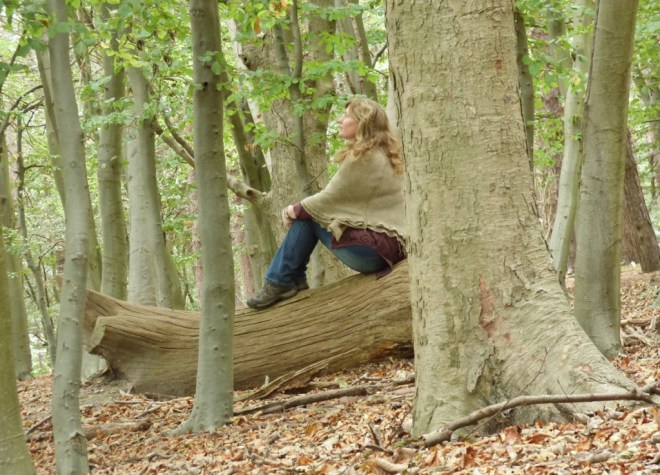
It’s good to be home. After a couple of weeks visiting my family back in Canada, with yet another heat wave (40C with the humidity!) I can honestly say that I’m grateful to be back in Suffolk. It feels like autumn has arrived here, as it has back in Canada (the day after I left, it turned to a lovely 21C and the leaves beginning their autumnal splendour) and the change in the air is most welcome.
As always, going back to visit my family brings up contemplations of just what “home” really is. I realised that in 3.5 years, I will have lived in the UK for as long as I have lived in Canada. Over twenty years of eating food grown in this land, drinking water from local bore holes and reservoirs, breathing in the air and connecting with the different flora and fauna relative to this place and this time. It really has shaped me, alongside the people I’ve met and the experiences I have had, and I am both grateful and a touch melancholic when reminiscing about all that I have done and gone through in moving to this new land all those years ago.
This is where I made my lifelong dream come true, to be an author. Never did I ever dream about establishing a Druid College, or a belly dance company, or a host of many other turns my life has taken. It’s been a challenge and a blessing, the twists and turns my life has taken, and for which I am both proud and humbled to have come out the other side. England is not the land of Madam George and roses, as Sinead O’Connor once sang, but it is the place that captured my heart, alongside Wales, Scotland and Ireland.
So I return to my home with a renewed sense of place, of home and indeed, of belonging. Even though I will always carry a thread of being an outsider, with my accent alerting people to the fact that I was not born here, still I feel like this place is home. An immigrant to this country, coming from a long line of immigrants to various countries, I feel a shared connection both to my ancestors as well as to the ancestors of place, which here in the UK are so varied from before history even began. I have a few months now to breathe deeply, to take the time to reconnect, now that my new book for Llewellyn has been sent off and revised. For the rest of the year, I will be taking information in, taking in the sensual and the ecstatic, allowing the awen to flow into me after many long months of being on the other end. Allowing myself to reap the harvest sown earlier on. And so the cycle continues, in and out, flowing and ebbing, as I gather my resources ready for a new round of work come the new year. For the next three months, I will be listening to the words and voices of others, allowing their inspiration to fill me, and see where that takes me.
And in the meantime, I shall walk this land, the sandy soil of heath and woodland beneath my feet, the wind blowing in from the sea and scenting the air, the hearthfires burning both in the little village around me and within my soul.
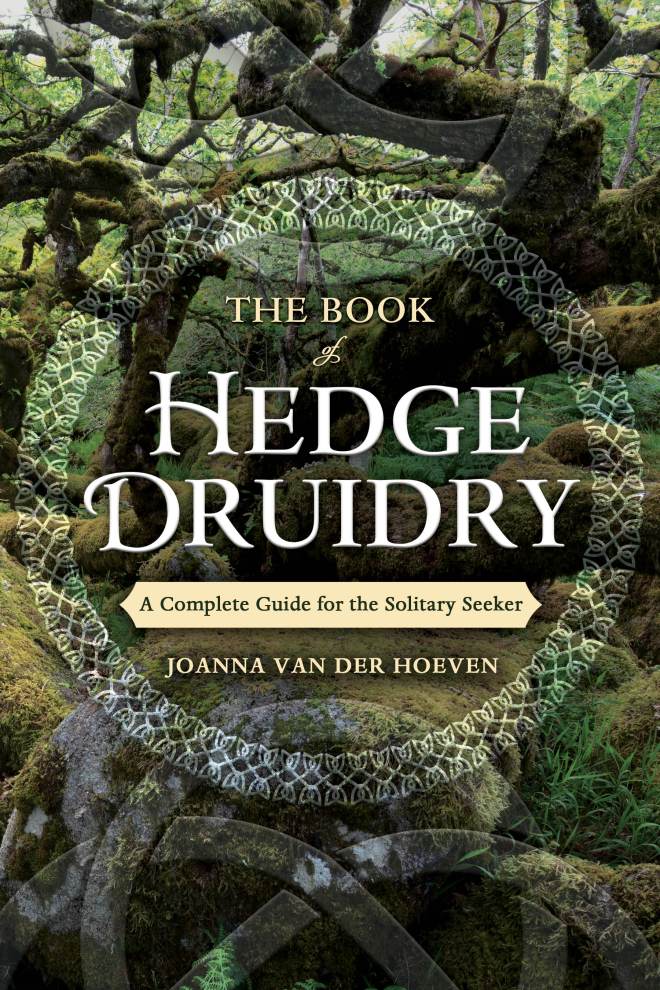
P.S. Here’s a sneak peek at the cover of my new book, coming out next summer!
Hello all! I’ve been a bit late in posting a review for Morgan Daimler’s Travelling the Fairy Path, and so I’m also including my review for her latest Pagan Portals as well, coming out next year: Manannán mac Lir: Meeting the Celtic God of Wave and Wonder.
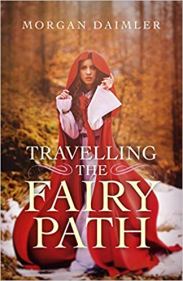 I’ve loved all of Morgan Daimler’s work, and so when the call went out last year for reviews for her Travelling the Fairy Path, I jumped at the chance! This book is a bit of a departure from others in her series dealing with Fairy Witchcraft, in that this work is more personal, and written in a slightly different style, presenting the material in a more conversational manner. It’s hugely informative, as are all of her books, and touches upon issues that are rarely mentioned in other books in the Neopagan world. Discussing the difference between spirits and fairies, how to work with verified or unverified personal gnosis, looking at the lore from the perspective of poetry and music as well as practical information on glamour, shape shifting and more, this book is a great addition and complement to her other works. There is even an entire compendium of ogham knowledge in the appendices, which is extremely useful. I always look forward to more works from this author, and highly recommend her to everyone in the Pagan community, as well as those interested in all things Celtic. Travelling the Fairy Path is available for pre-order, and will be out end of September.
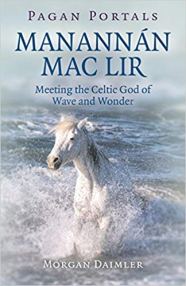 Morgan Daimler’s book on Manannán is a real gem for anyone interested in working with a deity connected to the sea. In a down to earth and easy manner, Daimler presents this god in clear language and with a heartfelt honesty that comes through the words on the page and settles in the heart. Each chapter is a treasure, and we not only cover the Irish aspects of this deity, but also take a look at the Welsh, Manx and Scottish associations, which are all exceedingly helpful. The ritual, meditation and prayer section makes this book truly come alive, as well as the section at the end of each chapter, entitled “Manannan in my life”. Here we see up close and personal how this deity affects the life of the author, and this insight really makes this work stand out. I have thoroughly enjoyed all of Daimler’s work, and she is a true asset to the community. This book will be available end of April 2019, but is now available for pre-order.
 Down the Forest Path